

In a variety of devices and industrial systems, the self-locking push button is an important system component that adds convenience, safety and efficiency to the design. One of the reasons this button is so valuable is that it has a unique characteristic of being locked, or engaged in an on position for as long as it stays pressed. Once released, it will automatically revert back to its original position; users will only need to push it again to return to the pressed position and continue using the self-locking button as if nothing had changed. This feature is very important for many different industries, such as manufacturing and many types of appliances used in the home. No longer will accidental dis-engagements occur because of continuously pushing the button to maintain function, providing for more consistency in production and use of the device.
How Does a Self-Locking Push Button Work?
A push-button type of self-locking switch operates easily but provides great functionality. The switch’s internal locking mechanism sets into motion at the time the button is pushed in and continues to hold downward until there is a subsequent push on the same button to unlock it. Depending on the type of switch, either completely mechanical switches or a combination of mechanical and electronic mechanisms can be found within the same button or switch assembly. Many high-end switches have indicator lights, such as LEDs, mounted to show the current state of the button, which provides users with a visual indicator of whether the switch or button is on or off. The self-locking mechanisms therefore make these switches ideal candidates for applications that require deliberate control.
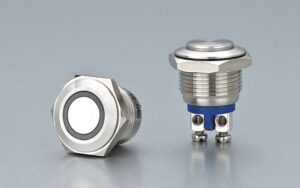
What are the Different Types of Self-Locking Push Button Locks?
There are multiple categories of self-locking push buttons that have been engineered to meet the varying needs of different industries. The following list includes some examples of these categories:
- Push Buttons With Mechanical Locking: These buttons rely on a purely mechanical lock, making them common in most old-style machines and equipment.
- Electronic Push Button/Mechanically/electromechanical buttons. These modern self-locking push buttons may have electronic components (for example, LED indicators), which are commonly used.
- Designed for use in rugged conditions with robust push button assemblies, these products are hermetically sealed to keep out moisture and dust or any other outside contaminants. Because of their ability to withstand difficult conditions, they provide exceptional longevity when used outdoors or in heavy industrial applications.
- Key Operated Push Buttons: This type has been designed so that it requires a key to either turn the button “on” or “off”, which provides an additional level of security for critical equipment as well as access control of restricted areas.
Why Choose a Self-Locking Push Button?
Self-locking push button switches have a number of advantages over traditional push button switches. The most important of these is that self-locking push button switches offer increased safety by preventing accidental toggling of critical systems. Additionally, for machines that must run continuously, the self-locking feature eliminates the need for constant physical pressure on the button. This allows users to press the button one time to turn on the machine and free their hands to do other things. In addition to all of these benefits, self-locking push button switches are very versatile in terms of designs and shapes. For example, the variety of styles and sizes means that you will be able to find a switch that fits your application. Other customization features such as backlight illumination, symbols, or built-in indicators can help you find exactly what you need in a switch.
Applications of Self-Locking Push Buttons
There are many different applications throughout the industrial realm that involve the use of self-locking push buttons when reliability and precision are of the highest importance. Some of the applications include:
- Heavy Industrial Machinery: In control panels for large machinery, pressure-sensitive switches are used because consistent operations are required for safety and productivity.
- In patient monitoring systems and surgical equipment, self-locking buttons are used to guarantee that devices will continue to work (without any chance of being accidentally turned off).
- For example, there are automobile systems that have self-locking push buttons which allow certain functions of the vehicle (e.g., starting engine, activating hazard lights) to function reliably.
- Consumer Electronics & Appliances: Devices from washing machines to ovens with a self-locking push-button mechanism now have improved usability and safety.
- Popular in marine gear, outdoor electric tools and farm machinery, self-locking push buttons that are waterproof and dustproof work well in rugged and outside conditions. They can withstand the toughest of environments.
Frequently Asked Questions
Self-locking push buttons use a mechanical latch (or electronic) system to operate by pressing down on it to activate it; once activated, the push button will remain in the ‘on’ position until deactivated (by being pressed) and will return to the original state. Some self-locking push button models include visual indicators (e.g., LED) signalling the push button is engaged or disengaged.
What are the different kinds of self-locking push button locks?
Self-locking push button locks come in many forms, including mechanical push buttons, electromechanical push buttons, waterproof push button locks, and key-operated push button locks. Each type includes additional functionality specific to its intended use, be it industrial or consumer-oriented.
Factors to Consider When Choosing a Self-Locking Push Button
When choosing a self-locking push button, you’ll want to look at application uses, how durable the material will be, and what features you want! Button applications exposed to the outdoors need to have weatherproof and waterproof capability; buttons used in low-light areas should have LED illumination; a button’s size, ease of use, and overall form factor are important attributes for ensuring that it fits within your device’s design.
In summary, self-locking push buttons provide improved levels of safety, convenience, and effectiveness in many different applications. Therefore, by learning about the operation of self-locking push-button switches and investigating the possible types available, people and organizations can choose the most suitable self-locking push-button switch to fit their unique requirements and guarantee that they will perform at expected levels for many years to come; hence, these cutting-edge devices will be vital for all forms of technology, including industrial machines, skimmers used in medicine, and consumer goods.



