

A push button DC voltage dip report should show how the powered control equipment behaves when its DC input supply is disturbed, including what happens when power returns. It is not simply a low-voltage rating for the switch. For an illuminated button, separate the indication circuit, contact input and controller response, and identify which assembly was tested. Buyers should request the exact report edition, supply-port boundary, operating modes and acceptance basis before applying the result to a panel. This guide provides a practical review process without prescribing test levels or promising that a component can prevent a machine restart.
Start with the correct DC supply boundary
IEC 61000-4-29:2026 describes methods for evaluating voltage dips, interruptions and variations at DC input power ports. The public scope addresses equipment and systems intended for connection to external low-voltage DC networks. A buyer should begin by establishing whether that scope corresponds to the equipment being evaluated, rather than applying the method number to every conductor carrying a DC signal.
An input contact and an equipment power port are not the same boundary. The switch can be part of a control circuit without being the powered equipment whose supply port is disturbed. Record whether the report concerns a controller, an illuminated operator assembly, a complete panel or another identified unit. The result follows that boundary and its conditions.
An internal indicator supply may also differ from the panel’s external DC connection. Ask the designer to explain that relationship on the drawing. A supplier’s lamp voltage designation does not establish the duration of an interruption the panel can tolerate, and it does not define whether a command should be remembered when supply returns.
Read the standard edition before comparing reports
The IEC catalogue identifies a 2026 edition, while older specifications and reports can refer to an earlier edition. Record the complete reference on the report and the reference required by the purchase specification. A difference is a review item, not automatic proof that a report is invalid or that a new edition applies retroactively to every contract.
The responsible engineer or compliance specialist should decide whether the existing evidence satisfies the actual project requirement. Ask for that decision in writing when editions differ. Do not copy test values from an older public example and label them current requirements. Product category, installation and contract conditions must all be considered by the competent reviewer.
For context on why report language matters, see the lot traceability guide. A reported result, the requirement used to judge it and the purchaser’s acceptance decision are connected but distinct. Procurement should retain each reference so that a later replacement review can reconstruct the original reasoning.
Identify the real operator and its circuit options
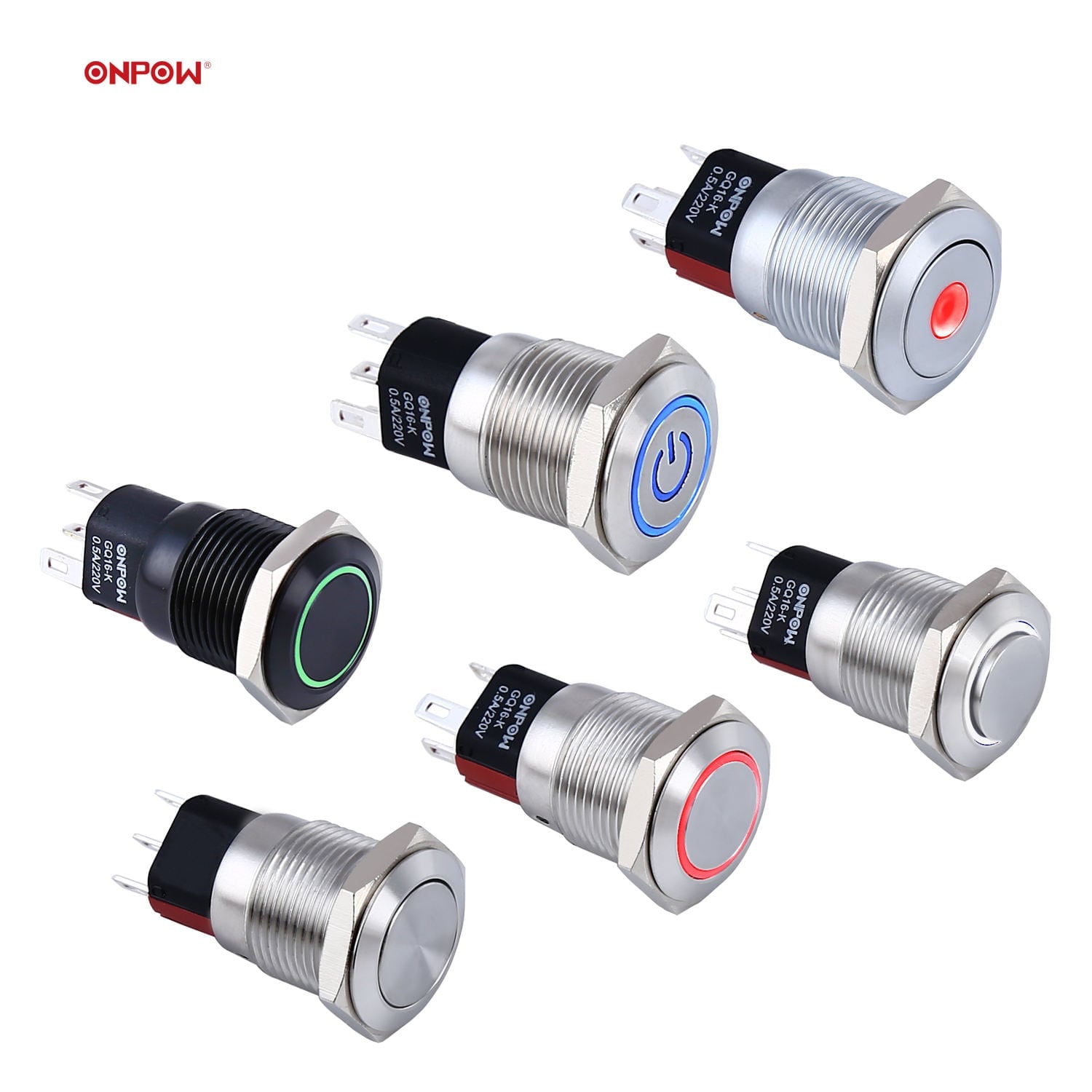
Use the actual product designation and approved drawing to identify the purchased switch. The ONPOW6116F-11E/S product page is an example of a real operator reference. Its image shows product identity; it does not establish DC dip performance or demonstrate a tested panel. Family photographs show alternatives, not automatic equivalence between every illustrated configuration.
List the ordered head, contact configuration, illumination option and connection details where applicable. Obtain current specifications for those choices. Avoid inferring an operating voltage from ring color, body shape or an old stock photograph. When a product page and purchase drawing appear inconsistent, ask the supplier to resolve the configuration before reviewing system evidence.
Then identify the connected electronics and supply path. A useful record distinguishes the switch contact, input module, illumination feed, controller and any separate monitoring channel. This is an evidence map, not a wiring instruction. Installation and test work belong with qualified personnel using the approved drawings and appropriate safety procedures.
Separate dips, interruptions and variations
A voltage dip, an interruption and a voltage variation describe different supply conditions. Do not reduce them all to “power failure.” The report should identify which phenomena were evaluated under the applicable requirements, with their actual conditions and durations. This guide intentionally does not supply a universal numerical pass threshold for industrial buttons.
Check how the report expresses the disturbed supply and how it relates to the declared normal supply. Percentages can be misunderstood when a reader confuses the remaining voltage with the amount of reduction. Ask the laboratory or engineer to clarify the notation instead of translating a table heading from memory into a purchasing conclusion.
The sequence also matters to interpretation. Determine whether the equipment was operating, which functions were active and when observations were made. A single statement that the display returned cannot establish that every command path remained correct. Preserve the underlying record needed to answer the project’s actual acceptance questions.
Use an evidence table for procurement
This table is a practical document checklist, not a substitute for the standard or an approved laboratory procedure. The IEC scope establishes the DC-port subject; the questions below help connect a report to a purchase.
| Review item | Evidence to request | Purchasing question it answers |
|---|---|---|
| Equipment boundary | Model, revision and configuration | Was the delivered assembly represented? |
| DC power port | Drawing and supply identification | Where was the disturbance applied? |
| Method edition | Full standard reference | Does the report match the project basis? |
| Disturbance schedule | Recorded conditions and durations | Which supply events were evaluated? |
| Command monitoring | Input and controller observations | Was an unwanted state change detected? |
| Indication monitoring | Meaning and behavior of the lamp | Could the operator see a misleading state? |
| Recovery sequence | Behavior when supply returned | Was restart behavior assessed against requirements? |
| Configuration changes | Reviewed difference record | Does evidence remain applicable after substitution? |
Keep missing information in the review log with an owner and a specific question. Do not convert an empty field into an assumed pass. Equally, do not demand a particular report layout when the necessary information is present in controlled attachments or referenced setup records.
Observe indication and commands independently
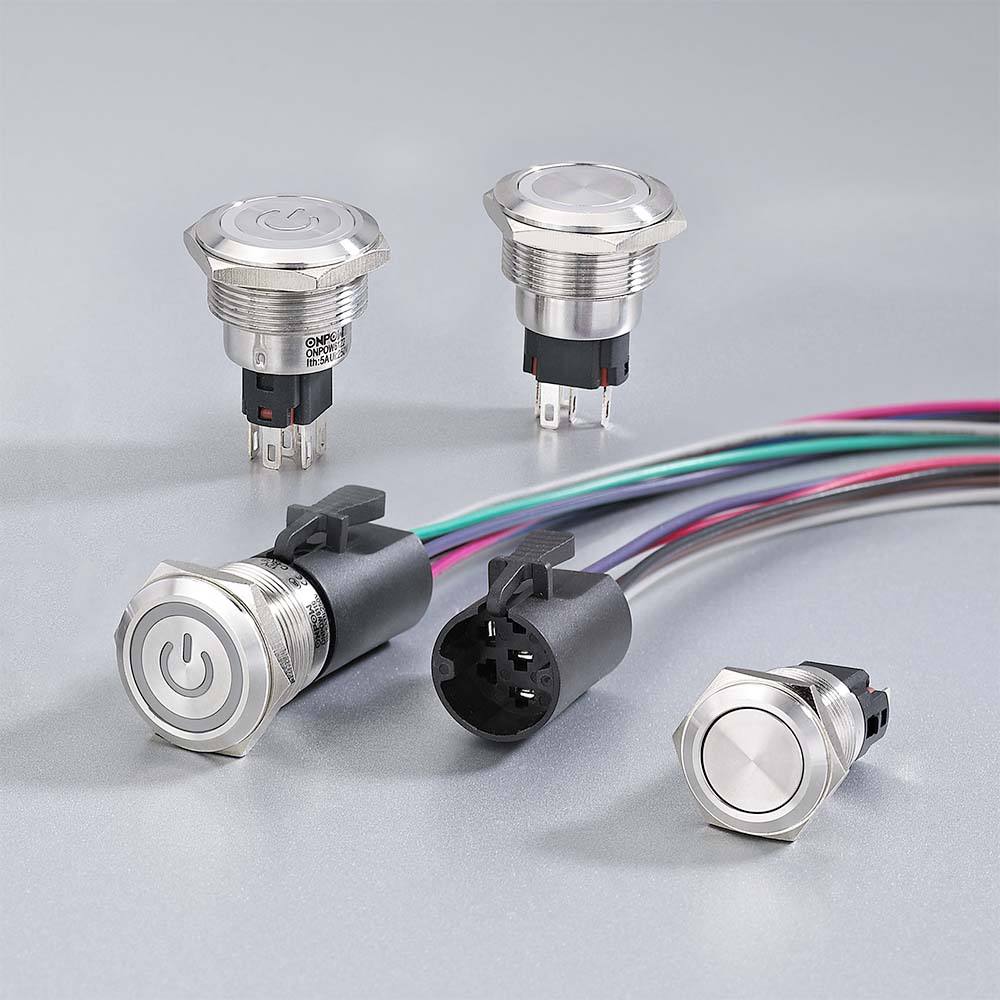
An illuminated ring usually communicates a designed meaning, but that meaning is determined by the circuit and control logic. It might indicate availability, a command state or another condition. Define its meaning before reviewing disturbance behavior. A brief change can only be interpreted sensibly against the function the equipment designer intended it to convey.
The controller’s recorded input should be reviewed separately. An indicator can go dark while the controller retains a state, or recover while another part of the equipment remains unavailable. These are examples of questions to investigate, not claims that a particular ONPOW model exhibits those behaviors. Request actual observations for the tested configuration.
Where a command must be reissued after a disturbance, the project should specify that behavior and how it will be assessed. Where retention is intended, document its conditions. Neither outcome should be assumed solely from a momentary or maintained mechanical action. The complete control design determines how physical input and stored logic interact.
Treat power restoration as a separate review step
Check what happened when normal supply returned. Did the equipment resume a prior mode, wait for acknowledgement, clear a stored command or require another action? The acceptable behavior follows the equipment’s risk assessment and applicable requirements. A procurement reviewer should ask for the evidence, not invent a universal restart policy for all machines.
HSE’s work-equipment guidance provides authoritative context for managing equipment suitability and safe use. It does not prescribe this article’s test schedule or certify a switch. Use the relevant local requirements and competent design assessment for the actual machine, particularly where an unexpected restart could cause harm.
Do not test restoration behavior by interrupting power on a live production machine without an approved plan. Establish controlled conditions, responsibilities and safe isolation procedures through qualified personnel. An article can explain what records to review; it cannot authorize a field experiment or replace the machine’s safety documentation.
Keep other electrical reports in their own scope
A surge report concerns a different event from a DC supply dip. An EFT review also answers a different question. Keep these reports as complementary entries in the equipment evidence package instead of using one successful test to imply general immunity to every electrical disturbance.
Contact durability, terminal robustness and dielectric withstand have their own purposes as well. A switch that meets its mechanical requirements may still be connected to electronics whose supply response needs evaluation. Conversely, an equipment DC-port report does not establish every component’s life or terminal rating. Preserve these distinctions in supplier enquiries and inspection plans.
When replacing a supply, input module or illuminated operator, compare the new configuration to the evaluated one. Refer differences to the responsible engineer. A replacement that fits the panel opening is not automatically covered by the old system report, but a difference also does not automatically require repeating every test. Document the reasoned assessment.
Build a useful enquiry package
Send the supplier the intended application, exact model choices, available assembly drawings and the supply boundary selected by the equipment designer. Ask for current product data and identify separately the panel-level evidence expected from the system builder. This avoids asking a component vendor to guarantee behavior controlled by equipment outside its supply.
For report confidence, use the terminal robustness report review. Retain the controlled report, relevant attachments and the engineering acceptance decision together. Record any limitations explicitly. A focused unresolved question is easier to close than a broad statement that a button “failed EMC” without an identified test boundary.
Frequently asked questions
Does a lamp voltage rating prove DC dip immunity?
No. A nominal illumination specification does not establish how connected equipment behaves during a supply disturbance. Review the equipment power port, evaluated conditions, monitored functions and acceptance basis for the actual configuration.
Can an AC dip report cover a DC supply port?
Do not assume equivalence. Confirm the actual supply boundary and the applicable requirements with the responsible engineer. The report should identify the method and conditions relevant to the equipment being purchased.
Is an older edition report automatically unacceptable?
No. Compare the report reference with the contract and applicable equipment requirements. Have the responsible specialist assess the difference and document the decision; do not declare retrospective invalidity from the publication date alone.
What is the most important recovery question?
Ask what the complete equipment did when normal supply returned and whether that behavior met its defined requirements. Review command, indication and restart observations separately, rather than accepting lamp recovery alone as proof of correct operation.
Further learning
Khan Academy explains voltage as background to interpreting a disturbed DC supply. This lesson does not demonstrate IEC dip testing or establish restart safety.

Voltage (electric potential difference) | Physics | Khan Academy — Khan Academy



