

A push button power frequency magnetic field report must identify the equipment exposed, the operating functions observed and the basis used to judge the result. It does not prove immunity merely because the switch has a metal body or sits near a motor. For a control panel purchase, first determine whether this phenomenon is relevant to the equipment, then connect the report to the actual input electronics, indication and assembly. This guide explains how to review that evidence while keeping magnetic field exposure separate from cable coupling, radiated RF, mechanical shock and unrelated product ratings.
Understand the phenomenon before requesting evidence
IEC 61000-4-8:2009 describes a basis for evaluating equipment performance under power-frequency magnetic field exposure. Its public scope refers to equipment operating in residential, commercial and industrial settings, including power installations. It distinguishes this exposure from disturbances coupled into cables, which are addressed by other methods. Buyers should preserve that distinction when building an EMC evidence list.
The practical procurement question concerns equipment behavior in the relevant environment, not whether a button attracts a magnet. A material label does not establish the response of the controller or other connected electronics. The responsible engineer should identify the applicable equipment requirements and decide whether this particular evaluation is relevant to the proposed installation.
Do not infer a universal field requirement from the nearby presence of a transformer, contactor or motor. The equipment context, location and applicable requirements matter. A site concern may justify engineering investigation, but it is not itself a measured exposure or a report result. Record what is known and identify the assessment still required.
Separate the operator from the equipment under test
An operator is part of the human interface. The complete function may include a contact, input circuit, controller logic, illumination and the equipment output. A report on one identified assembly cannot automatically establish the performance of every system using the same-looking head. Begin with the tested unit’s model and revision before reading the result table.
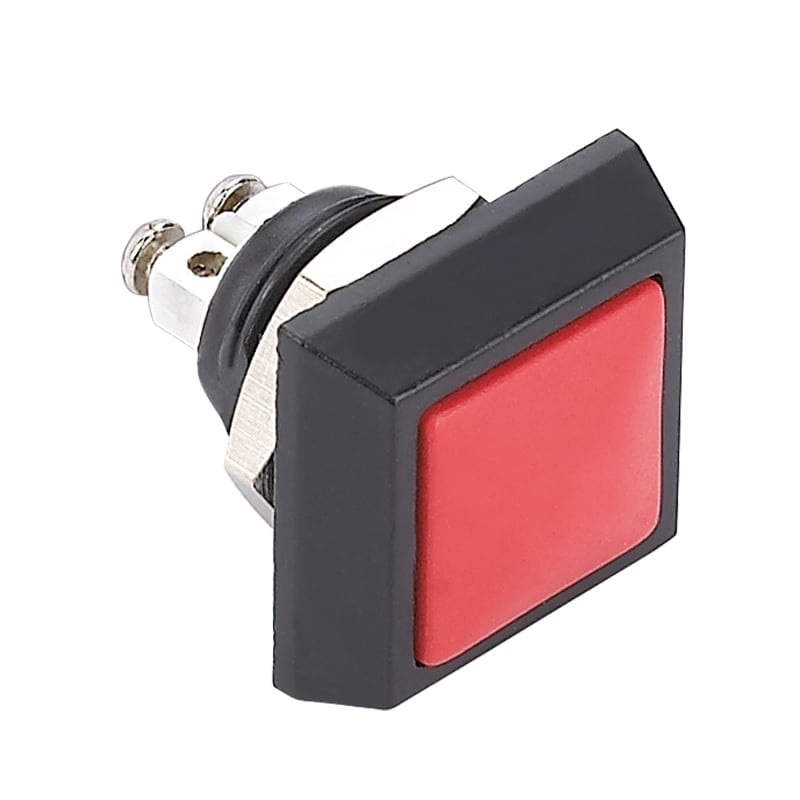
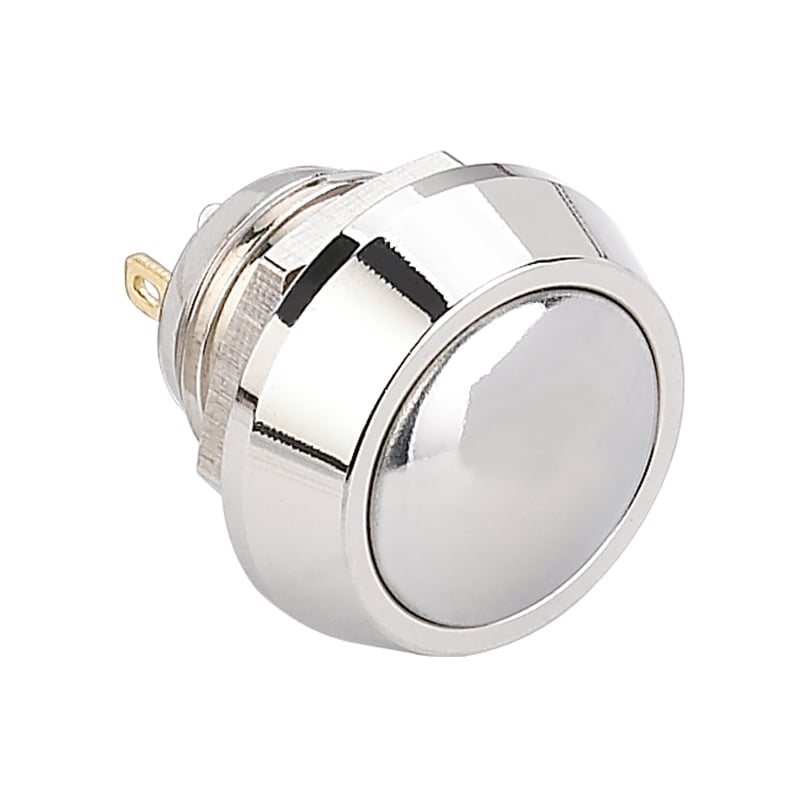
The ONPOW GQ12B-10/B/AL product page provides a real product identification example. The illustrations here are original manufacturer product photographs from the GQ12 family. They show different physical options; they do not show a magnetic field test, prove a material grade or establish that all configurations share test coverage.
Match the ordered designation to current supplier documents and the approved equipment parts list. A family name is useful for organizing a catalogue, but it is not a complete configuration record. Record contact and connection choices where relevant, and ask the supplier to clarify discrepancies before allowing a report to become evidence for a different assembly.
Check applicability without inventing product claims
The IEC industrial immunity publication provides a separate reference point for industrial equipment requirements. Its presence in a project must be determined by the responsible specialist; this article does not assign it automatically to every control panel or switch. A method standard and an equipment requirement have different roles in the review.
Ask which requirement made magnetic field evaluation relevant and how the test plan interpreted it. A short note explaining why a function is included or excluded can be more useful than a broad supplier assertion. An exclusion should have a reason and an accountable reviewer rather than being hidden behind the phrase “not applicable.”
Where the buyer’s specification simply says “EMC compliant,” resolve the ambiguity before ordering. Identify the equipment, intended environment and accepted evidence package. Avoid asking for an unsupported component certification as a substitute for that work. The goal is a clear purchasing basis that both supplier and equipment builder can actually satisfy.
Review the exposure arrangement and operating modes
A usable report explains the tested arrangement sufficiently to connect it to the delivered equipment. Look for equipment identification, setup references, relevant orientations and the declared exposure conditions. Let qualified laboratory personnel and the applicable method determine the setup. This article is a report-review aid and does not provide instructions for constructing an exposure coil.
Operating modes need equal attention. Determine which commands, indications and equipment states were exercised and what was monitored. An equipment photograph can show an assembly but cannot establish which function was active. Request the associated operating description or test-plan reference when a report gives a result without explaining the function assessed.
Consider whether the monitored behavior represents the actual application. A controller idle screen may not reveal a transient input event; an indicator alone may not reveal the resulting equipment state. The responsible designer should choose suitable observations and justify them. Do not invent universal logging rates or claim that one visual check is adequate for every application.
Use a structured review table
The table below organizes purchasing questions. It contains no test levels and should be read with the applicable equipment requirements and laboratory records.
| Review subject | Evidence to locate | Follow-up if the link is unclear |
|---|---|---|
| Applicability | Requirement and engineering rationale | Ask who determined the phenomenon was relevant |
| Tested assembly | Model, revision and configuration list | Reconcile the report with the ordered equipment |
| Exposure arrangement | Setup references and declared conditions | Request explanation from the issuing laboratory |
| Operating modes | Functions and states under observation | Check whether the application was represented |
| Command behavior | Input and equipment-response records | Resolve unexplained transitions or missed actions |
| Indication behavior | Defined meaning and observations | Determine whether displayed states remained reliable |
| Result interpretation | Criteria and recorded outcome | Avoid equating recovery with uninterrupted function |
| Production changes | Controlled differences and disposition | Obtain an applicability decision for substitutions |
The scope distinctions originate in the IEC publications; the document-control questions are practical recommendations. They do not claim that every laboratory must use this exact table or report format. Controlled attachments can provide the necessary information when the main report points to them clearly.
Examine command and indication observations separately
A physical contact, the controller input and the final equipment action are related observations. They should not be collapsed into one statement such as “the switch worked.” Ask what was observed and where. If a command state was monitored only inside the controller, determine whether that observation answered the project’s actual functional question.
An illuminated device adds another channel. Establish what its light means in the approved design and whether that meaning was assessed during exposure. A normal-looking light is not proof of correct input processing. An unlit device is not automatically evidence of a contact failure. Interpretation requires the actual circuit and observation record.
Review observations both during exposure and afterward. The equipment might require a particular response during the disturbance, a defined recovery afterward or both, depending on its requirements. Procurement should not invent acceptance criteria after seeing the result. Agree the basis in advance and retain it with the report and equipment configuration.
Avoid confusing magnetic exposure with other tests
Power-frequency magnetic field exposure is different from the radiated RF assessment. It is also different from the EFT evidence review, which concerns another disturbance. Similar acronyms and a shared EMC heading do not make the evidence interchangeable. Keep each report linked to the question it actually answers.
The IEC scope also separates cable-coupled disturbances from this field method. A cable-routing concern therefore needs its own competent assessment rather than being automatically marked covered by a magnetic field result. A complete equipment review may involve several complementary evaluations, selected through the applicable requirements and intended installation.
Mechanical shock evidence addresses yet another subject. A robust-looking actuator or a successful mechanical report cannot establish electromagnetic performance. Use a simple evidence matrix to prevent one document from being reused as proof of unrelated claims during purchasing, maintenance or replacement approval.
Assess changes to location and configuration
When an installation changes, identify what changed before drawing conclusions. The equipment may have a new location, a revised controller, a different operator assembly or a changed enclosure arrangement. Route those differences to the responsible engineer. Avoid assuming either that all old evidence remains valid or that every relocation requires a complete retest.
The review should connect the actual difference to the original evaluation boundary. Record the supporting documents and decision. If further assessment is required, state what question it must answer. A focused request is easier for a laboratory or equipment builder to address than an instruction to “improve magnetic immunity” without a defined problem.
Do not add shielding, alter bonding or move safety-related components based solely on a general article. Such modifications can affect other equipment functions and require approved design control. Keep troubleshooting observations distinct from production instructions until qualified personnel have evaluated and verified the proposed change for the specific machine.
Build the purchasing and maintenance record
Ask for current product documents, the relevant equipment report and a configuration link between them. Include the intended application and the requirements selected by the equipment designer in the enquiry. ONPOW can provide product information for the ordered operator; equipment-level claims need evidence from the party responsible for that equipment and its tested assembly.
Use ILAC’s explanation of accreditation to understand the role of laboratory competence, and verify the issuing laboratory’s relevant scope separately. A laboratory accreditation mark does not expand the tested sample or certify every product in a catalogue. Preserve report authenticity and configuration applicability as distinct review questions.
For maintenance, retain the accepted model, drawing revision, evidence references and any substitution conditions together. This allows a future buyer to understand why a replacement was approved. It also prevents a family photograph or a broad sales description from becoming the only surviving record of an engineering decision.
Frequently asked questions
Does a metal switch body prove magnetic field immunity?
No. Body appearance or a material description does not establish how the connected equipment behaves under an electromagnetic exposure. Review the actual assembly, operating functions and evidence against the applicable requirements.
Is this the same as radiated RF testing?
No. The methods address different phenomena and exposure arrangements. Maintain separate evidence entries and ask the responsible specialist to determine which evaluations apply to the equipment and installation.
Must every industrial button have this report?
Applicability depends on the equipment requirements and intended use. A component is not automatically the complete tested equipment. Identify who is responsible for the system evaluation and document any justified exclusions.
What should a buyer ask when the report says only pass?
Request the tested configuration, operating modes, exposure conditions, acceptance basis and relevant observations. Confirm that the delivered assembly is represented before using the result in an equipment approval or replacement decision.
Further learning
Khan Academy introduces magnetism as background to understanding magnetic field exposure. This is not a power frequency immunity test demonstration or a qualification of ONPOW products.
Introduction to magnetism | Physics | Khan Academy — Khan Academy



