

A push button fluid contamination report should name the actual liquid, exposure conditions, tested configuration and acceptance checks. A water-ingress rating does not establish resistance to hydraulic fluid, lubricant, coolant or cleaning chemicals. Likewise, a result for accidental contact does not authorize continuous immersion. Before selecting a control for a contaminated environment, match the supplier’s evidence to the substance, contact route and recovery conditions expected in the equipment.
This guide helps buyers prepare an enquiry and interpret a test report. It does not provide a chemical compatibility rating for any ONPOW model, and it does not authorize cleaning or energizing contaminated equipment.
Describe the exposure before asking for a resistant switch
“Oil resistant” is incomplete as a purchasing requirement. Identify the fluid by product name and available composition information, then describe how it could reach the switch. A short splash on the operator, residue around the panel seal and liquid reaching rear terminals are different exposure situations. Record which one the equipment design must address.
Also identify concentration, temperature, contact duration, repetition and any approved cleaning afterward. If the fluid is a formulated commercial product, retain its current technical information and safety data sheet. The supplier needs a meaningful description to compare with existing evidence; the generic category “industrial fluid” leaves too much unresolved.
Understand the scope of an accidental-contact test
The IEC 60068-2-74 public scope describes a method addressing accidental contact with fluids. The IEC preview available from VDE provides the reference identity for the consolidated publication. Specify the required edition and amendments in the enquiry, and obtain the complete procedure through the appropriate standards channel when commissioning the test.
A test method is not a general compatibility list. The report must still identify the actual fluids, conditions and criteria used. A standard number on the cover cannot establish suitability for a different liquid or a different contact duration. Keep the test conclusion tied to the experiment actually performed.
Map the exposure onto the assembled control
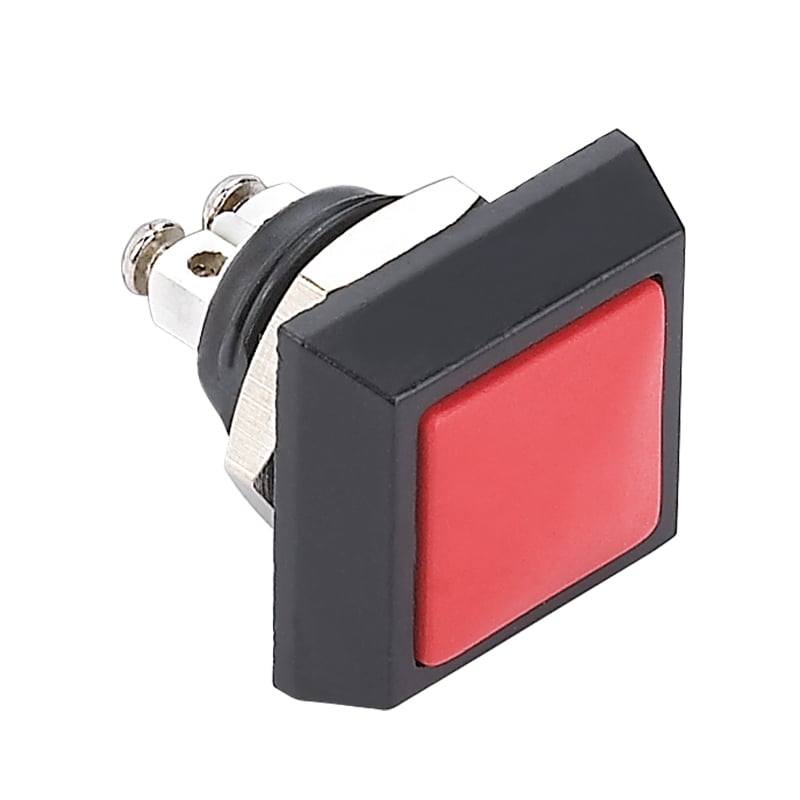
Identify the operator, lens, bezel, mounting seal, contact assembly and accessories that could be contacted. Ask whether the report tested the complete assembly, a moulded component or a material specimen. A result for a material plaque does not describe liquid paths through the installed panel or behaviour of every other component.
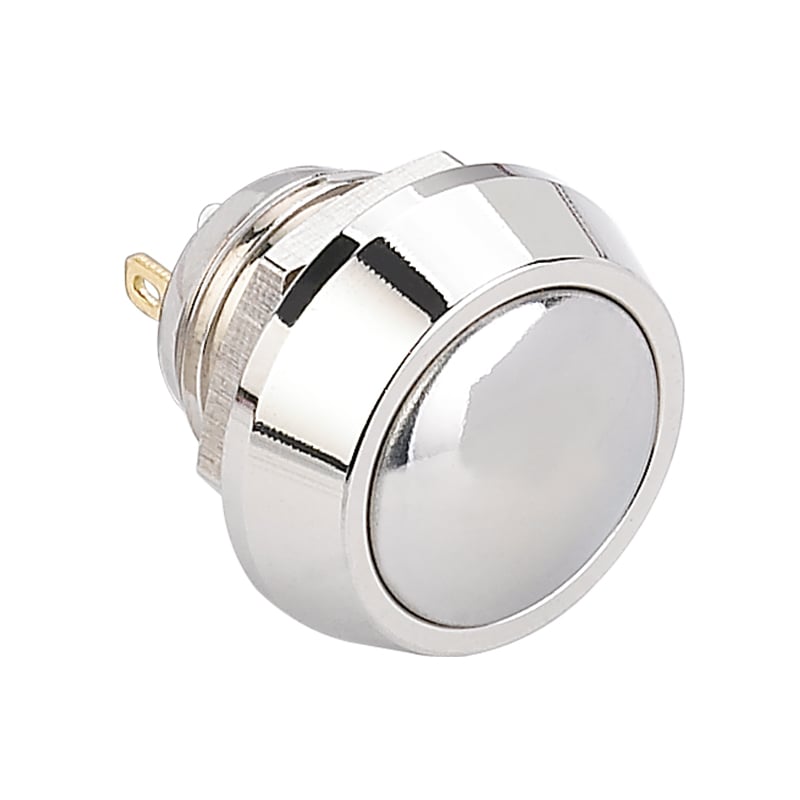
Use the GQ12B-10/J/N product page to identify a real ONPOW product when preparing a configuration enquiry. The accompanying catalogue photographs show product identity and visible form. They do not prove chemical resistance, seal material or fluid-test coverage. Confirm the actual order code and current manufacturer documentation before selecting the version.
The mounting arrangement deserves its own record. Panel thickness, hole condition, sealing parts and installation instructions can affect the assembled boundary. Do not assume that a front-side exposure test also covers the rear connections or an unsealed enclosure opening elsewhere in the equipment.
Use a fluid report review table
The following table provides a practical review sequence. It contains no invented fluid resistance values or standard pass thresholds. The applicable acceptance limits belong in the agreed equipment specification and laboratory test plan.
| Review area | Evidence to request | Decision affected |
|---|---|---|
| Liquid identity | Exact product, concentration and relevant formulation | Whether the test represents the service substance |
| Sample identity | Order code, revision, materials and accessories included | Whether the supplied construction is covered |
| Contact route | Exposed surfaces and assembly orientation | Whether front, seal and rear risks were evaluated |
| Conditions | Temperature, duration, repetition and application method | Whether the exposure represents the requirement |
| Recovery | Cleaning, drying and time before examinations | Whether the reported state matches the intended acceptance point |
| Physical checks | Recorded appearance and specified dimensional or mechanical checks | Whether observed change meets the written criteria |
| Electrical checks | Required measurements and operating observations | Whether the control’s required function was assessed |
| Limitations | Deviations, exclusions and applicability statement | Whether additional evidence remains necessary |
Treat an empty cell as a question to resolve. It should not become an assumed pass merely because another part of the report looks complete.
Separate chemical effects from liquid ingress
Ingress and compatibility are related at the equipment level, but they are different evidence questions. An ingress assessment investigates entry under its specified conditions. Compatibility evidence addresses the effects of contact with an identified substance. The substance might affect an exposed component even when no liquid reaches the electrical compartment.
The dust report mounting-boundary guide illustrates why installed boundaries matter when interpreting environmental evidence. For liquids, the reviewer must additionally identify the fluid and relevant material interaction. Avoid extending an ingress result to chemicals it did not evaluate.
Similarly, a favourable water exposure result does not establish that a cleaning mixture is acceptable. The mixture may have different ingredients, concentration and temperature. Ask for a relevant compatibility statement or test rather than substituting the word “waterproof” for the missing evidence.
Read recovery conditions before interpreting the result
Ask when the examinations occurred and what happened between exposure and examination. A result after an authorized recovery period describes that recovered state. It does not necessarily demonstrate acceptable behaviour while liquid remains on the component. A report should make this timing understandable to the equipment reviewer.
If the purchasing requirement calls for operation during exposure, identify whether the test actually included it and under what controlled conditions. Do not perform improvised energized chemical tests in the workshop. The responsible engineer and qualified laboratory should establish the appropriate method and safety arrangements.
Cleaning also needs to be traceable. If the laboratory removed residue using a particular approved method, preserve that detail. The production or maintenance team should not substitute an aggressive cleaner and assume the same conclusion still applies. Resolve differences through the manufacturer’s guidance and the equipment’s approved procedures.
Investigate changes without guessing the failure mechanism
Discoloration, softening, cracking, sticking or an electrical change each calls for a clear recorded observation. These are examples of things a reviewer may ask about, not a claim that every method requires every examination. The relevant specification determines what must be measured and what constitutes an unacceptable change.
If a sample changes, request the affected part identity and the evidence behind the laboratory conclusion. A visible mark does not by itself establish loss of function; successful actuation does not erase a failed appearance criterion. Keep the measured or observed result separate from the acceptance decision.
For electrical properties, review the specific test boundary described in the insulation-resistance guide. Do not apply an unspecified test voltage to an assembled illuminated control simply because a fluid report mentions insulation. The exact configuration and manufacturer instructions remain necessary.
Compare two supplier submissions fairly
Consider a hypothetical control-panel order exposed to a named machining coolant. One supplier supplies a general oil-resistance statement. Another supplies a report for a specified hydraulic fluid on a different switch variant. Neither submission automatically addresses the coolant requirement. The first lacks conditions; the second may provide useful background but has a substance and configuration mismatch.
Prepare a difference list covering liquid identity, concentration, temperature, exposure route and sample construction. Ask each supplier to address those differences. An engineering reviewer can then decide whether an applicability explanation is sufficient or whether a new test is necessary. The comparison should be based on relevance, rather than the number of pages or the presence of a logo.
Keep the original requirement visible during this exchange. Changing the enquiry to match whichever report arrives first can leave the equipment’s actual exposure unresolved. If the design changes to reduce contact, record that design decision and reassess the remaining requirement.
Keep material declarations in their proper role
A substance declaration and a compatibility result serve different purposes. A material declaration may identify regulatory information or controlled composition, but it does not demonstrate performance after contact with a process fluid. Ask for both categories of evidence where the customer requires both.
The laboratory accreditation scope checklist helps assess the test provider’s declared scope. Accreditation is relevant evidence about laboratory competence within that scope; it does not expand a report to untested liquids or products. Retain the actual method and sample description alongside any accreditation information.
Prepare an effective ONPOW enquiry
Send the full switch code and quantity, panel arrangement, identified fluids and safety data, expected concentration and contact conditions, required method edition, recovery assumptions and acceptance examinations. Explain whether only the operator face is exposed or whether rear components also need assessment. Ask for available reports and explicit exclusions.
For order release, record the covered configuration, accepted evidence and unresolved conditions. For maintenance, obtain approved cleaning and replacement guidance separately. This keeps procurement evidence useful while allowing the equipment designer to address spill prevention, enclosure sealing and safe access as parts of the complete system.
Frequently asked questions
Does an IP rating prove resistance to coolant or lubricant?
No. Review the rating’s own scope and request compatibility evidence for the identified fluid and conditions. Do not substitute an ingress label for a chemical assessment.
Can accidental-contact evidence justify continuous immersion?
Only evidence that actually covers the required immersion conditions can support that decision. An accidental-contact result should remain within its documented exposure and recovery boundaries.
Is a report for another commercial fluid acceptable?
It may provide background, but it needs an engineering applicability review. Differences in formulation, concentration, temperature and contact route should be resolved explicitly.
What should be done when rear terminals can be splashed?
Include that exposure in the equipment assessment and supplier enquiry. Do not extend a front-side sample result to the rear assembly without supporting evidence and an approved installation arrangement.
Further learning
Khan Academy explains solubility and intermolecular forces as background to why the identity of a liquid matters. It does not provide switch compatibility ratings.
Solubility and intermolecular forces | AP Chemistry | Khan Academy — Khan Academy



