

A push button plastic ash content report measures the residue remaining after a specified laboratory treatment. For a buyer, its value depends on whether the tested sample represents the particular molded component being purchased. A percentage on a resin certificate is not evidence that a complete push button has a certain strength, flame rating or electrical life. Start with the component identity, then review the method and calculation, and finally compare the result with an agreed material specification. This guide explains that purchasing workflow without assigning an unverified resin formulation or test result to any ONPOW product.
What an ash result can establish
The public scope of ISO 3451-1:2026 covers general methods for determining ash in plastics and recognizes that suitable conditions depend on the material. It also points to separate parts for particular polymer families. A report should therefore identify more than the words “ISO tested.” The edition, applicable part, laboratory method and sample description all help establish what was measured.
The ASTM D5630 summary describes the measurement of residual solids and expressly limits chemical identification from that result. A buyer should not translate an ash percentage into a list of ingredients. A laboratory may need additional analytical work to answer a composition question. These are distinct purchase questions and should have distinct evidence requirements.
Keep this distinction visible in the purchase file. “Residue within the agreed interval” describes one measured characteristic. “Approved material” implies a broader decision that also needs traceability and the other requirements in the specification. Use the narrower statement when only the narrower evidence is available.
Identify which plastic part was sampled
A panel operator can contain several visibly different parts. Its actuator, lens, housing and other molded pieces should not automatically be treated as one material. Before accepting a report, ask the supplier to identify the sampled part on a drawing or photograph and connect it to the ordered configuration. Record color and revision where these form part of the material specification.
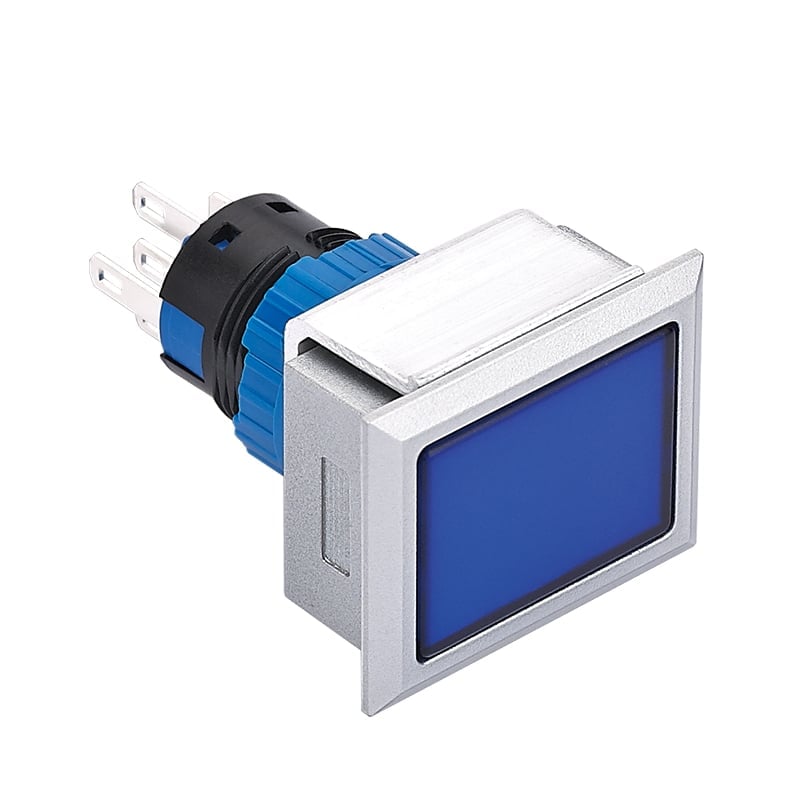
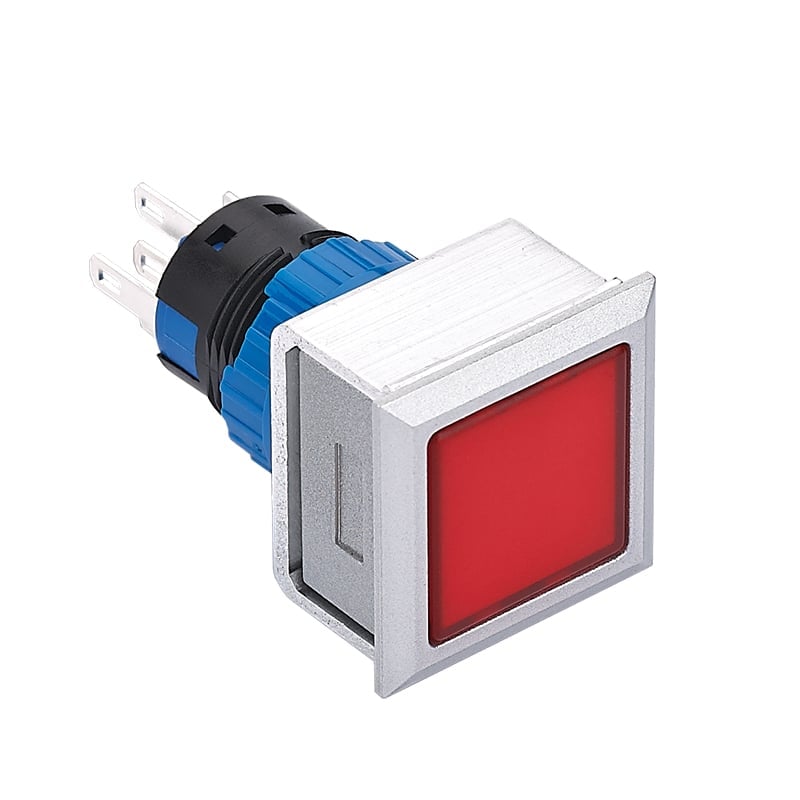
The ONPOW LAS1-A product family provides a practical starting point for discussing component identity with sales. The product photographs in this article are identification examples. They do not establish the resin used in every visible piece, a filler percentage or any completed ash test. Obtain the exact configuration and material evidence for the actual order.
A report on loose pellets needs a documented relationship to the finished component. Ask who supplied the pellets, which production lot used them and whether the submitted material included the relevant color or additive package. If this link cannot be established, retain the report as background information rather than marking the ordered component as verified.
Read the report in a consistent order
Begin with the laboratory name, report identifier and issue date. Next locate the sample receipt information and description. Only then review the result. This prevents a strong-looking percentage from distracting the reviewer from an unrelated sample. If the supplier submits selected pages, request the full report, including notes that define the method and any departures.
The following table is a buyer’s review aid, not a replacement for the test standard or the laboratory’s procedure. Apply the detailed method through a qualified laboratory and the agreed material specification.
| Report item | What to look for | Follow-up when information is missing |
|---|---|---|
| Component identity | Sample description linked to the ordered part and revision | Request a marked drawing and sample mapping |
| Material traceability | Resin or component lot linked to the submitted specimen | Ask for the documented supply and production link |
| Method | Standard edition, part and identified procedure | Request the applicable method details |
| Test conditions | Conditions sufficient to understand how the residue was obtained | Ask the laboratory to clarify the report |
| Reported basis | Percentage, initial sample basis and treatment of individual results | Request calculations or supporting values where needed |
| Acceptance rule | Requirement from the agreed purchase specification | Keep conformity undecided until a rule is agreed |
| Conclusion | Limited to the measured characteristic and sample | Remove unsupported performance assumptions |
Keep a copy of the original report alongside the review record. A spreadsheet containing only its final percentage cannot preserve the qualifications attached to the measurement. Where several revisions exist, identify which report supersedes the others and retain the history for traceability.
Check the mass calculation without inventing a limit
For a simple residue mass fraction, the calculation is ash percentage = residue mass divided by initial specimen mass, multiplied by 100. Both masses must use the same unit and must refer to the quantities defined by the applicable procedure. A gross crucible mass is not interchangeable with the net residue mass. Ask the laboratory about any method-specific corrections before independently recalculating its result.
For illustration only, a 2.000 g specimen and 0.300 g net residue give 0.300 / 2.000 × 100 = 15.0%. These numbers are invented to explain the arithmetic; they are not ONPOW results or a recommended target. The calculation does not identify the residue or prove that 15.0% is suitable for a particular component.
A useful review records both the arithmetic and its limits. If the sample was a mixed assembly, a surface coating or contamination could make its relationship to an individual plastic part unclear. Resolve the sample definition before treating a correctly calculated number as relevant material evidence.
Compare batches fairly
When purchasing teams compare incoming reports, first establish that the component, declared material and measurement basis are comparable. A change of method or specimen selection deserves review before a difference is attributed to production. Save the conditions next to the result rather than comparing percentages in isolation.
An agreed material specification should state what the buyer needs and how conformity will be decided. This article does not propose a universal ash interval for push buttons. A resin manufacturer’s technical information, validated design requirements and the supplier’s controlled specification may inform that agreement. Ask the responsible material specialist to resolve conflicting requirements.
If a new batch differs from an established reference, quarantine the conclusion rather than immediately declaring a defect or approving the batch. Request clarification of sample identity and method consistency. Escalate a confirmed unexplained difference through the supplier’s quality process. Preserve the original result even if later testing provides a more complete explanation.
Separate ash from other material questions
A residue result does not answer every question about a plastic component. For example, it cannot by itself establish whether a housing will retain shape under load or whether a lens will deliver the required appearance. Use the dedicated heat deflection report review when evaluating the scope of that different thermal measurement.
Likewise, a purchaser examining molding consistency may need the conditions and material identity discussed in the molding shrinkage report guide. Do not assume that two reports on differently named samples describe the same material. Connecting the samples is part of the review, not an automatic consequence of receiving both documents.
Ash determination and thermogravimetry can both involve residue, but their reporting questions differ. This article focuses on the endpoint residue and its purchasing interpretation. A temperature-resolved mass-change investigation requires a curve and its program. Ask the laboratory which evidence fits the actual concern before ordering additional tests.
Use laboratory competence evidence carefully
The laboratory accreditation scope guide explains how to connect a test method with the laboratory’s stated capabilities. Check the relevant scope and validity instead of accepting a logo as proof for every measurement. A report may also distinguish accredited and other work; read its qualifications.
For independent context, Polymer Service Merseburg’s ash determination overview identifies ash determination as a plastics testing service. Its existence does not mean it tested an ONPOW component. External method information explains a measurement; a supplier-specific report establishes what was actually submitted and measured.
Send the laboratory a clear question. “Confirm the residue mass fraction of this identified component using the agreed method” is easier to evaluate than “prove this is good plastic.” Include the sample description, relevant specification and requested reporting format. Ask whether the available quantity and condition permit the intended analysis before shipping material.
Turn the review into a purchase decision
Use three separate entries in the quality file: evidence received, checks completed and conclusion. For example, “report received for housing lot A” is an evidence entry. “Sample mapping confirmed against drawing revision B” is a check. “Ash requirement met for the submitted sample” is a limited conclusion. This structure keeps unresolved issues visible.
When a supplier offers a different resin or component revision, request a description of the change and the evidence required by the approved change process. A matching ash percentage alone does not demonstrate equivalence between formulations. The buyer’s engineering and quality teams should decide which additional comparisons are necessary for the application.
For an ONPOW inquiry, provide the ordered model or family, the component of concern, quantity, intended equipment and the exact evidence request. Ask which records can be supplied for that configuration. Do not ask sales to confirm a test result inferred from a photograph or from a generic article. This keeps the commercial discussion tied to verifiable documents.
Frequently asked questions
Does ash content identify the complete filler formulation?
No. Residue measurement alone does not identify every chemical constituent or the individual shares in a mixed formulation. If ingredient identification is necessary, ask a qualified laboratory to propose appropriate additional analysis for the particular question.
Can a resin report cover the finished push button?
It can contribute material evidence if the resin, production lot and specific molded component are traceably connected. It does not automatically cover every plastic part or establish complete switch performance. Record the exact relationship and its limitations.
What ash percentage should an industrial push button have?
There is no universal value supplied by this guide. Use the approved material specification and a justified acceptance rule for the particular component. An illustrative calculation or another product’s result is not a suitable purchasing limit.
Should a buyer run an ash test on site?
Arrange analysis through a laboratory with the appropriate competence, facilities and procedure. This purchasing guide is not a furnace operating instruction. Define the sample, method and reporting need with the laboratory before submitting material.
Further learning
Dr Daniel Belton introduces thermogravimetric analysis and its instrumentation. This explains the related mass-measurement context and the distinction between a full mass profile and an ash endpoint; it is not an ISO 3451 furnace procedure or a test of an ONPOW component.

Thermogravimetric Analysis – Introduction and Instrumentation — ChemEngTutor



