

A push button material declaration for REACH should identify the ordered configuration, the substances or requirements assessed, the reference date, and the evidence behind the statement. A generic letter headed “REACH compliant” leaves important questions unanswered. Buyers need to know which parts and production revisions the supplier actually reviewed, and which market the statement addresses. Start with document traceability before comparing conclusions. This guide explains a purchasing review for industrial control components; it does not certify an ONPOW model or replace the compliance assessment required for your equipment and supply-chain role.
Start with the order, not the certificate heading
Build a short identification sheet from the purchase order. Include the complete manufacturer reference, actuator variant, illumination option, terminal arrangement, accessories supplied together, and any customer-specific finish. Use the quotation and approved drawing to resolve differences in abbreviations. A declaration that covers a family may be useful, but the supplier should explain how your exact configuration belongs to that family.
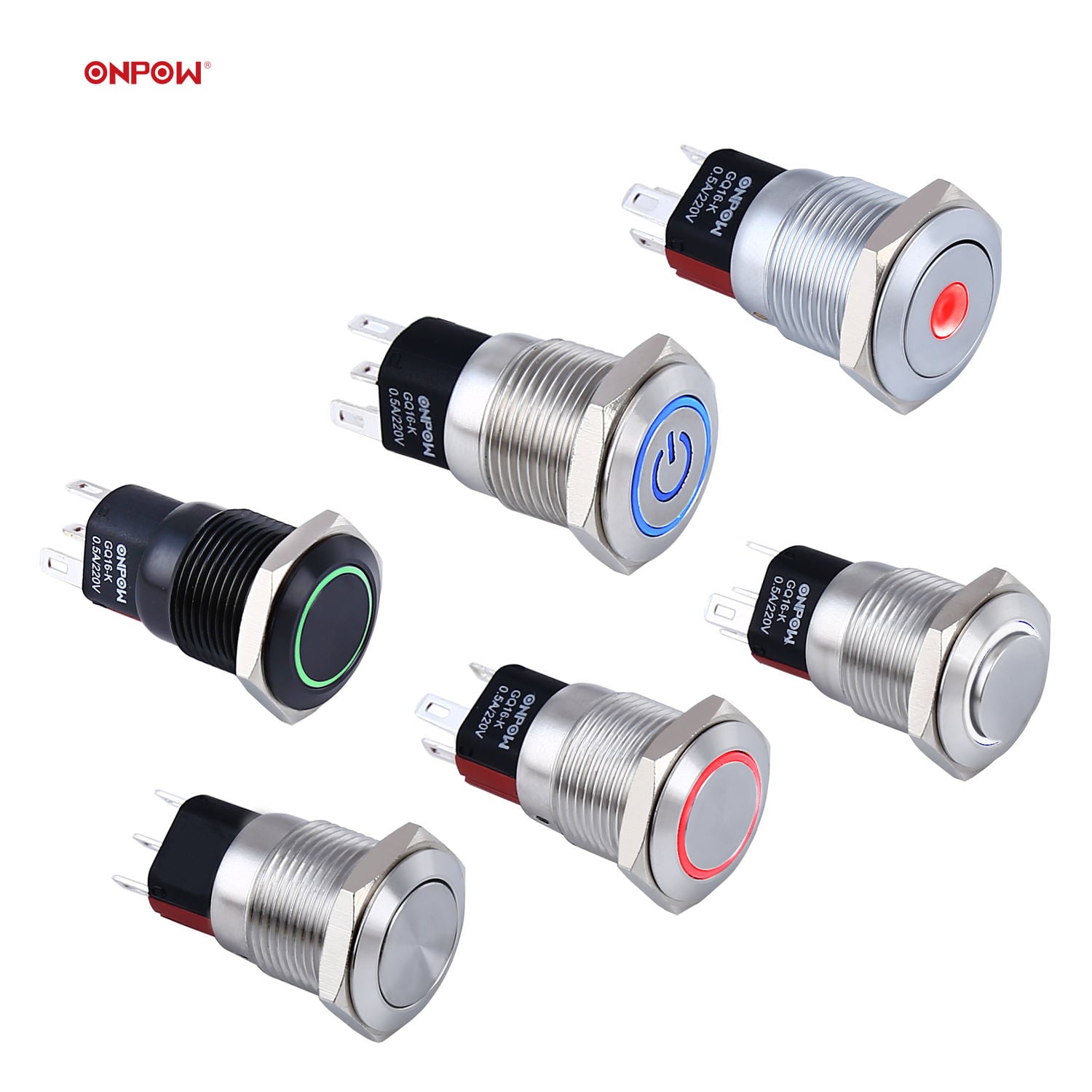
For example, the ONPOW6116F-11E/S product page provides an identifiable starting point for a documentation request. Its photograph helps people discuss the same component. It does not establish chemical composition, the presence or absence of a substance, or the applicability of a declaration to every optional version. Ask for the document that corresponds to the order rather than treating the product photograph as evidence of compliance.
Keep the supplier’s commercial reference and your internal stock number together. If a distributor uses a shortened reference, request a written cross-reference to the manufacturer’s designation. This avoids attaching a correct declaration to the wrong stocked item when several visually similar buttons share a purchasing description.
Separate the questions hidden inside “REACH compliant”
REACH covers more than a single list. Ask what the statement actually addresses: Candidate List information, relevant restrictions, or another specific requirement. Do not assume that a response about one topic answers all the others. A useful supplier response states its scope explicitly and identifies any exclusions or pending information.
The Irish Health and Safety Authority’s overview of SVHCs explains that Candidate List inclusion can lead to information duties for suppliers of articles. That is a reason to request a dated substance statement, not a reason to label every listed substance as automatically prohibited in every switch. Ask the responsible compliance specialist to evaluate the requirements relevant to the particular article and destination.
Keep terminology consistent across the file. “Not intentionally added,” “not detected,” and “not above the stated threshold” describe different types of evidence. Ask suppliers to explain the meaning of their wording instead of rewriting all three into a stronger purchasing conclusion. An analytical result also needs a method, reporting limit, and identified sample before it can support a specific statement.
Check the date and the list reference
Record both the declaration issue date and the Candidate List reference used for its review. These dates answer different questions. A newly signed letter may repeat an older assessment, while an older document may still be accompanied by a clear update covering the current scope. Request the underlying reference instead of judging only the signature date.
Avoid putting a fixed substance count into your permanent purchase specification. Lists change, and a number without an identifiable date is difficult to audit. A better request asks the supplier to identify the list version or publication date, state the assessment date, and explain how subsequent changes will be communicated for continuing orders.
For repeat purchases, assign an owner to check whether the stored statement still matches the supplied revision and agreed regulatory basis. A calendar reminder can support this process, but it does not replace event-based review after a material, finish, supplier, or product change. Document the event that triggered each review so the next buyer can understand why an update was requested.
Use a document review table
The table below is a suggested purchasing workflow, not a legal determination or a prescribed regulatory form. Adapt it to your quality system and the requirements confirmed by your compliance owner.
| Review point | Evidence to request | Action when unclear |
|---|---|---|
| Product identity | Full ordered reference and covered variants | Obtain a manufacturer cross-reference |
| Assessment scope | Named REACH topic and stated exclusions | Ask which requirements were evaluated |
| Reference date | Candidate List basis and review date | Request a dated scope clarification |
| Substance information | Relevant identities and safe-use information where required | Refer the response for compliance assessment |
| Evidence chain | Supplier assessment, material information, or identified reports | Clarify the basis and its limitations |
| Change control | Notification contact and affected revisions | Agree how future changes reach purchasing |
Do not reduce this review to a green tick against the supplier name. The useful record is the connection between the item ordered, the document received, and the decision made. Save unresolved questions next to the evidence so that a later shipment does not inherit an approval accidentally.
Distinguish communication from notification
An information request from a customer and a regulatory notification are different activities. Their conditions and responsible parties must be checked separately. Purchasing should collect the information needed by the responsible organization, rather than guessing its obligations from the mass of the complete control panel or from a single sentence in a supplier letter.
The HSA guidance on notification of substances in articles describes conditional notification duties for article producers and importers. The important purchasing lesson is to keep the evidence needed for that assessment available. Do not apply a notification condition as a blanket reason to refuse a customer’s request for substance information.
Also separate EU REACH from requirements in other jurisdictions. If the order serves more than one destination, state the markets in the request and ask the compliance owner to identify the applicable references. A document headed only “REACH” should not silently become evidence for every destination your company supplies.

Ask for evidence that follows the actual component
A switch assembly can contain multiple purchased parts and finishes. The practical question is whether the supplier’s assessment follows the configuration supplied to you. Request the basis at a level that supports your review without demanding confidential formulation details unnecessarily. The supplier may provide controlled declarations, identified upstream information, or relevant analytical evidence with appropriate limits.
A report on an uncolored resin sample cannot automatically answer questions about a finished colored actuator, plated terminal, or supplied accessory. Similarly, one measured location does not necessarily represent every material in an assembly. Ask which component the evidence covers and which parts were assessed by another route.
For third-party reports, use the laboratory accreditation scope guide to check the relationship between the reported method and the laboratory’s stated scope. Accreditation is not a substitute for checking sample identity. A technically sound test on the wrong sample is still unsuitable evidence for the purchase under review.
Handle substitutions and incomplete responses
When a supplier proposes an alternative button, reopen the identification check even if its dimensions and electrical function appear equivalent. Material evidence does not automatically transfer across a changed manufacturer reference. Ask whether the existing declaration explicitly covers the alternative and retain the answer with the substitution approval.
If the response is incomplete, describe the gap precisely: missing variant coverage, unclear list date, unidentified sample, or unconfirmed accessory. This produces a useful follow-up request. A broad message saying “send a better certificate” often returns another generic letter and leaves the original issue unresolved.
Keep commercial urgency separate from the evidence status. Purchasing can record that a response is pending while the quality or compliance owner determines the next action. Do not convert silence into a declaration, alter the supplier’s wording, or claim that ONPOW has provided a document that has not actually been received.
Connect the paperwork to receiving inspection
At delivery, match the packaging and supplied references to the approved order. The push button incoming inspection guide addresses this physical acceptance stage. Receiving inspection and substance-document review support one another, but neither replaces the other. A visual check cannot establish composition, while a declaration cannot prove that the correct item arrived.
Save the batch or delivery reference, the declaration revision, the supplier response, and the internal disposition together. This allows a later reviewer to identify which deliveries relied on a particular statement. If a change notice arrives, the organization can locate the affected records without rechecking every product photograph manually.
Include material documentation in the RFQ attachment rather than introducing it after dispatch. Explain the markets, references, evidence required, permitted response format, and contact for technical questions. For another distinct evidence boundary, the UL94 material report guide explains why material-level information must not become a finished-product claim. Chemical documentation remains a separate purchasing requirement.
Frequently asked questions
Does a product photograph prove REACH compliance?
No. A photograph identifies visible configuration and appearance. It does not establish substance identity or concentration. Request a statement and supporting basis that cover the exact ordered reference, including the relevant variants and supplied accessories.
Is a Candidate List substance always banned from a switch?
Do not draw that conclusion from listing alone. Different requirements can apply to different substances and uses. Have the responsible compliance owner evaluate the applicable rules, and request the information needed to support that evaluation.
Can one declaration cover a whole product family?
It can be useful when the manufacturer clearly defines the covered references, variants, evidence basis, and exclusions. Ask for a written connection between your ordered configuration and that family scope. A family name alone leaves the coverage uncertain.
What should I send with an ONPOW documentation request?
Send the full ordered reference, configuration, destination market, quantity or order reference, and the specific information required. Ask for the assessment scope and date. Keep the response with the order, and resolve any mismatch before treating the documentation review as closed.
Further learning
ECHA explains communication and notification concerning Candidate List substances in articles. This 2017 webinar provides background; use current official guidance for the requirements applying to an order.

Communicating about substances in articles – what you need to know — EUchemicals



