

Push button end-of-life handover records should connect the retired component to an identified receiver, an agreed treatment route and evidence of what happened after collection. A delivery note proves a transfer, but it does not by itself prove recycling. For an equipment owner or panel builder, the useful record begins with the machine and component identity and finishes with a reconciled receiving or treatment document. This guide presents a practical purchasing and maintenance record structure. It does not assign a waste code to an ONPOW switch, establish that a particular switch is legally electronic waste, or authorize dismantling equipment.
Define the item being handed over
A push button may leave service as an individual component, a bag of replacement parts, a populated panel or an entire machine. Record that boundary before requesting a recycling quotation. A receiver who accepts complete industrial cabinets may have different conditions for loose switches. Acceptance of one load should not be assumed to cover another format.
Use the equipment asset number and maintenance work order to connect the removal to its origin. Where an individual switch has no serial number, record the model marking and the quantity within an identified container. Photograph the markings when they are readable. An unknown model should remain unknown in the record rather than acquiring the identity of the nearest catalog photograph.
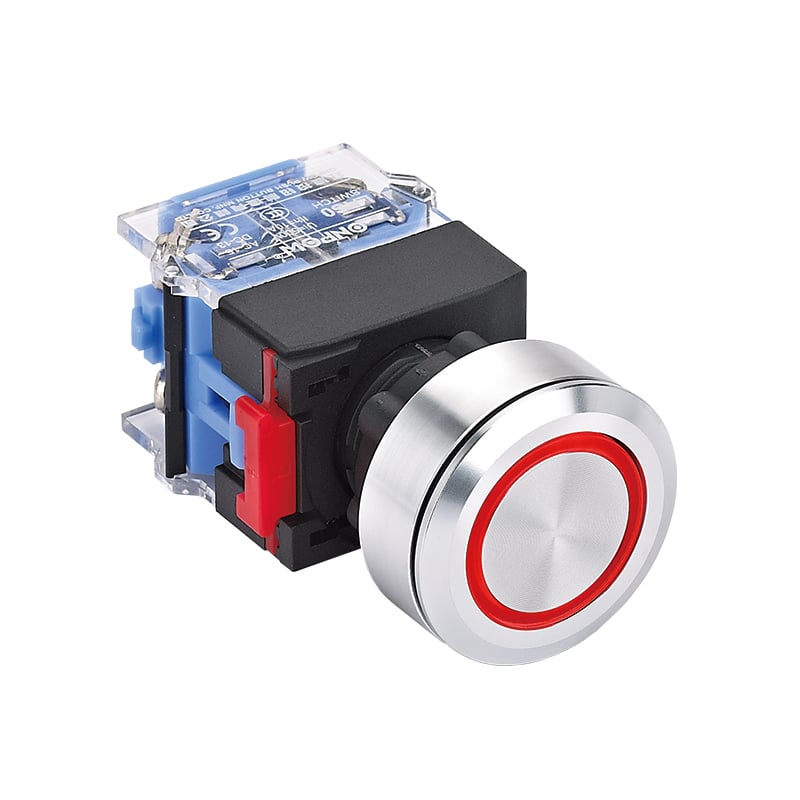
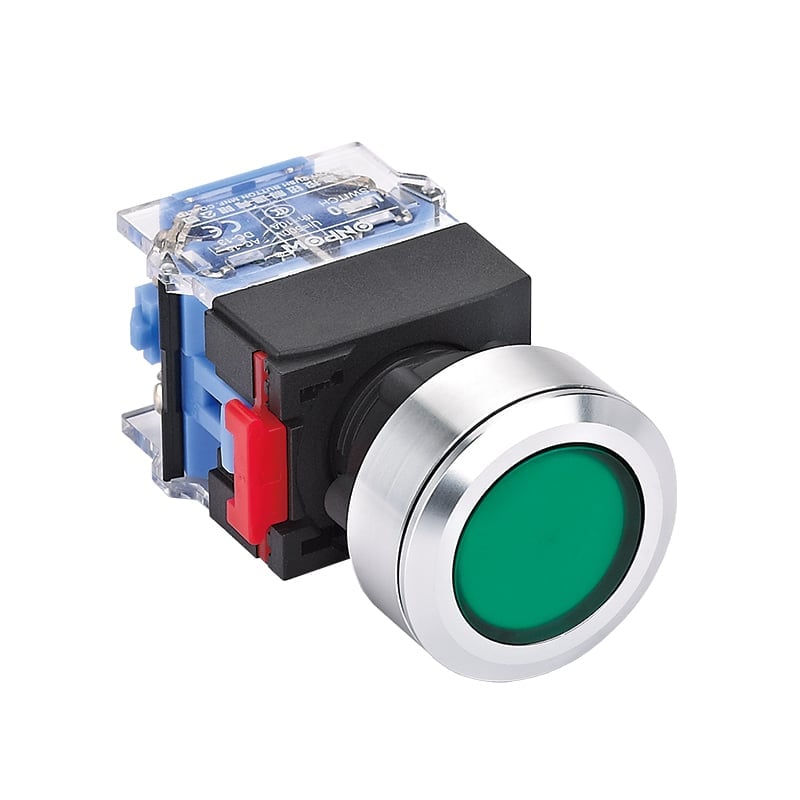
The ONPOW LAS0-K30 product example can help a buyer describe a similar visible product family when contacting the supplier. A catalog image cannot establish the materials, contamination, age or treatment classification of a removed item. Keep the original purchase record whenever it is available.
Separate removal approval from waste acceptance
The maintenance team decides whether equipment can be removed from operation and how the work will be performed. The receiving organization decides whether it accepts the resulting items under its actual permissions and procedures. Purchasing should obtain both decisions without treating either as a substitute for the other.
Electrical and mechanical hazards can remain present during removal. HSE’s guidance on work on electrical equipment emphasizes preparation, secure isolation and competent people. Component removal must follow the equipment-specific safe work procedure, including other stored energy and contamination where relevant. This article supplies no live-work or dismantling instructions.
Ask the receiver what information is needed before dispatch. Describe the actual load, including attached wires, panel fragments, mixed parts and any known contamination. Do not promise that a bag contains clean metal simply because the visible button head is metallic. Keep an uncertain load separate until the receiver has clarified acceptance conditions.
Build a handover record that survives an audit
The following table is a suggested operating record, not a universal statutory form. Local waste rules, contractual duties and the receiving site’s instructions may require additional documents. The objective is to make a later reviewer able to follow the item without guessing what an unexplained receipt represents.
| Record section | Information to capture | Check before closing the job |
|---|---|---|
| Origin | Equipment asset, work order, site and removal date | The item can be traced to the maintenance activity |
| Description | Known model, assembly boundary and attached materials | The description matches the actual container contents |
| Quantity | Count or measured mass, unit and weighing basis | Packing and receiving records use comparable units |
| Receiver | Legal identity, receiving site and contact | Acceptance applies to that site and described load |
| Agreed route | Reuse assessment, sorting, recycling or other accepted treatment | The quotation does not imply an unsupported final result |
| Transfer | Container reference, collection date and transport document | Collection and receipt references can be linked |
| Outcome | Receiving confirmation, treatment statement and exceptions | Claims match the evidence and unresolved items remain visible |
A count and a mass serve different purposes. Twenty switches and a recorded total bag weight can coexist, but they should not be added together or compared as though they measure the same thing. State whether the mass includes packaging or attached cable. If the receiving facility uses a different weighing basis, preserve both numbers and explain the difference.
Check the receiver beyond a logo
The US EPA’s certified electronics recycler guidance describes independent R2 and e-Stewards certification programs and recommends certified recyclers for businesses managing unwanted electronics. The relevance of a certification still needs to be checked against the actual site, current scope and proposed material stream. A logo copied into a quotation is not a complete acceptance decision.
Record the name of the organization issuing any certificate and the facility to which it applies. Ask the receiver how to confirm its current status. Keep a dated verification reference with the order so that a future reviewer can distinguish the company’s trading name from the certified operating site.
Certification should not become a claim that EPA has approved a particular ONPOW component or a particular consignment. Likewise, collection by a certified organization is not proof that every kilogram was recycled. Ask for a clear explanation of the service being purchased and the outcome evidence that will actually be supplied.
Agree on treatment evidence before collection
A common record gap appears after the load has left the site: the buyer requests a certificate that was never included in the service. Define the required documents while the quotation is still being reviewed. Confirm whether the provider supplies a receiving note, a sorting statement, a treatment report or a final mass summary, and when it will be available.
Use plain questions. Does the document describe the load received or the material processed? Does it cover this collection alone or a larger mixed batch? Are rejected items listed separately? Can the provider connect the report to the collection reference? A document with a convincing title may still answer a different question from the one your customer asked.
Avoid demanding a recovery percentage that the provider cannot reliably allocate to individual switches. Mixed treatment streams may support a batch-level result without supporting model-specific recovery. Preserve the original reporting boundary. Do not turn a facility’s general performance figure into the recovery rate for a named product.
Reconcile differences and rejected items
Consider an illustrative maintenance job in which one box contains removed switches, retained cable ends and mounting accessories. The dispatch note records component count, while the receiver records gross mass. Those figures cannot directly establish material recovery. A useful reconciliation identifies the container, explains the measurement basis and records the receiver’s accepted contents.
If part of the load is rejected, the job stays open for that part. Record the reason, temporary storage location and next responsible person. Correct the final statement so that rejected material is not included in a completed recycling claim. A replacement collection should have its own reference linked to the original job.
Administrative differences also deserve a short explanation. A trade name on a quotation and a legal entity on an invoice may be legitimate, but the connection should be documented. Missing dates, unidentified collection references and unexplained mass changes are reasons to ask a follow-up question before approving the final record.
Keep reuse decisions separate from recycling results
A retired component may be proposed for evaluation as a spare. That is a different decision from sending it for material treatment. Record who assessed its condition, what evidence supported the proposed use and whether the equipment owner approved it. An intact appearance does not establish suitability for another machine or a safety-related function.
A supplier return may also be a route for inspection or warranty review rather than disposal. The return authorization should say what the receiving supplier is expected to do and who retains ownership. Do not close a waste-treatment record merely because a parcel has reached a manufacturer when the agreed activity is still diagnostic assessment.
For wider procurement context, review SCIP supply-chain information. Supply-chain information and the record of an actual transfer answer separate questions. Both may be needed, depending on the equipment and destination market.
Use the record carefully in customer reports
Report the strongest statement that the evidence supports. A signed collection note can support a statement that identified material was collected by a named organization on a given date. A receiving confirmation supports acceptance at a site. A treatment report may support a further statement within its own scope and reporting boundary.
The recycled-content evidence guide addresses the separate question of whether a prospective claim is justified. A completed handover should not automatically become a claim that every product in the same series is recyclable in every market. Nor does one receipt establish a percentage reduction in environmental impact.
Keep the relevant documents together with the equipment maintenance history and purchasing order. Follow the retention requirements applicable to the site and contract rather than inventing a universal storage period. If a customer asks for a broader statement, compare the requested wording with the actual documents and identify the missing evidence before signing it.
For the upstream information request, use the material declaration data guide to organize product identity and available supplier information. These records help the receiver ask informed questions, while the actual treatment decision remains specific to the described load.
Questions to settle in the purchasing request
Ask the supplier for the exact product identification and any available end-of-life information relevant to the ordered configuration. Ask the receiver about the described component stream, its site acceptance conditions and the documents included in the quotation. Ask the equipment owner who will approve removal and who will reconcile the records afterward.
For background on how disposal fits within a wider life cycle, the EPA’s electronics stewardship overview discusses reuse and management across stages. Use that context to plan the process, while basing the actual transfer on the specific site’s requirements and receiver acceptance.
A practical purchasing request names the origin, item boundary, expected quantity, delivery format, receiving destination and required evidence. It also identifies who will resolve exceptions. This gives the service provider enough information to propose an appropriate route and gives the equipment owner a concrete basis for closing the job.
Frequently asked questions
Does a collection receipt prove a push button was recycled?
It proves collection within the receipt’s stated scope. Recycling requires additional evidence about the accepted material and treatment outcome. Ask what the receiver’s documents actually demonstrate and keep collection and treatment claims distinct.
Can a product photograph determine the waste classification?
No. A photograph can help identify a visible family, but classification may depend on the actual assembly, condition, contamination, destination and applicable rules. Ask the responsible site specialist and receiver to assess the described load.
Must every removed switch have an individual serial number?
Not every component has one. Where it does not, a known model, count, container reference and equipment work order can provide practical traceability. Do not invent serial numbers or assign a catalog identity to an unidentified part.
What should happen when the receiver rejects part of the load?
Keep that part unresolved in the job record, document the reason and arrange an accepted next step. Exclude it from completed treatment statements until the actual outcome is supported by evidence.
Further learning
This historical United Nations report introduces the wider electronic-waste management problem. It provides context for responsible handover, not current disposal law, a recycler endorsement or a verified recovery result for ONPOW products.



