A push button lens CIELAB color difference report can help compare the appearance of a physical lens or molded color sample under defined measurement conditions. To use it, identify the reference specimen, measurement arrangement, illuminant, observer and color difference formula. Do not treat an object-color result as a specification for the light emitted by a powered LED. For purchasing, the goal is a reproducible comparison tied to the ordered component, with agreed acceptance conditions. A color name, a product photograph and an unexplained Delta E value do not provide that comparison on their own.
Separate the lens appearance question from the light output question
Begin by stating what is being compared. An unpowered colored lens viewed under room lighting presents a different measurement problem from an illuminated indicator viewed in operation. The first may involve reflected or transmitted object color. The second involves the complete light source, optical components, drive conditions and viewing arrangement.
ال CIE publication scope for ISO/CIE 11664-4 covers calculation of CIELAB coordinates and color differences for specified object-color applications. It explicitly distinguishes these from stimuli perceived as a primary light source. Confirm that the laboratory’s use of the method fits the actual specimen and measurement question.
على سبيل المثال، ال LAS1-AWY operator product page can identify a real configuration for a quotation. It does not establish the lens formulation, color coordinates or an acceptance tolerance. Ask the supplier to identify the specific component and whether the report concerns that part in an unpowered measurement or a different specimen.
Understand the coordinates before reading the difference
CIELAB represents color using three coordinates. L relates to lightness; a and b* describe positions along the other two axes. A result becomes meaningful only with the measurement conditions and reference white that support it. Raw numbers copied from unrelated documents should not be ranked as though they came from one common experiment.
A color difference compares two sets of coordinates. It can summarize the magnitude of a difference, while individual coordinate differences show its direction. Keeping both is useful when a buyer needs to explain why two nominally similar lens samples do not match an approved reference.
ال NIST colorimeter publication discusses calibrated color measurements and their uncertainty. Use it as metrology background, not as a push button acceptance specification. The numerical difference between two samples and the uncertainty associated with their measurement are separate matters to resolve in the review.
Name the formula and keep a calculation check
For the basic CIELAB Euclidean difference, the calculation is Delta Eab = square root of [(Delta L) squared + (Delta a) squared + (Delta b) squared]. Each coordinate difference is the sample coordinate minus the corresponding reference coordinate. These color-space differences are dimensionless; they are not percentages of pigment or light output.
As a deliberately hypothetical arithmetic example, let the coordinate differences be 1, 2 and 2. The resulting Delta E*ab is the square root of 1 + 4 + 4, or 3. This illustrates the calculation only. It is not an ONPOW measurement, a recommended tolerance or evidence that observers will always notice or accept that difference.
Other color difference formulas can produce different numerical results from a comparison. If a report says only Delta E, request the full formula designation. Do not apply a tolerance established for one formula to a result calculated using another without an agreed technical basis.
Establish a reference sample that can survive reorders
A useful reference has an identifier, approval date, component description and storage record. It should represent the intended production configuration, including the relevant surface finish and thickness. If a separate plaque is used, explain how it relates to the lens being purchased rather than assuming that a flat sample represents every molded geometry.
Agree which reference controls the decision when a physical master and a digital specification coexist. A phone photograph is convenient for discussing a concern, but automatic exposure, white balance, display settings and lighting make it unsuitable as an unqualified numerical color standard. Keep photographs as observations alongside the controlled evidence.
For a long-running equipment program, define how the reference will be replaced or reapproved. A damaged, contaminated or aged master can cause disputes even when measurements are repeatable. Preserve the original approval record and the reason for any later reference revision so that a new target is not silently substituted for the old one.
Review measurement conditions before comparing batches
Ask how the sample was presented to the instrument: reflection or transmission, measurement geometry, aperture, backing, orientation and the handling of gloss. For a small curved lens, have the laboratory explain whether the selected arrangement is suitable and which area of the component it measures.
Also preserve the illuminant, standard observer and conditioning. A comparison is easier to interpret when these are consistent. If the conditions differ, ask whether the stored measurement data can support a valid common comparison; do not assume that changing a label on the report changes the underlying measurement.
The table below is a purchasing review checklist. It translates the method scope and measurement considerations into practical questions; it does not reproduce a laboratory procedure or prescribe a universal pass limit.
| عنصر الأدلة | ماذا يجب أن تسجل | What an unresolved gap means |
|---|---|---|
| هوية العينة | Lens or plaque designation, color variant and batch | Numerical result may not represent the ordered component |
| Reference | Master identifier and approval revision | Difference has no stable target for future orders |
| Measurement mode | Reflection or transmission and geometry | Two reports may describe different optical arrangements |
| Sample presentation | Thickness, backing, orientation and measured area | Geometry or background may affect the comparison |
| Calculation basis | Illuminant, observer, coordinates and named formula | Delta E values may not share a comparable basis |
| قاعدة القرار | Agreed tolerance, uncertainty treatment and visual review | A number alone cannot establish acceptance |
Keep color difference distinct from other optical properties
Color matching does not replace transmission or haze assessment. A sample can require separate evaluation of how much light passes through it and how that light is scattered. If the concern is brightness loss through a lens material, start with the lens transmittance evidence guide.
If the concern is cloudiness or scattering, use the separate push button lens haze report guide. Those measurements answer different questions from an object-color comparison. One accepted result should not be used to waive another requirement without a specific engineering reason.
Refractive index is also separate. The refractive index report guide explains its wavelength and temperature context. A common color name or similar color coordinates does not establish equal index, resin identity or identical optical behavior in an assembled operator.
Resolve a mismatch with a controlled comparison
Suppose a delivered sample looks different from the approved master. First confirm component identity and the reference revision. Record whether the observation was made with the indicator powered or unpowered, the viewing conditions and the affected area. These details help prevent a powered brightness concern from being sent to the supplier as an unpowered color matching complaint.
Next compare the test conditions. If reports use unlike formulas, backings or geometries, identify the mismatch and request a comparable reassessment where justified. Retain the original documents rather than deleting the inconvenient result. The review should explain why a number was unsuitable for the decision.
When the measurement is close to a contractual limit, apply the agreed uncertainty and acceptance rule. Do not invent a rounding convention after seeing the result. Escalate an ambiguous case with the reference sample, method and decision rule together so the laboratory can address a defined problem.
Build a purchase specification around an observable requirement
Write whether the requirement concerns unpowered lens appearance, a molded material plaque or the complete illuminated indicator. Name the reference, relevant method, sample presentation, formula and acceptance rule. Where visual approval matters, define the viewing conditions and the people or process responsible for that approval.
For powered indicators, request a separate assessment appropriate to emitted light and actual equipment use. Supply the intended electrical conditions and viewing needs, and ask the responsible supplier or laboratory which measurements are applicable. Do not transfer an object-color tolerance to light output simply because both documents use color terminology.
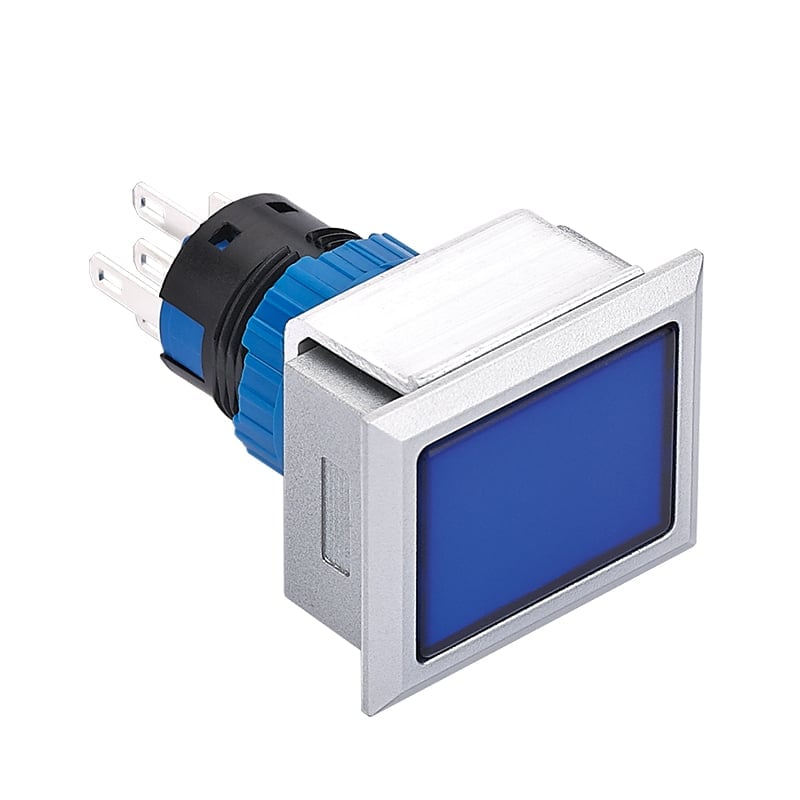
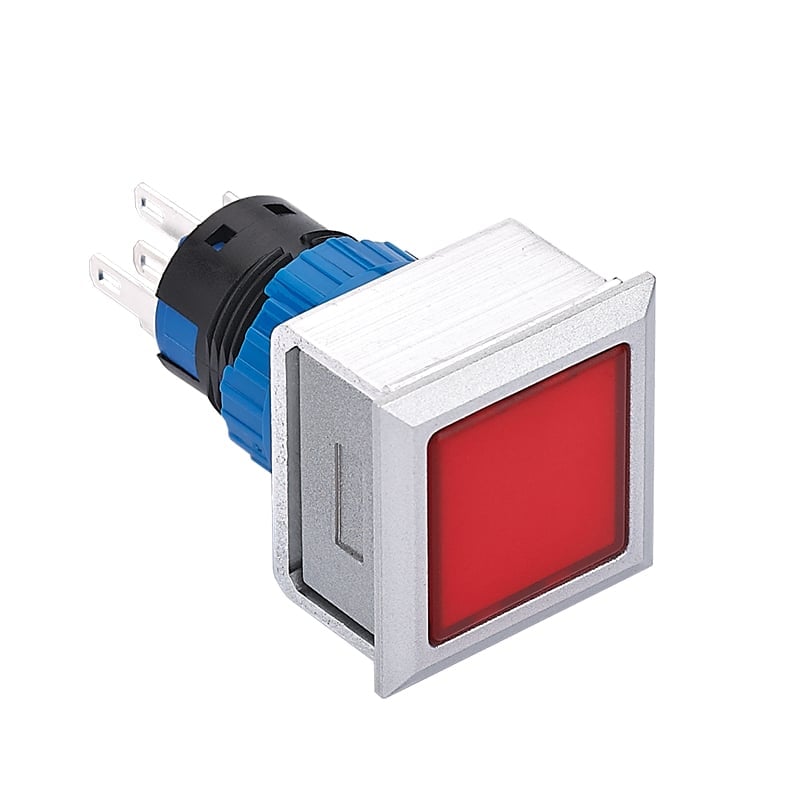
Keep the enquiry concise and component-specific. For ONPOW, provide the exact operator model and color configuration, then ask what supporting documentation is available for the named part. The photographs here show real product examples; they are not color measurement targets, calibrated reproductions or evidence of a certified color tolerance.
Finally, retain the approved sample identifiers, report revision, measured conditions and disposition with the order. If the specification changes, record what changed and which production orders it applies to. This makes a future difference easier to investigate without asking a new buyer to reconstruct the approval from email photographs.
الأسئلة الشائعة
Can a CIELAB lens report specify the color of a powered LED?
لا تفترض ذلك. مقارنة لون الجسم وقياس مصدر الضوء المزود بالطاقة لهما نطاقات مختلفة. حدد المحفز الفعلي واستخدم طريقة قياس مناسبة لمؤشر الإضاءة الكامل.
Is one Delta E limit suitable for every push button lens?
لا يوجد حد عالمي هنا. اتفق على الصيغة، والعينة، وظروف القياس، والمتطلبات البصرية، وقاعدة القرار للمشروع قبل استخدام نتيجة عددية لقبول أو رفض التسليم.
Can product photographs be used as a color master?
Ordinary product photographs are useful for identifying a configuration, but they are not calibrated color references. Use an approved physical master or a properly defined measurement specification for a controlled comparison.
What should accompany a color difference value?
Keep both specimen identities, reference revision, measured coordinates, illuminant, observer, measurement arrangement and exact formula. Preserve the acceptance rule and uncertainty information needed to interpret the comparison.
مزيد من المعلومات
NPTEL introduces the fundamentals of colorimetry. Use this as measurement background; a powered indicator assessment requires its own applicable method and is outside the object-color comparison in this article.