

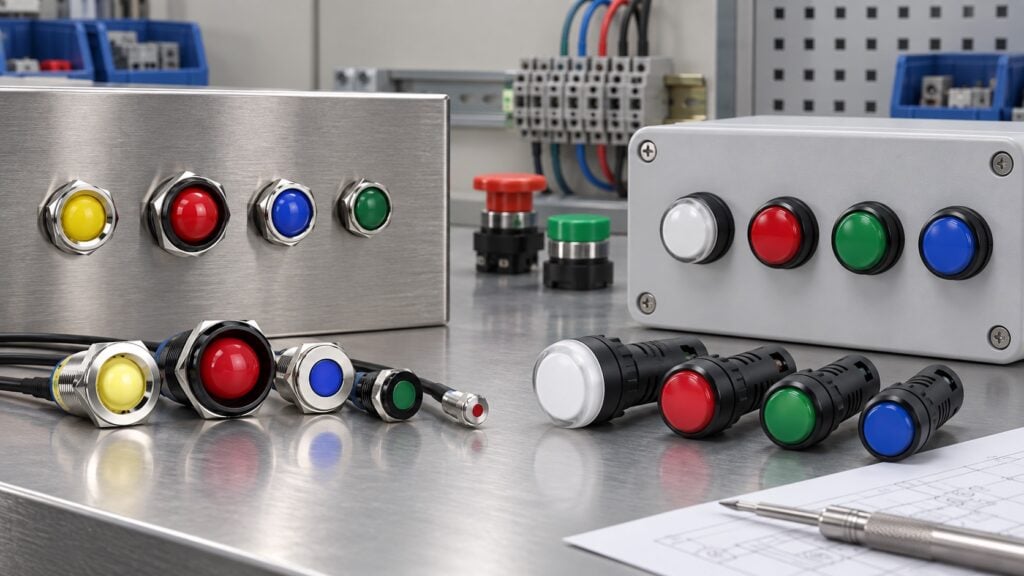
Choose a metal or plastic indicator light housing from the installation requirements, not appearance alone. Metal bezels can suit panels where a compact, rigid, wear-resistant front is important. Plastic bodies can reduce weight, provide electrical insulation at the housing, and support economical high-volume panel builds. Neither material is automatically more waterproof, safer, more chemical-resistant, or longer-lasting. The complete tested device—including lens, body, gasket, retaining nut, terminals, panel cutout, electrical rating, and installation—determines performance.
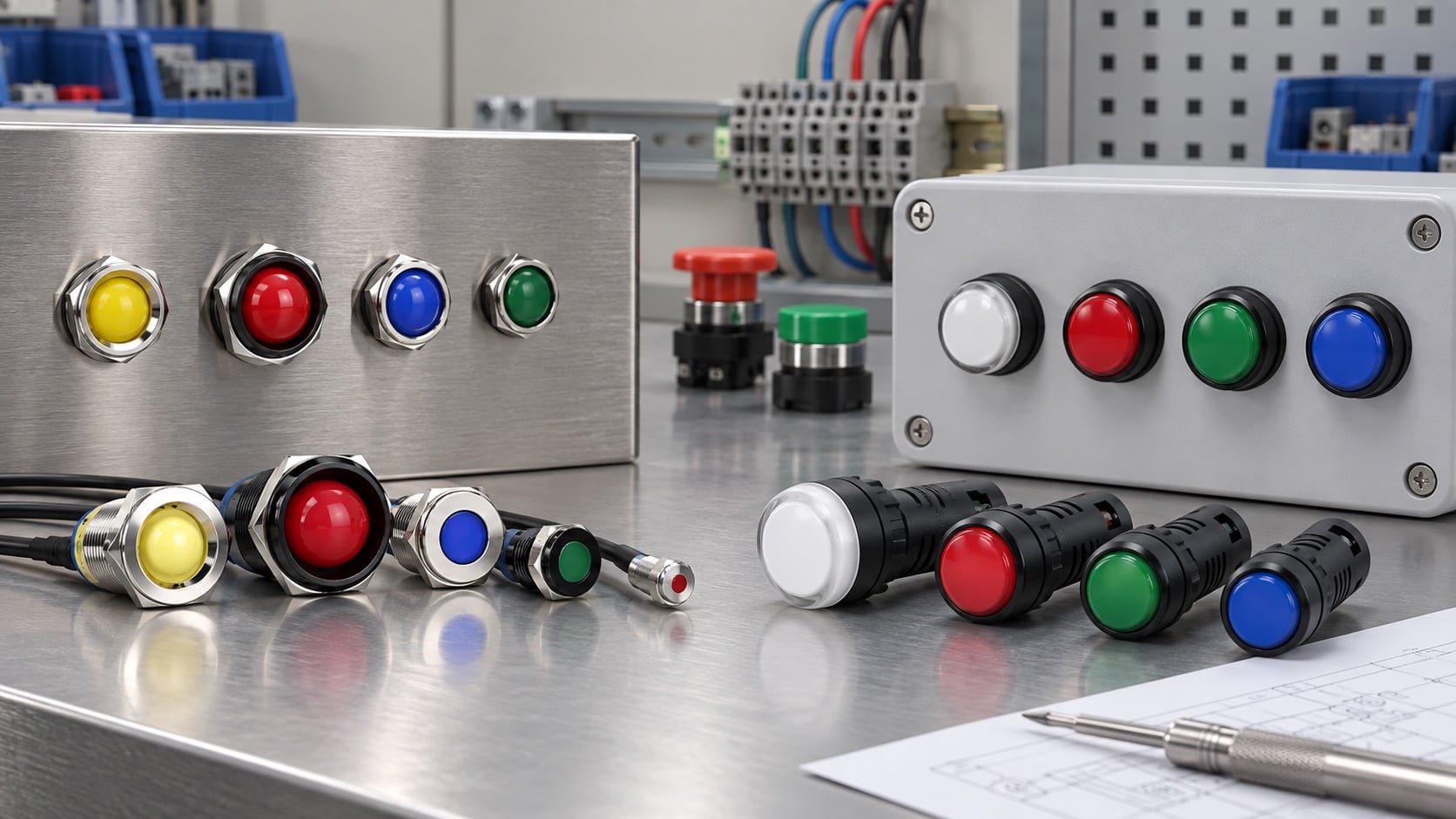
Metal vs plastic indicator lights at a glance
| Selection point | Metal-bezel indicator | Plastic-body indicator | Co ověřit |
|---|---|---|---|
| Front construction | Rigid metallic bezel with a machined appearance | Molded insulating body and bezel | Exact alloy or polymer grade, finish, and drawing |
| Impact and wear | Can resist everyday knocks and tool contact, depending on design | Can absorb light handling but may mark or crack under unsuitable loads | Product impact data and real panel exposure |
| Corrosion or chemicals | Depends on alloy, plating, finish, and contaminants | Depends on polymer compatibility, temperature, UV, and cleaners | Supplier compatibility data for the actual substance |
| Electrical behavior | Conductive housing may require attention to bonding and clearances | Housing is normally insulating, but terminals remain live | Applicable product and panel requirements |
| Weight and cost | Often heavier and may cost more | Often lighter and economical at scale | Complete installed cost, not unit price alone |
| Installation | Thin bezel can suit premium or compact interfaces | Molded body can offer easy handling and common panel formats | Cutout, panel thickness, torque, gasket, depth, and terminals |
Treat this as a screening table. A product drawing and current datasheet take priority over general material assumptions.
Start with the machine environment
Define the real exposure before choosing a housing. Record indoor or outdoor location, normal and maximum temperature, vibration, impact risk, dust, oils, coolant, cleaning chemicals, washdown practice, ultraviolet exposure, and expected service life. “Factory use” is not specific enough: a dry assembly bench, food-processing washdown area, machine-tool coolant zone, and coastal installation create different material demands.
Do not equate waterproof with outdoor use. Indoor equipment may need protection from washdown, condensation, dust, or coolant, while some outdoor equipment is sheltered. The IEC 60529 IP Code classifies enclosure protection against access, solid objects, and water; it does not say that every product with the same IP marking has identical resistance to impact, chemicals, corrosion, sunlight, or temperature.
When a metal indicator housing makes sense
A metal bezel is often selected for a rigid interface, frequent operator contact, visible equipment, or a panel where its finish matches other metal push buttons. It can provide a compact front profile and resist casual surface wear. This does not make every metal lamp “heavy duty.” Thin plating, unsuitable alloys, an incorrect gasket, or excessive mounting torque can still shorten service life.
Metal is electrically conductive. The panel designer must consider the complete device construction, insulation system, creepage and clearance, protective bonding rules, and fault behavior under the applicable standard. Never infer that a front bezel needs or does not need a separate bond without the manufacturer’s instructions and the panel design.
Corrosion resistance is also specific. Stainless steel grades, aluminum alloys, nickel-plated brass, chrome finishes, and painted metals behave differently around salt, acids, alkalis, cleaners, and dissimilar metals. Ask for the actual material and test evidence instead of ordering “stainless-looking” parts.
The ONPOW metal signal lamp range is a starting point for comparing metal-front product families. Confirm the exact series, cutout, lens, voltage, terminal, and environmental rating before adding a part to the bill of materials.
When a plastic indicator housing makes sense
Plastic indicator housings are useful where low weight, insulation, fast assembly, and cost control matter. Molded construction can support consistent shapes and common panel cutouts. A plastic device is not automatically fragile: performance depends on the polymer formulation, wall thickness, geometry, temperature, and installation.
Check chemical compatibility carefully. A housing that tolerates water may soften, craze, swell, or discolor when exposed to a particular solvent, oil, disinfectant, or cutting fluid. Ultraviolet exposure can affect some polymers, and high temperature can change stiffness or gasket compression. Obtain compatibility and aging information for the exact grade rather than relying on the generic word “plastic.”
The ONPOW plastic signal lamp range and AD16-22D product page show representative panel-mount forms. Product photographs establish appearance only; the order code and current documentation determine electrical and mechanical capability.
Compare installation, not just the front bezel
Two lamps with similar front diameters can differ in cutout tolerance, threaded length, panel-thickness range, rear depth, terminal orientation, gasket position, and required torque. These details affect assembly time and whether the panel door can close without stressing wires.
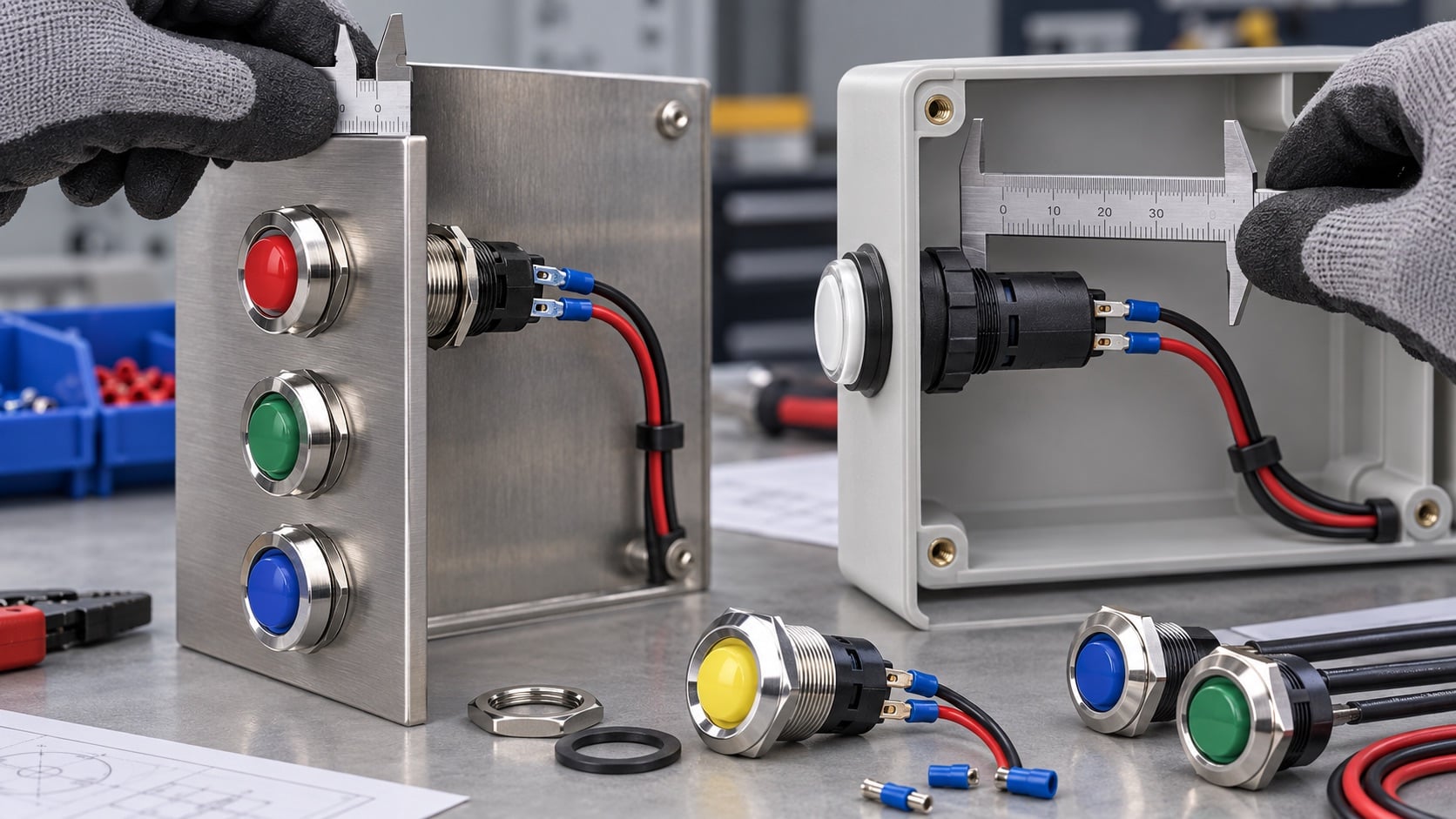
Before approving either material:
- Compare the dimensioned drawing with the panel cutout and thickness.
- Check rear clearance against door hardware, cable ducts, terminal blocks, and moving parts.
- Confirm the gasket belongs on the specified side and is not twisted or damaged.
- Use the manufacturer’s retaining-nut torque; excess torque can distort plastic and damage seals, while low torque can permit movement.
- Verify terminal type, conductor size, ferrule or connector, strip length, and strain relief.
- Inspect the finished assembly from both sides before electrical testing.
The control-panel layout guide helps coordinate indicators with push buttons, labels, clearances, and operator reach.
IP, NEMA, and the completed assembly
An enclosure or component rating applies to a defined construction and test. A rated indicator does not automatically give the complete control panel the same rating. Cutout quality, panel flatness, gasket, mounting torque, unused openings, cable entries, door seals, and other devices all affect the assembled result.
NEMA explains that a field-installed assembly’s overall enclosure rating is limited by its weakest component. The NEMA 250 scope also includes separate tests for water, corrosion, gaskets, and other conditions. Do not convert an IP code directly into a NEMA Type by matching numbers; the standards have different scopes and test details.
For North American projects, certification and component conditions of acceptability may matter. UL’s industrial control panel program overview identifies component usage and enclosure environmental ratings among the panel considerations. Ask the responsible panel shop or certification body how the selected indicator may be used.
Heat and electrical selection still come first
Housing material does not correct an electrical mismatch. Confirm rated voltage range, AC or DC operation, frequency, polarity, current, internal lamp technology, and ambient temperature. An incorrectly rated LED module can overheat or fail regardless of whether the bezel is metal or plastic.
Review nearby heat sources and ventilation. A lamp next to a transformer, drive, resistor, or sun-heated door may see a higher temperature than the room. Metal can conduct heat differently from plastic, but the manufacturer’s tested temperature limits—not intuition—should control the selection.
Maintenance and replacement
Maintenance staff need access to the retaining nut, terminals, and identification. A durable front device can still be difficult to service if rear clearance is poor or wiring blocks removal. Standardize approved spares by full part number, not color and diameter alone.
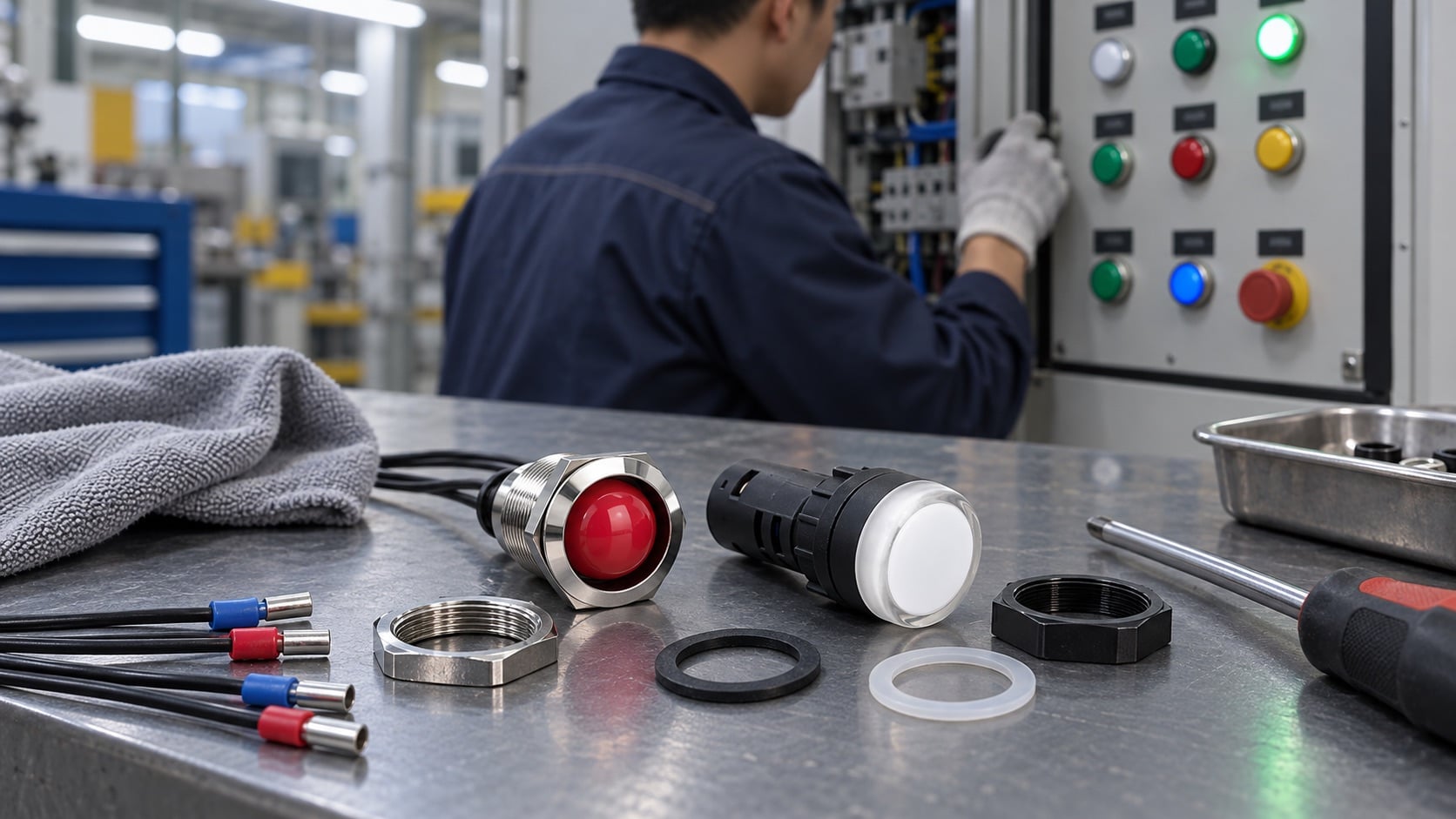
During inspection, look for a loose bezel, compressed or displaced gasket, corrosion, plating damage, plastic cracking or discoloration, loose terminals, heat marks, and cable strain. Isolate the circuit using the approved procedure before touching rear terminals. Replace the complete device when damage affects sealing, insulation, retention, or visibility; do not improvise with sealant or an unverified nut.
Common selection mistakes
Assuming metal always lasts longer
An unsuitable alloy or finish can corrode, while a compatible engineered polymer can perform well. Compare the actual environment and evidence.
Assuming plastic is automatically insulated and safe
The housing may be insulating, but terminals and conductors can still be live. Installation and electrical protection remain essential.
Selecting by IP rating alone
IP addresses defined ingress conditions. It does not replace checks for impact, chemicals, UV, corrosion, temperature, or the completed panel assembly.
Ignoring mounting torque
Overtightening can distort a plastic body or gasket; incorrect torque can also damage threads or allow either material to rotate.
Buying by photograph
Similar fronts can hide different voltage modules, terminals, dimensions, materials, and certifications. Verify the full order code.
RFQ checklist
Provide the supplier with:
- required bezel and body material, finish, and color;
- expected impact, vibration, temperature, UV, dust, water, oil, coolant, and chemical exposure;
- required IP or enclosure Type and the standard edition;
- panel material, cutout, thickness, gasket, torque, and rear-clearance limits;
- supply voltage, AC/DC, frequency, polarity, lens color, and brightness;
- terminals, wire size, connector, and service-access requirements;
- required certificates, drawings, samples, test reports, and spare quantities.
Použít ONPOW contact page to confirm the current variant and documentation before purchase.
Vzdělávací video
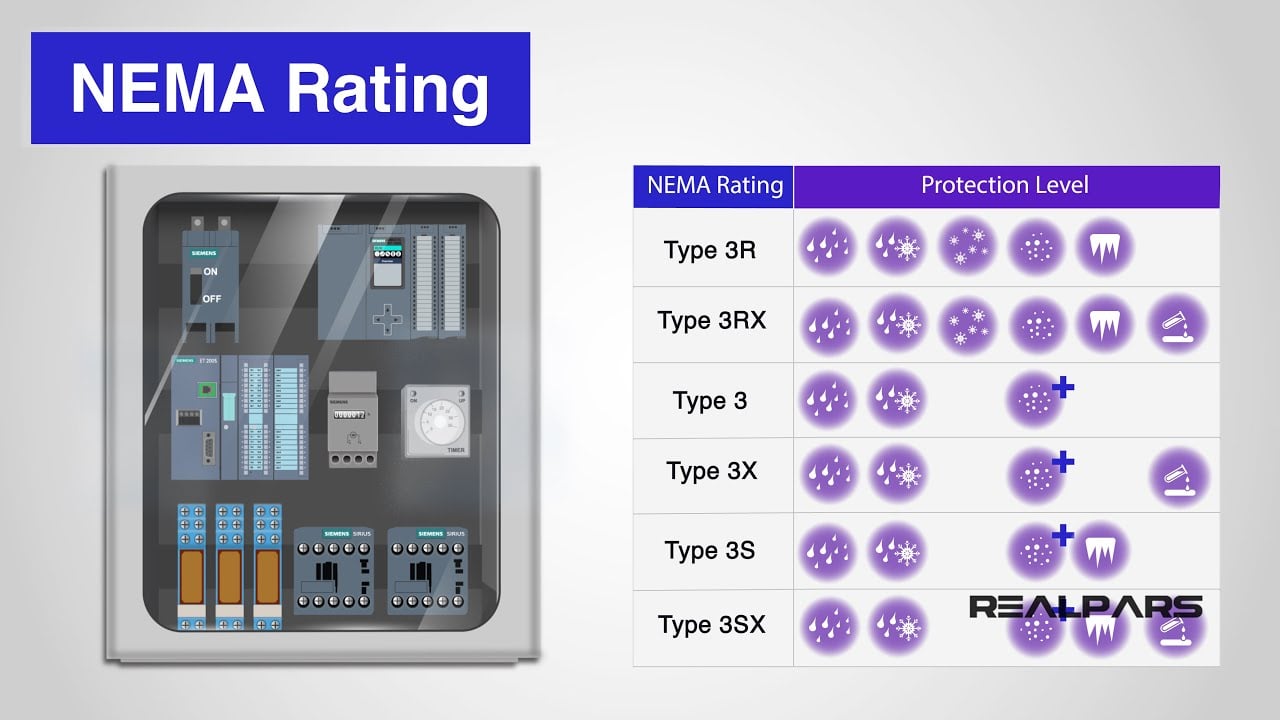
This neutral enclosure-rating overview explains why an environmental rating describes tested protection conditions. It is background only; it does not replace the selected indicator’s datasheet or the finished panel evaluation.
Často kladené otázky
Are metal indicator lights more waterproof than plastic ones?
Not automatically. Water protection depends on the complete tested construction, gasket, installation, and rating—not the bezel material alone.
Are plastic indicator lights suitable for industrial panels?
Yes, when the exact product meets the electrical, mechanical, temperature, chemical, and enclosure requirements of the application.
Does a metal bezel require grounding?
Follow the exact product instructions and applicable panel standard. Do not decide from appearance alone; construction and fault paths matter.
Can I replace a plastic indicator with a metal model using the same cutout?
Only after checking the full drawing, panel thickness, rear depth, gasket, torque, terminals, electrical rating, and certification conditions.
Final recommendation
Choose metal when its verified rigidity, finish, wear behavior, and material compatibility fit the machine. Choose plastic when its verified insulation, weight, assembly, and cost advantages fit better. In both cases, approve the exact model only after reviewing the environment, complete datasheet, installation drawing, electrical variant, enclosure requirements, and service access.
Sources for verification: IEC 60529; NEMA 250 scope; UL industrial control panels; ONPOW signal lamps.
Customization
ONPOW undertakes a variety of custom needs for push-button development. Confirm whether packaging, marking or documentation OEM/ODM applies to Metal vs Plastic Indicator Light Housings for Industrial Panels in the quotation.
Minimum order quantity, lead time and trade terms are not published here; confirm them with sales at sales@onpow.com.



