

A washdown piezo switch is worth considering when a control panel needs a smooth operator surface and a documented front-panel ingress protection specification. Selection still depends on the exact cleaning method, temperature, chemicals, mounting seal and protected rear connections. A catalog IP claim does not establish hygienic certification, resistance to every detergent, or suitability for outdoor weather. Start with the cleaning procedure and the complete installed assembly, then qualify a specific switch configuration. This guide gives equipment builders and purchasing teams a practical review process rather than promising that any sealed button will survive any washdown routine.
Describe the cleaning exposure before the product
“Washdown” can mean a damp wipe, directed spray, foam cleaning or another plant-specific procedure. Those conditions are not interchangeable. Obtain the actual cleaning instructions used at the installation, including the water or solution temperature, detergents, contact time, nozzle method and drying sequence. Identify whether cleaning occurs while the equipment is isolated and which components may remain energized under an approved procedure. Do not invent a safe condition from the word waterproof.
Map the exposure around the control panel. The operator face, bezel, panel joint and rear enclosure are separate locations. A front-facing operator may see routine cleaning while its rear leads should remain inside a protected cabinet. A door opened during cleaning changes the situation completely. Draw the installation boundary and mark where liquid can reach joints, cable entries or connectors, even when it cannot reach the button face directly.
El HSE food and drink safety guidance is useful context for identifying machinery and workplace hazards during cleaning. It does not certify a chosen switch for your cleaning method. Use the plant’s risk assessment, equipment instructions and competent engineering review to define the acceptable procedure.
Read the exact product claim and its scope
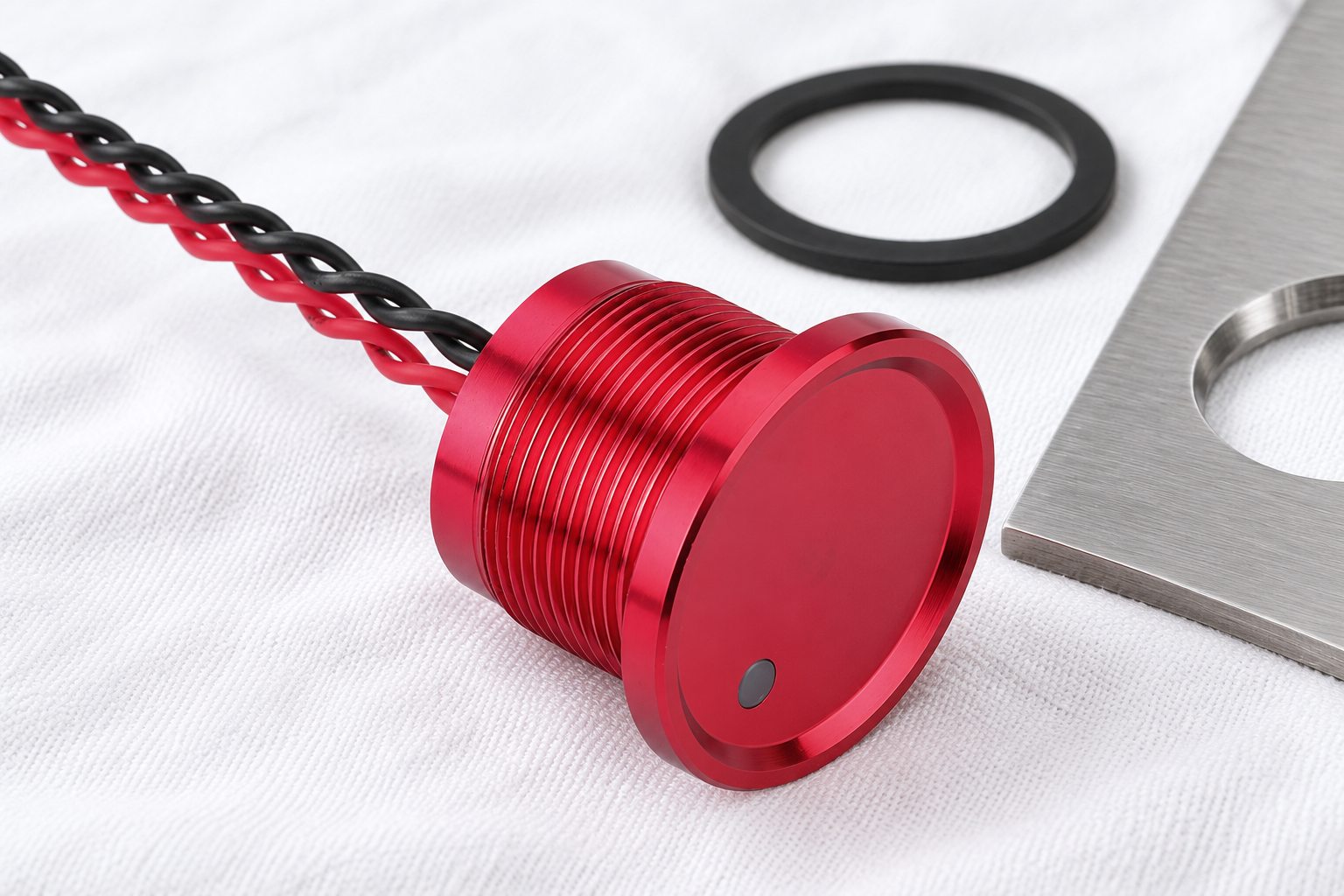
El ONPOW PS223Z10YRD1/D product page identifies an aluminium alloy button and body, an epoxy resin base and front-panel IP68/IP69K protection. It also lists an operating temperature range with a restriction on instantaneous temperature difference. Preserve that distinction: the published wording concerns the front panel, and a temperature statement is not a blanket approval for hot cleaning followed by cold rinsing.
Ask ONPOW to confirm the test basis and installation conditions for the exact ordered configuration. Obtain the mounting instructions, required seal arrangement and whether any published claim changes with illumination, cable or housing options. A product family page may summarize several choices; the approved drawing and written confirmation should identify which choices were supplied.
Do not silently translate one IP designation into another or infer cleaning chemistry from an ingress code. Water entry, material compatibility and hygienic design are different questions. Where the plant requires a named standard or documented test, request that evidence explicitly and have the result reviewed against the customer’s requirement.
Distinguish a smooth face from hygienic acceptance
A piezo operator can present a relatively smooth visible surface without the same travel as a conventional mechanical push button. That makes it a candidate for evaluating wipe access and residue removal. It does not remove all joints from the installed assembly. The surrounding bezel, fastening arrangement, panel finish and enclosure door still influence whether residues or moisture remain after the approved procedure.
Review the complete surface using a sample installed in a representative panel. Look for edges that are difficult to reach, recesses that collect residue and damaged finishes that cannot be maintained. Decide whether the switch is in a product-contact area, a splash zone or a separate control location. Those distinctions belong to the equipment’s hygienic design assessment, not to the switch’s marketing category.
El existing piezoelectric switch overview explains the sensing technology. In this article, the selection question is whether the installed operator and surrounding assembly suit the documented cleaning environment. Mechanical simplicity can be helpful, but it should remain an evaluation input rather than a declaration of sanitary compliance.
Use a cleaning qualification table
Record each condition before approving a sample. The table below is a purchasing and engineering checklist, not a schedule of universal cleaning limits. Put measured site requirements and supplier-confirmed limits into the corresponding project record.
| Review area | Site information to record | Supplier or assembly evidence | Approval question |
|---|---|---|---|
| Water exposure | Actual nozzle procedure and directions of exposure | Applicable front-panel test and mounting conditions | Does the documented claim cover the intended boundary? |
| Temperature changes | Cleaning, rinse and recovery temperatures | Exact device limits and thermal change restrictions | Does every stage remain within confirmed conditions? |
| Cleaning chemicals | Product name, concentration and contact time | Material compatibility confirmation | Are face, seal, body and cable materials covered? |
| Panel joint | Cutout, panel material and surface condition | Seal and mounting instructions | Can installation reproduce the specified arrangement? |
| Rear connections | Enclosure boundary and cable entry routes | Cabinet and connector protection design | Can liquid reach an unprotected connection? |
| Operating response | Press, release and power recovery sequence | Output behavior and controller interface review | Are commands reliable after cleaning and drying? |
Keep unanswered items visible. A switch that passes a water-entry test still needs the separate chemical and interface questions resolved. Likewise, a compatible material list does not validate a poorly installed panel joint.
Review materials and cleaning chemistry together
Ask the cleaning team for the actual product safety and use instructions. A broad term such as “food-safe detergent” does not specify concentration, dwell time or compatibility with an aluminium finish, an adhesive or a cable jacket. Share the procedure with the supplier and request a written answer for the exposed materials. Do not replace a documented compatibility question with a visual impression that metal looks durable.
Inspect the sample before exposure and keep clear photographs of the face, edge, seal and cable exit. After the approved evaluation, inspect for changes such as discoloration, lifting finish, deposits, swelling or cracking. An absence of visible change is useful evidence, but it does not prove every electrical or sealing property remains unchanged. Define functional and inspection checks alongside the visual assessment.
Choose acceptance criteria before testing. For example, decide which finish changes are unacceptable for the installation and what evidence is needed to verify electrical behavior. Without written criteria, two teams can observe the same sample and reach different conclusions. Keep the test procedure and decision linked to the exact part configuration rather than applying it automatically to every switch in the family.
Install the panel seal without assumptions
Obtain the approved cutout, panel thickness range, fastening method and seal placement instructions. Inspect the panel surface for burrs, distortion or coating defects that interfere with the mounting joint. Do not invent a tightening torque or add an unapproved sealant because the joint appears incomplete. Both under-tightening and excessive force can create problems that the catalog rating does not address.
Route the rear leads within the intended protected boundary and provide appropriate mechanical support. A loose cable pulling on the rear assembly during door movement can create a different failure mechanism from water applied to the front face. Check the enclosure’s doors and cable entries as part of the installed assembly. A switch alone cannot supply protection that the surrounding cabinet lacks.
Record who installed the sample and which drawing revision they followed. If production panel material or thickness later changes, review whether the qualified mounting arrangement still applies. Installation control is particularly important when several contractors or panel shops build nominally identical equipment.
Check operation before and after cleaning
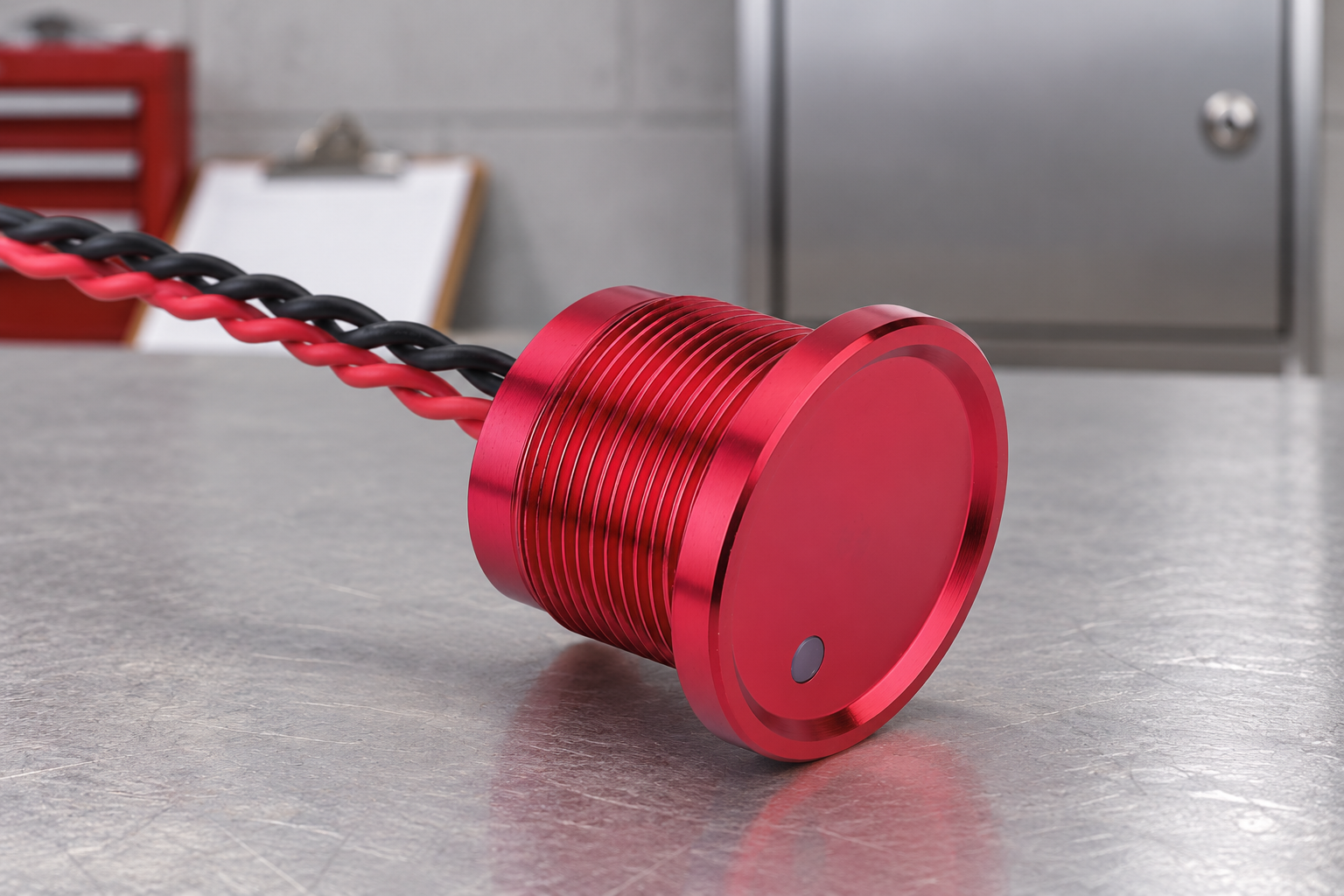
A piezo sensing element responds to mechanical stress; the assembled switch’s electronics determine its usable output. The UCSC physics demonstration provides background on that physical effect. It does not prove immunity to impacts, cleaning vibration or other disturbances at your installation. Evaluate the actual assembled operator with the intended controller and mounting arrangement.
Before exposure, record idle state, deliberate activation and indication behavior. After the prescribed cleaning and drying process, repeat the same checks under the approved test conditions. Investigate missed or unexpected commands by distinguishing the switch output from the controller response. Do not solve a problem by disabling necessary controller filtering without reviewing the consequences.
If a pulse output is involved, use the momentary piezo switch guide to clarify the operating-mode question, then obtain the exact output requirements. For cleaning-related applications, keep a clear distinction between ordinary operator commands and safety functions. A sealed piezo button does not automatically qualify as an emergency stop, interlock or safety-rated enabling device.
Make maintenance part of the selection
The cleaning process and maintenance plan should agree. Provide instructions for inspecting the operator, panel joint, enclosure seals and cable routes. Identify what damage requires replacement and which service actions are authorized. Avoid a fixed replacement interval without a manufacturer or application basis; use the approved maintenance plan and observed conditions.
El HSE maintenance guidance emphasizes planned maintenance and safe working arrangements. Follow the equipment’s isolation procedure before opening enclosures or replacing controls. After replacement, verify the correct part and mounting arrangement and perform the specified functional checks rather than assuming a similar-looking button is equivalent.
Track recurring findings. A residue problem around several operators may indicate a panel or cleaning-method issue, while an intermittent command may belong to the electrical interface. Recording the failure location and conditions helps the equipment team fix the cause and avoids repeatedly replacing a sound component.
Send a complete washdown inquiry
Prepare a short specification containing the cleaning procedure, exposed materials, panel drawing, rear enclosure design, required operating mode and indication requirements. Include the expected environment during normal use as well as cleaning. If the equipment is outdoors, add separate weather, sunlight, freezing and corrosion questions; front-panel water protection alone does not answer them.
Ask for the exact product drawing, mounting instructions and written confirmation of relevant protection and material limits. Request a representative sample and agree on the qualification evidence before volume ordering. Contact ONPOW with those conditions so the proposed configuration can be assessed against the installation, rather than asking only for the highest IP number.
Educational background

This Oficiencia demonstration explains the piezoelectric effect with support from the University of São Paulo physics group. Its Portuguese presentation is optional background on sensing physics. It neither demonstrates a washdown test nor certifies the product shown in this article.
Preguntas frecuentes
Does an IP68 or IP69K claim approve every cleaning procedure?
No. Confirm the test basis, installation conditions and protected boundary for the exact configuration. Temperature changes and chemical compatibility need their own review.
Is a smooth piezo button automatically hygienically certified?
No. Surface accessibility is one design consideration. Hygienic acceptance concerns the complete assembly, its location and the customer’s documented requirements.
Can front-panel protection be applied to exposed rear terminals?
Not without explicit evidence. Keep the rear connections inside the intended protected enclosure and assess cable entries, doors and maintenance conditions separately.
What should I inspect after a cleaning evaluation?
Compare the face, finish, joint and cable exit with their initial condition, then repeat the approved operating and electrical checks. Predetermine acceptance criteria for the exact sample.
Does waterproof mean suitable for outdoor machinery?
No. Outdoor service adds weather, sunlight, corrosion, freezing and temperature cycling questions. Qualify those conditions separately from the cleaning procedure.



