Push button repairability depends on the approved service boundary, available replacement parts and evidence that the equipment can return to its intended condition after the work. A removable component is not automatically repairable, and an available complete switch does not prove that its internal contacts or illumination module can be serviced separately. Buyers should request a defined replacement unit, matching configuration information and the manufacturer’s instructions before making a repairability claim. This guide focuses on the procurement evidence needed to support maintenance. It does not provide instructions for opening sealed switches or modifying safety circuits.
Start with the service boundary
Ask what the manufacturer permits a competent technician to replace. Possible boundaries include the complete installed switch, a separately supplied operator or an approved accessory. These possibilities must come from the documentation for the exact product. Do not assume that a product with a similar front appearance uses the same internal assembly or service method.
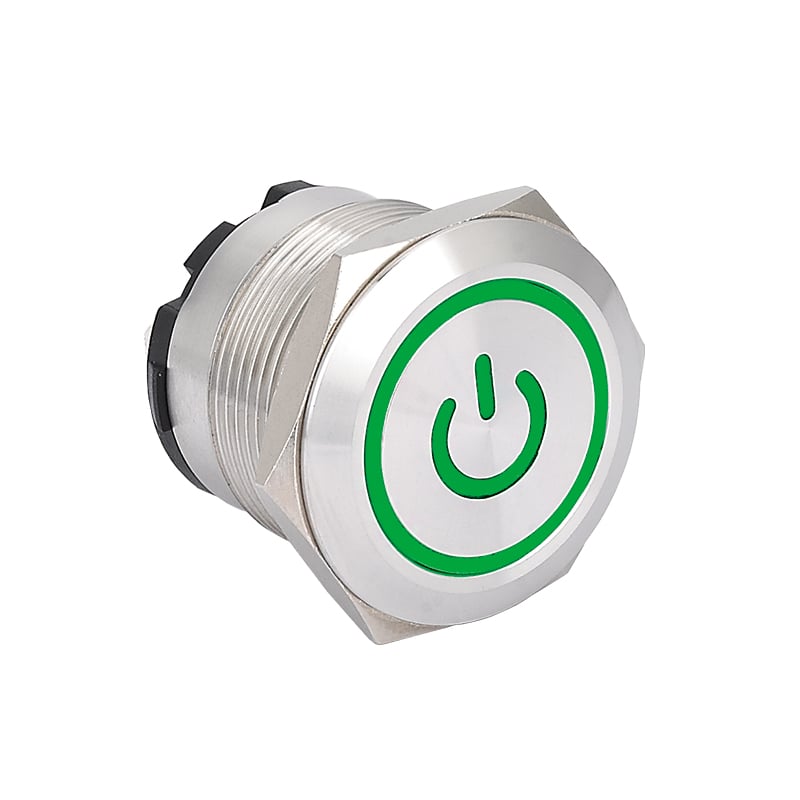
A product photograph can show the physical form that purchasing needs to identify. For example, the ONPOW6222 product example provides a reference for an inquiry. It does not establish that the displayed construction has user-serviceable internal parts, or that components from other versions can be mixed with it.
Write the permitted service boundary in the maintenance purchasing specification. If the supplier only supports complete-unit replacement, record that clearly. A complete-unit service policy may still provide an effective way to maintain equipment, but it should not be described as internal component repair.
Define the intended function before requesting a substitute
A replacement request should describe what the existing component does in the equipment. Include the equipment asset and drawing references so the supplier understands whether the inquiry concerns an ordinary command, an indication function or a safety-related application. The equipment designer or responsible engineer must decide the necessary performance and validation requirements.
Capture the full existing part designation, including suffixes, available markings and the original purchasing record. Record the actuator form, mounting arrangement, terminal arrangement, action and circuit configuration from verified documentation. Electrical ratings and illumination details also require confirmation for the ordered version. A catalog family name alone is insufficient for approving interchangeability.
Keep the required function separate from what is currently in stock. If the original designation cannot be identified, state the uncertainty and ask for an engineering review. Do not let a purchasing description silently become a specification simply because it is the only description available.
Request evidence at the level being claimed
The following table is a buyer’s review framework. It does not assert that a particular ONPOW model supports every service action. Use it to distinguish what can be ordered from what can be demonstrated, and to identify the document needed before approving a maintenance plan.
| Proposed statement | Evidencias que se deben solicitar | Boundary to record |
|---|---|---|
| The complete switch can be replaced | Exact replacement designation and installation instructions | Whole-unit replacement only |
| A subassembly can be replaced | Manufacturer-approved part and applicable procedure | Named models and revisions |
| An alternative is interchangeable | Documented comparison and equipment approval | Assessed function and installation |
| Spare supply is supported | Written availability terms and change notification process | Product versions, market and time period |
| Equipment function can be restored | Defined post-work checks and release responsibility | Equipment-level verification |
| Repair reduces environmental impact | Comparative evidence with a defined boundary | Do not infer benefit from replacement alone |
A spare-part list answers an availability question. It does not, on its own, demonstrate compatibility or safe installation. Similarly, a service drawing may describe how an assembly is built without authorizing the customer to dismantle it. Ask the manufacturer to explain which document controls the work.
Examine access and installation constraints
The ability to reach the component can matter as much as the availability of the component itself. A switch installed behind a densely wired panel may require more equipment access than the purchasing team expects. Review the equipment drawings and approved maintenance method before promising a short service interval or a simple replacement.
Ask the maintenance planner to identify relevant access restrictions, connector or terminal arrangements and the risk of disturbing adjacent components. The purpose is to prepare a realistic work scope, not to devise an improvised removal technique. Required tools and installation settings must come from the product and equipment instructions.
Consider which identifying information will remain readable after installation. Keep the full ordered configuration in the equipment file so that a future technician does not have to rely on the front color or head shape. A photograph taken during approved maintenance can supplement the record, but it should not replace the drawing or part specification.
Keep repairability and electrical safety decisions connected
HSE’s guidance on electrical equipment work stresses planning, competence and preserving correct equipment operation after repairs. Secure isolation and control of energy belong in the equipment-specific work procedure. Pressing a stop button is not a substitute for an appropriate isolation arrangement.
HSE also discusses planning and competence in its maintenance of work equipment guidance. Use those principles to assign responsibility and prepare the job. The presence of a replacement part does not remove the need for a competent assessment of the work or the hazards involved.
Safety-related controls require particular care. A similar-looking part or a successful basic continuity check does not prove that the equipment’s protective function has been preserved. Refer the decision to the responsible equipment specialist, who can define the applicable instructions, acceptance criteria and checks. Avoid assigning a universal repair test from a generic article.
Assess the evidence behind an alternative part
An alternative should be compared against the complete equipment requirement, not against a few visible attributes. Matching the mounting diameter may be necessary, but it does not establish matching action, circuit behavior, terminals, sealing arrangement or suitability for the connected load. The comparison should identify both confirmed matches and unresolved differences.
Request the current manufacturer documentation for the proposed alternative and preserve the revision used for approval. If the replacement changes the configuration, the equipment documentation may also need revision. Record who approved the change and which equipment versions it covers so that a one-time engineering decision does not become an uncontrolled general substitution.
An illustrative review might find that two switches fit the same opening while having different terminal arrangements. Purchasing should not call them direct replacements until the equipment specialist has assessed the installation and function. The appropriate outcome may be approval with a revised procedure, a request for another variant or rejection of the substitution.
Make supplier support specific
Ask whether the replacement is a standard current item, a special order or an available remaining stock item. Confirm minimum ordering conditions, configuration details and how product changes are communicated. Treat delivery estimates as dated commercial information rather than a permanent maintenance guarantee.
If the supplier offers a support commitment, ask what it actually covers. Continued supply of a complete switch, repair at a service center and availability of individual accessories are different services. Record the applicable versions, contact route and any limitations in the order documentation. A vague promise that parts are available leaves the maintenance team with too many unresolved questions.
El spare switch storage guide addresses how retained spares are managed before installation. That is complementary to repairability evidence: a well-stored spare still needs to be the correct approved version, while a correct spare can lose usefulness if its identification and condition records are not preserved.
Define the return-to-service record
Before work begins, identify who will verify the completed installation and release the equipment. The acceptance record should reference the replaced component, approved part, work instruction and relevant inspection or functional checks. The responsible specialist should specify the actual checks appropriate to the equipment and application.
Keep the old and new part identities distinguishable. If a component is returned for diagnosis, connect the return authorization to the equipment work order. An unexamined returned part should not enter the approved spare stock simply because it is physically intact. Record the supplier’s diagnosis and the disposition decision when they become available.
Where the work changes equipment documentation, close those changes with the maintenance job. Future technicians need the configuration that is actually installed. A completed replacement without an updated component reference can create the same identification problem at the next failure.
Avoid unsupported environmental conclusions
Supporting repair can help an organization consider longer equipment use, but a specific environmental benefit needs evidence. Replacing a switch, retaining an old component and extending a machine’s operation are different events. Do not turn any one of them into a quantified carbon saving without a defined comparison and reliable data.
The EPA’s descripción general de la gestión responsable de productos electrónicos de la EPA places reuse and repair within a wider life-cycle discussion. That context supports considering service options. It does not establish the environmental result of a particular switch replacement or prove that every removed part is suitable for reuse.
For the separate product-level environmental comparison, review life-cycle assessment functional units. An operating-life assumption should be explicit in a comparison. It should not be presented as demonstrated field life merely because a replacement part can be purchased.
Send a complete replacement inquiry
Provide the supplier with the known model, equipment reference, clear photographs, required function and relevant verified configuration details. State whether you need a complete replacement or evidence of an approved serviceable subassembly. Ask for current drawings, instructions and any written compatibility limitations.
Utiliza el technical evidence review when evaluating the scope and reliability of supplier documents. Technical evidence needs equipment-level assessment alongside the replacement inquiry. The supplier can identify its component, while the responsible equipment specialist determines how it fits the completed assembly.
The resulting file should let maintenance answer three concrete questions: what is approved for replacement, what can be obtained and how the equipment will be checked afterward. Where one answer is missing, describe the missing evidence instead of using an unqualified repairable label.
Preguntas frecuentes
Does a replaceable switch count as internally repairable?
No. La sustitución de la unidad completa y la reparación interna son límites de servicio diferentes. Utilice la terminología admitida por el fabricante e identifique cualquier subconjunto aprobado por separado antes de describir los componentes internos como elementos reparables.
Can a matching mounting size prove interchangeability?
No. Mounting is only one requirement. The responsible equipment specialist must also assess function, configuration, electrical suitability, installation and any protective requirements before approving an alternative.
What should the supplier confirm about spare availability?
Request the exact supported designation, ordering conditions, current supply status and change-notification route. Any longer support commitment should state the covered versions and service rather than relying on a general availability promise.
Who should approve the equipment after replacement?
The equipment owner should assign a competent responsible person and define appropriate acceptance checks for the application. A supplier’s component quotation does not replace equipment-level verification and release.
Información adicional
SAFE Work Manitoba presents lockout procedures in a film created by WorkSafeBC and adapted with permission. It supports the safety context for maintenance; it is not an instruction for opening or repairing a specific push button. Follow the equipment-specific procedure and competent supervision.