A push button POPs material statement should identify the covered product, the substance scope and the basis of the supplier’s answer. POPs means persistent organic pollutants; a useful purchasing review connects the requested statement to the applicable requirements and the exact ordered switch. Do not treat a general environmental policy, another manufacturer’s declaration or a product photograph as proof about an ONPOW configuration. This guide provides a practical document checklist for industrial control buyers, including how to distinguish product information from waste-management questions and how to record gaps without inventing a compliance conclusion.
Understand why the statement was requested
A purchasing team may receive a POPs questionnaire from an equipment manufacturer, a distributor or a customer with its own restricted-substance specification. Start by asking which requirement the form is intended to address. Capture the destination market, the named document or legislation, the revision and the requested product coverage. A question about a supplied component needs a different evidence boundary from a question about discarded equipment.
Le EU summary of the POPs framework is an official starting point for understanding the legislation. It does not declare an individual switch compliant. For an order decision, the responsible reviewer must check the applicable current text and the circumstances of the supply. Avoid transferring a number or an exemption from an unrelated substance or application into the customer’s form.
Identify the complete purchased item
Record the full product reference and the options included in the order. Clarify whether the request covers the switch alone, separately supplied accessories, packaging or a larger assembled panel. A statement about a component family may be helpful, but the supplier should explain which ordered references are included. The identity mapping matters even when two switches look similar in catalogue photographs.
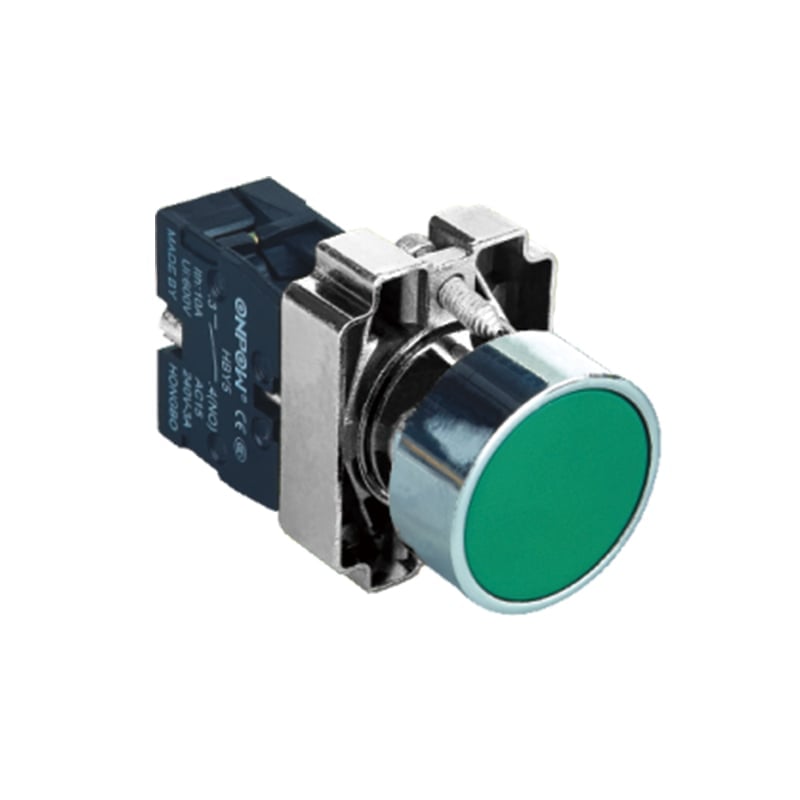
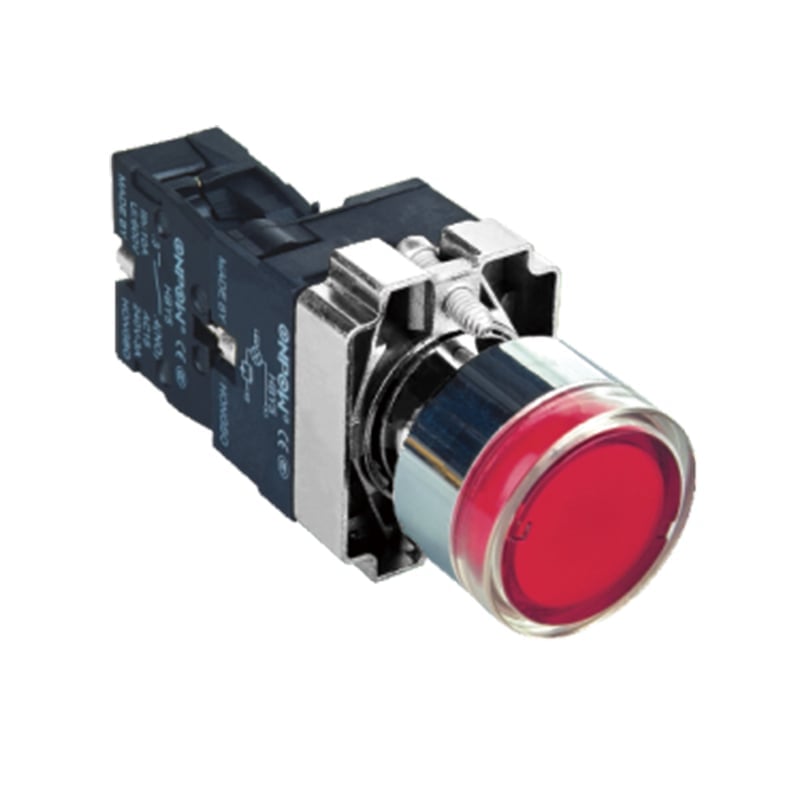
Use the relevant ONPOW product reference and the exact product page to establish the item being discussed. Photographs in this article are identification examples. They do not establish polymer formulation, additives, chemical concentrations or laboratory results. The product’s appearance cannot determine whether a particular substance assessment has been performed, and an environmental statement cannot replace the product’s electrical documentation.
Review the statement as an evidence package
The table below is a proposed purchasing checklist, not a table of legal limits. It helps the reviewer establish whether the supplier’s answer is connected to the actual request. Resolve missing coverage before using the file as part of an equipment documentation package.
| Champ de preuve | Useful information | Warning sign | Follow-up request |
|---|---|---|---|
| Issuer | Responsible legal entity and contact | A logo without an identifiable issuer | Ask who owns and can clarify the declaration |
| Couverture du produit | Exact references or a controlled family list | A generic statement with no coverage explanation | Request written mapping to the ordered item |
| Substance basis | Named requirement and revision or assessment date | POPs used as an undefined blanket label | Ask which scope was assessed |
| Evidence route | Upstream records, material assessment or identified testing | A conclusion without a stated basis | Ask for the method and qualifications |
| Gestion des modifications | Update contact and relevant revision history | New files overwrite old evidence without explanation | Save versions and confirm changed coverage |
| Unresolved matters | Explicit exclusions and unknowns | Empty cells interpreted as absence | Request a clear answer or record the gap |
The most useful review note explains why the evidence answers the request. A checked box without that reasoning makes later changes harder to assess. Preserve the supplier’s qualifications and avoid rewriting a limited statement into an absolute claim.
Separate product restrictions from waste questions
Le European Commission page on waste containing POPs discusses the management of waste containing these substances. It provides a separate context from deciding what a supplier has declared about a newly purchased component. A waste-management threshold or treatment discussion must not be copied into a product declaration as though it were a general acceptance rule for every new switch.
Ask whether the review concerns placing a product on the market, using an article, handling stock or managing waste. Assign end-of-life questions to the responsible environmental or waste specialist with the relevant equipment history. A switch buyer usually cannot settle the classification of discarded equipment from a new-product catalogue. Keeping these questions separate improves the quality of both reviews and avoids an apparently complete file that answers the wrong question.
Check material information without guessing formulation
A product may contain several distinct materials, but their appearance does not disclose the supplier’s full formulation or assessment boundary. Ask the supplier how its statement covers the purchased configuration and any included accessories. If the response refers to a material grade, determine how that grade is connected to the actual part and which upstream evidence supports the statement.
An analytical report should identify the specimen, method, analyte scope and reporting qualifications. Testing one selected material does not automatically assess every component of a finished switch. A material report also does not demonstrate the composition of a later production change. Do not commission a generic test solely because a questionnaire is incomplete; first determine what information is missing and whether the proposed method can answer that question.
Keep POPs, REACH and RoHS reviews distinct
Customers often request several environmental documents in one message. That does not make the documents interchangeable. Use the révision de déclaration de matériau REACH to organise the separate REACH question and the RoHS scope guide for the corresponding electrical-equipment substance review. Each response needs its own coverage and requirement check.
When a supplier combines several topics in one letter, identify the paragraph answering each customer question. If a section covers only a named regulation or list, preserve that scope. Do not infer an unmentioned POPs assessment from a RoHS heading. Likewise, the presence of a POPs statement does not establish electrical conformity, fire performance or any product certification. The review concerns the specific chemical-information question presented by the customer.
Work through a realistic document mismatch
Consider a hypothetical order for an illuminated operator with separately purchased accessories. The supplier provides a family statement for the operator, but the buyer’s form refers to all supplied items. The first action is to list the accessories and ask whether they are included. It is premature to conclude that the delivery fails the requirement, and equally premature to treat the operator statement as covering everything.
A second mismatch might involve an older statement and a newly revised customer specification. Compare the scope of the two documents, rather than assume that an older date alone makes the evidence invalid. Ask whether the supplier has reviewed the relevant changes and can confirm applicability. Record the response and the review date. These examples illustrate a purchasing process; they do not describe a chemical finding or a supplier declaration issued for ONPOW.
Evaluate laboratory and supply-chain evidence separately
Supplier knowledge and laboratory results can support different parts of an assessment. Upstream declarations may explain material sourcing, while a report describes measurements on identified specimens. Neither should be stretched beyond its stated scope. When the customer requires additional analytical evidence, involve a laboratory or specialist capable of explaining specimen preparation and the limitations of the requested method.
Le guide de portée de l'accréditation du laboratoire provides questions for checking an issuing laboratory and method coverage. It does not guarantee that a particular report answers a POPs questionnaire. Ask how the measured specimen relates to the ordered reference, what substances were considered and what the result actually means. Save the report with the supplier explanation instead of separating the measurement from its product mapping.
Record a decision that another buyer can understand
The controlled file should include the original request, the ordered reference, the supplier statement, supporting correspondence and the acceptance decision made by the authorised reviewer. Distinguish accepted evidence, information still requested and matters excluded from the review. If the customer’s approval is conditional, record the condition and the owner responsible for closing it. Avoid a single green status that conceals unanswered questions.
Define when the record must be reopened. Relevant events can include a changed configuration, a supplier material notification, a revised customer requirement or newly received evidence. Keep earlier versions attached to the orders they supported. A later declaration should not silently replace the evidence behind an earlier delivery. This preserves the reasoning needed when an equipment builder asks why a specific document was considered applicable at the time.
Prepare a concise supplier inquiry
Provide the exact switch reference, options and list of additional supplied items. Attach the customer’s wording and identify the required market and document revision. Ask for product coverage, the assessment basis, issue date and any qualifications or exclusions. Make clear whether the inquiry includes packaging. These details give the supplier a manageable question rather than an invitation to send an unrelated collection of certificates.
For identification and available documentation, Contacter ONPOW with the controlled reference list. Keep performance questions in a separate section of the inquiry so that chemical evidence is not mistaken for engineering approval. A useful outcome is a traceable answer that addresses the requested scope, together with an honest record of any remaining uncertainty. No photograph or generic policy can supply a missing product-specific assessment.
Foire aux questions
Une déclaration POPs prouve-t-elle qu'un interrupteur ONPOW a été testé chimiquement ?
No. A statement may rely on supplier information or another stated assessment. Check its evidence basis. Only an identified analytical report can describe the testing actually performed on its specified specimens.
Une déclaration RoHS peut-elle répondre automatiquement à une demande de POPs ?
No. Compare the actual requirement, substances and product coverage. A document covering one regulatory topic should not be assumed to answer another merely because both concern materials.
Should waste thresholds be used as universal new-product limits?
No. Product and waste requirements address different situations. Ask the responsible reviewer to identify the applicable requirement rather than transfer a threshold from a waste-management discussion into a component purchase.
What should a buyer do when product coverage is unclear?
Request a written mapping between the statement and the exact ordered references, including accessories if relevant. Preserve unresolved coverage as a gap until the responsible reviewer has sufficient evidence to decide.
Pour approfondir vos connaissances
The Basel, Rotterdam and Stockholm Conventions Secretariat explains national reporting and unintentional POPs. This institutional background is not a component declaration, a product test or an ONPOW compliance finding.