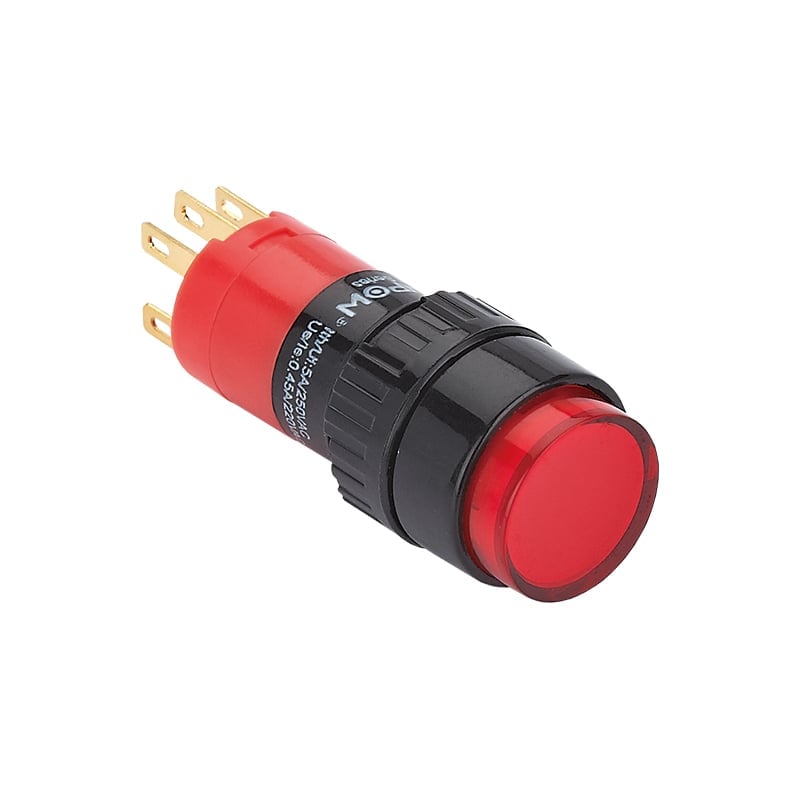
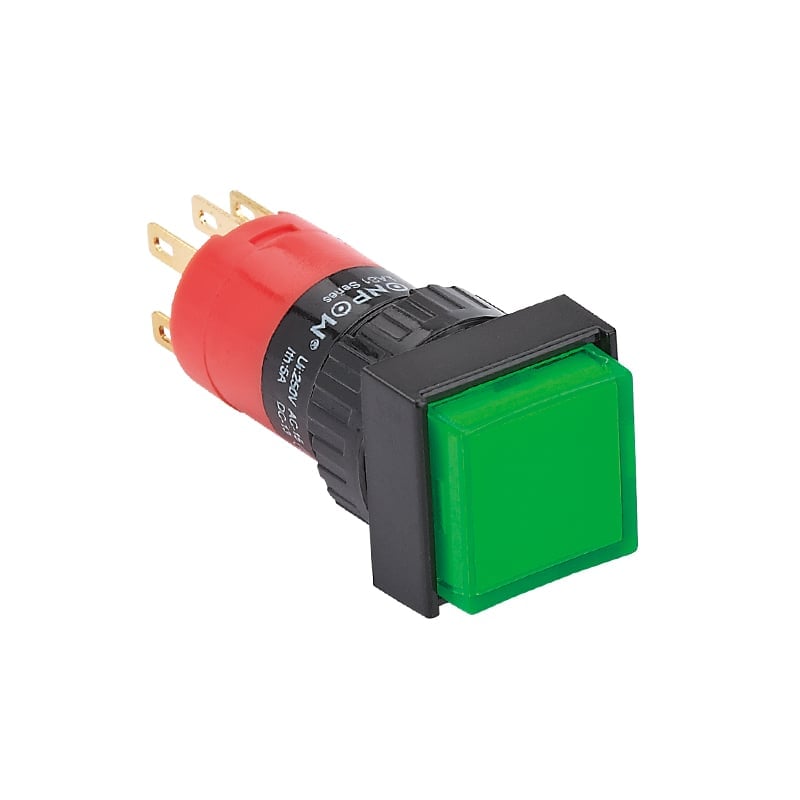
A push button plastic Charpy impact report supports a comparison of defined material specimens under a stated impact method. It does not establish an IK rating for a finished button, an enclosure impact approval or a guarantee against damage in service. Begin with the specimen and notch description, then review configuration, conditioning and material traceability. Only compare results on a compatible basis. This guide helps buyers and quality teams check the evidence behind a plastic material claim while keeping finished product requirements separate. The ONPOW photographs identify product examples; they are not pictures of a Charpy test or proof of any impact result.
What Charpy evidence can answer
Charpy evidence concerns the behavior of a specimen in a defined impact arrangement. The UL Solutions mechanical testing overview identifies Charpy methods among the available plastic mechanical tests and distinguishes material evidence from finished product evaluation. This is a useful starting distinction when a supplier sends a report in response to a broad request for a “strong button.”
Il BSI listing for non-instrumented Charpy testing identifies the method family. The applicable standard and edition should appear in the actual report. A recognized reference helps identify the investigation, but does not remove the need to read what was tested and under which conditions. Obtain the full procedure through a qualified laboratory when planning testing.
Write the procurement question in a limited form. For example, you may need comparable evidence for the proposed plastic grades in two operator configurations. That request differs from requiring a finished operator to survive an application specific impact. If the latter is the requirement, ask the responsible engineer to identify appropriate product evidence rather than substituting a convenient specimen result.
Read the notch and specimen description first
A report should make clear whether the specimen was notched and identify the relevant specimen and test configuration. Keep that identification beside the result in your comparison file. Do not remove it when creating a summary for management. A result separated from its configuration can look simple while becoming misleading.
If one supplier provides a notched result and another provides an unnotched result, do not rank their materials using those figures alone. Ask for matching evidence or a qualified explanation of what comparison is possible. Neither supplier has necessarily provided an invalid report; the mismatch may simply mean that the documents do not answer the same purchasing question.
Ask how the specimens were prepared and how they relate to the supplied material. A molded test bar and a piece taken from another object have different documented histories. The laboratory should identify the preparation route and any relevant orientation. Buyers should preserve those fields rather than infer them from a product photograph or the shape of the finished button head.
Check the material to component connection
Il LAS1 product family page identifies a real ONPOW family that may be discussed in a request. Confirm the ordered configuration and the specific plastic component before asking for available evidence. A family photograph does not establish that every variant uses one grade or that the visible head and concealed body share a material.
Request a chain linking the ordered configuration, component reference, controlled material code and report specimen. Where the formulation is confidential, ask for an agreed traceable code and scope statement. The goal is to verify relevance, not to require disclosure of proprietary information that is unnecessary for the purchasing decision.
If the supplier offers a representative material report, record it as representative. Determine whether that level of evidence meets the project requirement and obtain the responsible reviewer’s decision. Do not rewrite the file later as a test of the exact ordered operator. Clear labels protect both the buyer and supplier from claims that exceed the original evidence.
Organize a useful report review
The following table is a purchaser’s checklist. It supplies no pass values and does not reproduce the laboratory method. Use it to identify missing information before requesting additional work.
| Campo | Evidence to preserve | Review action |
|---|---|---|
| Metodo | Standard, part and edition | Confirm the reference used in the report |
| Specimen | Type, dimensions and preparation description | Keep the tested object identifiable |
| Notch | Notched or unnotched configuration and description | Avoid mixing incompatible results |
| Ambiente | Conditioning and test temperature | Ask about differences before comparison |
| Material mapping | Component code and tested material reference | Establish relevance to the purchase |
| Product requirement | Separate assembly impact requirement | cURL Too many subrequests by single Worker invocation. To configure this limit, refer to https://developers.cloudflare.com/workers/wrangler/configuration/#limits |
cURL Too many subrequests by single Worker invocation. To configure this limit, refer to https://developers.cloudflare.com/workers/wrangler/configuration/#limits.
Compare outcomes without hiding the test context
cURL Too many subrequests by single Worker invocation. To configure this limit, refer to https://developers.cloudflare.com/workers/wrangler/configuration/#limits.
cURL Too many subrequests by single Worker invocation. To configure this limit, refer to https://developers.cloudflare.com/workers/wrangler/configuration/#limits.
cURL Too many subrequests by single Worker invocation. To configure this limit, refer to https://developers.cloudflare.com/workers/wrangler/configuration/#limits.
Separate Charpy material results from IK and service damage
cURL Too many subrequests by single Worker invocation. To configure this limit, refer to https://developers.cloudflare.com/workers/wrangler/configuration/#limits cURL Too many subrequests by single Worker invocation. To configure this limit, refer to https://developers.cloudflare.com/workers/wrangler/configuration/#limits cURL Too many subrequests by single Worker invocation. To configure this limit, refer to https://developers.cloudflare.com/workers/wrangler/configuration/#limits.
cURL Too many subrequests by single Worker invocation. To configure this limit, refer to https://developers.cloudflare.com/workers/wrangler/configuration/#limits plastic hardness guide when the actual document concerns indentation. Neither the presence of a hard surface nor a favorable specimen impact result proves that an installed button cannot be damaged by tools, misuse or an unreviewed mounting arrangement.
For product selection, begin with informazioni sugli interruttori a pulsante and the exact operator’s applicable documentation. If the concern is accidental impact in a specific machine environment, describe that environment to ONPOW and the responsible engineer. Ask what relevant product evidence exists and what remains to be established for the equipment.
Investigate a damaged button without guessing the cause
If an operator arrives cracked, preserve the packaging, configuration identification and damaged sample where practical. Record the location and appearance of the damage without attributing a cause before investigation. The first useful evidence may be shipping and receiving records rather than a new resin test.
If damage occurs after installation, collect the installation instructions, panel details and service history for review. A Charpy report can be part of a broader material investigation, but should not be treated as proof that the failure must have resulted from one particular cause. The responsible technical team needs the actual observations and applicable product documents.
Keep laboratory findings and purchasing actions separate. A recommendation to obtain a different specimen comparison is not an instruction to replace an installed safety related control. Installation and replacement decisions belong with qualified personnel following the equipment requirements. Procurement can support the process by providing accurate configuration and document records without issuing unsupported operational advice.
Send a focused request and retain the decision
A useful inquiry names the ordered item, component of interest, impact related requirement and requested evidence purpose. Attach the report you need clarified, highlighting the missing specimen or notch field. Ask ONPOW what material evidence is available and which configurations it covers. Avoid requesting an unrestricted claim that a plastic button is impact proof.
When the answer arrives, record whether it supports a material comparison, a limited quality record or another stated purpose. Save the report revision, component mapping and reviewer decision. If further testing is required, keep the agreed scope and acceptance criteria distinct from this document checklist.
For reorders, confirm that changes to the relevant material or component are communicated through the agreed process. A report remains evidence about its identified sample and scope. Continued relevance to later purchases depends on a documented connection, not simply on the fact that the product family name has remained familiar.
Domande frequenti
Can a Charpy result be converted into an IK rating?
Do not use a material specimen result as an enclosure IK rating. The tested objects and evidence scopes differ. Request the applicable finished product or equipment evidence for the actual requirement rather than inventing a conversion.
Can notched and unnotched values be ranked together?
They should not be treated as directly interchangeable. Preserve the configuration of each result and ask for matching evidence or qualified interpretation. A larger number alone does not establish the preferred material for your application.
Does a product photo establish the tested plastic grade?
No. A photograph helps identify the operator but does not establish composition, specimen preparation or test outcome. Obtain the documented connection between component, material code and report specimen.
What if the supplier supplies only a summary table?
Ask for the supporting report and the missing configuration fields. A summary may be useful for screening, but it should not be treated as complete acceptance evidence when the method, specimen or scope remains unclear.
Approfondimenti
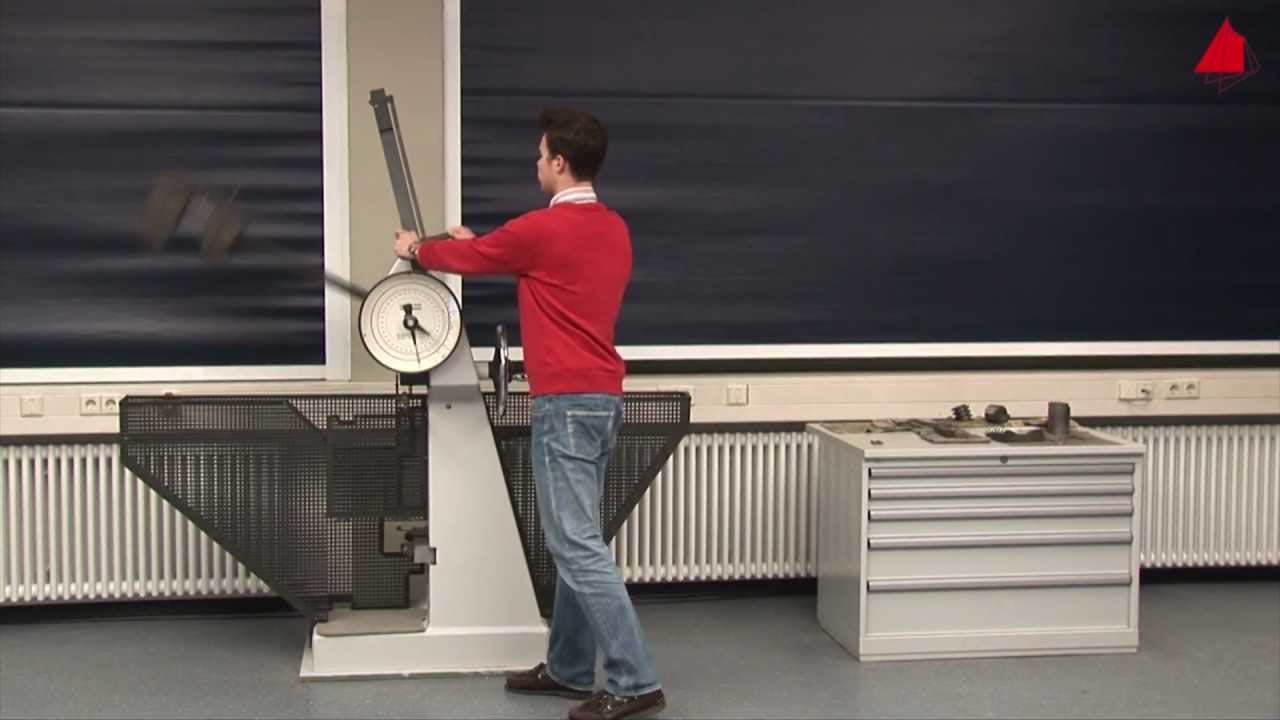
MaterialsScience2000 demonstrates a Charpy test on metal specimens. This explains the pendulum and notched specimen concept only; it is not the plastics test procedure, an IK assessment or an ONPOW test result.