

Premi gli interruttori a pulsante sono ovunque—dalle macchine industriali agli elettrodomestici e alle apparecchiature mediche. Ma non tutti gli interruttori funzionano allo stesso modo. Due tipi comuni che’incontrerai sono momentanei pulsante interruttori e a ritenuta pulsante interruttori. Confonderli può portare a malfunzionamenti frustranti (come una macchina che non’rimane accesa) o persino a rischi per la sicurezza. Analizziamo’le loro differenze chiave, come funzionano e come scegliere quello giusto per le tue esigenze—con esempi pratici di ONPOW, un'azienda con 37 anni di esperienza nella pulsante produzione.
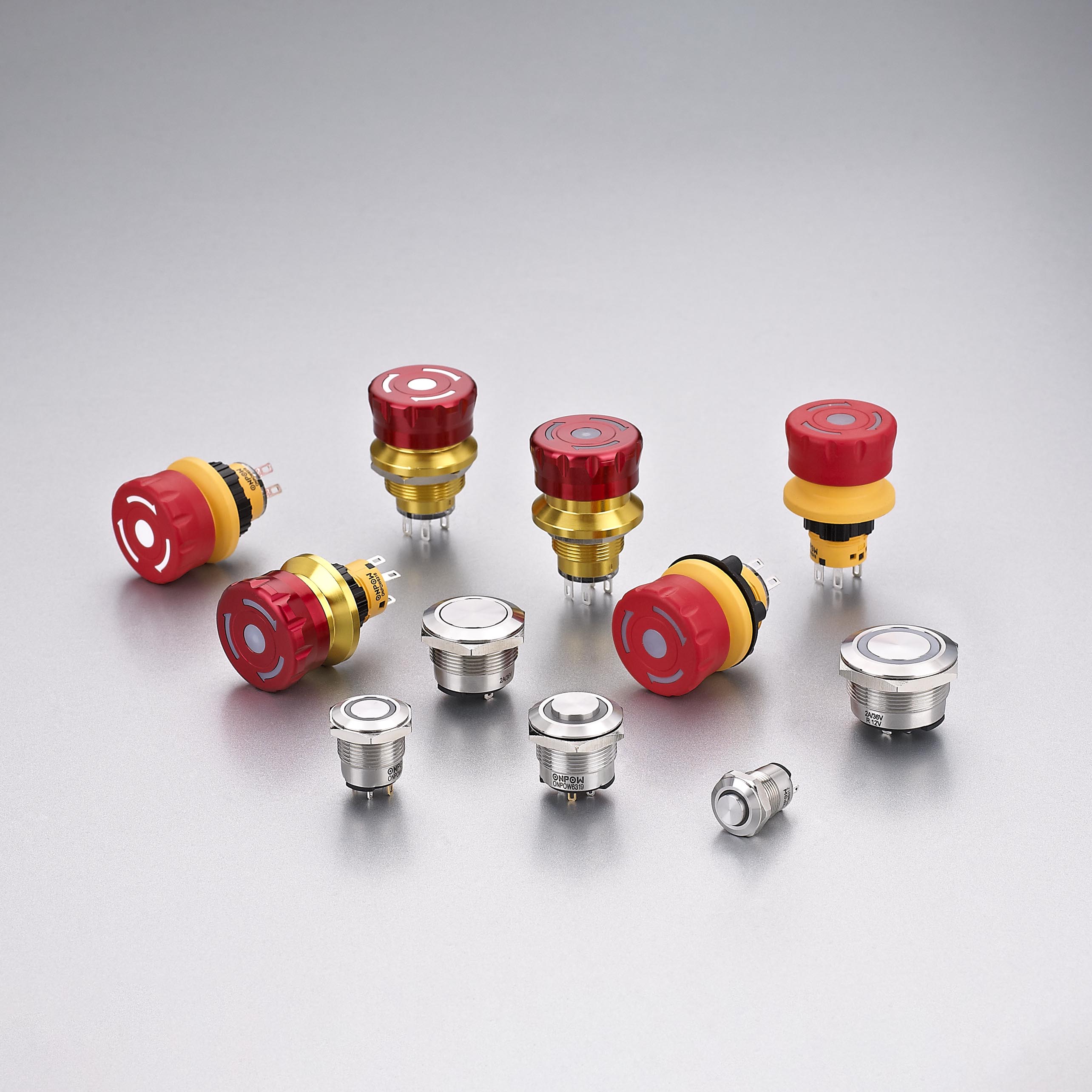
1. Qual’è la differenza principale? È tutta una questione di’permanenza “o ritorno a molla” or “ritorno a molla”
La più grande distinzione tra interruttori momentanei e a ritenuta si riduce a una domanda: L'interruttore rimane nella posizione in cui lo premi, oppure torna indietro a molla?
Vediamo’Usiamo una semplice analogia: pensa a un campanello (momentaneo) rispetto a un interruttore della luce (stabile).
Un campanello funziona solo mentre lo premi—lo lasci andare e si ferma. Questo’è momentaneo.
Un interruttore della luce rimane “on” quando lo attivi, e “spento” quando lo disattivi—senza bisogno di tenerlo premuto. Questo’è stabile.
2. Momentaneo pulsante Interruttori: “Premi per attivare, rilascia per fermare”
Come funzionano
Un interruttore momentaneo completa o interrompe un circuito elettrico solo durante il tempo in cui lo premi fisicamente. Non appena rilasci il pulsante, una molla integrata lo riporta nella sua posizione originale e il circuito si spegne. Si’tratta di un “azione” temporanea—nessun cambiamento duraturo a meno che tu non continui a premere.
Usi comuni
Gli interruttori momentanei sono destinati ad azioni che devono essere di breve durata o controllate da una pressione costante. Gli esempi includono:
Macchine industriali: Pulsanti di arresto di emergenza (E-stop)—lo premi per spegnere la macchina, e si resetta quando viene rilasciato (o con un reset separato).
Apparecchiature medicali: “Avvia scansione” pulsanti su macchine diagnostiche (come raggi X)—la scansione si esegue solo mentre tieni premuto il pulsante, aggiungendo un livello di sicurezza per prevenire attivazioni accidentali a lungo termine.
Dispositivi domestici: Campanelli, microonde “avvia” pulsanti (alcuni modelli), o pulsanti di chiamata dell'ascensore.
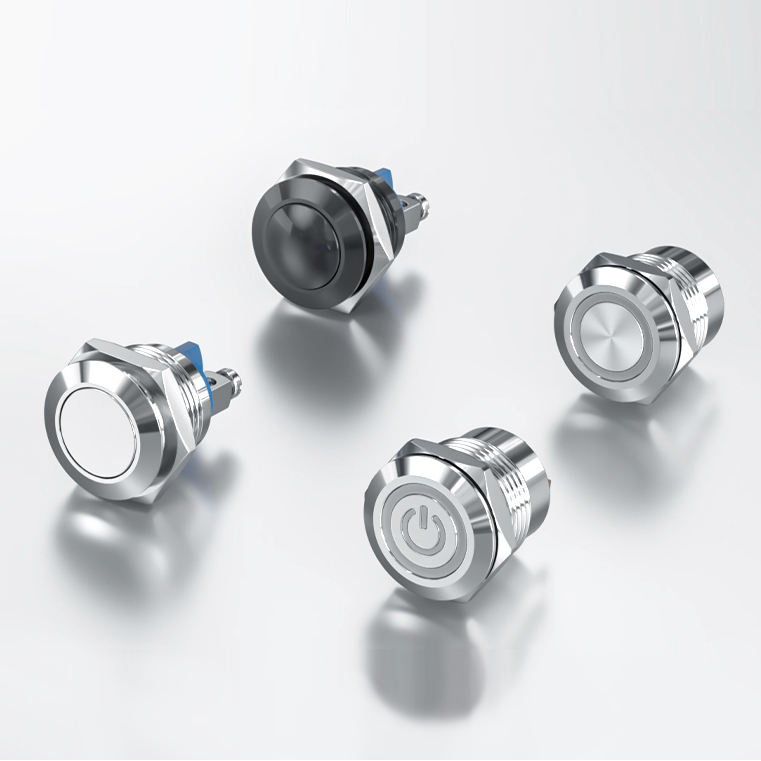
Opzioni momentanee ONPOW
ONPOW’s metal momentary pulsantes (e.g., GQ16 series) are built for durability—ideal for industrial and medical use. They handle frequent presses (up to millions of cycles) and resist harsh conditions (dust, humidity, chemical cleaners), making them reliable for high-use scenarios.

3. A ritenuta pulsante Interruttori: “Press Once to Turn On, Press Again to Turn Off”
Come funzionano
A latching switch “locks” into position after you press it, keeping the circuit open or closed even when you let go. To reverse the action (e.g., turn off a light), you press the button again—this releases the latch, and it snaps back to the opposite position. It’tratta di un “toggle” temporanea—each press changes the state permanently until the next press.
Usi comuni
Latching switches are for actions that need to be long-lasting or stay in place without constant pressure. Examples include:
Industrial control panels: “Power on” buttons for machines—press once to start the machine, and it stays on until you press the button again to shut down.
Household appliances: Coffee maker “on/off” buttons, or lamp switches (the pulsante-style ones).
Automation equipment: “Mode select” buttons (e.g., “auto” vs. “manual” on a conveyor belt)—each press switches the mode and keeps it there.
ONPOW Latching Options
ONPOW’s latching switches (available in metal and plastic series, like F31 plastic series) are designed for stability. They use high-quality latching mechanisms to avoid accidental “unlocking” (critical for safety) and come with certifications like CE, UL, and CB—suitable for global industrial and commercial use.
4.Key Differences at a Glance (Table)
To make it easier, here’s how momentary and latching switches stack up:
|
Caratteristica |
Momentaneo pulsante Switch |
A ritenuta pulsante Switch |
|
Action |
Works only while pressed; springs back when released |
Locks in position after pressing; reverses with a second press |
|
Stato del circuito |
cURL Too many subrequests by single Worker invocation. To configure this limit, refer to https://developers.cloudflare.com/workers/wrangler/configuration/#limits |
cURL Too many subrequests by single Worker invocation. To configure this limit, refer to https://developers.cloudflare.com/workers/wrangler/configuration/#limits |
|
cURL Too many subrequests by single Worker invocation. To configure this limit, refer to https://developers.cloudflare.com/workers/wrangler/configuration/#limits |
cURL Too many subrequests by single Worker invocation. To configure this limit, refer to https://developers.cloudflare.com/workers/wrangler/configuration/#limits |
cURL Too many subrequests by single Worker invocation. To configure this limit, refer to https://developers.cloudflare.com/workers/wrangler/configuration/#limits |
|
cURL Too many subrequests by single Worker invocation. To configure this limit, refer to https://developers.cloudflare.com/workers/wrangler/configuration/#limits |
cURL Too many subrequests by single Worker invocation. To configure this limit, refer to https://developers.cloudflare.com/workers/wrangler/configuration/#limits, “cURL Too many subrequests by single Worker invocation. To configure this limit, refer to https://developers.cloudflare.com/workers/wrangler/configuration/#limits” |
cURL Too many subrequests by single Worker invocation. To configure this limit, refer to https://developers.cloudflare.com/workers/wrangler/configuration/#limits |
|
Safety Note |
Ideal for “interrupt” actions (e.g., E-stop) |
Better for “sustained” actions (e.g., machine power) |
5.How to Choose: 4 Simple Questions to Ask
Not sure which switch to pick? Answer these 4 questions, and you’ll have your answer:
Question 1: “Do I need the action to stop when I let go of the button?”
If YES â Momentary (e.g., E-stop, doorbell).
If NO â Latching (e.g., machine power, lamp).
Question 2: “Is safety a top priority for accidental activation?”
For actions that need a “hold to work” safety layer (e.g., medical scans, heavy machinery controls) â Momentary (you can’t accidentally leave it on).
For actions that need to stay on without supervision (e.g., factory conveyor belts) â Latching (no need to hold the button for hours).
Question 3: “How often will the switch be pressed?”
High-frequency presses (e.g., 100+ times a day) â Choose a durable option like ONPOW’s metal momentary switches (built for millions of cycles).
Low-frequency presses (e.g., once a day to turn on a machine) â Latching switches (their latching mechanism holds up well to infrequent use).
Question 4: “What environment will it be used in?”
Harsh environments (dust, humidity, chemicals—e.g., factories, hospitals) â ONPOW’s metal switches (momentary or latching) with IP65/IP67 protection (waterproof, dustproof).
Mild environments (offices, homes) â Plastic switches (e.g., ONPOW F31 latching series) for cost-effectiveness.



