A push button dust ingress report is useful only when its tested mounting boundary matches the assembly you intend to buy. Check the exact sample, panel arrangement, seals, exposed faces and stated protection claim before accepting the result. A front mounted operator, an unmounted switch and a complete control enclosure are different test boundaries. A document for one does not automatically establish protection for the others. Keep dust ingress evidence separate from water protection, chemical resistance and hazardous location approval, even when those requirements appear on the same purchasing checklist.
This guide helps buyers review a report and prepare questions for the manufacturer. It does not assign a protection rating to any pictured ONPOW product, prescribe a dust chamber procedure or replace the installation instructions for an approved component.
Identify the boundary behind the rating
L'ufficiale IEC 60529 catalogue entry concerns degrees of protection provided by enclosures. For a panel mounted switch, the first practical question is therefore what constituted the tested enclosure boundary. Ask whether the report concerns the front operator fitted to a specified panel, the complete component or an enclosure containing several devices.
The answer should be supported by the sample description, drawing or test photographs. A sentence saying “tested to IEC 60529” is not enough to identify that assembly. It also does not tell you whether every face of the delivered component has the same declared protection.
Compare the claimed boundary with the actual installation. A front face statement might be relevant when the rear is protected inside a suitable cabinet. It does not make exposed rear terminals acceptable in an environment for which they have not been assessed. The designer must evaluate the complete arrangement.
Start with the exact sample identity
Record the manufacturer, full ordering code, sample identifier and report revision. Include the operator shape, any illumination option and relevant mounting accessories. Do not rely on the first few characters of a family name when the report identifies a particular configuration.
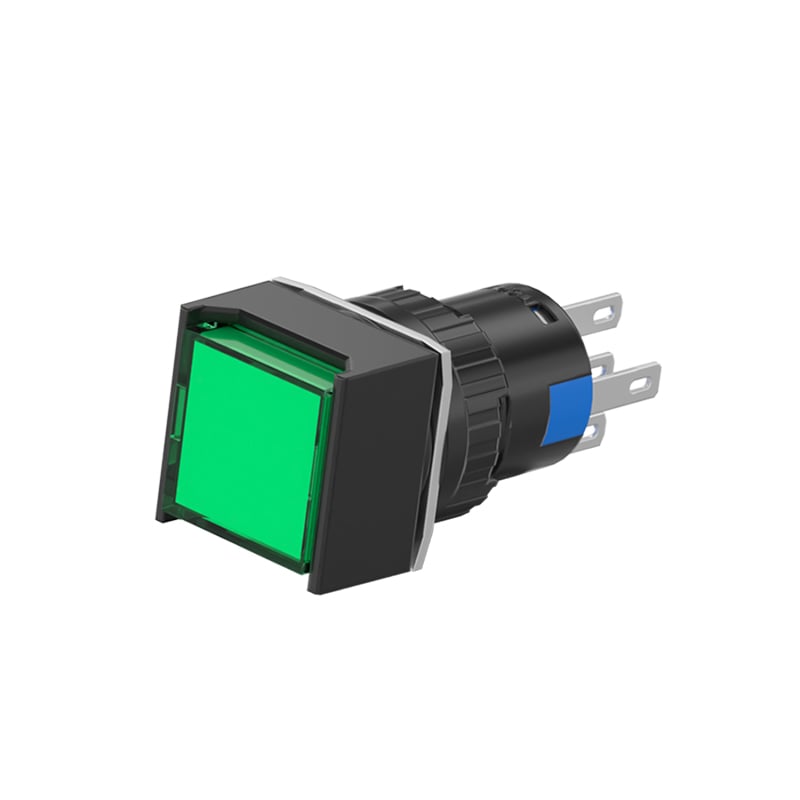
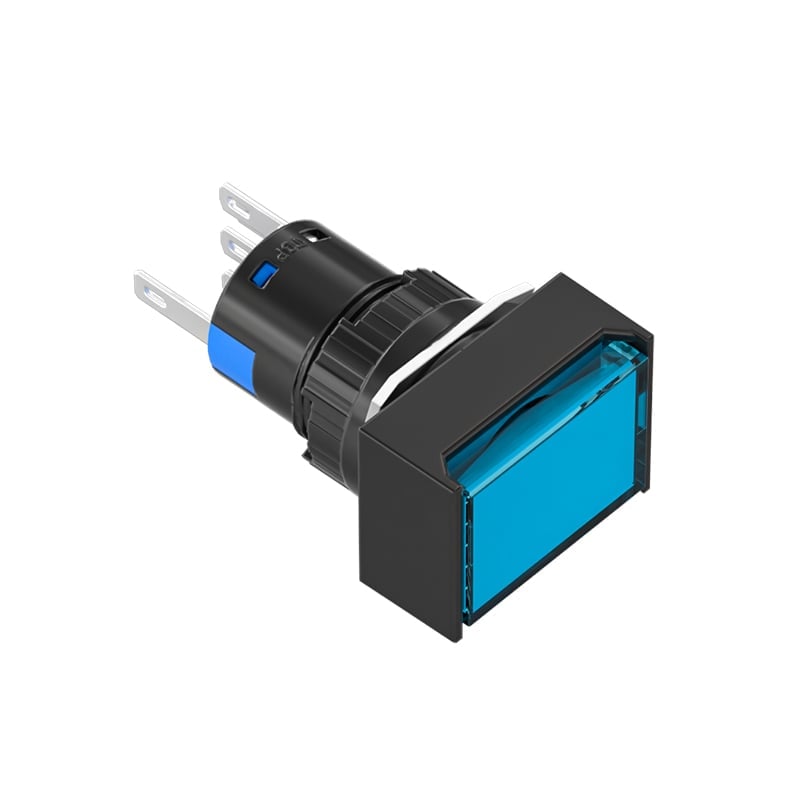
An ONPOW LAS1-A product page is a useful starting point for identifying a component in an enquiry. Its original photographs show the product, not a dust test outcome. Request the manufacturer’s written protection statement and its applicable mounting conditions for the exact configuration you plan to order.
If the report covers a family through representative samples, ask for the issuer’s explanation of that coverage. The buyer should not independently extend the tested sample to every head shape, accessory or terminal arrangement. Retain the applicability statement with the report so a later inspection can reconstruct the approval decision.
Compare the panel and seal arrangement
A seal works within an assembly. Review the panel details stated in the installation instructions and any relevant conditions identified in the report. Ask how the test specimen was mounted and whether the delivered parts include the same sealing arrangement.
Useful records can include the mounting drawing, panel material and thickness where specified, cutout condition, orientation, fastening method and accessory list. These are review questions rather than universal requirements invented for every switch. Use the actual manufacturer’s instructions to determine which details matter for the selected part.
Do not substitute a generic tightening value from another product. A report with a particular mounting arrangement should be reviewed against that arrangement. If the proposed panel or accessory differs, ask the manufacturer whether the original evidence remains applicable or whether additional assessment is needed.
Review the report systematically
The following table records questions for a purchasing review. It is not a substitute for the complete standard or a laboratory procedure. Leave acceptance levels to the agreed equipment requirements and authorized technical review.
| Voce | What to locate in the evidence | Question for an unresolved difference |
|---|---|---|
| Sample | Complete model and configuration | Does the delivered variant fall within the documented coverage? |
| Tested boundary | Operator, component or complete enclosure description | Which faces and interfaces does the claim cover? |
| Montaggio | Drawing, panel arrangement and specified installation conditions | Is the proposed panel within the confirmed arrangement? |
| Sigillatura | Identification of seals and included accessories | Are the tested sealing parts supplied with the order? |
| Esposizione | Method reference and recorded test conditions | Does the report identify the required dust assessment? |
| Evaluation | Observations, acceptance basis and conclusion | What result was actually established for this sample? |
| Modifiche | Revision and substitution record | Has anything relevant changed since the reported assessment? |
Record a specific evidence reference beside each answer. If a supplier sends a certificate summary instead of the full report, identify which fields can be confirmed and which still require clarification. A summary should not acquire details that it does not contain.
Separate dust evidence from water evidence
A broad environmental label can hide important differences. The IEC consolidated IP code publication identifies the code as a system for enclosure protection. A dust related claim and a water related claim answer different exposure questions; neither establishes resistance to every contaminant encountered in a plant.
For purchasing, request the declared rating exactly as written and check which part of the code the supplied report supports. Do not fill in a missing water result from a dust test, or treat a water spray result as proof of dust exclusion. Where documents address different samples, establish their relationship before combining claims.
L'esistente IP and IK specification guide provides the broader selection context. This report review focuses on sample and mounting traceability rather than repeating a rating chart. Keep the equipment requirement and the evidence supporting each part of it visible in the approval record.
Consider what happens behind the front panel
A cabinet can contain additional paths for contamination, including cable entries, vents, door interfaces and openings for other components. A qualifying result for one mounted push button cannot establish the protection of those other interfaces. Review them as part of the complete panel assessment.
Ask how the selected component’s rear side will be protected during normal use, installation and maintenance. If a door is routinely open during a dusty process, the operating arrangement may differ from a closed enclosure assumption. Resolve that application question with the responsible engineer instead of extending a front face statement.
For ongoing care, use the guida alla pulizia del pulsante industriale alongside the actual manufacturer’s instructions. An ingress report does not authorize arbitrary solvents, aggressive cleaning tools or a changed seal arrangement. Maintenance compatibility requires its own confirmation.
Do not confuse dust ingress with explosion protection
Dust can introduce hazards beyond contamination. Where combustible dust may be present, a general ingress rating is not a substitute for a hazardous location assessment or the appropriate equipment approval. Have a competent person establish the site’s requirements before selecting the control device.
Il U.S. Chemical Safety Board’s combustible dust resources explain why accumulated combustible dust deserves a separate safety assessment. This source supports that distinction; it does not provide product approval for an ordinary switch or turn an ingress report into an explosion protection certificate.
Ask whether the intended location has been classified and what equipment documentation the project requires. Do not use a product photograph, a metal housing or an ordinary dust rating to infer suitability. Keep the site assessment and any required equipment certification separate from the enclosure ingress review.
Work through a changed mounting example
Imagine that an existing control panel uses a switch with a report describing a particular mounting and seal arrangement. A replacement supplier offers a visually similar operator but proposes a different mounting accessory. The old result cannot be transferred merely because the panel cutout appears compatible.
Request identification of the replacement assembly and a statement about the proposed accessory. Compare the evidence boundary with the existing panel and record any additional assessment requested by the engineer. The outcome might be a supported substitution, a revised installation or a different part; it should follow evidence rather than appearance.
A second example is moving an operator from a closed control cabinet to a small open bracket near a dusty process. Even if the operator is unchanged, the rear side environment has changed. The right question is whether the complete proposed arrangement meets the application requirement, not whether the front looks as protected as before.
Keep receipt inspection within its limits
Receipt inspection can confirm ordered identity, supplied sealing parts and visible damage. It can also check that the correct installation documents accompany the shipment. These observations help preserve the approved configuration, but they do not reproduce a laboratory dust test.
Do not open seals or dismantle samples casually to infer protection. Follow the agreed inspection plan and the manufacturer’s instructions. If damage or an unexplained accessory change is found, quarantine the affected items under the site’s quality process and request a disposition rather than approving them from the original report alone.
Link the review to the push button mechanical shock report guide when transport or handling damage is relevant. Mechanical condition and ingress performance may both matter, but their supporting evidence should remain clearly identified.
Send a precise evidence request
Provide the full ordering code, panel drawing, environmental requirement and proposed installation. Ask which exposed faces the protection claim covers, what accessories are required and whether the report matches that exact arrangement. Include any difference from the standard installation so the manufacturer can address it directly.
Request a traceable report reference and a written applicability statement where representative samples or family coverage are involved. Keep the manufacturer response with the approved bill of materials and change control record. Contact ONPOW with this information to discuss the relevant product documentation; do not infer an approval from a general catalogue description.
The finished review should state what was confirmed and what remains conditional. A useful conclusion identifies the covered assembly and its installation conditions. It does not broaden the claim to water exposure, chemical compatibility, all rear surfaces or hazardous locations without separate evidence.
Domande frequenti
Una classificazione di polvere sulla faccia frontale copre i terminali esposti posteriori?
Not automatically. Read the declared boundary and the installation conditions. The complete arrangement must protect each relevant surface and interface according to the application’s requirements.
Un rapporto per una famiglia di interruttori può coprire ogni modello di quella famiglia?
Only when the documented coverage or an authorized applicability assessment establishes that relationship. A similar family name alone does not connect every variant to a tested sample.
La protezione dalla polvere rende un pulsante adatto per aree con polvere combustibile?
No. Ingress protection does not replace a hazardous location assessment or any required equipment approval. Ask the responsible engineer to establish the location and equipment requirements separately.
Può l'ispezione in ingresso dimostrare lo stesso risultato di un test in camera di polvere?
No. Incoming checks can preserve identity and visible condition, but they do not reproduce the laboratory method. Use the approved report, installation instructions and inspection plan for their respective purposes.
Approfondimenti
The U.S. Chemical Safety Board explains combustible dust hazards. This supports the distinction between ordinary dust ingress protection and an explosion hazard assessment; it does not certify a switch for hazardous locations.