

When selecting switches for industrial equipment, control panels, or electronic devices, one of the first questions people ask is: What is the difference between a touch switch and a push button switch?
Both types of switches can be used to control electrical equipment, but they work in fundamentally different ways. A touch switch relies on touch sensing and generally does not require physical movement of the switch itself, while a push button switch uses physical pressure to make or break an electrical connection. Pressing the button activates or deactivates the circuit.
1. What Is a Touch Switch?
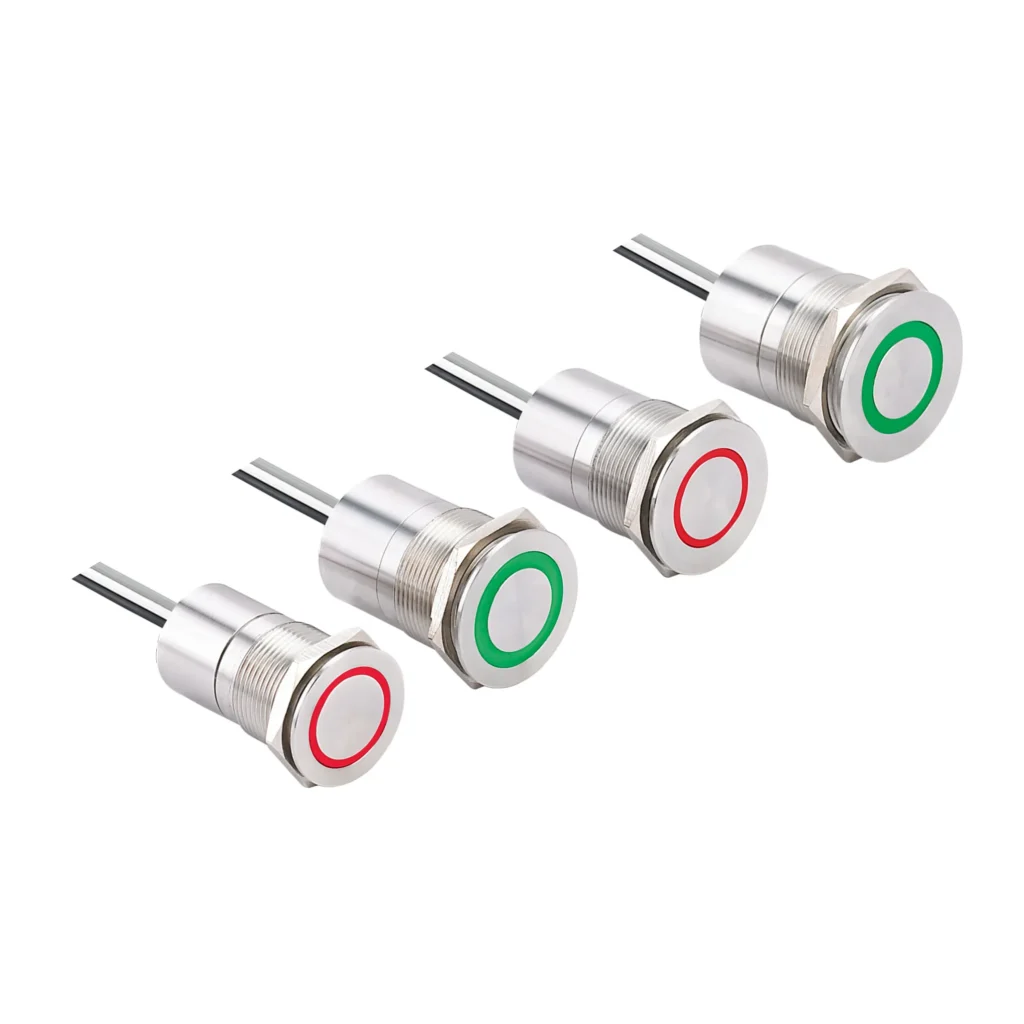
A touch switch is an electronic sensing switch that triggers a signal when its sensing surface is touched. Unlike traditional mechanical switches, it generally does not require a movable button or mechanical contacts to recognize an operating command.
Most touch switches use capacitive sensing technology. When a finger touches or approaches the sensing area, the capacitance changes. The internal circuit detects this change and generates a signal to control the connected device. Depending on the design, some models may also use resistive sensing or other sensing technologies.
2. What Is a Push Button Switch?
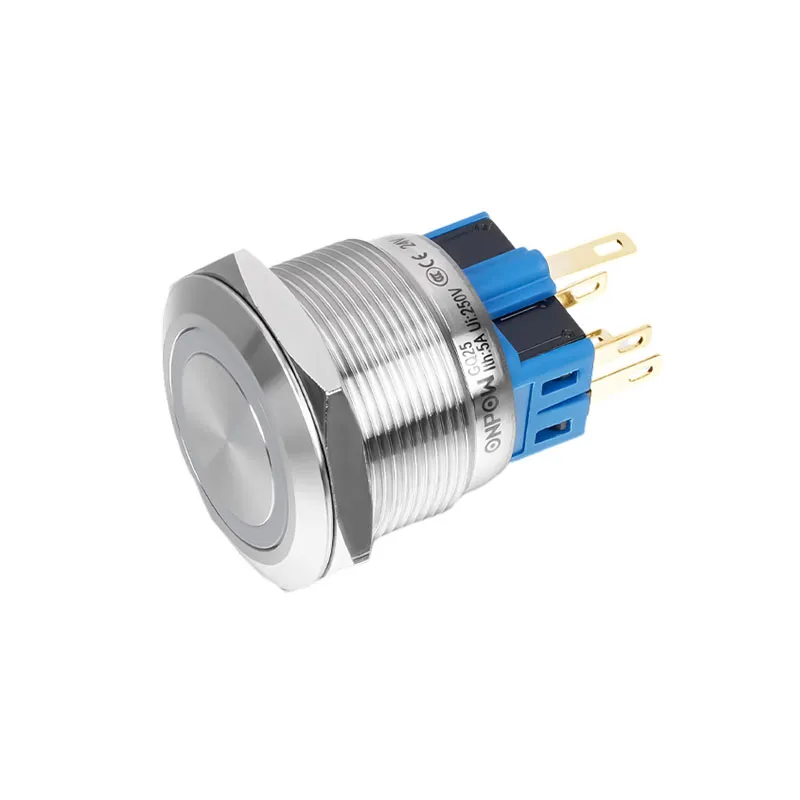
A push button switch is a manually operated electrical switch that uses physical pressure to control a circuit. When an operator presses the button, the internal contact mechanism changes state, either completing or interrupting the electrical circuit.
Unlike a touch switch, a mechanical push button requires a physical pressing action. Some models also provide tactile feedback or an audible clicking sound. Thanks to their intuitive operation and reliable performance, push button switches are widely used in industrial control panels, machinery, automation systems, and electrical equipment.
3. Touch Switch VS Push Button Switch: Key Comparison Table
| Comparison | Touch Switch | Push Button Switch |
|---|---|---|
| Operating Method | Finger touch or proximity sensing | Physical pressing of the actuator |
| Working Principle | Electronic sensing and signal detection | Mechanical contact switching |
| Moving Parts | Generally no moving parts in the sensing area | Equipped with a movable mechanical actuator |
| Operating Feedback | Usually no tactile feedback | Can provide tactile and audible feedback |
| Appearance | Flat, smooth, and minimalist panel surface | Features a raised physical button |
| Glove Operation | Depends on the sensing technology; standard capacitive models generally do not support it | Easy to operate with gloves when the structure is properly designed |
| Environmental Impact | Susceptible to moisture and electromagnetic interference | Protection depends on sealing and structural design |
| Wear and Maintenance | No mechanical wear in the sensing structure | Mechanical contacts may wear out after long-term use |
| Typical Applications | Smart panels and touch-control interfaces | Industrial control systems and machinery |
Which Type Offers Better Reliability?
Reliability depends more on product quality, structural design, and operating conditions than on the switch type itself.
High-quality touch switches can offer a long service life because they have almost no moving parts. However, industrial push button switches are often preferred in harsh operating environments. They provide direct operation, and their housings can be designed with high-strength sealing and protection.
For example, IP67-rated metal push button switches can be used in dusty and wet environments, provided that the complete installed assembly meets the required protection rating and the operating conditions remain within the product specifications.
4. How to Choose: Touch Switch or Push Button Switch?
There is no universal choice. The key is to consider the equipment’s intended application and the operator’s requirements.
Choose a touch switch if you have the following requirements:
- You want a flat and minimalist control panel.
- Tactile feedback from pressing a button is not necessary.
- The switch is used in smart home devices or electronic touch interfaces.
- The panel needs to be wiped and cleaned frequently.
- The operating environment is suitable for the sensing technology.
Choose a push button switch if you have the following requirements:
- You need clear tactile feedback when operating the switch.
- Operators frequently control industrial machinery.
- Blind operation and quick button identification are important.
- You need specific contact configurations, such as normally open (NO) or normally closed (NC).
- You require different actuator sizes, materials, or illuminated models.
For example, industrial machine tools are generally equipped with physical start, stop, and emergency stop buttons, taking advantage of the intuitive and reliable operation of mechanical push buttons.
The two types can also be used together. Many control systems combine both solutions: touchscreens are used for parameter settings and monitoring, while physical buttons handle critical operations such as starting, stopping, and resetting. This combination offers both the flexibility of digital interfaces and the convenience of physical buttons.
5. Why Choose ONPOW Push Button Switches?
When selecting industrial push button switches, suitable product specifications and professional technical support are equally important.
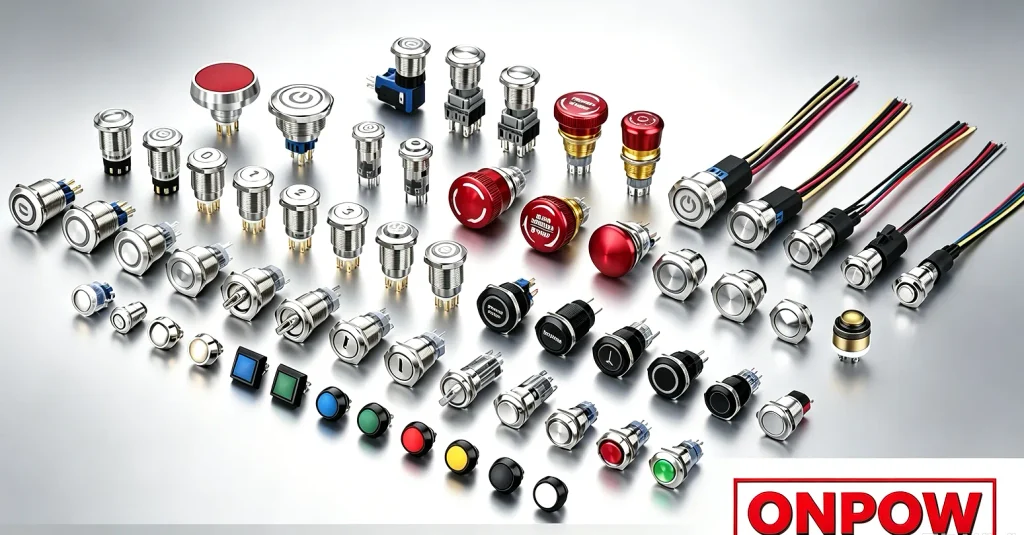
ONPOW specializes in industrial control switches and related components, offering a wide range of metal push button switches, illuminated push button switches, indicator lights, and other industrial control solutions. Our products meet the needs of both new control panel development and replacement or maintenance of existing components.
Whether you have specific requirements for mounting hole sizes, contact configurations, latching or momentary operation, or electrical parameters, the ONPOW team can help you find the right product.
Explore the full range of ONPOW products and feel free to contact us for technical support and customized switch selection solutions.



