

A push button IEC 63000 evidence review should establish whether the documents received are relevant, traceable and sufficient for the equipment manufacturer’s substance-compliance assessment. A supplier declaration, material record or laboratory report can contribute to that file, but its usefulness depends on what it actually covers. Match the evidence to the ordered configuration, check its origin and limitations, identify gaps and record the responsible reviewer’s decision. A folder full of PDFs is not a substitute for that assessment.
This guide presents a practical purchasing workflow. It does not certify ONPOW products, assign a substance result to a pictured switch or replace the complete applicable standard and regulatory requirements.
Define the decision the evidence must support
Start with a written statement of the product, market and requirement under review. A document collected for a different customer or substance list may still be informative, but it may not answer your current question. Record the exact ordering code, the equipment project and the requested scope before asking the supplier for additional files.
The public IEC 63000 consolidated publication description identifies its subject as technical documentation supporting assessment against substance restrictions. The public scope does not provide a universal list of tests for every switch. Obtain the complete applicable edition where a formal assessment requires it and avoid presenting a buyer’s checklist as the standard’s full requirements.
For a market-specific example, Great Britain RoHS guidance for manufacturers explains that the manufacturer must be satisfied with component information and remains responsible for the whole product’s compliance. Use the correct guidance for the actual destination. A useful supplier file supports the manufacturer’s decision without transferring that decision automatically to the component supplier.
Map each document to an ordered configuration
Create a simple index connecting purchase line, supplier code, product revision and evidence reference. A broad family statement needs an explicit coverage explanation when the purchase includes variants. Differences in illumination, contacts or supplied accessories should be visible in the enquiry so the supplier can confirm the relevant scope.
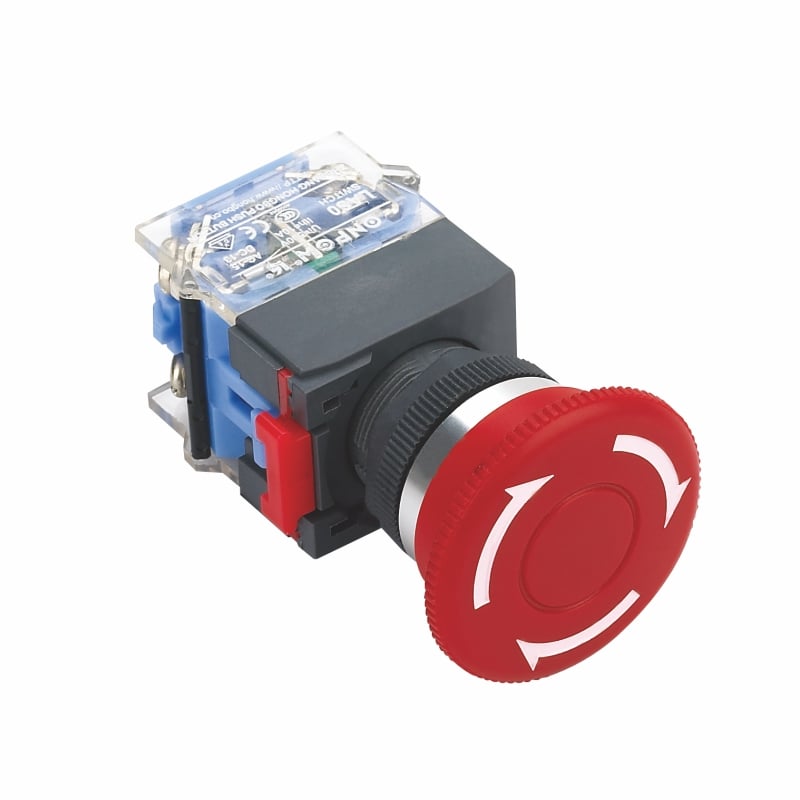
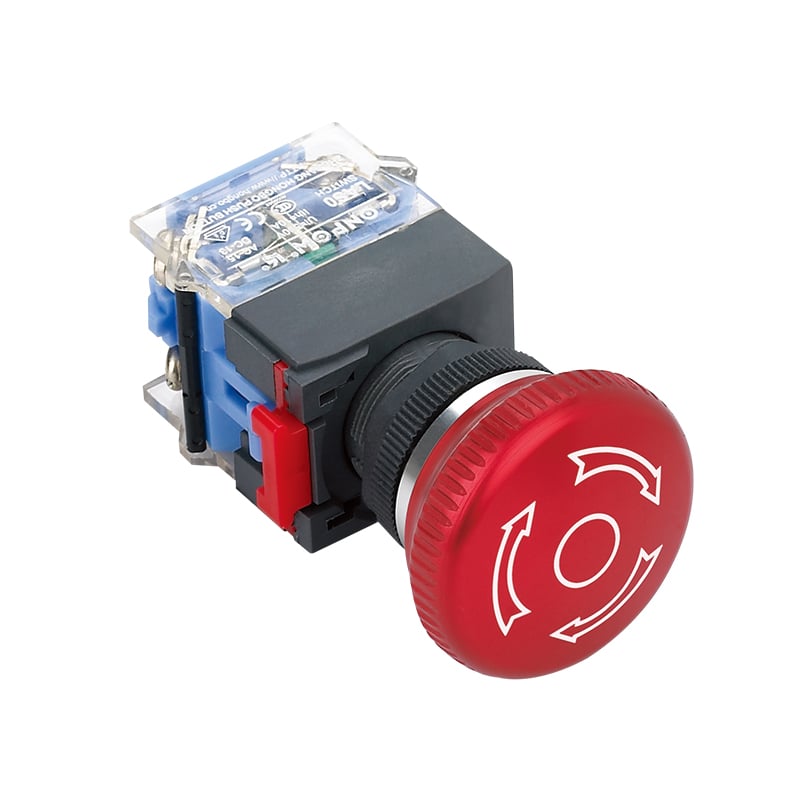
The LAS0-K-11E product page is an identification example for a supplier enquiry. Confirm the complete ordering suffix and configuration with ONPOW. The related product photographs in this article show different visible operating heads for identification; they do not show tested samples, establish material formulation or prove that the same declaration applies to each variant.
When a document names an internal supplier reference, ask for the mapping to your purchased code. Save that mapping alongside the document. It is a small administrative step with substantial practical value: a later reviewer can then establish why a document was included without depending on the memory of the original buyer.
Evaluate relevance before judging document appearance
A polished report can concern the wrong sample, and a short supplier statement can contain useful, precisely scoped information. Start by reading the product identification, subject, date and any exclusions. Then establish what question the document answers and whether that question corresponds to your purchase.
The table below is a recommended review aid. It is not a complete IEC 63000 clause checklist, a universal evidence ranking or a finding about any ONPOW configuration. Apply the agreed assessment procedure and the relevant requirements to decide what evidence is sufficient.
| Evidence item | Review question | Action when the answer is unclear |
|---|---|---|
| Supplier statement | Does the issuer identify the covered codes and requirement? | Request a scoped confirmation and technical contact |
| Material declaration | Can the information be traced to the supplied item and reference context? | Resolve product mapping and list-version gaps |
| Laboratory report | Does the sample and analytical scope address the needed question? | Ask the responsible specialist to assess suitability |
| Product-family attachment | Are included and excluded variants explicit? | Obtain a supplier-confirmed coverage list |
| Revision notice | Is the accepted evidence still connected to the current supply? | Review the change and obtain affected updates |
| Review record | Is the decision, limitation and owner documented? | Assign an accountable reviewer and close the open question |
Do not convert this table into a numerical pass score. Several attractive documents cannot compensate for a missing connection to the purchased component. A single unresolved point can matter more than the number of attachments received.
Check origin, authority and limitations
Confirm who issued the record and who can answer questions about it. Check the document identifier, issue date and revision, and preserve the original source. A distributor may forward a manufacturer’s response legitimately, but the forwarding route should not obscure the actual issuer or the scope of its statement.
If authenticity is unclear, contact the identified issuing organization through a reliable route. Ask about the specific document rather than sending an unrestricted request for all confidential manufacturing information. A clear verification question is easier to resolve and creates a useful record of the answer. Do not edit a supplier’s signature, dates or conclusions to align them with your own template.
Document limitations deserve the same attention as conclusions. A report may identify a particular sample, a specific analytical method or a restricted set of substances. Those boundaries should remain visible in the assessment record. The laboratory accreditation scope guide explains why a laboratory’s name alone is insufficient when assessing the relevance of a result.
Distinguish information gaps from adverse findings
Missing information does not automatically prove non-compliance. It does mean that a reviewer may lack a sufficient basis for acceptance. Record the missing item precisely: for example, an unlisted ordering suffix, an unclear revision relationship or a document covering only one part of an assembly. This produces a question the supplier can answer.
An adverse finding requires a different route. If a record indicates a potential substance issue, the responsible compliance team should assess the affected supply and applicable obligations. Procurement staff should preserve the evidence, escalate promptly and avoid rewriting the finding into a more comfortable phrase. Follow the organization’s established process for purchase and release decisions.
Keep the two situations separate in your tracker. “Awaiting coverage confirmation” describes a documentation gap. “Technical review of reported result” identifies a finding that needs assessment. Neither should become “approved” because a shipment deadline is approaching. Accurate status descriptions allow commercial staff to see the real next action without making a technical judgement themselves.
Follow a hypothetical purchase through review
Imagine an equipment manufacturer buys three operating-head variants for one panel project. A supplier statement names the first code, a material attachment names a related family and a laboratory report describes a sample using another reference. The package may be relevant, but the relationships are not yet clear. The buyer creates a code map and asks the supplier to confirm which record supports each purchase line.
Suppose the supplier confirms that the family attachment covers two variants and excludes the third. Record the confirmed coverage and keep the third line open. Do not assume that the excluded variant fails the requirement; ask what information is available for it. This keeps the assessment proportionate while preventing unproven family-wide acceptance.
Now suppose the laboratory report identifies a sample whose relationship to the current configuration is undocumented. The responsible specialist can request additional traceability or another evidence route. Retain the report as received and record why it was not sufficient on its own. This example illustrates a review process only; it does not describe any actual ONPOW document package or product finding.
Close gaps with targeted supplier questions
A good follow-up request contains the purchase code, the document reference, the exact uncertainty and the answer needed. “Please send more certificates” often produces another collection of unrelated files. “Please confirm whether document X covers code Y with revision Z” gives the supplier a manageable task and the reviewer a clear closing criterion.
Where further testing is considered, let the responsible specialist define its purpose, sample identity, method and interpretation. Do not order an arbitrary test panel simply because a previous customer used it. Different questions may require different information, and testing without a defined decision can leave the original gap unresolved.
For declaration wording and product coverage, see the RoHS scope review. For a separate supply-chain topic, the conflict minerals record guide explains why a company-level response and a product-specific response should not be treated as equivalent. Keep each evidence route attached to its own requirement.
Maintain the file when supply changes
An accepted record should remain connected to the configuration actually supplied. Record who monitors supplier changes, who reviews their significance and where the accepted evidence is stored. If a material, manufacturing source or component configuration changes, the responsible team should determine whether the evidence remains applicable and what updates are needed.
Keep superseded versions rather than overwriting the only copy. Identify the effective revision and preserve the reason for replacement. This is especially helpful when repeat orders span several product revisions or distributors. A future investigation can then distinguish what was known at the original decision from information received later.
Before closing the review, write a short assessment note stating the requirement, covered codes, evidence used, unresolved limitations and approving responsibility. That note should help another qualified reviewer understand the decision without reconstructing a long email chain. Where a point remains unresolved, identify the next action and owner instead of declaring the entire technical file complete.
Frequently asked questions
Is an IEC 63000 reference a product certificate?
No. Referencing a technical-documentation standard does not establish product certification or a particular substance result. Review the underlying evidence, its scope and its connection to the supplied configuration. The responsible manufacturer must make the applicable assessment.
Does every push button require the same laboratory tests?
This guide does not prescribe a universal test package. The required evidence depends on the actual assessment, applicable requirements and information already available. A competent specialist should define any additional testing around a clear decision and traceable sample.
Can we accept one declaration for an entire switch family?
Only when the supplier’s confirmed scope and your assessment support that coverage. A family name, similar appearance or shared mounting size is insufficient by itself. Keep the covered codes and exclusions explicit in the purchase file.
What should happen when the supplier cannot close a gap?
Keep the limitation visible and ask the responsible reviewer to decide the next action under the project’s procedure. That may involve further information, an alternative evidence route or a purchase decision. Do not hide the gap or invent a favourable conclusion to release the order.
Further learning
IEC introduces hazardous-substance management and assurance. This background concerns the broader assurance process, not certification of an ONPOW switch or a substitute for a configuration-specific IEC 63000 assessment.



