

Push button material chain of custody claims need a defined material attribute, a named chain model and records connecting the claim to the ordered configuration. A chain-of-custody system explains how information and responsibility move through a supply chain; its existence does not establish that a particular switch contains a particular material. Before accepting a sourcing statement, ask what is being claimed, which organizations and material flows are covered and whether the wording describes physical content or an accounting attribution. This guide offers a purchasing review workflow. It makes no sourcing, certification or recycled-content claim for the illustrated ONPOW products.
Begin with the attribute, not the certificate logo
A supplier may describe its material as responsibly sourced, recycled, certified or covered by mass balance. Those words should lead to a specific question: which characteristic of which purchased item is the supplier asking the buyer to accept? Without that answer, a certificate can look relevant while leaving the customer’s actual requirement unresolved.
The UN Transparency Protocol’s chain-of-custody discussion distinguishes models and explains the different relationships between physical flows and attributed characteristics. It also labels its specification as suitable for pre-production pilots. It is useful background for terminology, not an instruction that every switch supplier must implement that protocol.
For a buyer, start a claim record with the supplier’s exact wording. If the document concerns raw material entering a processor, ask what supports carrying that wording through subsequent manufacturing and assembly. If it concerns packaging, do not extend it to the switch. State the gap before requesting more paperwork so that the supplier can answer the actual question.
Understand why the chain model changes the meaning
Identity preservation, segregation, controlled blending, mass balance and book-and-claim approaches do not all communicate the same relationship between an output and its source attributes. A buyer should not collapse them into a single “traceable” checkbox. The relevant scheme and contract determine what claims are allowed and what evidence is required.
At a conceptual level, some approaches maintain a close physical link to eligible material, while others use defined accounting or transferable claim arrangements. The purchasing implication is to ask whether the statement describes material physically present in the item or an attribute allocated under a named system. Do not translate an accounting allocation into an assertion about every individual housing.
The ISO 22095 public scope describes a general framework and explicitly warns that the framework alone cannot make or verify product or material claims. At the November 2026 review date, ISO lists the 2020 edition, a 2026 amendment and further development. This article uses public scope information, not a review of the complete standard or an assertion that a supplier conforms to its clauses. Confirm the agreed edition and applicable scheme before contractual use.

Map the purchased configuration to the claimed boundary
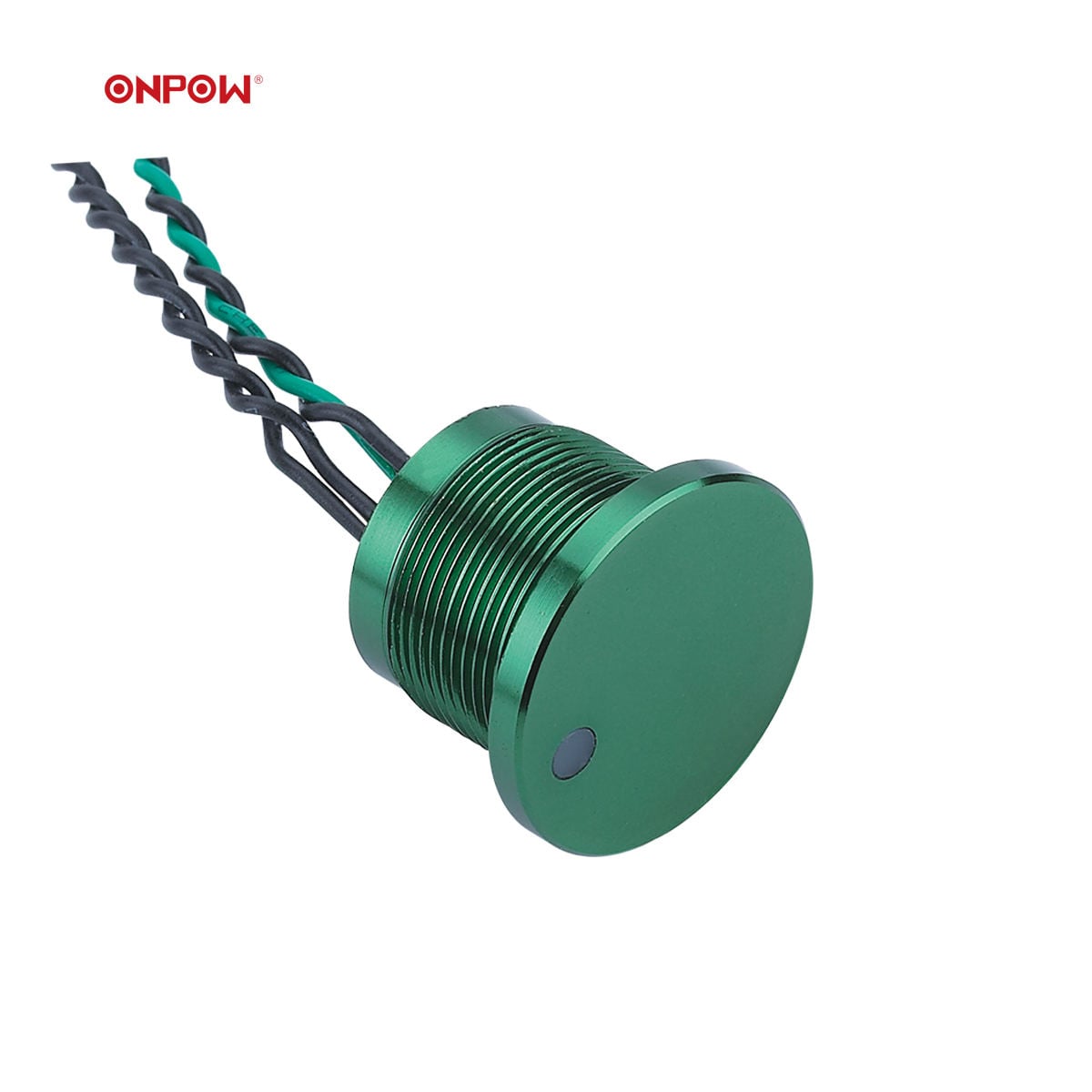
Use the complete manufacturer’s code rather than a family description. The PS223Z10YRD1/D product page illustrates how an enquiry can identify a particular catalogue item. A corresponding product photograph is an identification aid only. It does not reveal feedstock origin, supplier ownership transfers or eligibility under a material sourcing scheme.
List the part or material named in the statement. A housing, actuator, contact assembly, mounting accessory and shipping carton can follow different supply routes. If a claim is limited to one component, keep that component boundary in every summary that travels downstream. Do not give a whole-switch answer to a component-only question.
Also identify the covered site and period where supplied. A current organizational certificate may not cover every site, subcontracted step or historic delivery. Ask the supplier to map the relevant record to the order or supply period. When that mapping is missing, record it as an evidence gap rather than assuming the product falls outside or inside scope.
Build a concise purchasing review table
The following is a proposed project checklist, not an official audit form. Use it to find gaps before a specialist reviews the claim against the applicable scheme. The conceptual distinction between material movement and claim attribution is supported by the UNTP source above; the fields below organize practical purchasing questions.
| Review field | What to request | Why the answer matters |
|---|---|---|
| Attribute | Exact statement and named characteristic | Prevents a generic system claim from becoming a product claim |
| Model | Named chain model and applicable scheme | Explains the relationship between physical content and attributed information |
| Item boundary | Covered material, component, switch or packaging | Prevents extending evidence beyond the stated object |
| Supply boundary | Organizations, sites and relevant processing stages | Identifies where the supporting chain starts and ends |
| Delivery mapping | Ordered codes, period and record cross-references | Connects the accepted statement to the purchase |
| Quantity basis | Units and reconciliation basis where relevant | Allows the reviewer to understand what the claimed quantity represents |
| Assurance scope | Issuer, assessment type and scope limitations | Separates supplier statements from independently assessed evidence |
| Change route | Notification contact and review triggers | Keeps a previously accepted statement from becoming stale |
Do not demand commercially sensitive upstream contracts by default. Ask what evidence can be supplied and what an independent reviewer could inspect if needed. A controlled evidence route may answer the question without distributing confidential formulations or transaction details throughout the customer’s organization.
Examine the handoffs that could break the explanation
A claim can become difficult to interpret when one organization sells material, another processes it and a third assembles the final switch. Ask how the relevant characteristic is carried across each included step. The answer should identify records and responsibilities, not merely repeat the same slogan at every stage.
Start with one representative purchase rather than requesting a vast generic dossier. Choose a delivered configuration and ask the supplier to show how the statement relates to its covered material or component. Follow the explanation backward until the claimed source boundary is clear and forward until it reaches the purchased item or the stated endpoint.
Where material is mixed or transformed, request the applicable accounting explanation and limitations. Avoid inventing a universal balancing period, conversion factor or acceptable loss rate; these depend on the specific process and scheme. If the supplier’s evidence omits those details but the claim depends on them, refer the gap to the responsible reviewer rather than supplying assumptions on the supplier’s behalf.
Distinguish quantity accounting from proof of composition
A balanced quantity record can help support a particular sourcing claim under its scheme. It should not be mistaken for a chemical analysis of the delivered switch. Likewise, a laboratory composition result may identify substances in a sample without establishing the upstream ownership or claim transfers required by a chain system.
For chemical documentation, REACH material-declaration review addresses a different evidence purpose. For report relevance and limitations, use the complementary questions in laboratory accreditation scope. These information routes can coexist in one purchasing file, but one should not silently stand in for the other.
Keep environmental sourcing and engineering suitability separate as well. Even a well-supported sourcing statement does not establish the switch’s rating, mounting compatibility or suitability for the machine. Conversely, a technically acceptable switch may still lack the material claim required by a specific tender. Record both decisions so that a buyer does not approve one by accidentally checking the other.
Example: when a raw-material statement stops too early
Suppose a hypothetical customer asks for a documented material sourcing attribute in a switch housing. The supplier provides an upstream processor’s certificate naming a resin range, but the purchasing record names only the assembled switch. The missing step is the connection between that resin scope, the actual housing supply and the ordered configuration.
Ask the supplier whether the housing falls within the cited scope, how the claim is transferred to its purchase record and which model governs the statement. Request a clear limitation if the evidence ends at an upstream material sale. Do not assume that every unit downstream carries the same physical-content claim because the processor has a certificate.
If the supplier instead explains an attributed quantity under an accounting model, return to the customer’s required wording. The customer may require a physical-content statement or may accept a defined attributed statement under a particular scheme. That is a purchasing and claims decision to resolve explicitly, not a wording change that an editor should make without evidence. The example is hypothetical and assigns no material attribute to an ONPOW model.
Preserve the evidence without confusing it with lot traceability
A maintenance team may need to trace a switch to a delivery lot. A sustainability reviewer may need to understand a material attribute across multiple organizations. These tasks overlap in identifiers, but they answer different questions. A lot label alone does not establish a material claim, and a sourcing certificate alone may not identify the replacement part installed in a panel.
Use push button lot traceability records for shipment and maintenance links. Add a separate claim reference containing the accepted wording, model, boundary, applicable scheme, evidence versions and reviewer. If a supplier issues a revised statement, retain the previous version with the reason for the change rather than overwriting the historical decision.
Define practical reopening triggers in the purchasing agreement or internal procedure. Examples include a different material supplier, changed component design, different covered site or revised claim wording. These are proposed management triggers; the applicable scheme or contract may impose additional requirements. Have the responsible specialist decide when a complete reassessment is needed.
Turn the review into a precise enquiry
Send ONPOW the complete model list and explain the material statement required by the customer. Ask what supporting information is available, which component or packaging item it covers and whether there are limitations on downstream wording. Keep quantities, delivery references and intended destination available so that the response can be mapped to the actual purchase.
Close the task with one of three clear outcomes: the specific wording is supported within its recorded scope; a narrower wording is supported; or the requested attribute remains unverified. An unresolved claim is not a finding that a product is unsafe or unsuitable. It is an instruction to avoid asserting more than the evidence shows while the appropriate purchasing owner resolves the remaining requirement.
Frequently asked questions
Does ISO 22095 certify the material in a switch?
The general framework alone does not establish a product characteristic. A specific claim needs its applicable requirements, scope and supporting evidence. Do not use a reference to the standard as proof of an ONPOW material attribute.
Is mass balance the same as physical recycled content in each unit?
A buyer should not assume that equivalence. Ask how the named system attributes characteristics and what wording it permits. Keep accounting-based statements distinct from assertions about the physical composition of an individual item.
Can a delivery lot number replace chain-of-custody evidence?
No. It may help connect purchasing and maintenance records, but it does not by itself explain the upstream material attribute, applicable chain model or permitted claim.
What should happen if a certificate covers only an upstream supplier?
Ask for the documented connection to the purchased component and the claim’s stated endpoint. If that connection cannot be established, record the requested downstream attribute as unverified rather than extending the certificate’s scope.
Further learning
NEN introduces chain of custody and the standard-development project in this 2018 video. It is conceptual background, not a tutorial for the current edition, an audit, or certification of an ONPOW product.



