

A push button plastic oxidation induction report evaluates a material sample under a defined oxidative test program. Before comparing results, distinguish oxidation induction time at a specified temperature from oxidation induction temperature during programmed heating. The two outputs use different units and answer different questions. For purchasing, neither output automatically establishes a complete switch’s operating temperature, antioxidant concentration or years of service. A useful review connects the specimen to the ordered component, checks the test conditions and limits the conclusion to the evidence actually supplied. This guide provides that workflow without claiming a tested formulation or result for any ONPOW product.
Distinguish OIT from OOT first
The public scope of ISO 11357-6:2025 through EVS covers oxidation induction time and oxidation induction temperature using differential scanning calorimetry. It primarily addresses stabilized or compounded polyolefin materials and notes possible applicability to other plastics. Do not assume that every visible plastic in a panel operator automatically belongs within an appropriate application of the method. Ask the laboratory to confirm suitability for the identified specimen.
In an isothermal OIT measurement, the reported quantity is a time associated with the onset of oxidative response at a selected temperature. In a dynamic measurement, the quantity is an onset temperature associated with the heating program. The standard distinguishes these two measurements. Keep the distinction in the review sheet rather than storing both under an ambiguous “oxidation value” heading.
The abbreviations can be confusing. Ask a supplier to spell out the reported property, its unit and the program used. If a spreadsheet column contains temperatures in one row and times in another, separate the fields before making any comparison. A larger number is not a meaningful purchasing advantage until the quantities and conditions are comparable.
Establish whether the evidence fits the component
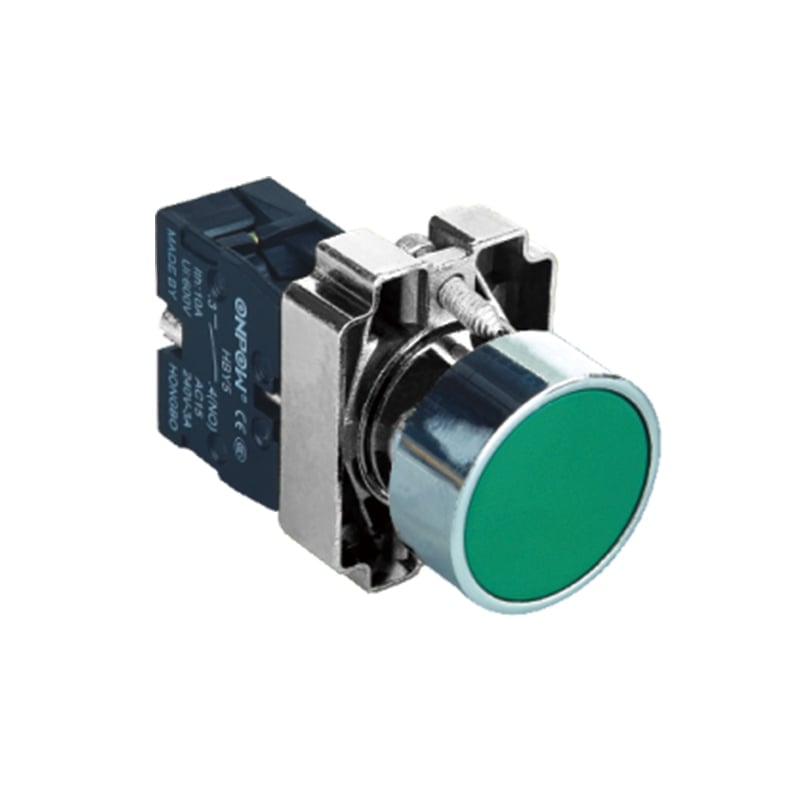
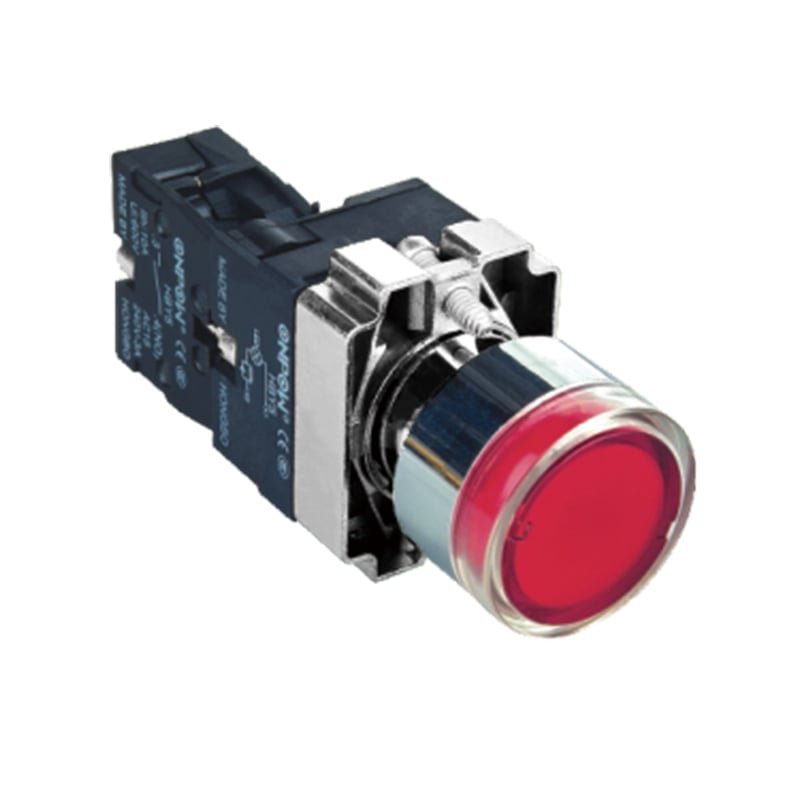
Begin with the ordered configuration and the particular molded part. The ONPOW HBY5 product family provides an identification reference for a supplier discussion. Manufacturer photographs in this article show product examples only. They do not identify the polymer in every component or establish oxidation stability, antioxidant content, certification or a tested temperature.
Ask the supplier which material and production lot the report represents. A generic resin data sheet may support an initial discussion but needs a documented relationship to the finished component. Record whether the laboratory tested pellets, a prepared plaque or a piece removed from the actual part. Preserve any relevant sample preparation information.
If the material identity is unknown, resolve that issue before requesting a specific test as a routine acceptance requirement. An analyst should determine whether the proposed method and interpretation suit the material. Requiring an unfamiliar number without checking method applicability can create paperwork without improving the purchasing decision.
Review the full test record
A complete report needs enough context to interpret the result. Ask for the specimen identity, standard edition, measurement mode, temperature program, atmosphere, result and readable thermal trace. Confirm which onset convention the laboratory used and whether the report identifies departures from the intended method.
Use the table below to structure the buyer’s review. It identifies questions to ask; it does not prescribe instrument settings or universal acceptance limits. The laboratory should apply the controlled method and any agreed material specification.
| Review field | Time-based evidence | Temperature-based evidence |
|---|---|---|
| Property name | Oxidation induction time under stated conditions | Oxidation induction temperature under stated conditions |
| Unit | Time, identified explicitly in the report | Temperature, identified explicitly in the report |
| Program | Selected temperature and relevant timing reference | Heating program and associated rate |
| Atmosphere | Gas conditions and defined timing reference | Oxidizing conditions during the defined program |
| Evaluation | Trace and rule used to locate onset | Trace and rule used to locate onset |
| Sample link | Component, material, revision and lot | Component, material, revision and lot |
| Comparison | Same property under comparable conditions | Same property under comparable conditions |
| Decision boundary | No automatic conversion to service years | No automatic conversion to operating temperature |
Save the complete report rather than copying only the conclusion into a purchase order. A later reviewer should be able to reconstruct which mode was used without contacting the original buyer. Include the report identifier in internal material records and retain the supplier’s clarification where terminology was initially unclear.
Do not infer antioxidant concentration
The measurement should not be used as a direct determination of antioxidant concentration. Different formulations and interactions can produce different results. Therefore a purchasing summary should not turn “longer induction time” into a stated percentage of antioxidant or the identity of an additive package.
If chemical content is the contractual concern, ask for evidence designed to address that concern. An oxidation measurement may contribute to a broader investigation, but it does not eliminate the need for appropriate composition information. Ask the laboratory to explain what can be concluded directly and what requires a separate analytical technique.
This boundary also matters during supplier changes. Two materials can share a broad polymer description without having identical stabilization systems. Conversely, receiving different oxidation values does not by itself identify which ingredient changed. Request the supplier’s controlled material declaration and change explanation instead of reverse engineering a formulation from one reported number.
Check timing arithmetic carefully
Where a report defines OIT as the elapsed interval between a stated timing reference and the evaluated onset, the arithmetic is onset time minus reference time. Keep both values in the same unit. Do not measure from the start of the entire instrument run unless that is the defined reference for the reported result.
For an illustrative calculation only, suppose a marked reference occurs at 8.0 minutes and the evaluated onset occurs at 26.5 minutes. Their difference is 18.5 minutes. These fictional values explain subtraction; they are not ONPOW measurements, a recommended requirement or a laboratory procedure. The example does not select an onset from an actual curve.
Ask the laboratory to resolve an unclear reference marker. A printed trace may show an instrument clock, a temperature hold and another event, so visual subtraction from an unannotated chart can be misleading. Preserve the laboratory’s stated evaluation and request the underlying data if the result affects acceptance.
Compare batches using an agreed plan
For routine purchasing, define the reference material, intended comparison and acceptable evidence before results arrive. Compare the same reported property using appropriately comparable specimen selection and conditions. Record changes to the method or material separately so that a shift in a number does not automatically become a production conclusion.
If a supplier provides a new report after a resin change, request a written connection between the change, sample and ordered component. Keep the earlier report as the reference history. The responsible engineering and quality teams should decide whether additional testing is necessary for the application and how the new material will be approved.
Avoid inventing a universal minimum OIT for industrial push buttons. A defensible acceptance rule belongs to the approved material specification and application requirements. A value copied from a cable, film or pipe document is not automatically suitable for a panel operator. State the source and scope of every proposed requirement.
Keep oxidation evidence separate from lifetime
A laboratory result under a selected program does not equal a guaranteed number of years in a control cabinet. The equipment’s environment, component stresses and operating requirements need their own evaluation. Do not advertise a service-life claim based solely on an induction measurement.
A published research study on OIT and condition monitoring examines the relationship in specified polymer and exposure contexts. Such research helps show why interpretation needs a defined system and assumptions. It is not a validation of an ONPOW product and should not be used to assign a lifetime to an unrelated material or assembly.
For dimensional changes associated with temperature, use the separate thermal expansion report review. For deformation under a specified loading arrangement, consult the heat deflection evidence guide. These questions involve different measurements, even when their reports all contain temperature axes.
Close the review with a limited conclusion
Use the laboratory accreditation scope guide when checking whether the laboratory’s stated capabilities cover the requested work. Do not substitute an accreditation logo for reading the report’s method, specimen and qualifications. Retain any distinction between accredited and other reported activities.
A useful review outcome might state that the report is traceably linked to the submitted material and satisfies the agreed oxidation requirement under its stated conditions. It should also identify the ordered component and the requirement used. If traceability or method applicability remains unresolved, keep the conformity decision open and describe the missing evidence precisely.
For an ONPOW inquiry, provide the model or family, marked component, intended equipment environment and documentation question. Ask which material records are available for the actual configuration. If the supplier cannot supply the requested analysis, decide with the responsible engineer whether another evidence route is appropriate. Generic educational explanations should remain separate from supplier-specific test records.
Frequently asked questions
Are OIT and OOT interchangeable?
No. One is a time-based measurement under a selected temperature condition, while the other is a temperature-based measurement under a defined heating program. Confirm the full property name, units and method before comparing reports.
Does a longer induction time prove more antioxidant?
No. The method is not intended to determine antioxidant concentration, and formulation effects complicate interpretation. Request suitable composition evidence when concentration is the actual contractual question.
Can an OIT result predict switch life in years?
Not by itself. Any lifetime assessment needs a justified model, material and exposure evidence, and validation for the relevant system. This guide provides no service-life prediction for ONPOW components or complete switches.
What if a report describes an unidentified plastic sample?
Ask for the material and component mapping, lot reference and method suitability explanation. Until the supplier establishes the relationship, retain the report as unlinked analytical evidence rather than verification of the ordered part.
Further learning
Dr Daniel Belton introduces differential scanning calorimetry and instrumentation. This provides the measurement background for oxidation induction evidence; it is not an OIT test demonstration or a lifetime validation of ONPOW products.
Differential Scanning Calorimetry – Introduction and Instrumentation — ChemEngTutor



