

A push button plastic surface resistivity report describes how a tested surface resists an electrical current under stated laboratory conditions. Before accepting it, identify the sampled material, exposed face, conditioning, electrode arrangement, applied voltage and measurement time. A result from an unidentified flat plaque cannot establish the insulation performance of an assembled switch. This guide helps control panel buyers review evidence when comparing a material change, investigating cleaning residues or qualifying a replacement component. It does not provide a test voltage for installed equipment or assign a resistance rating to any ONPOW product.
Start with the surface question
Ask why this report is in the procurement package. A buyer investigating a residue left by a cleaner needs different evidence from a designer comparing the bulk insulating properties of two resins. The relevant question might be whether the reported surface state represents the proposed component after its intended manufacturing and handling route. Write that question on the review sheet before comparing numbers.
Keep the decision separate from ordinary continuity testing. The contacts are intended to conduct when operated, whereas an insulating surface has a different function. A measurement between contact terminals can include paths through the assembled device and does not isolate a material surface. Use the separate guide to switch insulation resistance test boundaries when the question concerns the complete switch.
An investigation should also identify the responsible engineer. Purchasing can collect documents and flag missing conditions, but acceptance needs the application requirements. There is no universal surface resistivity number in this article that approves every button, every panel or every environment.
Read the method without treating its name as a rating
The public scope of ASTM D257 covers direct current measurements on electrical insulating materials. It distinguishes measured resistance from resistivity calculated using specimen and electrode dimensions. Its guidance also identifies applied voltage, electrification time, environment and contamination as factors in interpreting results. These statements explain why an isolated number is an incomplete comparison; they are not evidence that an ONPOW assembly was tested.
Another relevant reference is IEC 62631-3-2, surface resistance and surface resistivity. Confirm the exact method and edition with the laboratory rather than assuming that two standard names make results interchangeable. Obtain the actual report, including its specimen description and any deviations. A catalogue description helps identify scope but cannot replace the laboratory procedure or a project acceptance specification.
Look for a clear quantity and unit. Surface resistance and surface resistivity should not be silently interchanged, and neither should be substituted for volume resistivity. If the laboratory reports a calculated quantity, request its geometry basis. Do not reconstruct missing geometry from a photograph of the instrument.
Tie the tested face to the purchased component
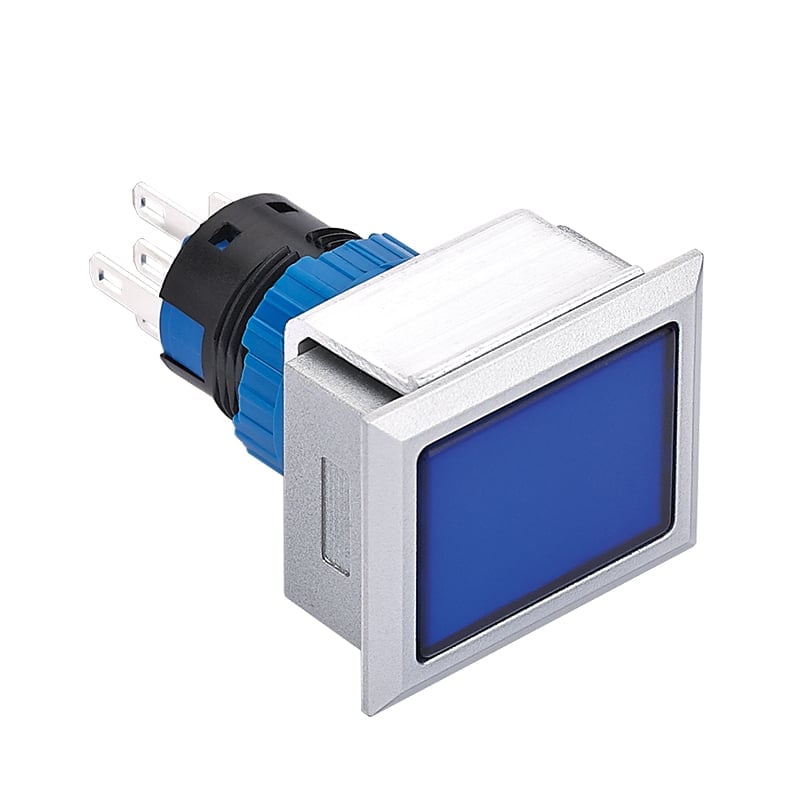
An illuminated button can contain several distinct parts. The exposed actuator, surrounding body, internal carrier and other insulating pieces need not be the same material. Specify the part whose evidence is being reviewed, then identify its grade, colour, supplier designation and traceable batch if available. An unspecified description such as “switch plastic” is insufficient for assigning a result to a particular face.
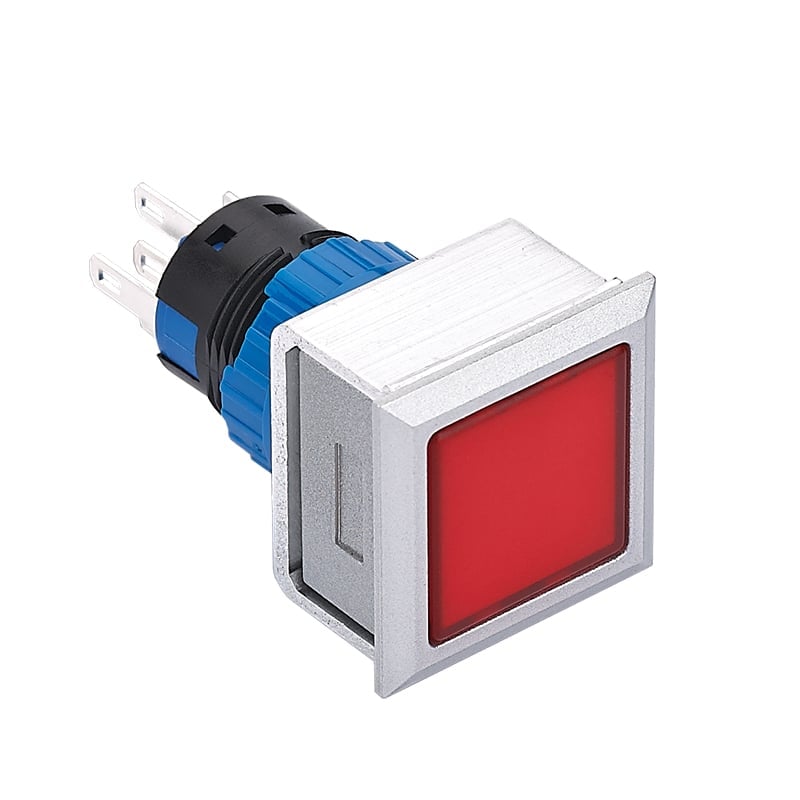
The LAS1-A product example helps explain the component identification question. Its original photographs identify the product configuration; they do not reveal a polymer grade, a surface resistivity value or a tested conditioning state. Ask ONPOW to confirm the ordered variant and whether an applicable material document is available before adding a test claim to a drawing.
Request a specimen map when the laboratory received a complete component. Which face was sampled, how was it prepared, and did preparation remove the finish whose behaviour matters? If a flat plaque was supplied instead, record that distinction. A plaque may support material screening while leaving the curved, marked or assembled production surface outside the evidence.
Compare only reports with compatible conditions
Use the following review table as a document checklist. It contains no acceptance limits; the checks follow the measurement conditions identified in the ASTM and IEC references above, combined with procurement traceability questions.
| Report item | What to request | Why the decision depends on it |
|---|---|---|
| Specimen identity | Grade, colour, batch and part or plaque description | Prevents assigning a result to an unrelated component |
| Tested face | Face identification and preparation record | Separates the original surface from a cut or altered face |
| Conditioning | Temperature, humidity, duration and storage history | Makes environmental differences visible |
| Electrical conditions | Applied voltage and electrification time | Prevents comparison of different measurement states |
| Electrode arrangement | Geometry, contact approach and calculation basis | Shows how resistance became a reported resistivity |
| Surface state | Cleaning, handling and contamination description | Identifies a relevant difference between supplied samples |
| Reporting limitations | Range, repeat results and deviations | Distinguishes an actual result from an instrument bound |
Do not average two reports merely because both use the same unit. First establish what was held constant. If one report describes a cleaned plaque and another describes an as received component, the comparison has two changed variables. Ask the laboratory whether a controlled paired evaluation would answer the question more directly.
Treat handling and cleaning as part of the sample history
A useful incoming sample record starts before testing. Record the package identifier, opening date, visible condition and any handling or cleaning before transfer to the laboratory. Keep retained samples labelled. If the purpose is to evaluate a cleaning process, preserve the cleaner identity and the actual process instruction rather than writing only “cleaned.”
Do not invent a solvent wash to make specimens look consistent. Cleaning can change the surface state being investigated. The laboratory should agree on preparation suitable for the selected method and the purpose of the comparison. When an as received surface is important, a cleaned result should be labelled as a separate condition, not presented as a correction of the original result.
The same distinction applies to field returns. A returned button has a service history that a new laboratory plaque lacks. Collect information about location, cleaning and observed symptoms without asserting a cause. A changed surface measurement may support further investigation, but it does not by itself identify which event caused an equipment problem.
Keep surface and bulk evidence separate
The companion guide to plastic volume resistivity reports concerns conduction through material. Use it when evaluating the bulk measurement and its sample dimensions. This article addresses the surface evidence and the conditions of the tested face. Request both only when each answers a defined engineering question.
Similarly, a high reported resistance does not establish a complete equipment safety assessment. The assembled configuration includes geometry, interfaces, connections and other application factors beyond a material test. Do not use a surface report to approve a working voltage, erase a required inspection or create a new certification statement.
If a purchasing specification asks for “antistatic” or “insulating” material, ask the specification owner for the applicable method, intended function and acceptance criteria. Those words can conceal different objectives. A supplier should receive a clear question instead of being asked to choose a favourable number from an unrelated data sheet.
Resolve an incomplete or contradictory report
Suppose two suppliers submit values that appear far apart. Supplier A identifies the specimen and environmental conditions, while supplier B provides only a brochure figure. The next action is not to rank A against B numerically. Request B’s underlying report and compare the defined conditions. If the missing document cannot be supplied, mark the value as unverified for this procurement decision.
For repeat results that vary, request the individual readings, specimen identifiers and laboratory comments. Keep any reported range or measurement bound intact. A statement that a reading exceeded an instrument range should not be converted into an exact value. Equally, do not discard a less favourable replicate simply because the average looks acceptable.
If a laboratory offers a nonstandard fixture for a small curved part, ask for its limitations in writing. The measurement may be useful for a controlled comparative investigation, but that does not automatically make it equivalent to the cited standard. Store the agreed purpose and limitations with the test file so a later buyer does not reuse it as a general product rating.
Prepare a practical supplier request
Send the complete ordered model, a photograph or drawing identifying the relevant plastic component, and the reason for the request. Ask whether the proposed material evidence refers to a production part, a separately moulded plaque or a resin supplier sample. Include the environment and cleaning process that engineering wants considered, without directing an unsafe test on installed equipment.
Before commissioning work, review the laboratory accreditation scope. Confirm the laboratory can address the selected measurement and specimen type. A general accreditation logo is less useful than a clear match between the planned work and the available scope, together with disclosure of any work outside that scope.
Close the review with one documented outcome: evidence suitable for the defined comparison, clarification required, or further application assessment needed. Record who made the decision and which report revision it used. This makes the file reusable when a supplier, colour or manufacturing route changes and prevents a material screening result from becoming an unsupported assembly claim.
Frequently asked questions
Does surface resistivity prove that a push button is electrically safe?
No. It describes evidence for a tested surface under defined conditions. The complete button and equipment require their own applicable assessment. Do not infer a working voltage, certification or permission to energize equipment from this material measurement.
Can I compare a plaque result with a finished actuator result?
Only after reviewing whether the specimens, surface preparation, geometry and conditions support the intended comparison. Record the different specimen types explicitly. The laboratory and application engineer should explain any remaining limitation before purchasing treats the values as equivalent.
Is the highest number always the best choice?
The appropriate result depends on the specified function and acceptance criteria. A number without specimen identity and measurement conditions is not a sufficient selection basis. Resolve the application requirements before using results to rank materials or approve a replacement.
What should I ask ONPOW to provide?
Provide the exact model and identify the component and surface under review. Request available material identification and applicable supporting documents. Product photographs support identification only; any surface measurement, method and acceptance decision must be established separately for the relevant configuration.
Further learning
NPTEL introduces dielectric response in polymers. This background helps distinguish material electrical properties; it is not a surface resistivity test on an ONPOW component.



