

When choosing an electrical switch, one of the first things to consider is how many circuits it needs to control and how those circuits should operate. You may have come across terms such as SPST, SPDT, DPST, and DPDT in product specifications, wiring diagrams, or electrical catalogs. But what do they actually mean, and which configuration is right for your application?
These abbreviations describe the number of poles and throws in a switch. In simple terms, they tell you how many separate circuits a switch can control and how many connection paths are available to each circuit.
Choosing the wrong configuration can lead to unnecessary wiring complexity, limited functionality, or compatibility issues. This guide explains the differences between SPST, SPDT, DPST, and DPDT switches, how they work, and what to consider when selecting one for your equipment.
1. What Do Poles and Throws Mean in a Switch?
Before comparing the four switch types, it helps to understand two basic terms: poles and throws.
- Pole: The number of independent circuits a switch can control.
- Throw: The number of output connections each pole can switch between.
Think of a pole as an independent control path and a throw as the number of available connection choices.
For example:
- A single-pole switch controls one circuit.
- A double-pole switch controls two separate circuits.
- A single-throw switch has one switched output path.
- A double-throw switch can connect a circuit to one of two output paths.
Once you understand these two terms, the abbreviations become much easier to read.
- SPST = Single Pole, Single Throw
- SPDT = Single Pole, Double Throw
- DPST = Double Pole, Single Throw
- DPDT = Double Pole, Double Throw
2. SPST vs. SPDT vs. DPST vs. DPDT: What’s the Difference?
The main difference is how many circuits a switch controls and how many connection paths are available.
| Switch Type | Poles | Throws | Main Function |
|---|---|---|---|
| SPST | 1 | 1 | Turns one circuit ON or OFF |
| SPDT | 1 | 2 | Connects one circuit to either of two outputs |
| DPST | 2 | 1 | Turns two separate circuits ON or OFF simultaneously |
| DPDT | 2 | 2 | Switches two separate circuits between two sets of outputs |
Here’s a simple way to remember them:
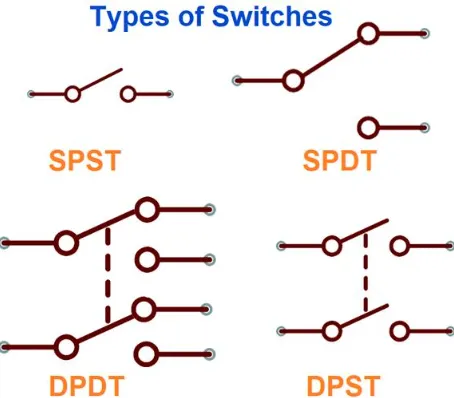
- SPST: One circuit, ON or OFF.
- SPDT: One circuit, two possible connection paths.
- DPST: Two circuits, ON or OFF together.
- DPDT: Two circuits, each switching between two connection paths.
3. What Is an SPST Switch?
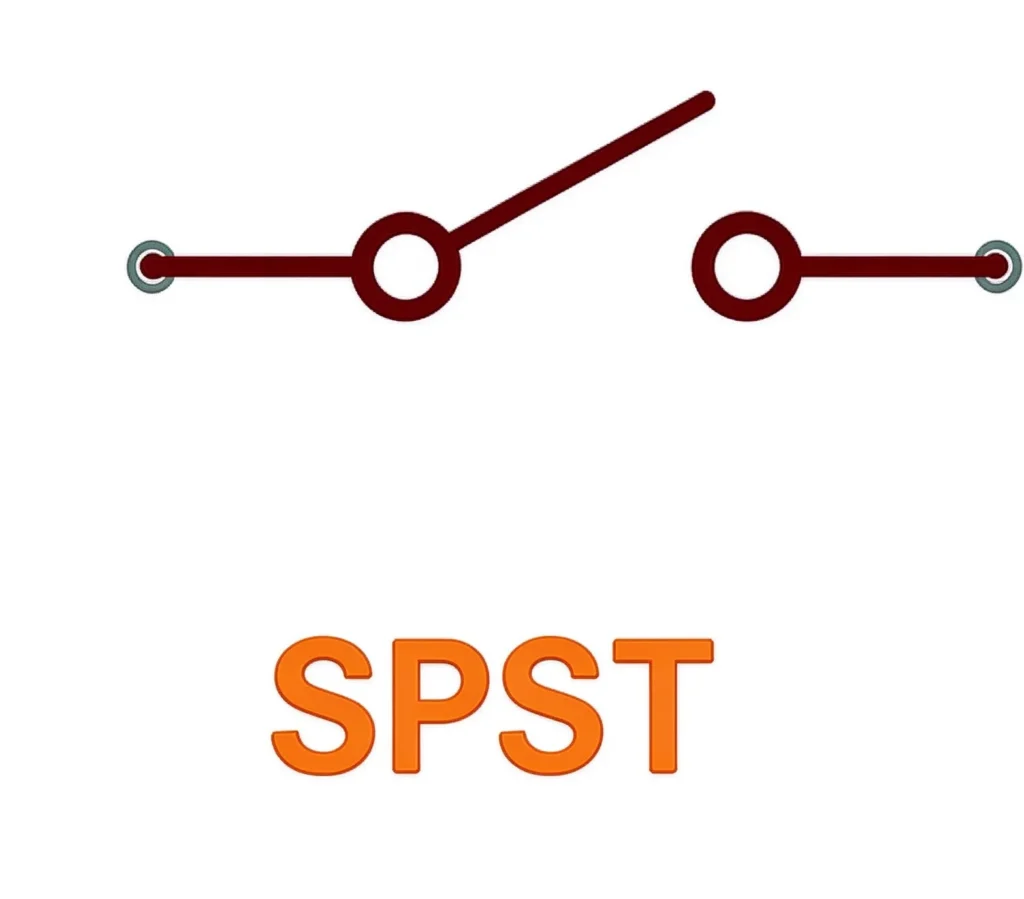
An SPST (Single Pole, Single Throw) switch is the simplest and most common switch configuration. It controls a single electrical circuit, allowing it to be opened or closed.
In the ON position, the contacts close and allow current to flow. In the OFF position, the contacts open and interrupt the circuit.
How does it work?
An SPST switch has two main terminals and two basic states:
- ON: The circuit is connected, allowing current to flow.
- OFF: The circuit is disconnected, stopping current flow.
Common applications:
- Power ON/OFF control for electrical equipment
- Lighting circuits
- Small appliances
- Basic industrial control panels
- Simple machine start/stop functions
4. What Is an SPDT Switch?
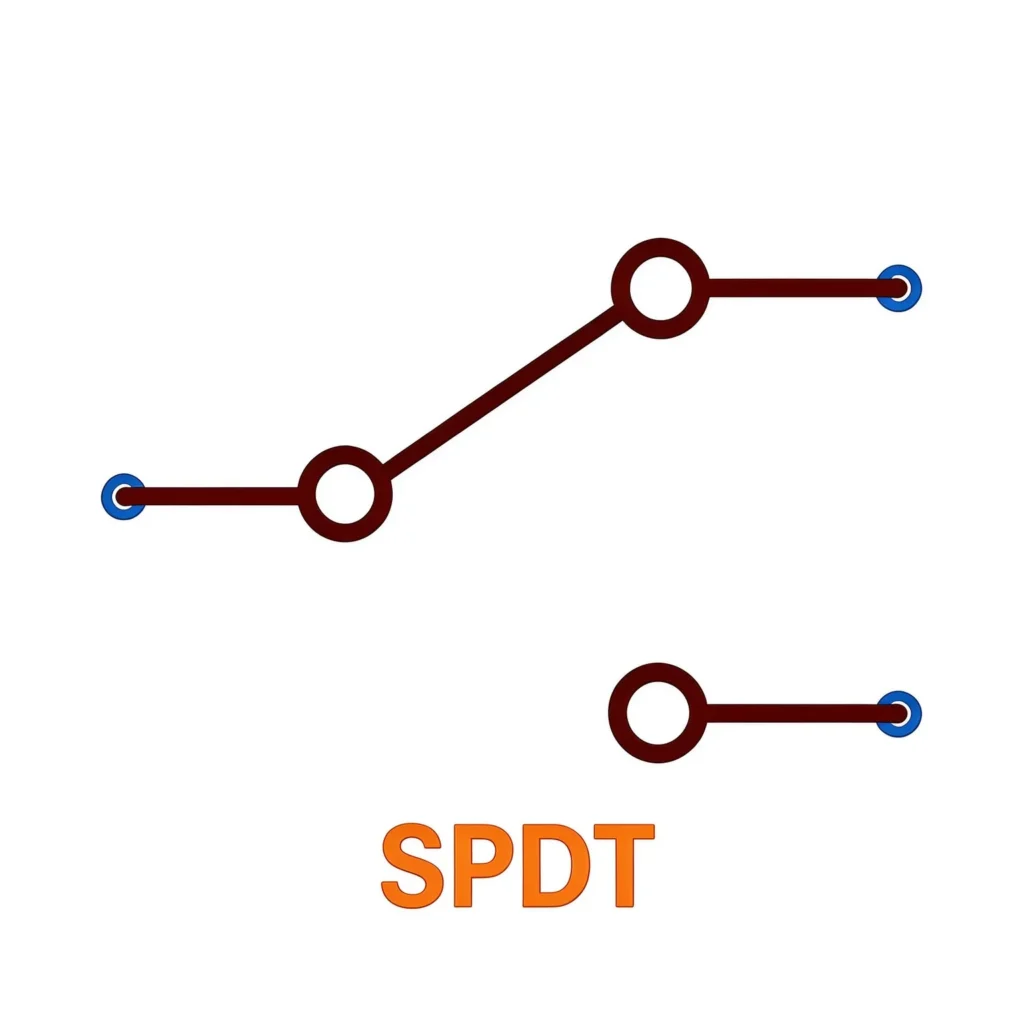
An SPDT (Single Pole, Double Throw) switch controls one circuit but provides two possible output connections.
Unlike an SPST switch, which simply opens or closes a circuit, an SPDT switch directs a common terminal to one of two output terminals.
How does it work?
An SPDT switch typically has three terminals:
- COM (Common): The shared connection.
- NO (Normally Open): Not connected to COM in the normal, unactuated state.
- NC (Normally Closed): Connected to COM in the normal, unactuated state.
Common applications:
- Selecting between two operating modes
- Switching between two signal paths
- Forward and reverse control circuits (when used in a suitable circuit arrangement)
- Electronic control systems
- Industrial equipment mode selection
5. What Is a DPST Switch?
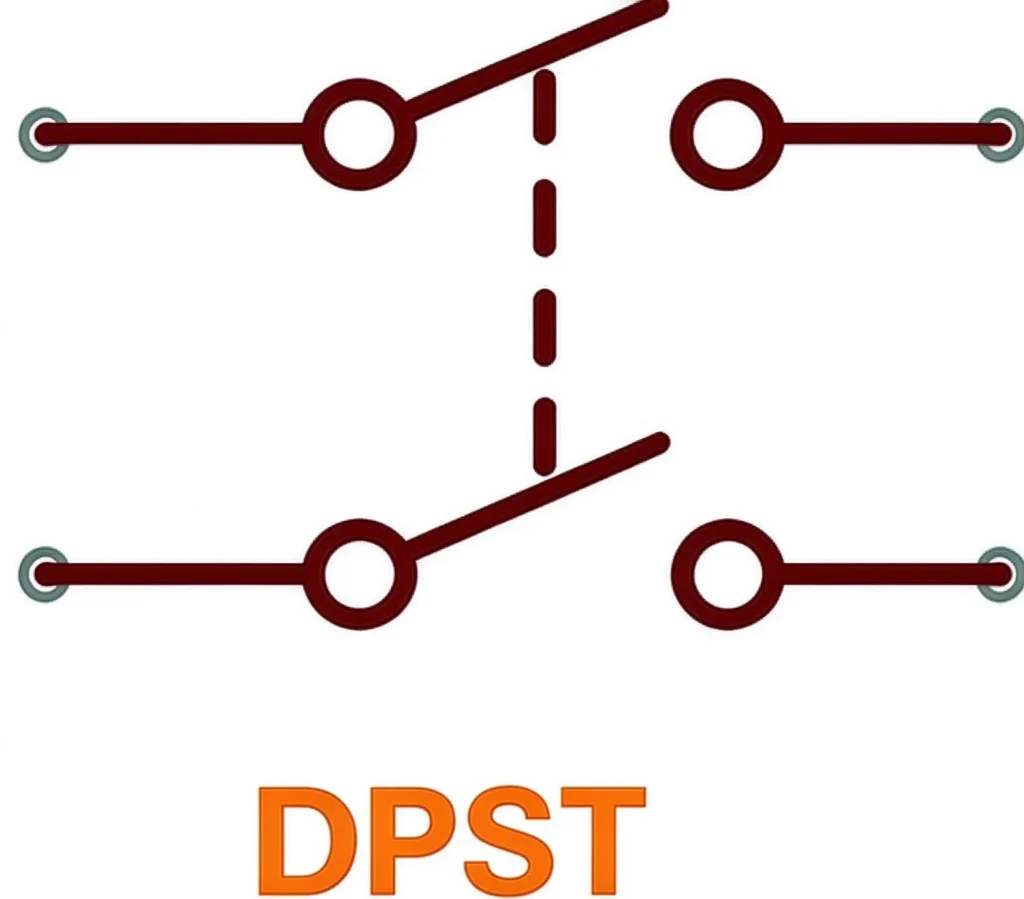
A DPST (Double Pole, Single Throw) switch controls two separate circuits at the same time.
It works similarly to an SPST switch, but instead of switching one circuit, it switches two independent circuits together.
How does it work?
A typical DPST switch has four main terminals, with two separate contact sets.
When the switch is turned ON, both contact sets close. When it is turned OFF, both open.
Common applications:
- Switching two electrical lines simultaneously
- Power control in industrial equipment
- Electrical appliances requiring two-pole isolation
- Control panels with multiple circuit connections
6. What Is a DPDT Switch?
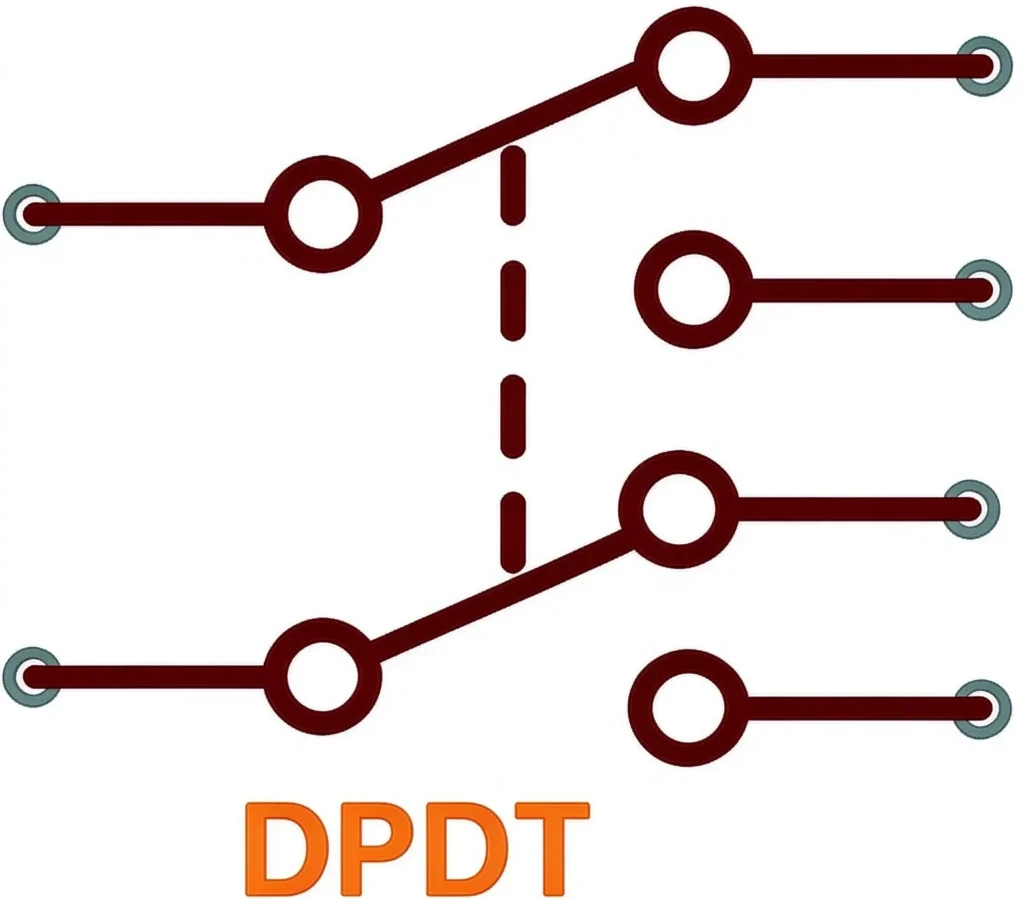
A DPDT (Double Pole, Double Throw) switch combines two poles with two throws.
It can control two separate circuits, with each pole switching between two output paths. This makes it one of the more versatile basic switch configurations.
How does it work?
A typical DPDT switch has six terminals:
- Two common terminals
- Two normally open terminals
- Two normally closed terminals
Each pole has its own changeover contacts. When the switch changes position, both poles transfer between their respective contact paths.
Common applications:
- Reversing DC motor direction with suitable wiring
- Switching between two power or signal sources
- Selecting alternative circuit configurations
- Industrial control systems
- Equipment requiring coordinated changeover switching
ONPOW Solutions for Every Configuration
At ONPOW, we manufacture a range of industrial push button switches designed for different control panel requirements. Our product options include different mounting sizes, contact configurations, illumination choices, and protection levels, with customization available for specific applications.



