

A metal buzzer is a compact audible signaling device used to alert people to machine status, operating conditions, warnings, or potential hazards. It converts electrical energy into sound, producing a clear tone that helps operators recognize when attention is needed.
You can find metal buzzers in industrial control panels, automation equipment, security systems, medical devices, and other applications where reliable audible alerts are important.
But how does a metal buzzer actually work? What makes it different from other types of buzzers, and what should you consider when choosing one for your equipment? Let’s take a closer look.
1. What Is a Metal Buzzer?
A metal buzzer is an electronic sound-producing component with a metal housing. When supplied with the appropriate electrical power, it generates an audible signal to communicate information or attract attention.
Unlike ordinary plastic-housed buzzers, metal buzzers typically feature a durable metal exterior. Depending on the design, this can provide better mechanical protection and make them suitable for demanding environments.
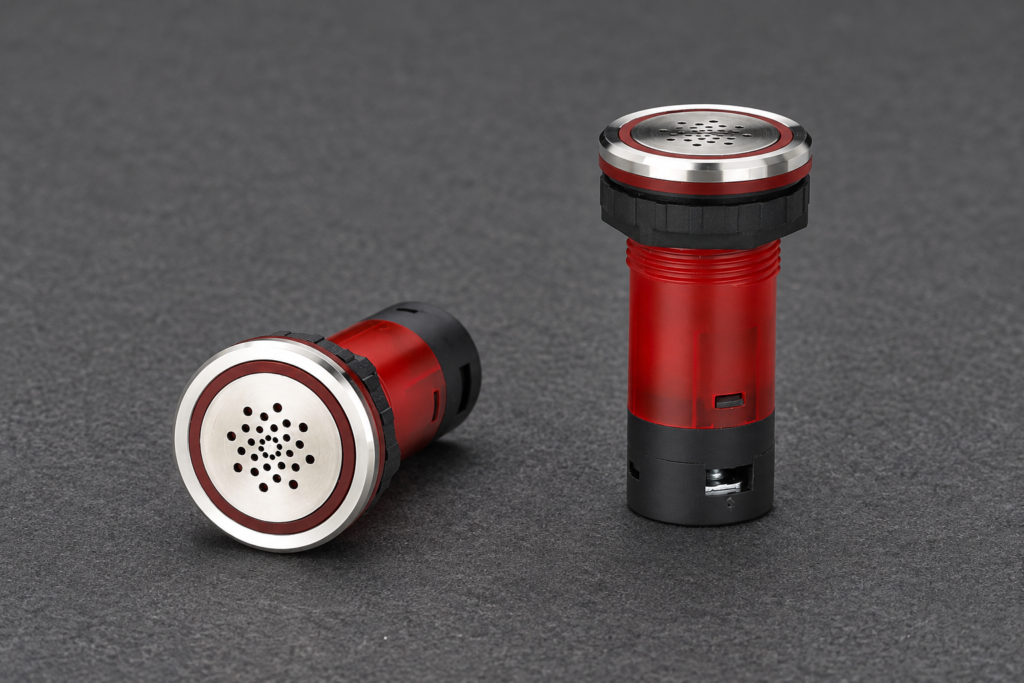
Their compact size also makes them easy to integrate into control panels, machinery, and electrical enclosures.
2. How Does a Metal Buzzer Work?
A metal buzzer works by converting electrical energy into sound vibrations. When an electrical signal reaches the buzzer, its internal sound-generating mechanism produces vibrations that create audible tones.
The exact operating principle depends on the buzzer’s design. Many electronic buzzers use piezoelectric or electromagnetic technology.
- Piezoelectric Buzzer
A piezoelectric buzzer uses a piezoelectric ceramic element. When an alternating electrical signal is applied, the element changes shape slightly and vibrates.These vibrations produce sound waves that can be heard as an audible tone.Piezoelectric buzzers are generally lightweight, energy-efficient, and suitable for applications requiring compact sound indicators. - Electromagnetic Buzzer
An electromagnetic buzzer works through the interaction between an electric current and a magnetic field.When current flows through a coil, it creates a magnetic field that attracts a movable metal component. This movement produces vibrations, which generate sound.Depending on the design, electromagnetic buzzers can produce different sound characteristics and are commonly used in alarm and signaling equipment.
The key difference: Piezoelectric buzzers generate sound through the vibration of a piezoelectric element, while electromagnetic buzzers use magnetic force to create mechanical movement.
3. What Are Metal Buzzers Used For?
The main purpose of a metal buzzer is to provide an audible signal when a machine, device, or system needs to communicate information.
Here are some common applications.
- Industrial Machinery and Automation
In industrial environments, metal buzzers are often installed in control panels and automated equipment.They can alert operators when a machine starts or stops, when a production process is complete, or when an abnormal condition occurs.
For example, an audible alarm can help workers respond quickly when a machine experiences an unexpected fault. - Security and Access Control Systems
Metal buzzers can be used in access control equipment, security panels, and electronic locking systems.They may provide audible feedback when a door is unlocked, an access card is accepted, or an unauthorized entry attempt is detected. - Medical Equipment
Some medical devices use audible indicators to notify healthcare professionals of changes in operating status or conditions that require attention.In these applications, a buzzer can provide an additional layer of communication alongside visual indicators and display messages. - Electrical Control Panels
Control cabinets and electrical distribution systems often use buzzers to indicate equipment status or abnormal operating conditions.An audible signal helps operators identify issues without having to continuously monitor the control panel. - Household and Commercial Equipment
Metal buzzers can also be found in commercial appliances, electronic devices, and other equipment that requires audible notifications.Typical examples include operation reminders, fault alerts, and user feedback signals.
4. Metal Buzzer vs. Plastic Buzzer: What’s the Difference?
Both metal and plastic buzzers are designed to produce audible signals, but their housing materials and application suitability can differ.
| Feature | Metal Buzzer | Plastic Buzzer |
|---|---|---|
| Housing Material | Metal | Plastic |
| Mechanical Protection | Generally more robust | Depends on plastic material and design |
| Appearance | Industrial and solid | Lightweight and versatile |
| Weight | Generally heavier | Generally lighter |
| Typical Applications | Industrial equipment, control panels, machinery | Household electronics, appliances, general electronic devices |
| Environmental Suitability | Depends on sealing and protection rating | Depends on sealing and protection rating |
Which one should you choose?
A metal buzzer may be a better choice when mechanical durability and an industrial appearance are important. A plastic buzzer may be more suitable when low weight and cost are the main considerations.
The best option ultimately depends on the installation environment, electrical requirements, and expected service life.
5.Why Choose an IP67 Waterproof Metal Buzzer?
Many applications are not limited to clean, dry indoor environments. Industrial machinery, outdoor units and commercial systems are frequently exposed to dust, splash water and humid conditions.
ONPOW metal buzzers feature IP67 protection. They are fully dust-tight and can withstand temporary water immersion under standard test conditions, making them suitable for demanding working environments.
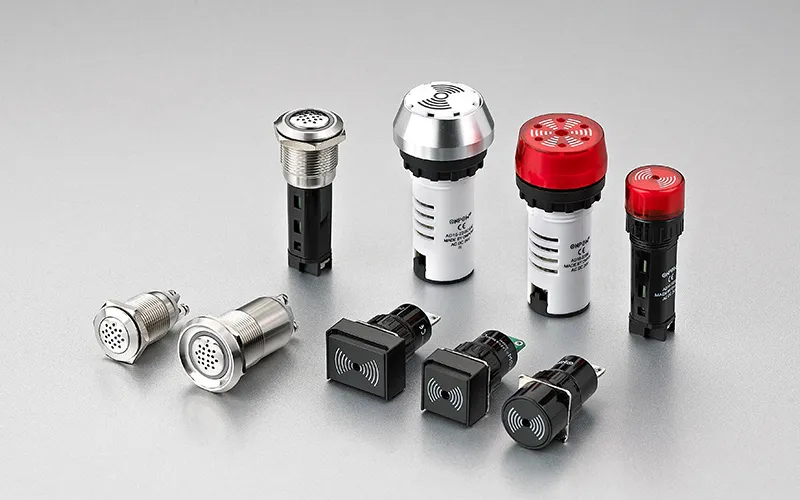
ONPOW metal buzzers feature IP67 protection. They are fully dust-tight and can withstand temporary water immersion under standard test conditions, making them suitable for demanding working environments.
If you have custom requirements for mounting dimensions, electrical configurations or operating conditions, please feel free to contact us, and we will recommend the most suitable buzzer for you.



