

When choosing indicator lights for control cabinets, machinery, electrical boxes, or industrial equipment, the housing material may seem like a small detail. However, it can actually affect product durability, appearance, environmental resistance, installation compatibility, and even the overall service life of the equipment.
So, should you choose a metal indicator light or a plastic indicator light? The answer depends on where the indicator light will be installed and the operating conditions the equipment needs to withstand. For harsh industrial environments and applications where durability and appearance are important, metal models are usually preferred; while for cost-sensitive equipment with lighter-duty requirements, plastic indicator lights are a practical choice.
This article explains the key differences between the two to help you choose the right indicator light without paying extra for performance you do not need.
Metal Indicator Light vs. Plastic Indicator Light: Quick Comparison
| Feature | Metal Indicator Light | Plastic Indicator Light |
|---|---|---|
| Durability | Excellent | Suitable for general applications |
| Impact Resistance | Usually higher | Depends on the type of plastic |
| Appearance | Premium industrial appearance | Lightweight and simple |
| Corrosion Resistance | Depends on metal material and surface treatment | Naturally resistant to many corrosive environments |
| Temperature Resistance | Generally good | Highly dependent on the material |
| Outdoor / Industrial Use | Very suitable | Depends on structural design and material |
| Cost | Usually higher | Usually lower |
| Long-Term Appearance | Durable and stable appearance | May develop scratches or fading over time, depending on the material |
| Most Suitable Applications | Industrial equipment, control cabinets, machinery | Consumer equipment, light-duty control cabinets, cost-sensitive products |
The table above is for initial reference only. When selecting an indicator light, the actual operating environment should be considered rather than focusing on the housing material alone.
1. Start with the Installation Environment
The first thing to consider is not “Which one looks better?” but: Where will this indicator light be used?
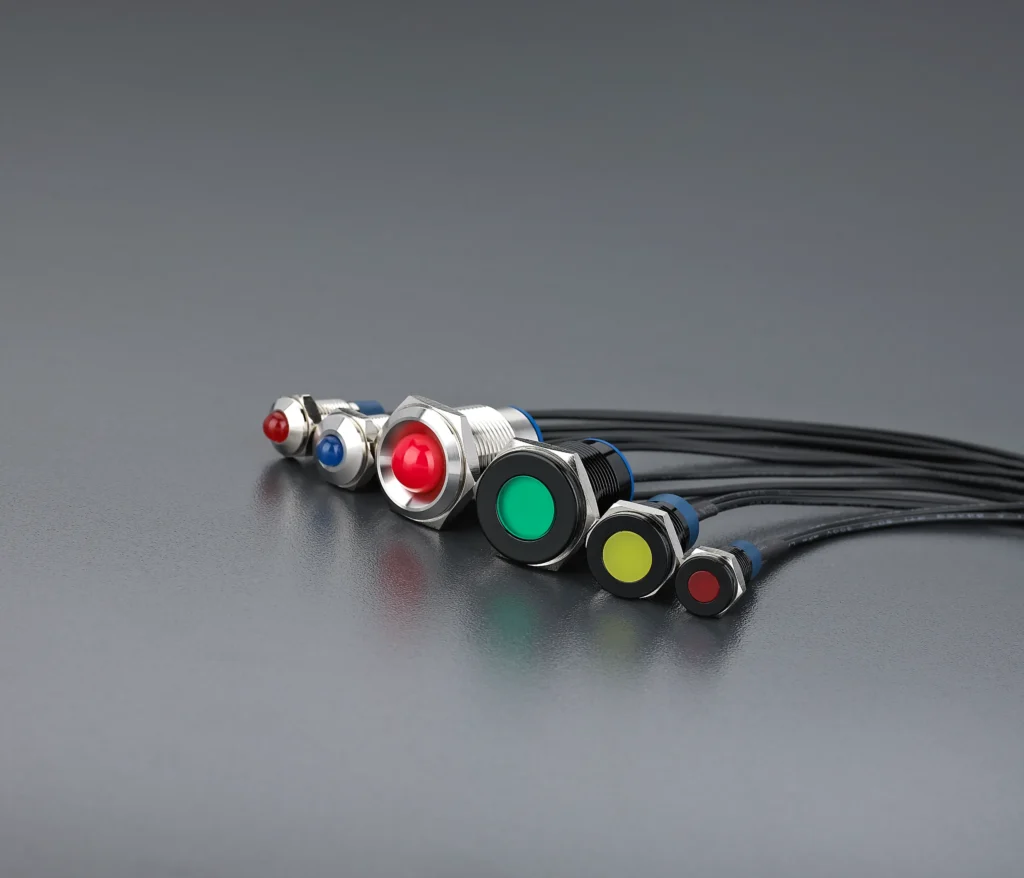
If the indicator light is installed on industrial machinery, factory control cabinets, power equipment, charging equipment, or equipment that will be frequently touched or operated, a metal indicator light may be more suitable.
For example, industrial equipment often encounters:
- Frequent operation
- Mechanical vibration
- Accidental impact
- Dust and moisture
- Temperature changes
- Continuous operation
- Frequent cleaning
In these applications, the housing should not only focus on appearance, but also maintain stable and reliable performance after repeated use.
If the indicator light is installed on well-protected indoor equipment, household equipment, or in applications where it is rarely touched, a plastic indicator light can fully meet the requirements.
2. When Should You Choose a Metal Indicator Light?
When a product requires durability, a high-quality appearance, and a secure installation effect, metal indicator lights are generally preferred.
- Stronger Mechanical Durability
The metal housing has a robust structure and can withstand repeated operation and mechanical stress. It is especially suitable for control cabinets and industrial equipment where operators frequently press buttons and adjust components around the panel. When installed on a panel, a metal housing also provides a more solid feel. - More Professional Appearance
For many equipment manufacturers, appearance is just as important as basic functionality. Metal indicator lights have a simple and solid appearance, making them highly suitable for industrial control panels, human-machine interfaces, and high-end equipment. Stainless steel and other metal surfaces can also match the style of other metal components on the panel. For this reason, metal indicator lights are often used on control panels that are visible to customers or operators.
Examples of suitable equipment include:
Industrial machinery, automation equipment, electrical control cabinets, charging equipment, power equipment, testing and measuring instruments, transportation equipment, machine tools, and commercial equipment.
However, housing material alone cannot determine whether a product is suitable for a particular operating environment. You should also check the IP rating, electrical specifications, LED specifications, installation method, and operating temperature range.
3. When Is a Plastic Indicator Light More Suitable?
Metal models are not the best choice for every application. When a high-strength housing is not required, plastic indicator lights are a good choice. Their advantages include:
- Lower cost
- Lighter weight
- Flexible housing designs
- Good insulation performance
- A wide range of color options
- Easy installation
For high-volume production, the cost difference between metal and plastic components can be significant. If the equipment is installed indoors, is not easily impacted, and does not require a premium metal appearance, a plastic model can be more economical and practical.
Important reminder: Do not select an indicator light based only on price. If a low-cost indicator light needs to be replaced frequently or cannot meet the operating environment requirements of the equipment, it may not actually be the better choice.
4. Metal vs. Plastic: Which One Should You Choose for Outdoor Use?
Outdoor applications require more factors to be considered. Many people naturally assume that metal is always more suitable for outdoor use, but this is not necessarily the case. The following factors should be considered carefully:
- IP-beschermingsgraad
- Material
- Surface treatment
- Sealing structure
- UV exposure
- Temperature
- Surrounding environment
For example, outdoor control cabinets may be exposed to rainwater, moisture, dust, sunlight, and temperature changes. In coastal environments, if the metal material and surface treatment are not properly selected, salt and moisture can also cause corrosion of metal components.
Therefore, when using a metal indicator light for outdoor equipment, do not look only at the housing material. Be sure to check the complete product specifications and environmental requirements.
5. How Should Corrosion Be Considered?
Corrosion resistance is another important factor. Different metals have different corrosion resistance characteristics, and the surface treatment process can greatly affect their performance.
In applications where the indicator light may come into contact with moisture, chemicals, or salt spray, should pay attention to:
- Housing material
- Surface treatment
- Sealing structure
- IP-beschermingsgraad
- Operating temperature
- Chemical exposure conditions
Plastic itself does not experience metal rusting and may have advantages in certain environments. However, a properly selected metal housing can also provide excellent durability and stable long-term appearance. The suitability of a material depends on the actual operating conditions, so the two should not be simply viewed as a one-or-the-other choice.
6. Does the Indicator Light Need to Be Waterproof?
If the indicator light is installed outdoors or may come into contact with water or cleaning liquids, water resistance is critical.
Do not only ask: “Is this a metal indicator light?”
Instead, confirm: What is the IP protection rating of the complete indicator light, and does it meet your installation requirements?
The IP rating represents the product’s ability to resist dust and water under specified test conditions. For industrial applications, the IP rating is often more important than whether the housing is made of metal or plastic. A well-sealed metal indicator light can be an excellent solution for demanding panel applications, but the IP rating must be based on the manufacturer’s specifications.
7. Consider the Installation Method
Installation details can sometimes be overlooked by purchasers. Before selecting a product, confirm:
- Panel cutout diameter
- Panel thickness
- Installation method
- Terminal type
- Wiring method
- Required installation space
- Clearance required in front of the panel
For example, indicator lights in 16 mm, 19 mm, and 22 mm sizes correspond to different panel cutout dimensions. If you are replacing an existing indicator light, measuring the original panel cutout before placing an order can save considerable time and help prevent installation problems.
8. Check the Electrical Specifications
Housing material is only one part of the selection process. You also need to confirm the electrical requirements of the indicator light, including:
- Rated voltage
- LED light color
- Operating current
- Terminal configuration
- Operating temperature
- Service life
- IP-beschermingsgraad
- Panel cutout dimensions
For example, if your control system uses DC 24V, you need to select an indicator light compatible with this voltage. Even if the housing material is correct, the product still cannot be used if its electrical specifications do not match.
Should You Choose a Metal Indicator Light or a Plastic Indicator Light?
There is no universal answer.
When you prioritize durability, a solid industrial appearance, mechanical strength, and long-term stable panel quality, a metal indicator light is generally a suitable choice. If you place greater importance on lightweight design, low cost, insulation performance, or simply need a basic housing, a plastic indicator light may be more suitable.
The most reliable selection approach is: Determine the operating conditions and technical requirements first, and then choose the housing material.
In other words, do not choose metal simply because it sounds more durable, and do not choose plastic just because it is cheaper. Choose the material that matches the actual requirements of your equipment.
Related Article Links:
- Metal Indicator Light
- Communication Industry Indicator Light Solution: Reliable Status Signaling with ONPOW GQ12T
ONPOW Industrial Metal Indicator Lights
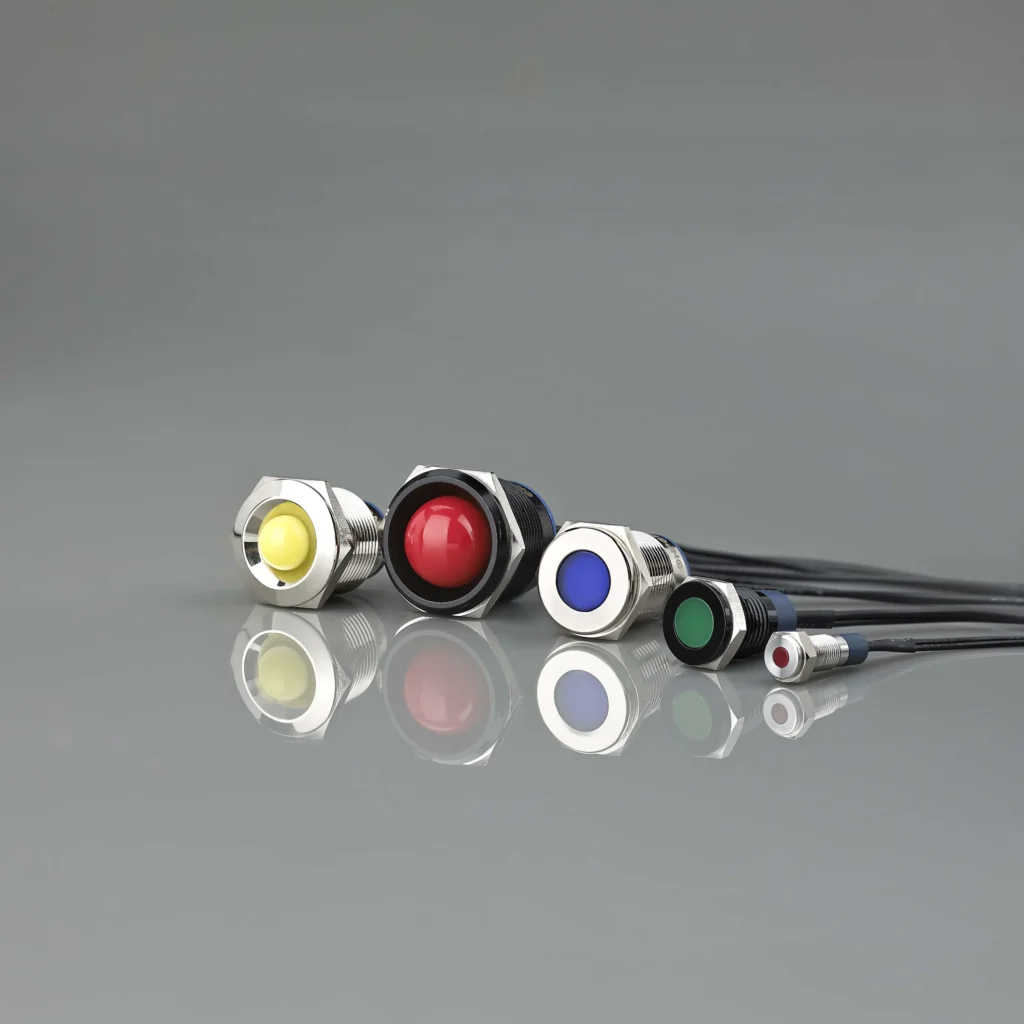
ONPOW offers a wide range of metal indicator lights in different sizes, LED light colors, voltage options, and configurations to meet various panel designs and electrical requirements.
If you need an indicator light suitable for your specific application, our engineers can assist with product selection based on your specific requirements.
CONTACT US
Customization
ONPOW undertakes a variety of custom needs for push-button development. Confirm whether packaging, marking or documentation OEM/ODM applies to Metal Indicator Light vs. Plastic Indicator Light: How to Choose? in the quotation.
Minimum order quantity, lead time and trade terms are not published here; confirm them with sales at sales@onpow.com.



