

A waterproof key switch must be selected for the complete installation and its actual exposure, rather than for the word “waterproof” in a listing. Confirm the specified ingress-protection rating, whether it applies to the front face or the whole device, the panel sealing requirements and the conditions of the documented test. Then assess temperature, condensation, sunlight, corrosion, cleaning chemicals and rear-terminal protection separately. An IP rating does not establish unrestricted outdoor or washdown suitability. For an industrial control panel, the correct purchase brief describes the exposure and the required installation evidence before it names a preferred switch finish or head style.
Start with an exposure description
The first question is not “which waterproof key switch looks right?” It is “what will reach the installed operator, from which direction, and during which task?” Rain on a sheltered front face, occasional splashes, repeated cleaning and immersion are different exposures. A panel under a roof may still experience wind-driven moisture or condensation inside the enclosure.
Record the expected operating environment and the cleaning procedure. Describe the liquid, its temperature, the cleaning method and whether the operator is manipulated while wet. If the equipment moves between warm and cool locations, include the possibility of condensation. If the device is installed outdoors, add sunlight and corrosion considerations rather than treating water as the only issue.
Do not invent a pressure or duration that the site has not specified. Ask the responsible equipment owner to define the real conditions and the acceptance requirements. A supplier can then confirm whether a particular version is appropriate, or identify the additional protection needed.
Read an IP rating within its scope
The IEC’s IEC 60529 publication listing identifies the standard for classification of degrees of protection provided by enclosures. The rating identifies specified protection conditions; it is not a general promise about every environmental influence.
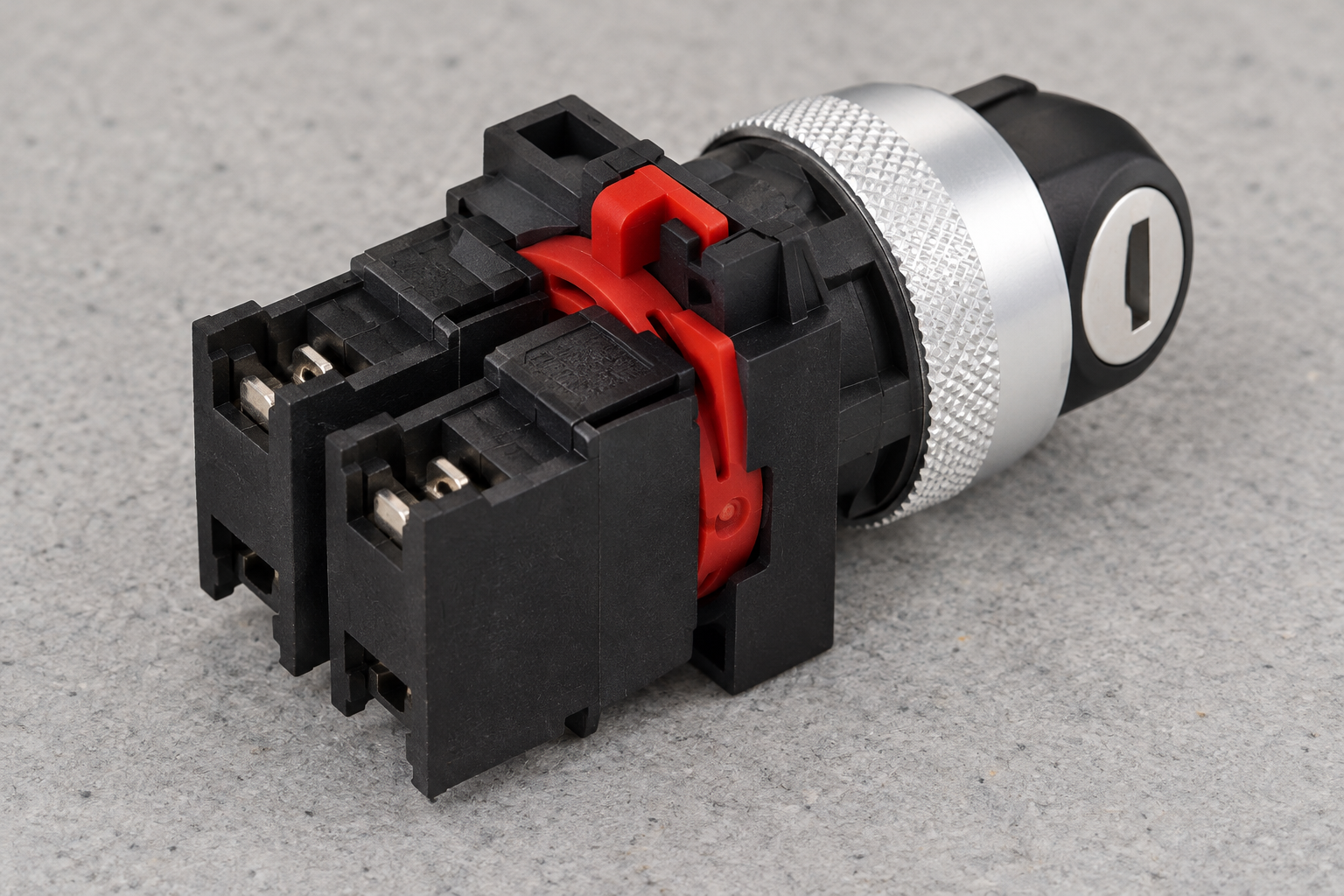
A product may state a front-panel protection rating. That wording matters because the rear contact assembly can require protection from the enclosure. The installed result also depends on the correct cutout, panel thickness, seal, retaining arrangement and installation instructions. A loose or unsuitable mounting interface can undermine a sound device selection.
Ten ONPOW keyed operator family includes front-panel protection information. Treat it as product-family information to confirm for the exact ordered version. Do not translate it into a claim that exposed rear contacts can tolerate rain or that an assembled machine has passed an enclosure test.
Separate ingress protection from outdoor suitability
An outdoor installation exposes more than a seal to water. Ultraviolet light can affect some materials; temperature affects operation and seals; salt or industrial chemicals can contribute to corrosion; internal condensation can reach parts that front-face water testing does not address. The exact material and environmental limits need their own evidence.
A metal face may be chosen for appearance or mechanical requirements, but “metal” does not identify the alloy, coating or resistance to every chemical. A plastic component may be suitable for an application, but its color and shape do not establish UV performance. Ask for the actual material and the supplier’s documented compatibility information.
The equipment installation requirements in 29 CFR 1910.303 provide US workplace context for suitability and environmental considerations. They do not certify an individual ONPOW model for outdoor use. Apply the rules relevant to the installation and verify the exact equipment requirements.
An environmental selection table
This checklist organizes the questions that should appear in a quotation request. It does not assign a protection class or recommend a cleaning process without the application data.
| Exposure or interface | Evidence to request | Common mistake to avoid |
|---|---|---|
| Water reaching the front face | Exact IP rating, scope and specified installation | Treating a front-face rating as rear-contact protection |
| Cleaning liquids | Compatibility with actual chemicals and procedure | Assuming clean-water testing covers detergents or solvents |
| Outdoor sunlight | Material or assembly suitability information | Equating a waterproof listing with UV resistance |
| Hot or cold operation | Operating limits for the exact version | Using a generic family range for every option |
| Condensation inside the panel | Enclosure and environmental-control assessment | Protecting the head while leaving rear contacts exposed |
| Mounting cutout and seal | Approved cutout, panel thickness and seal arrangement | Substituting a convenient washer without approval |
| Key operation during exposure | Confirmation of intended operation conditions | Assuming stationary testing covers every operating sequence |
Complete the table with the application owner and panel builder. Where evidence is missing, keep the item open instead of marking the switch suitable from a photograph.
The key cylinder adds practical considerations
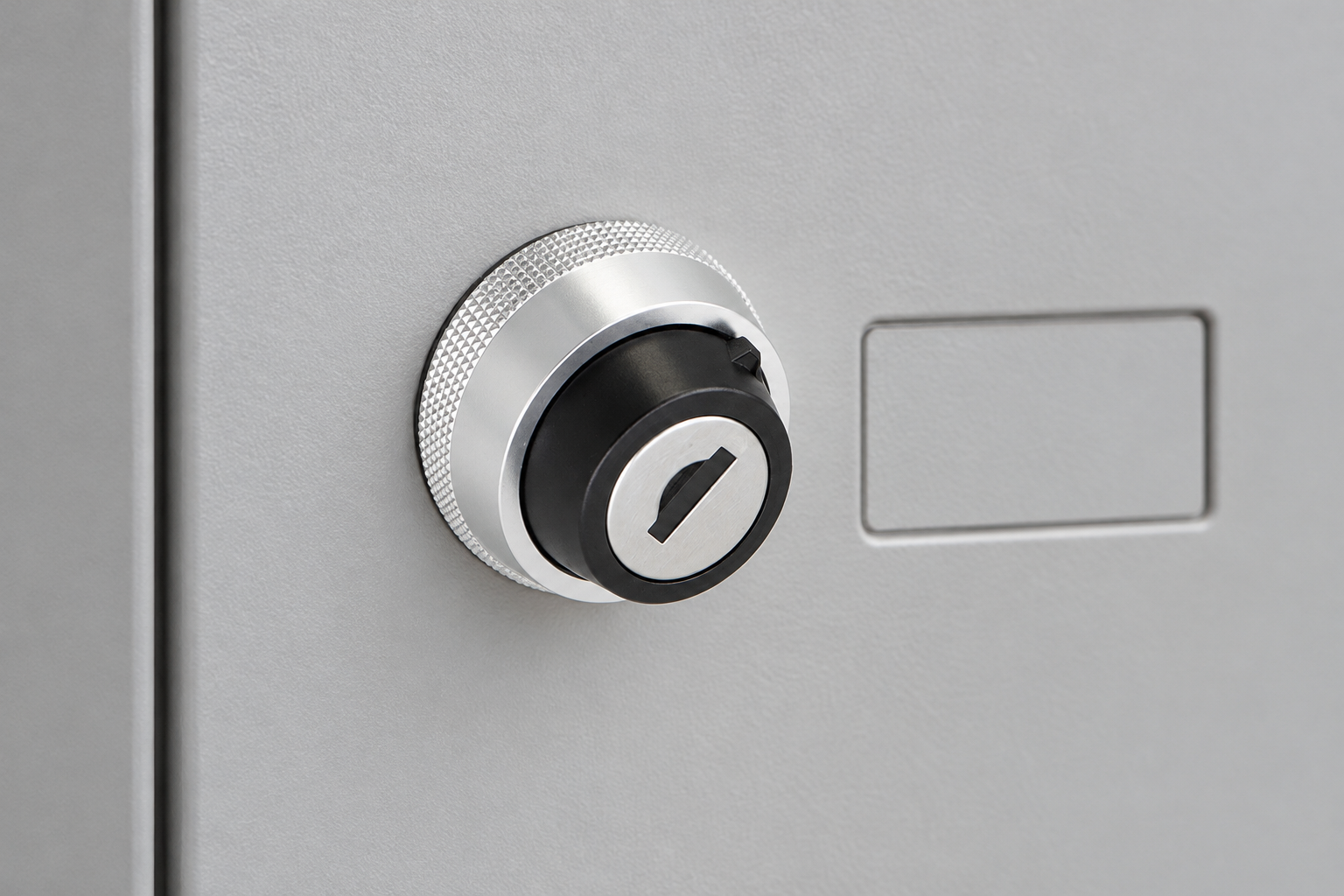
A keyed operator has an access opening and an operating mechanism. Ask whether the specified protection applies with the key removed, inserted, turned or under other stated conditions. Do not assume every position has identical protection simply because the head looks unchanged.
Check whether a cover is available and what its documented role is. A cover can affect access, visibility and the operating sequence. It may help shield the device, but it does not automatically upgrade the tested rating or eliminate the need for correct mounting. Do not add an improvised cover that creates a new obstruction during an important operation.
Consider the user’s gloves and the space around the key. A switch can meet the environmental brief while being difficult to operate in the actual task. That is a separate design issue, and it should be addressed in the panel layout rather than by forcing the operator to use the key at an awkward angle.
Protect the rear assembly and panel interface
The enclosure needs to accommodate the rear body, contact blocks, conductors and service access. Protecting only the front face can leave an incomplete installation if moisture enters through nearby openings, cable entries or the enclosure itself.
Follow the supplied mounting instructions for the exact device. Verify that the sealing surface is appropriate and that the retaining method is compatible with the panel. Do not invent a tightening torque or a panel thickness from a similar-looking product. A different version or material can have different assembly requirements.
Ten two-position key switch guide helps define the contact action, while the two-position selector wiring guide explains the need to compare position states with the control circuit. Environmental selection must preserve those electrical and operating requirements as well.
Keep electrical duty in the same purchase brief
An environmentally suitable head still needs suitable contacts. Confirm the actual signal or load, AC or DC duty, relevant ratings and connection arrangement. A front-panel protection rating does not establish the ability to switch a motor, solenoid or electronic input.
If the switch contains illumination, specify the lamp supply independently of the contact duty. Sealed appearance does not identify the electrical connection scheme. Obtain the exact drawing before the panel builder assigns terminals or orders an alternate version.
For a temporary command, review the momentary key switch selection guide. The return action and removal positions remain separate from ingress protection. A buyer should not have to trade away the correct control behavior merely to obtain a preferred environmental option.
Maintenance without creating a new exposure
Use the supplier’s instructions for cleaning and maintenance. Do not prescribe solvents, oils or pressure spraying for a lock cylinder without documented compatibility. A method that appears to improve key movement can damage a seal or leave contamination in an unsuitable place.
Inspect the head, key opening, panel interface and enclosure according to the machine’s maintenance procedure. Look for mechanical damage, looseness, corrosion and evidence of moisture where it does not belong. Investigate the cause rather than replacing a wet contact block while leaving the entry path unchanged.
Work on the equipment belongs within the applicable isolation and electrical safety procedures. The ordinary key switch is a control device; possessing its operating key does not necessarily isolate energy. Where US requirements apply, use the appropriate workplace practices rather than treating a key as the sole maintenance safeguard.
Acceptance should match the actual requirement
Compare the delivered model and options with the supplier’s written confirmation. Verify the mounting and environmental scope in the documentation. Check the operator action, removal positions and contact sequence using the responsible commissioning procedure.
Do not improvise a water test on installed energized equipment. An informal hose demonstration can create hazards and does not necessarily reproduce a recognized test condition. If verification of the assembled panel’s protection is required, specify the appropriate test and responsible party before installation.
Retain the product drawing, installation instructions and environmental acceptance record. This makes future replacements more reliable than ordering by head size and a remembered “waterproof” description. When requesting a quotation from ONPOW, send the complete exposure table with photographs or drawings of the proposed enclosure interface.
Further learning: the switch and its controller
The RealPars lesson explains how a physical contact relates to a PLC program. It is included to support electrical specification alongside environmental selection. It does not demonstrate an ingress test or prove that the illustrated keyed operator is suitable for outdoor use.

Questions about waterproof keyed operators
Does an IP rating mean a key switch can be used outdoors?
No. Outdoor suitability also depends on materials, sunlight, temperature, corrosion, condensation and the complete installation. Confirm the actual exposure and the exact product version separately.
Does front-panel protection include the rear contacts?
Do not assume so. Read the scope of the product rating and protect the rear assembly through the intended enclosure and installation. Confirm any whole-device protection claim with the supplier.
Can a cover increase the IP rating?
A cover does not automatically change a tested rating. Request the documented protection and installation requirements for the complete combination. Also review whether the cover interferes with access.
Can cleaning chemicals be selected from the water rating?
No. Chemical compatibility is a separate requirement. Send the actual liquids and cleaning procedure to the supplier and avoid prescribing undocumented solvents or lubricants.
What information is needed for a quotation?
Provide water exposure, cleaning conditions, temperature, sunlight or corrosion concerns, mounting details, contact duty, operator action and key removal positions. Request written confirmation for the exact available version.



