A push button plastic specific heat capacity report is useful when an engineer needs a traceable thermal model input for a particular material. Review the measured temperature range, specimen identity, DSC procedure and calibration before accepting the numbers. A heat capacity value describes stored thermal energy per unit mass and temperature change. It does not establish a button’s permitted operating temperature, current rating or resistance to deformation. For purchasing, the practical question is whether the reported material and conditions match the component being evaluated, and whether the result answers a defined engineering question.
Decide whether heat capacity evidence is actually needed
Most replacement button orders begin with mounting dimensions, contact function, terminal arrangement and the equipment specification. A thermal material report should support a specific investigation rather than become a generic document requirement. It can be relevant when comparing transient heating assumptions, investigating a changed molded material or asking a simulation team which inputs are still uncertain.
Write the intended decision at the top of the request. For example: confirm whether two candidate material datasets can be compared over the same temperature interval. That is a manageable question. Asking a laboratory to prove that a complete control station will remain cool from one small polymer sample is a different task, requiring assembly information and an appropriate assessment.
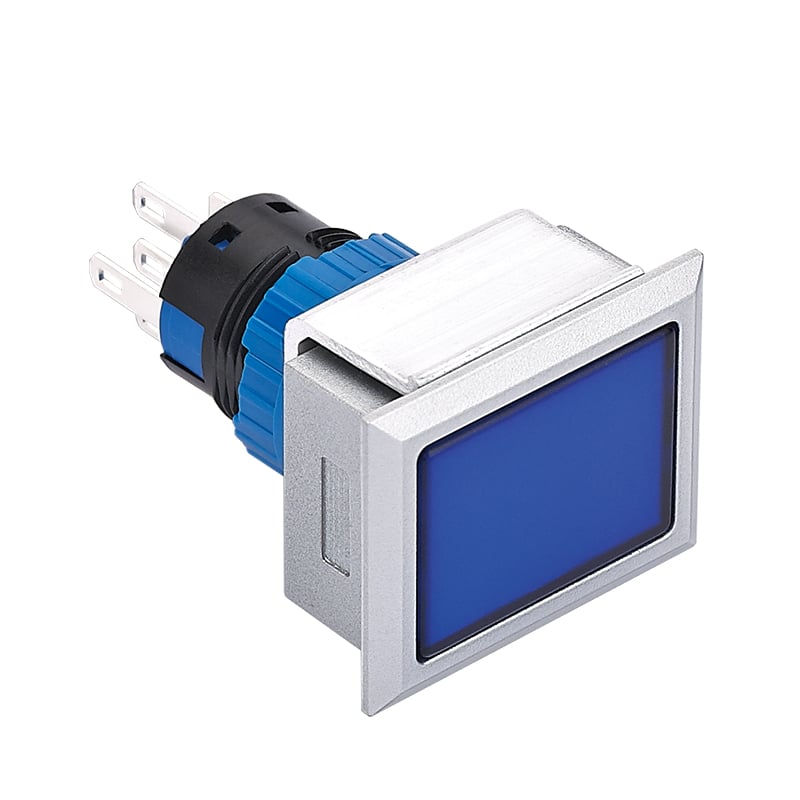
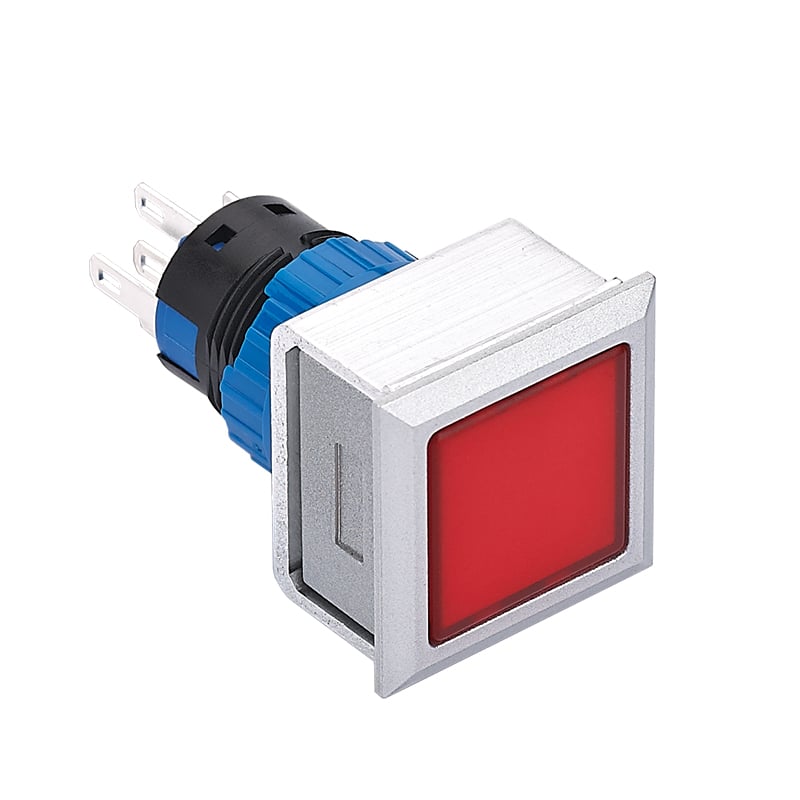
The ONPOW LAS1-A 22 mm product example helps identify the kind of panel component under discussion. Its photograph does not identify the formulation of every molded part. Ask the supplier which specific component the material evidence covers before assigning any result to the actuator, housing or mounting accessory.
Read the property and its units correctly
Specific heat capacity is commonly written as cp. The NIMS PoLyInfo property guide distinguishes heat capacity per unit mass from other thermal properties and records measurement conditions. In a report, preserve the units exactly. J/(g·K) and J/(kg·K) differ by a factor of one thousand, even though both describe the same type of property.
For a simplified interval with approximately constant cp, sensible heat can be estimated as Q = m × cp × ΔT. Here Q is energy, m is the mass of the material represented by the dataset, and ΔT is its temperature change. Keep the mass and heat capacity units consistent. A temperature difference in kelvin has the same numerical size as a difference in degrees Celsius.
Consider a purely illustrative calculation: a 5 g sample with an assumed cp of 1.2 J/(g·K), heated through 10 K, stores approximately 60 J of sensible heat. Those values are invented only to demonstrate units; they are not ONPOW measurements or design limits. The calculation does not give heating time without heat input and losses, and it does not represent latent heat during a phase change.
Understand what a DSC report can contribute
ASTM E1269 addresses determination of specific heat capacity using differential scanning calorimetry. Its public scope is a starting point for identifying the requested method, not a substitute for the laboratory’s controlled procedure or the complete standard. Require the report to state the method edition actually used.
A useful report distinguishes the sample signal from the instrument baseline and identifies how heat flow was calibrated. Ask for the reference material, calibration record identifier and any stated limitations. You do not need to prescribe instrument settings from a general purchasing article. The laboratory should justify its procedure for the specimen and the question being asked.
The NPTEL introduction to DSC provides educational context for the relationship between heat flow and programmed temperature. A buyer should still ask whether the delivered output is a cp dataset, a transition scan, or another thermal analysis result. The same instrument name does not make different measurements interchangeable.
Trace the specimen to a real component
Start with the ordered product code, drawing revision and component name. Then ask for the resin designation or other controlled material identifier, color or additive variant where relevant, production lot and specimen preparation route. A plaque supplied by a resin producer and a piece removed from a finished component have different traceability paths.
If the specimen comes from a molded part, record the sampling location. A report describing only “plastic sample” may be technically meaningful to the laboratory but insufficient for a purchase decision. The procurement record should connect that description to a drawing or photograph with a clearly identified component.
Do not combine different pieces to obtain sufficient test mass without laboratory agreement and disclosure. If a sample contains coating, metal inserts or adhesive, its measured response may represent the mixture rather than the intended polymer alone. Ask how foreign material was handled and preserve the original sample description in the evidence file.
Use a report review table before comparing suppliers
The following table is a purchasing checklist, not a list of mandatory method settings. The laboratory remains responsible for the procedure, while the equipment designer decides whether the data are relevant to the application.
| Rapor maddesi | Kontrol edilecekler | Action if information is missing |
|---|---|---|
| Bileşen kimliği | Product code, part description and material reference agree | Request a specimen-to-part mapping |
| Yöntem | Method designation, edition and deviations are stated | Ask for the controlled procedure reference |
| Temperature interval | Data cover the actual modeling interval | Obtain additional measurements or restrict use |
| Birimler | Mass basis and temperature units are explicit | Resolve units before entering data |
| Isıl geçmiş | Conditioning and heating or cooling sequence are identified | cURL Too many subrequests by single Worker invocation. To configure this limit, refer to https://developers.cloudflare.com/workers/wrangler/configuration/#limits |
| cURL Too many subrequests by single Worker invocation. To configure this limit, refer to https://developers.cloudflare.com/workers/wrangler/configuration/#limits | cURL Too many subrequests by single Worker invocation. To configure this limit, refer to https://developers.cloudflare.com/workers/wrangler/configuration/#limits | cURL Too many subrequests by single Worker invocation. To configure this limit, refer to https://developers.cloudflare.com/workers/wrangler/configuration/#limits |
| Output | cURL Too many subrequests by single Worker invocation. To configure this limit, refer to https://developers.cloudflare.com/workers/wrangler/configuration/#limits | cURL Too many subrequests by single Worker invocation. To configure this limit, refer to https://developers.cloudflare.com/workers/wrangler/configuration/#limits |
| cURL Too many subrequests by single Worker invocation. To configure this limit, refer to https://developers.cloudflare.com/workers/wrangler/configuration/#limits | cURL Too many subrequests by single Worker invocation. To configure this limit, refer to https://developers.cloudflare.com/workers/wrangler/configuration/#limits | cURL Too many subrequests by single Worker invocation. To configure this limit, refer to https://developers.cloudflare.com/workers/wrangler/configuration/#limits |
Compare temperature curves rather than isolated numbers
An isolated room temperature value may be useful for an initial estimate, but it does not automatically describe a wider interval. Request a table with temperatures, units and the data treatment stated. Keep the original curve so that a future reviewer can see whether a tabulated value sits near a transition or an unusual feature.
When comparing two reports, first align their temperature points and sample histories. If one result was taken on initial heating and another after a controlled cooling cycle, ask whether that difference matters. Do not silently interpolate across an interval that the laboratory has excluded or across a feature that requires separate interpretation.
A higher value is not automatically a better button material. The useful value is the one that accurately represents the component for the model’s purpose. If the engineering decision is insensitive to the measured difference, additional decimal places may add paperwork without changing the choice. Agree on decision criteria before testing rather than selecting them after seeing favorable results.
Keep heat capacity separate from other thermal evidence
Heat capacity concerns energy storage. Heat transfer through a material requires different evidence; the plastik termal iletkenlik kılavuzu addresses that separate question. A material that stores more heat per degree is not necessarily a material that carries heat away more effectively.
Likewise, a thermal calculation may require mass or density information. The plastic density report checklist helps keep the density input traceable. Check that the model does not use the mass of an entire switch with cp data representing only one polymer component.
Operating limits belong to the applicable component and equipment documentation. A cp measurement should not be used to infer a continuous service temperature, overload allowance, flame classification or electrical endurance. If the real concern is local heating at a connection, an assembly investigation is needed; a polymer property alone cannot explain the electrical source or the heat path.
Handle unclear or inconsistent results
Put the affected dataset on hold for its intended engineering use, while keeping unrelated verified product information available. Describe the discrepancy precisely: missing units, an untraceable specimen, inconsistent temperature labels or a large unexplained difference between repeats. A specific question is easier for a supplier or laboratory to resolve than a request for a more convincing certificate.
For laboratory competence and scope, use the laboratory accreditation review guide. Accreditation should be checked against the relevant activity and location; it does not remove the need to inspect the actual report and specimen identity.
If a corrected report is issued, archive both versions and note which model input changed. Avoid replacing an old attachment without recording the revision. Engineers who later investigate a simulation discrepancy need to know whether the difference came from a material change, a revised measurement or a transcription correction.
Build a concise supplier request
A useful request includes the ordered configuration, the molded part being assessed, the intended temperature interval and the reason for needing cp data. Ask for the report number, specimen traceability, method edition, curve and numerical output. State whether a resin supplier dataset is acceptable for screening or whether evidence from the actual production material is required.
Keep the request proportionate. Some projects need only a documented preliminary assumption, clearly marked for later validation. Others need a measured dataset tied to a controlled material revision. Treat these as different evidence stages, and let the responsible engineer decide when the input is adequate for the design decision.
For an ONPOW inquiry, send the exact product code and identify the part of interest. Request current documentation instead of inferring material composition from product appearance. This makes it possible to discuss what evidence exists and what additional work, if any, would answer the application question.
Sıkça Sorulan Sorular
Does a specific heat capacity report establish the operating temperature of a button?
No. It describes a thermal material property under stated measurement conditions. The permitted operating conditions of a complete switch require its applicable documentation and equipment assessment.
Can a DSC transition report replace a cp dataset?
Only if it actually contains a valid specific heat capacity determination suitable for the intended use. The instrument name alone does not establish that the required property was measured.
Should I select the material with the highest cp value?
No general preference applies. Compare values only when the sample identity and conditions match, then evaluate their relevance to the engineering decision and the other required properties.
What should I do if the supplier provides only a resin datasheet?
Record it as a datasheet-based input, verify the material designation and conditions, and ask the responsible engineer whether that evidence is sufficient. Do not describe it as a measurement of the finished button.
Daha fazla bilgi edinin
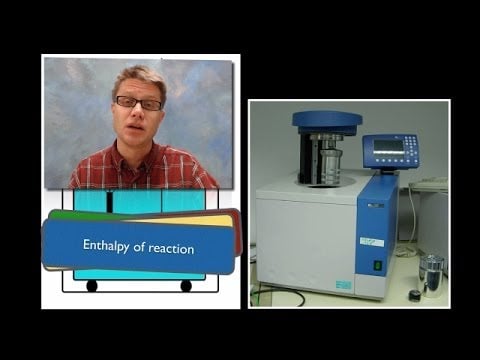
Bozeman Science introduces calorimetry and heat capacity. This is background for understanding stored thermal energy, not a demonstration of an ONPOW sample or the ASTM DSC procedure.