

Not all switches require physical buttons to operate. Some switches respond to a light touch, allowing users to control lights or devices without pressing traditional mechanical buttons. These are known as touch switches.
Touch switches are widely used in household appliances, lighting systems, electronic devices, and industrial control applications. However, different touch switches work in different ways, and selection should be based on the application, operating environment, and electrical requirements. This article explains the definition, working principles, types, and key factors to consider when selecting a touch switch for procurement.
What Is a Touch Switch?
A touch switch is an electronic switch that is activated when a person touches a designated sensing area. Traditional mechanical switches rely on physical contact movement to open or close a circuit, while touch switches use electronic sensing mechanisms to detect touch.
Depending on the design, a touch switch can detect the electrical properties of a finger, changes in capacitance, or pressure applied to the sensing surface.
Common applications of touch switches include:
- Home lighting and smart home systems
- Household appliances and consumer electronics
- Medical and laboratory equipment
- Industrial control panels
- Access control systems and interactive displays
One important point to understand is that a touch switch does not always drive a load directly. Some models switch a circuit on and off directly, while others send signals to a controller, which then drives the connected device.
How Does a Touch Switch Work?
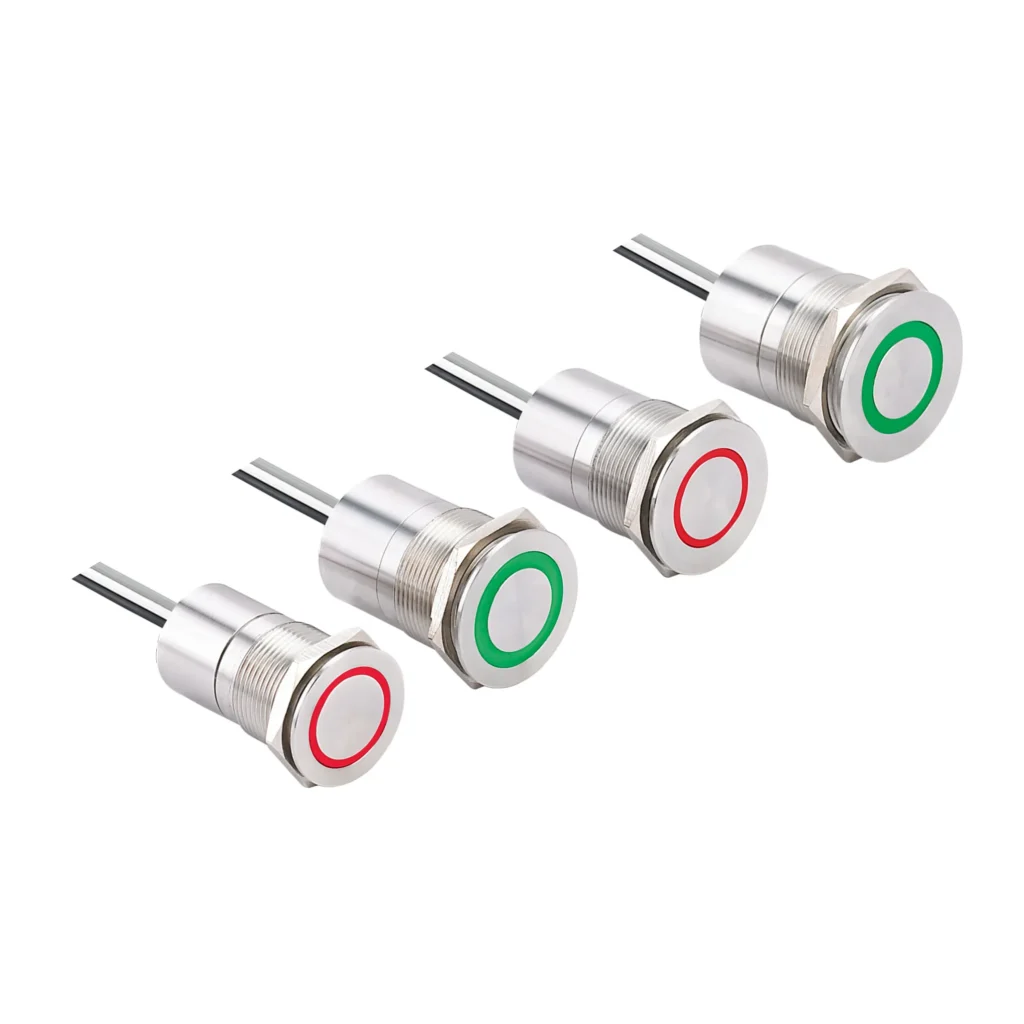
The working principle of a touch switch depends on the sensing technology it uses. Most electronic touch switches on the market use one of the following approaches.
1. Capacitive Touch Sensing
A capacitive touch switch detects changes in capacitance when a finger approaches or touches the sensing area.
The sensing circuit maintains a baseline electrical signal. When a finger touches the surface, the sensor detects a change in capacitance. The circuit identifies this change and generates a switching signal. This signal can be used to turn lights on or off, start an appliance, or trigger other control functions.
Capacitive touch technology has no exposed mechanical contacts and is commonly used in touch lamps, control panels, and various electronic user interfaces.
2. Resistive or Pressure-Sensitive Touch
Some touch-sensing devices detect pressure rather than changes in capacitance. When a user presses the surface, the sensing element detects the applied force and generates a signal.
This type of design differs from capacitive switches because pressure must be applied to activate it. Its performance depends on the sensor structure and the application environment.
3. Electronic Signal Processing and Output Control
After detecting a touch signal, the sensing circuit processes it and determines whether an output should be triggered. Depending on the design, the output can drive an electronic load directly, activate a relay, or send a signal to an upper-level control system.
For example, touching a panel can trigger a relay that switches on an equipment lighting circuit.
The key principle is that a touch switch detects an input action and converts the touch into a control command. The sensing method and output type determine which practical applications the switch is suitable for.
What Are the Different Types of Touch Switches?
Different touch switches are designed for different purposes. Understanding the main types can help narrow down the selection.
1.Capacitive Touch Switches
Capacitive touch switches detect changes in capacitance. Some designs can sense touch through suitable non-conductive materials.
They are commonly used in touch lamps, appliance interfaces, and electronic control panels. They are suitable for applications that require a smooth surface without moving mechanical components.
2.Touch On/Off Switches
Touch on/off switches turn a device on or off through touch. Some switch the on/off state with each touch, while others use different control logic.
They are commonly used in lighting and electronic devices. When purchasing, confirm whether the switch uses latching (toggle) operation, momentary operation, or another control logic.
3.Touch Dimmer Switches
Touch dimmer switches do more than simply turn a device on or off. Depending on the design, a short touch or a long touch can adjust the brightness of a light. Some models support multiple brightness levels or preset lighting modes.
4.Industrial Touch Switches
Industrial touch switches and touch-operated interface panels are used in certain machine tool controls, automation systems, and equipment panels.
However, a touch panel is not necessarily a direct replacement for a traditional industrial push button. Industrial applications often require clearly defined contact specifications, electrical ratings, tactile feedback, and reliable operation in harsh environments.
Selection should not be based solely on touch operation. The complete switching device must be evaluated for the intended application.
Are Touch Switches Waterproof?
Some touch switches are suitable for wet or harsh environments, but not all touch switches are waterproof.
Water and dust protection depend on the construction of the entire product, including the sensing surface, housing, seals, wiring connections, and installation method.
For example, the ability of a capacitive sensor to detect touch through non-metallic materials does not mean that the complete switch is waterproof.
For outdoor applications, washdown areas, or machine tools, check the manufacturer’s specified IP rating and the conditions under which it applies. If frequent operation is required in a humid environment, sealed push button switches can also be considered as alternatives, depending on the actual operating conditions.
Can Touch Switches Be Used in Industrial Equipment?
Yes. Touch switches can be used in industrial equipment if their sensing technology, electrical parameters, and protection ratings meet the operating requirements.
Typical applications include machine tool human-machine interfaces, equipment status controls, maintenance panels, and certain automation systems.
However, industrial procurement should consider more than touch operation. Key factors include:
- Required switching voltage and current
- Output type and compatibility with the control system
- Resistance to dust, moisture, vibration, and electromagnetic interference
- Operating temperature and expected service life
- Mounting dimensions and wiring method
- Relevant safety and compliance requirements
In many industrial applications, metal push buttons and industrial push button switches remain reliable choices because they offer standardized mounting dimensions, clearly defined contact specifications, and stable performance.
ONPOW Touch Switch Products
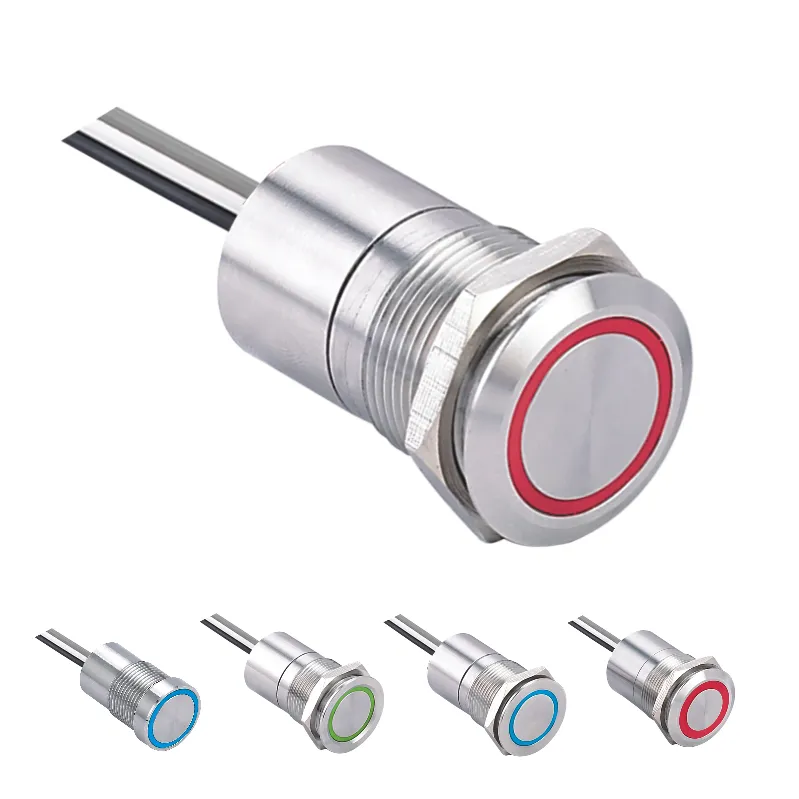
- Panel Kesik Ölçüsü Φ16/19/22,24V/500mA
- Parmak dokunuşu tetikleyici (akar su ile tetiklenebilir)
- Ultra uzun ömür (50 milyon çevrim)
- Görünüm ihtiyaçlarına göre özelleştirilebilir
- IP68, IP69K



