

A push button plastic fatigue report can help compare material behaviour under repeated loading, but its cycle count is not the mechanical life of a complete switch. Review the specimen, loading mode, stress history, frequency, temperature and failure criterion before using it in a purchasing decision. Then ask what separate evidence covers the assembled actuator and electrical contacts. Keeping those boundaries clear prevents a useful material test from becoming an unsupported promise about how many times an installed button will operate.
Begin with the part and the failure question
Specify which plastic component is under review and what repeated action concerns the design team. The operating head, retaining feature and rear housing may experience different conditions. A material coupon test does not automatically represent any of them. Define whether the immediate objective is comparing candidate materials, investigating damage or supporting a component validation programme.
Also distinguish the observed problem. A broken retaining feature, a change in operating force and an electrical contact failure are different events. They may appear in the same service history without sharing a cause. A supplier enquiry should describe the event precisely so the response does not substitute a material report for the evidence actually needed.
Understand the scope of uniaxial material testing
The public overview of ASTM D7791 concerns dynamic fatigue properties of rigid and semi-rigid plastics under uniaxial loading. Its scope includes tension and, for rigid plastics, a compression procedure. The overview also explains that preparation and test conditions affect whether results can be compared or applied to service.
Treat that as the method boundary, not as a complete laboratory instruction. A button mechanism may involve geometry, movement and contact conditions beyond a uniaxial specimen. Establishing a relationship requires a justified engineering basis and suitable component evidence. The purchasing review below organizes that discussion; it does not prescribe a universal fatigue test for ONPOW switches.
Verify sample identity and manufacturing history
Ask how the sample is connected to the supplied component. A moulded bar, a specimen cut from a sheet and a sample taken from a finished part can have different preparation histories. Keep their references distinct in the report summary. Do not assume the same polymer family name makes every preparation route interchangeable.
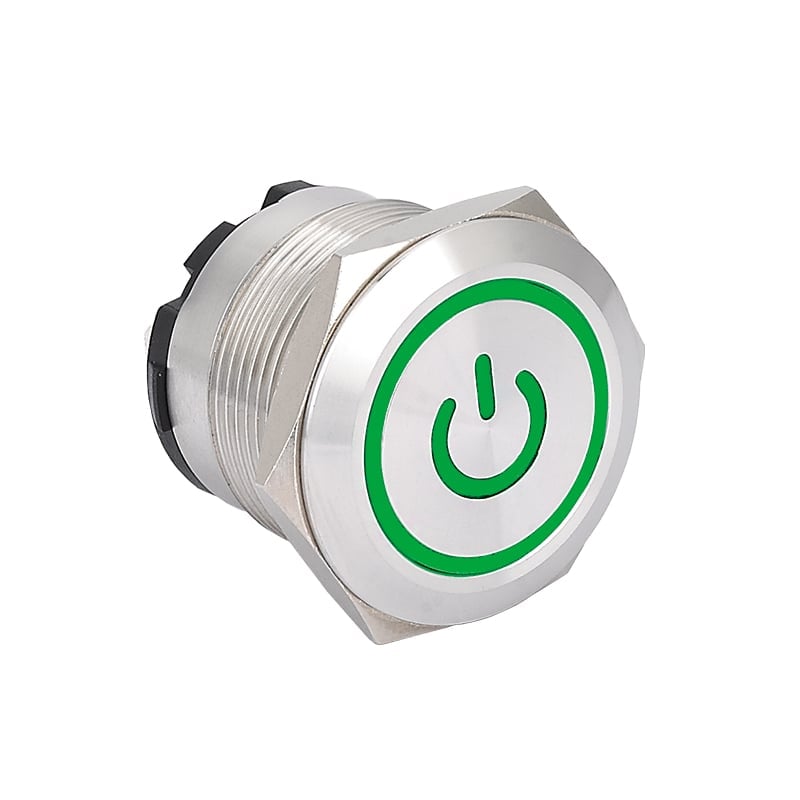
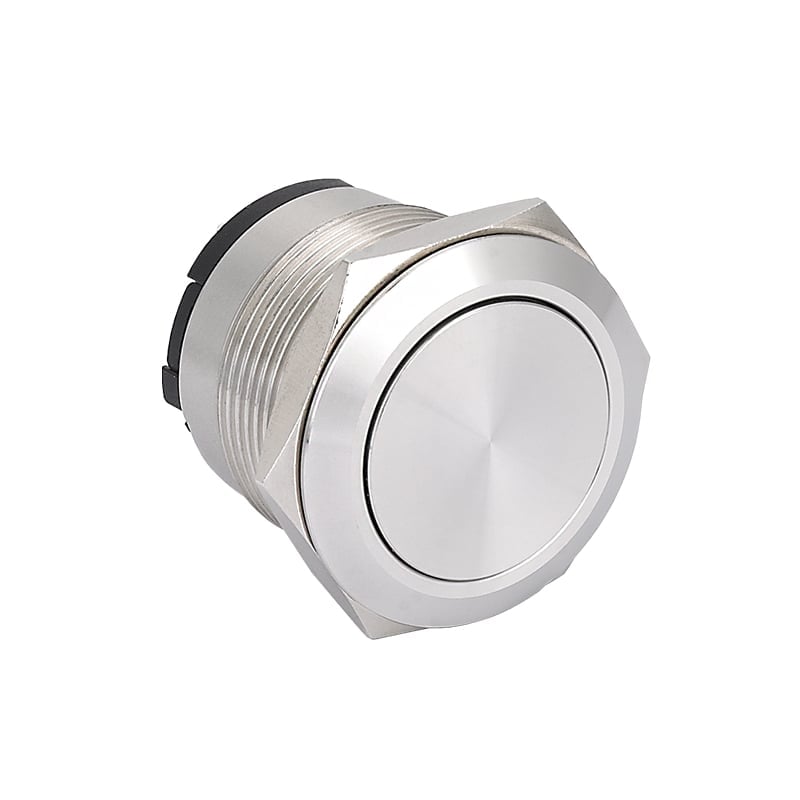
İstediğiniz değeri seçin ONPOW6222 assembly identification example to identify the ordered construction before requesting relevant component information. Confirm exact configuration and material applicability with ONPOW. Product photographs in this article show identification examples only; they do not establish a resin grade, a fatigue result or a mechanical endurance rating for the pictured model.
If the supplier provides material data through its resin manufacturer, ask who confirms applicability to the finished component. The answer should connect the grade, component revision and evidence reference. A clear documented link is more useful than filing a generic material datasheet under an assembly part number without explanation.
Read the complete loading description
A cycle count needs a loading history. Ask whether the laboratory controlled force, stress, displacement or strain, and how the report defines the upper and lower values. A specimen subjected to repeated tension is not undergoing the same loading path as one alternating between tension and compression. Record the distinction before comparing two fatigue curves.
The report should also identify the waveform, frequency and any pauses. Do not convert a faster test into a service duration by dividing cycles by an assumed operator rate. Frequency can affect the test’s conditions, and real equipment may include long dwell periods or a very different sequence. A calendar-life claim needs its own justified basis.
When a ratio or amplitude appears without definitions, ask for clarification. Different summaries can use similar terms while referring to different quantities. Purchasing does not need to recreate the laboratory’s analysis, but it should preserve enough information that the responsible engineer can understand and check the comparison.
Treat temperature as part of the result
Record both the surrounding conditions and any specimen temperature observations included in the report. A room-temperature label may describe the laboratory environment without explaining what occurred in the specimen during repeated loading. Ask how temperature was monitored or controlled where it matters to interpretation, and whether the report notes any limitation.
NIST research on temperature effects in polymer composite fatigue illustrates that conclusions belong to a defined material and environmental programme. Its particular composite findings are not ONPOW product data. Use the study as a reason to request relevant conditions, not as a source of a correction factor for an unidentified button plastic.
If the proposed application is warmer, colder or chemically different from the test, keep that discrepancy explicit. Ask what additional evidence or engineering treatment is appropriate. Do not adjust cycle counts using an invented percentage or assume one laboratory temperature is conservative for every polymer and mechanism.
A report review checklist
The following table provides qualitative purchasing questions. It does not specify test limits or an acceptable life for any switch.
| Report detail | Çözüme kavuşturulması gereken soru | Neden karar üzerinde etkili olduğunu |
|---|---|---|
| Material and preparation | Which grade, revision and specimen route were tested? | Different samples may not represent the ordered component |
| Loading mode | Was the specimen in tension, compression or another condition? | The result belongs to that loading arrangement |
| Loading history | What were the levels, waveform, frequency and pauses? | cURL Too many subrequests by single Worker invocation. To configure this limit, refer to https://developers.cloudflare.com/workers/wrangler/configuration/#limits |
| Sıcaklık | cURL Too many subrequests by single Worker invocation. To configure this limit, refer to https://developers.cloudflare.com/workers/wrangler/configuration/#limits | cURL Too many subrequests by single Worker invocation. To configure this limit, refer to https://developers.cloudflare.com/workers/wrangler/configuration/#limits |
| cURL Too many subrequests by single Worker invocation. To configure this limit, refer to https://developers.cloudflare.com/workers/wrangler/configuration/#limits | cURL Too many subrequests by single Worker invocation. To configure this limit, refer to https://developers.cloudflare.com/workers/wrangler/configuration/#limits | cURL Too many subrequests by single Worker invocation. To configure this limit, refer to https://developers.cloudflare.com/workers/wrangler/configuration/#limits |
| cURL Too many subrequests by single Worker invocation. To configure this limit, refer to https://developers.cloudflare.com/workers/wrangler/configuration/#limits | cURL Too many subrequests by single Worker invocation. To configure this limit, refer to https://developers.cloudflare.com/workers/wrangler/configuration/#limits | cURL Too many subrequests by single Worker invocation. To configure this limit, refer to https://developers.cloudflare.com/workers/wrangler/configuration/#limits |
Distinguish failures from stopped tests
A specimen that reaches the planned stopping point without the defined failure event is not a measured failure at that cycle count. Keep it identifiable as an unfailed or runout observation under the report’s terminology. Turning every stopped test into a failure point changes the meaning of the data and can distort comparisons.
Ask for individual results and the stopping rule. A statement such as tested for a number of cycles may describe only the duration of the programme, not the distribution of failures or a guaranteed life. The report should explain the actual outcome. If it does not, request the underlying interpretation before forwarding the figure to a customer.
Likewise, different failure criteria need separate labels. Visible cracking, rupture, an agreed deformation limit and a change in another measured property are not interchangeable. A comparison should either use a consistent endpoint or explain why the different outcomes still support the particular decision being made.
Compare curves with appropriate restraint
Check the axes, units and definitions before discussing which curve is better. Identify the tested stress or strain levels and the observations supporting the displayed trend. Avoid extending a fitted line far beyond the tested range simply because spreadsheet software makes it easy. Any extrapolation used for design needs a documented justification from the responsible specialist.
Preserve sample scatter rather than reporting only the most favourable result. If the report contains a statistical interpretation, keep its stated basis and limits attached. Do not create a reliability guarantee from a small set of laboratory observations or treat an average as a minimum service commitment.
For questions about time-dependent deformation under a maintained condition, see the plastic stress relaxation report guide. That topic is complementary to cyclic fatigue. For a different loading mode, the plastic compression report guide helps separate strength and modulus evidence from an endurance claim.
Keep complete switch endurance as a separate evidence item
A complete push button includes more than its plastic body. Springs, moving interfaces, seals, mounting conditions and contact assemblies may all affect its operation. A material fatigue report addresses the submitted material specimen; it does not test all those interactions. Request the manufacturer’s mechanical endurance evidence for the exact configuration if that is the requirement being assessed.
Electrical endurance is another question again. A mechanism can still move while the contact performance no longer meets its specified condition. Ask for the relevant electrical ratings and endurance documentation rather than attaching a plastic fatigue curve to an electrical life claim. This article does not supply operating limits or authorization to exceed the manufacturer’s documentation.
The laboratory accreditation scope review can help organize document checks for commissioned work. Confirm relevant competence, but also read the actual specimen and method details. A laboratory’s credentials cannot make a material coupon equivalent to a finished button mechanism.
Prepare a useful enquiry and decision record
Send the exact ordered configuration, component of interest, repeated action and conditions that concern the application. Explain whether you need a material comparison or evidence of complete switch endurance. Attach the customer’s requirement where available and request a response that separates existing evidence, applicability statements and work still required.
Record the conclusion with the report reference, component revision and limits of use. If an alternative material or mechanism is proposed, review the change against those boundaries. A well maintained record lets the next buyer preserve valid evidence while recognizing which part of the assessment needs updating. It also prevents a material test from silently becoming a product guarantee.
Sıkça Sorulan Sorular
Is a plastic fatigue cycle count the mechanical life of a push button?
No. The number belongs to a material specimen tested under defined loading and environmental conditions. Complete switch mechanical endurance requires evidence covering the relevant assembly and its specified test conditions.
Can a fast laboratory test be converted directly into years of use?
Not by cycle counting alone. The service loading sequence, pauses, temperature and failure mechanisms need a justified relationship to the test. A direct arithmetic conversion can imply a lifetime that the evidence does not establish.
What does a runout mean in a fatigue report?
It generally identifies a specimen that reached a defined stopping point without the specified failure event. Check the report's exact terminology and criterion. Do not record that stopping count as a measured failure life.
Which documents should a buyer request from ONPOW?
Identify whether the requirement concerns a plastic component, complete mechanical operation or electrical endurance. Request configuration-specific evidence for that question, together with report references, applicable conditions and a clear statement of limitations.
Daha fazla bilgi edinin
NPTEL discusses advanced polymer mechanics, including fatigue and fracture. This lecture is background for reading material evidence, not a test of ONPOW switch endurance.
#56 Advanced Mechanics | Polymers Concepts, Properties, Uses & Sustainability — NPTEL-NOC IITM



