

A push button plastic tensile report is useful when its specimen can be traced to the material used in the component being purchased. Review the material identity, specimen preparation, test conditions, strain measurement and reported property before comparing numbers. Tensile strength, tensile modulus and elongation answer different questions. None, by itself, establishes the pull-out strength of a terminal, the mounting strength of a switch or the service life of the assembled control.
For a panel builder, the practical objective is an evidence trail from the order code to the relevant plastic part and then to a suitable test record. This guide provides a proposed procurement review, rather than a laboratory procedure or a universal acceptance limit.
Decide which tensile question the purchase needs answered
Start with the actual design concern. Is the engineering team comparing candidate housing materials, investigating a material substitution, or checking a requirement already specified on a drawing? These situations need different decisions. A quotation request that simply asks for “high tensile strength” leaves the supplier without a defined component, condition or acceptance requirement.
Name the part and the property in the request. For example, a purchasing team might ask whether an existing material report applies to the insulating base of a particular order configuration. That is a traceability question. It does not require the supplier to invent a permissible pulling load for the finished switch.
Record the person responsible for accepting the evidence. Procurement can gather the documents and identify missing information; the designer or responsible engineer should decide whether the reported property answers the equipment requirement.
Understand the three quantities without combining them
Tensile strength concerns stress under pulling. Modulus describes the relationship between stress and strain over the method’s specified evaluation region. Elongation describes extension relative to a reference length. A stronger result in one column does not automatically mean a preferable result in every other column.
The BSI publication scope for ISO 527-1 concerns tensile characterization under controlled conditions, with specimen choices addressed across the series. Use the applicable method and specimen description from the actual report. Do not infer them from the standard number alone.
For background, OpenStax’s stress, strain and elastic modulus chapter explains why force and extension need geometric context. This is a useful distinction when a supplier sends a force value without the specimen cross-section or sends an extension value without a reference length. Request the reported property and its definition rather than silently converting incomplete data.
Connect the report to a real ONPOW order
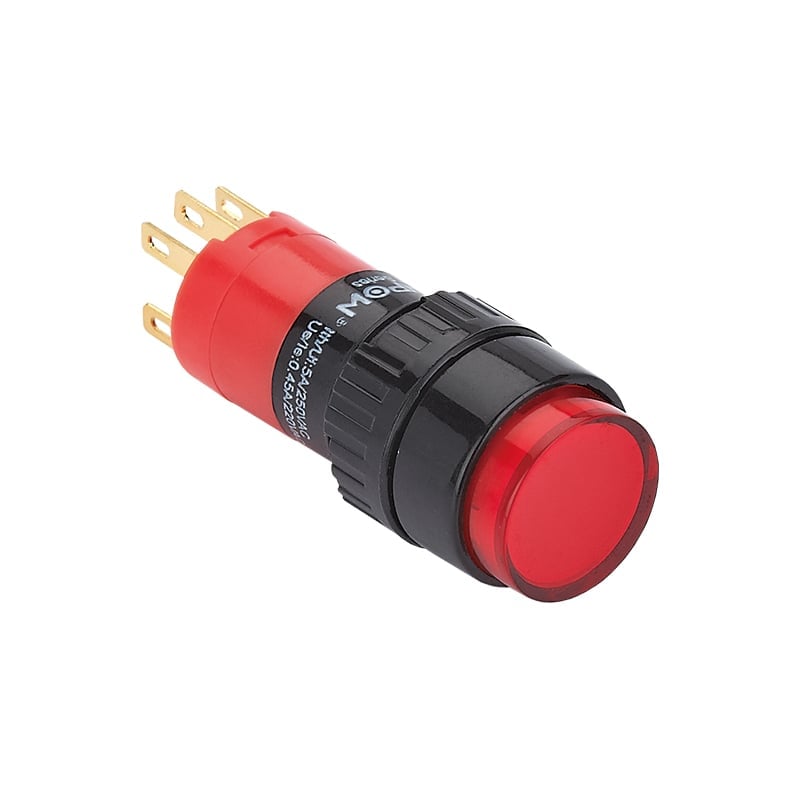
The LAS1Y-11/JC/ product page provides a real catalogue starting point for an enquiry. Identify the requested version and the particular plastic component before asking for material data. Product photographs establish the visible product form; they do not identify a resin grade or prove that the pictured part underwent tensile testing.
Ask the supplier to explain how the tested specimen relates to production. A separately moulded specimen can provide material information, but the relationship to the supplied component needs documentation. A family-level material brochure without a controlled connection to the order is a starting reference, rather than complete evidence for the purchase.
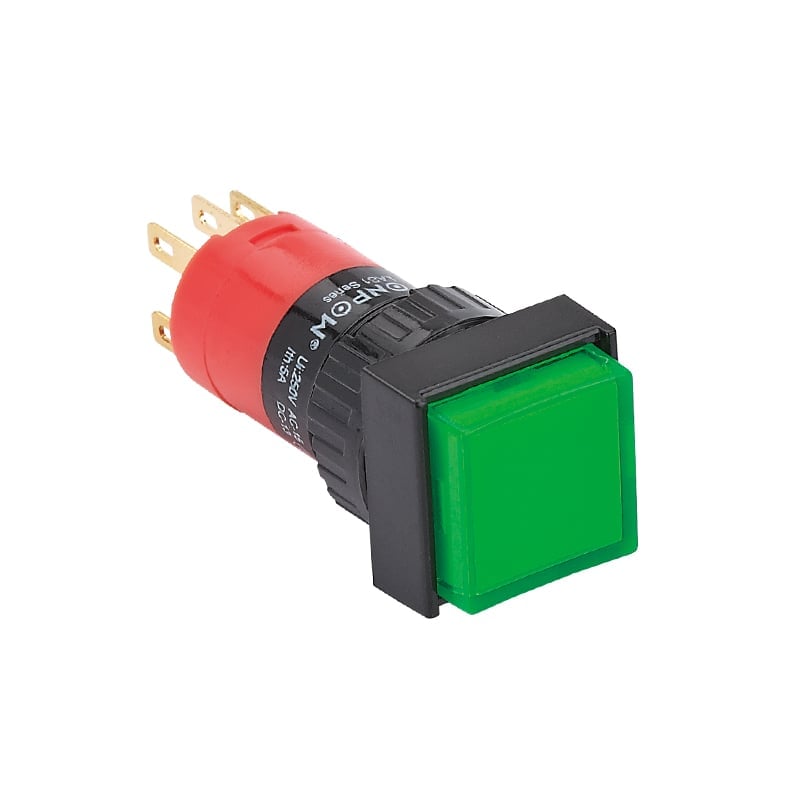
The other product photographs illustrate catalogue forms within the LAS1 family. Their inclusion does not mean the variants use identical formulations. Keep each pictured identity separate when discussing material applicability with sales or engineering.
Read specimen preparation before the results table
A useful review records whether the specimen was moulded specifically for testing or taken from another source. Preserve any stated dimensions, orientation and preparation history. If these details are missing, ask for the full report or an explanatory attachment rather than creating assumptions in the purchasing spreadsheet.
Where a report covers several specimens, check that identifiers remain consistent between the preparation section, results and attachments. A photograph labelled with one sample code and a result table labelled with another deserves clarification. The issue may be a simple clerical error, but it should be resolved before the evidence is used for approval.
Do not cut a sample from a switch and describe the outcome as a standard test without a qualified laboratory confirming the method’s applicability. Small component geometry can constrain what is possible. Agree on the intended evidence before damaging parts or commissioning work.
Keep conditions and strain measurement visible
Store conditioning, test atmosphere and the stated test speed beside the results. If two reports used different conditions, flag that difference for review. A spreadsheet that keeps only the largest strength value removes the context needed for a meaningful engineering comparison.
Also record how strain was measured and which reported strain quantity belongs to each result. Machine movement and specimen extension should not be treated as interchangeable without the method and laboratory explanation. Ask the laboratory to identify the measurement arrangement when a modulus or elongation value is important to the decision.
This is especially useful when comparing a short supplier summary with a detailed independent report. The shorter document may be accurate but insufficient for the specific comparison. Request the missing pages first; do not interpret brevity as proof of either compliance or noncompliance.
Use a report review worksheet
The following is a proposed purchasing worksheet. It provides document checks, not material limits or ONPOW test results. The method scope above supports the distinction between specimen characterization and an assembled product claim.
| Review item | Record from the submission | Action when the information is missing |
|---|---|---|
| Ordered component | Order code, revision and named plastic part | Ask which part the data concern |
| Material connection | Controlled grade or supplier traceability statement | Request the link to production material |
| Method | Standard, edition and applicable part | Confirm the required method before comparison |
| Specimen | Preparation, dimensions and orientation as reported | Obtain the specimen description |
| Measurement | Strain arrangement and stated test conditions | Ask the laboratory for clarification |
| Results | Separate strength, modulus and elongation with units | Avoid a combined “mechanical strength” field |
| Decision | Requirement, reviewer and disposition | Keep approval open until the question is answered |
Attach the original report to the worksheet. If someone later changes an entry, retain the reason and the source page so another reviewer can reproduce the decision.
Compare two submissions in the right order
First check whether both submissions concern the intended component material. Next compare method, specimen and conditions. Only then compare the property values. This sequence prevents a large number from dominating a decision before the evidence is known to be applicable.
Suppose supplier A provides a material sheet with a named grade and supplier B provides a laboratory report for a different grade. The longer document does not automatically win. The missing issue is applicability to the component being ordered. Ask both suppliers to close that gap before ranking their results.
If conditions remain different, document the difference rather than calculating a percentage improvement. The responsible reviewer may accept a justified comparison, request aligned tests, or decide that tensile data are unnecessary for the purchase. Each outcome should have a recorded reason.
Separate tensile data from installed switch requirements
A material tensile result cannot establish how much load a mounting nut, panel or terminal will tolerate. Those questions involve the configured assembly and its own evidence. Do not create an installation torque or a terminal pull requirement by converting a resin strength number into force using an estimated area.
For the wider assembly evidence discussion, use the laboratory accreditation scope guide. When the concern is heat exposure during manufacturing, the solderability and soldering heat report guide addresses a separate process boundary. Neither should be replaced by a tensile material sheet.
Likewise, material thermal endurance evidence concerns another property and set of conditions. Keeping these records separate makes the final equipment review more useful than collecting a generic folder labelled “plastic certification.”
Handle substitutions and incomplete records
When the supplier proposes a material change, ask which component and production revision are affected. Request the previous and proposed material references, the reason for the change and an assessment of which existing evidence remains applicable. A matching tensile value alone is insufficient to establish that all other required properties remain unchanged.
For an incomplete report, issue a specific clarification request: identify the missing specimen description, measurement detail or production connection. Avoid asking for “all certificates” without identifying the unresolved question. Specific requests make it easier for the supplier to provide a relevant answer and for the reviewer to close the issue.
Keep a pending status until the clarification is evaluated. If the order must proceed under a documented engineering concession, record that disposition separately from a normal evidence approval. The purchasing record should describe the actual decision, including its limits.
Prepare a focused enquiry package
Send the exact order code, component of concern, required property and reason for requesting it. Include the applicable customer requirement where one exists. Ask for available evidence and its applicability statement before assuming that a new test is necessary.
A practical enquiry also names the required document language, the person reviewing the result and the deadline for clarification. If destructive sampling or external testing is proposed, agree on sample identity and the intended deliverable before work begins. This reduces the risk of receiving a correct report for the wrong question.
Contact ONPOW through the product enquiry with that package. The useful next step is confirmation of the evidence available for the requested configuration, followed by review against the equipment requirement. No tensile rating for a particular ONPOW product is asserted in this article.
Frequently asked questions
Does a plastic tensile report prove terminal pull-out strength?
No. It characterizes a material specimen under its reported conditions. Terminal retention is an assembly question requiring applicable product evidence and an agreed requirement.
Can I compare two tensile strength numbers immediately?
First match the material connection, method, specimen and conditions. If these differ, ask for an engineering interpretation or comparable evidence before ranking the values.
Does the product photograph identify the tested resin?
No. The photograph identifies visible product form. Obtain controlled material identification and a connection between the report and the component being purchased.
What should I request when a summary omits strain details?
Ask for the complete report and the measurement arrangement relevant to the reported property. Keep the comparison open until the responsible reviewer has enough information to make the intended decision.
Further learning
Khan Academy introduces stress and strain using a tensile example in steel. This explains material quantities only; it is not a plastics test demonstration, a bending procedure or an ONPOW product result.
Stress vs strain curve | Class 11 (India) | Physics | Khan Academy — Khan Academy India – English



