

A push button PFAS declaration is useful only when its chemical definition, product coverage and evidence basis match the purchase. Ask which ordered configurations are covered, what the supplier means by PFAS, and whether the answer comes from upstream records, analysis or another stated assessment. A statement about selected substances cannot automatically establish the absence of every substance in a broader group. This guide explains how an industrial control buyer can review the paperwork, record unresolved questions and request a clear response without turning a component photograph or a general policy into a chemical compliance claim.
Start with the question your customer actually asked
A customer questionnaire might ask about intentionally added PFAS, a defined substance list, a particular reporting obligation or a general purchasing preference. These are different requests. Copy the exact question into the review record before contacting a supplier. Include the intended market, the customer’s specification revision and the response date. If the request uses an undefined phrase such as PFAS-free, obtain a written definition before accepting or rejecting evidence.
The EPA PFAS overview provides introductory background on this group of chemicals. It is not a component declaration or a universal test specification. Use the customer’s applicable requirement to decide what information is needed; do not copy a drinking-water discussion into an acceptance limit for a switch. The review should connect a specific request to a specific answer rather than gather loosely related environmental documents.
Define the ordered configuration before discussing chemistry
Identify the complete switch reference, selected illumination option, accessories and revision information available on the order. Separate the operator from additional parts supplied by other companies. An equipment builder may combine a switch with wiring, labels, a panel and external accessories. Evidence for the purchased switch does not automatically extend to this assembled equipment or to packaging.
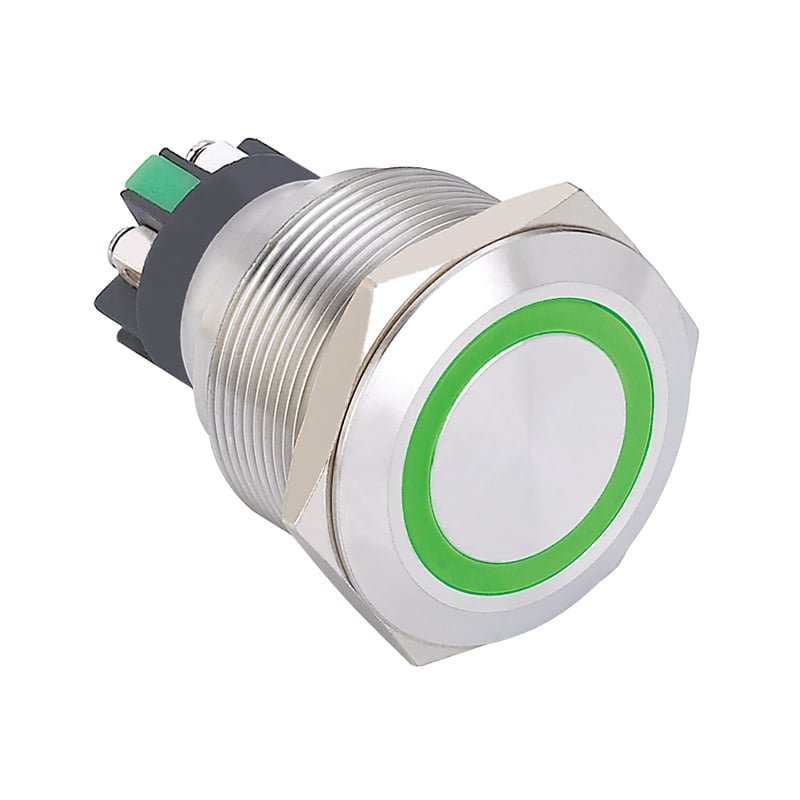
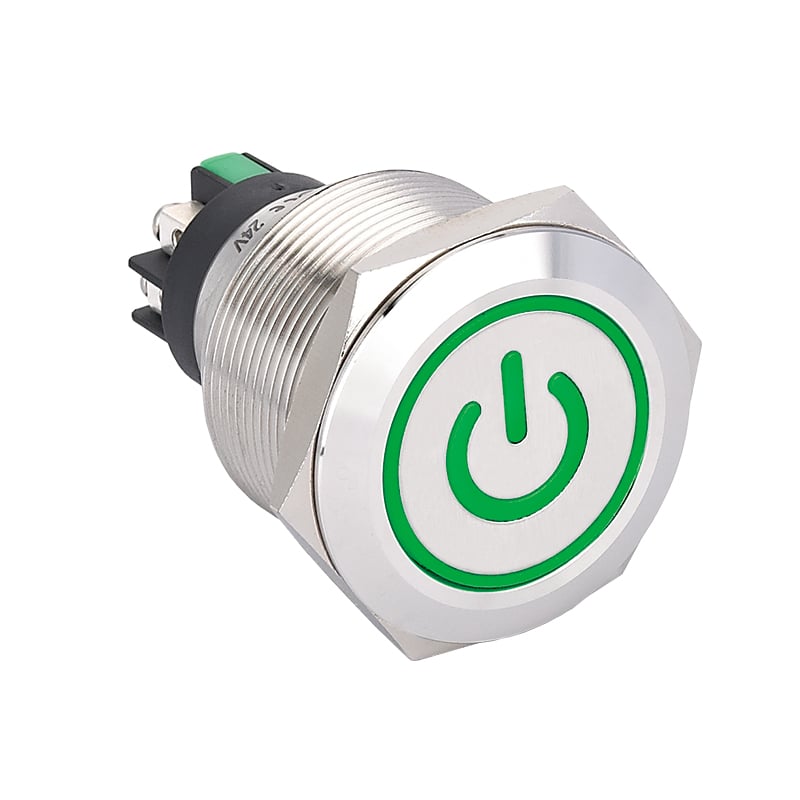
The ONPOW GQ25-L product reference can help identify a procurement discussion. Its product photographs do not show a complete chemical inventory. They cannot establish the presence or absence of PFAS in hidden parts, finishes or processing residues. Request configuration-specific information from the supplier rather than infer formulation from the appearance of a metal body, an illuminated head or a visible mounting feature.
Use a declaration review table
The following table is a proposed purchasing workflow. It contains no regulatory concentration limits and makes no claim about an ONPOW product. The purpose is to expose a mismatch early enough for the supplier and the buyer to resolve it before a document is used in an equipment file.
| Review field | What to request | What a gap means | Practical next action |
|---|---|---|---|
| Chemical scope | Named definition or substance list and revision | The word PFAS has no agreed scope in the response | Ask the supplier to identify its assessment boundary |
| Product scope | Exact references or an explicit family coverage list | The statement may cover another configuration | Obtain a reference-to-declaration mapping |
| Evidence basis | Supplier records, analysis or stated assessment method | The strength and limits of the conclusion are unclear | Request a description of how the answer was reached |
| Qualification | Meaning of intentionally added, unknown or not detected | Different evidence states may be confused | Keep the supplier’s exact qualification in the record |
| Date and change control | Issue date, responsible contact and update trigger | Later material changes may escape review | Assign a review owner and follow-up event |
Use each row to generate a focused question. Sending the entire questionnaire again rarely helps when only one issue remains unresolved. A short request identifying the reference and the missing scope statement gives the supplier a clearer route to an answer.
Separate chemical definitions from regulatory status
The European Commission REACH restrictions overview explains the restriction framework. For an actual purchase, check the current applicable measure, substance scope and dates with the responsible compliance reviewer. A proposal, a consultation and an adopted restriction are different stages. Do not write a universal ban into a supplier acceptance rule simply because a webinar discusses a proposed restriction.
Record the regulatory source and the date it was checked separately from the supplier declaration date. If the customer’s requested scope changes while an order is being processed, reopen the review rather than silently applying the old answer. The chemical family name alone does not identify a jurisdiction, an application, an exemption or a transition provision. This article deliberately supplies no universal PFAS limit or assertion that a particular switch is within or outside any specific legal obligation.
Distinguish the evidence states in a supplier response
A response may state that certain substances are not intentionally added. That addresses the supplier’s defined use criterion; it does not automatically describe every incidental trace or every upstream process. Another response may say the supplier has no information. Preserve that as an information gap. Rewriting it as absence creates an unsupported conclusion that later reviewers may be unable to trace.
An analytical report has its own boundaries. Ask which specimen was examined, which substances or indicators were measured, how the sample was prepared and what reporting limits apply. A result for one sample and one analyte list does not automatically cover an entire product family or every chemical that might fall within a broader definition. These are questions for the laboratory and the responsible material specialist, not assumptions that procurement should settle from a certificate heading.
Match documents without overstating their authority
Check the issuing company and whether it is the manufacturer, a distributor or another supply-chain participant. A distributor may transmit a valid upstream document, but the relationship between the document and the ordered item still needs to be clear. Save the original file and the message that explains coverage. If the document uses a family name, request confirmation that the exact ordered reference is included.
Compare the PFAS response with the separate REACH material declaration review. A REACH document may answer a different substance question. A broad environmental policy can describe a company’s approach while offering no part-specific assessment. Keep these documents together for context, but do not allow one document title to replace the evidence missing from another.
Handle incomplete answers with a proportionate follow-up
Suppose an illustrative supplier letter says that no listed PFAS are intentionally added to a product family, while the customer’s form asks whether any PFAS are present in the complete purchased assembly. The letter has not answered the wider question. Mark the mismatch and ask whether the supplier can extend the assessment or explain the remaining uncertainty. This hypothetical example is not a report about ONPOW materials.
Where upstream information is incomplete, record the unanswered component scope and the promised follow-up date. Let the designated customer or compliance owner decide whether additional evidence is necessary before use. Do not force a supplier to replace a qualified answer with an absolute statement merely to satisfy a spreadsheet. An honest unresolved field is more useful than a confident sentence with no supporting assessment.
Keep chemical review separate from engineering approval
A material declaration does not establish contact ratings, insulation performance, mounting suitability or environmental protection. Electrical and mechanical selection still require the exact product documentation and the equipment designer’s review. Likewise, successful operation during a functional check does not establish chemical composition. These approval activities may share a product reference while addressing entirely different questions.
If a laboratory report is part of the evidence package, use the laboratory accreditation scope guide to structure questions about the reported method and issuing laboratory. Accreditation is not a substitute for correct specimen identity or the applicability of the method. A report must be connected to the actual procurement question before it can support an acceptance decision.
Build an order file that can survive a material change
Store the customer requirement, supplier response, covered reference list and review decision together. Identify who approved the evidence and which questions remained open. Link the review to the order or controlled part record, using the lot traceability records guide for the separate task of associating delivered goods with purchasing records. Traceability alone does not prove chemistry, but it helps determine which documents belong to which delivery.
Define practical triggers for rechecking: a different accessory, a revised declaration, a supplier notification or a changed customer requirement. Avoid setting a meaningless expiry date that implies a stable formulation has been independently verified. The review interval and escalation route should reflect the purchasing arrangement and the responsible team’s requirements. Save earlier versions so that a later statement does not erase the basis of an earlier decision.
Send a focused information request
Provide the exact ONPOW reference and options, the destination market and the customer’s requested chemical definition. Ask for covered product scope, the evidence basis, qualifications and a responsible contact. Explain whether accessories or packaging are included in your request. This makes the inquiry answerable and reduces the chance of receiving a generic document that cannot be connected to the order.
For product identification and available configuration documentation, contact ONPOW with the ordered reference. Keep chemical questions distinct from performance requirements in the same request. The useful outcome is a documented answer whose boundaries match the purchase, with unresolved issues clearly assigned for follow-up. It is not an unsupported label attached to a photograph or a general product family.
Frequently asked questions
Does a product photograph prove that a push button contains no PFAS?
No. A photograph identifies visible product features. It does not disclose the chemical composition of all parts, finishes or process-related materials. Request a statement covering the exact ordered configuration and the required chemical definition.
Is not intentionally added the same as not detected?
No. The first describes a defined use or formulation statement. The second describes an analytical result within a method and reporting scope. Keep both qualifications intact and check whether either answers the customer’s question.
Can a REACH statement replace a PFAS questionnaire?
Only if the actual substance scope and product coverage answer the requested question. The document name alone does not establish equivalence. Ask for clarification when the definitions or covered references differ.
Does a PFAS statement approve the switch for an electrical application?
No. Chemical information does not establish electrical ratings, mounting suitability or equipment safety. Review those matters separately against the exact product documentation and the equipment requirements.
Further learning
ECHA explains the PFAS restriction proposal and restriction process in this 2023 educational recording. Historical proposal information is background only; check current official requirements for the purchase.

Restriction of per- and polyfluoroalkyl substances (PFAS) under REACH — EUchemicals



