

When choosing a switch for an industrial control panel, machine, or electrical system, you may come across two common options: a selector switch y una interruptor de botón. Both are used to control equipment, but they work differently and serve different purposes.
The main difference is how they operate. A selector switch allows users to choose between different operating modes or positions, such as Manual, Off, and Auto. A interruptor de botón is typically used to trigger a specific action, such as starting a machine, stopping a process, or resetting an alarm.
Choosing the right one depends on what you need the operator to do, how the control system works, and whether the selected state needs to remain in place.
1. Selector Switch vs. Push Button: Key Differences
Here is a quick comparison to help you understand which type is more suitable for your application.
| Característica | Selector Switch | Pulsador |
|---|---|---|
| Propósito principal | Selects an operating mode or position | Triggers a specific control action |
| Operating method | Rotated or turned to a selected position | Pressed to activate a function |
| Typical positions | Two, three, or more positions, depending on the design | Usually one button per control function |
| State after operation | Often remains in the selected position | May return when released or stay in the new state, depending on the design |
| Common functions | Manual/Auto selection, mode selection, forward/reverse selection | Start, Stop, Reset, and other commands |
| Typical applications | Industrial control panels, machinery, automation systems | Machinery, electrical enclosures, production lines, and control stations |
| Best suited for | Choosing between operating modes or settings | Sending individual commands to equipment |
One important point: neither switch type determines the entire control logic by itself. The actual function depends on the contact configuration, wiring, and control system.
2. What Is a Selector Switch?
A selector switch is an electrical control component that allows an operator to choose between two or more positions. Each position corresponds to a particular setting, operating mode, or control function.
Instead of pressing a button to issue a single command, the operator turns the selector to the desired position.
For example, a machine might use a three-position selector switch labeled:
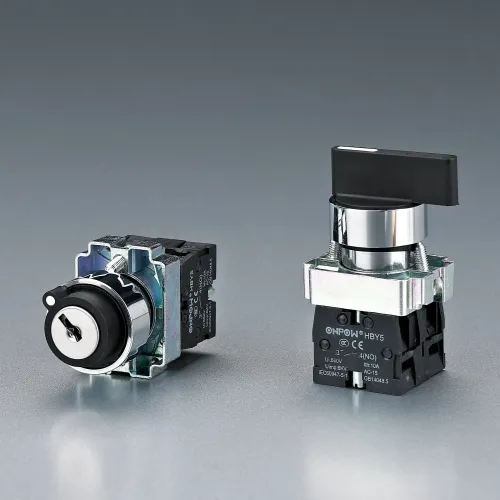
- Manual: The operator controls certain machine functions directly.
- Off: The relevant function or operating mode is disabled, depending on the circuit design.
- Auto: The machine operates according to its programmed control sequence.
Selector switches are particularly useful when a machine has several operating modes and the operator needs to identify the selected mode at a glance.
Common Types of Selector Switches
Different selector switch designs are available to suit different control requirements.
- Two-position selector switch: Commonly used for ON/OFF, Local/Remote, or Manual/Auto selection.
- Three-position selector switch: Often used for Manual/Off/Auto or other three-state control arrangements.
- Multi-position selector switch: Suitable for applications that require several settings or operating modes.
- Maintained selector switch: Remains in the selected position until the operator turns it again.
- Spring-return selector switch: Returns to a designated position when released, where the design supports this operation.
Not every selector switch has the same return mechanism or number of positions, so check the product specifications before selecting one.
When Should You Use a Selector Switch?
A selector switch is a good choice when the operator needs to choose a mode or setting rather than simply send a command.
Aplicaciones típicas incluyen:
- Selecting Manual or Automatic operation on industrial machinery.
- Switching between Local and Remote control.
- Choosing between different machine functions.
- Selecting operating modes on electrical control panels.
For example, if a production machine must support both manual maintenance and automatic production, a selector switch can make the operating mode clear and easy to change.
Related Article Links:
- Selector Switch Symbols and Contact Tables Explained
- Three-Position Selector Switch Wiring for Hand–Off–Auto
- Two-Position Selector Switch Wiring for Hand–Off Control
- Tipos de conmutadores rotativos: posiciones, operadores y disposiciones de contactos
3. What Is a Push Button Switch?
A interruptor de botón is an electrical control device operated by pressing a button. It is widely used to send commands to machines, control circuits, and electrical equipment.
Push button switches are commonly found on industrial control panels, production lines, packaging equipment, and automation systems.
Las funciones típicas incluyen:
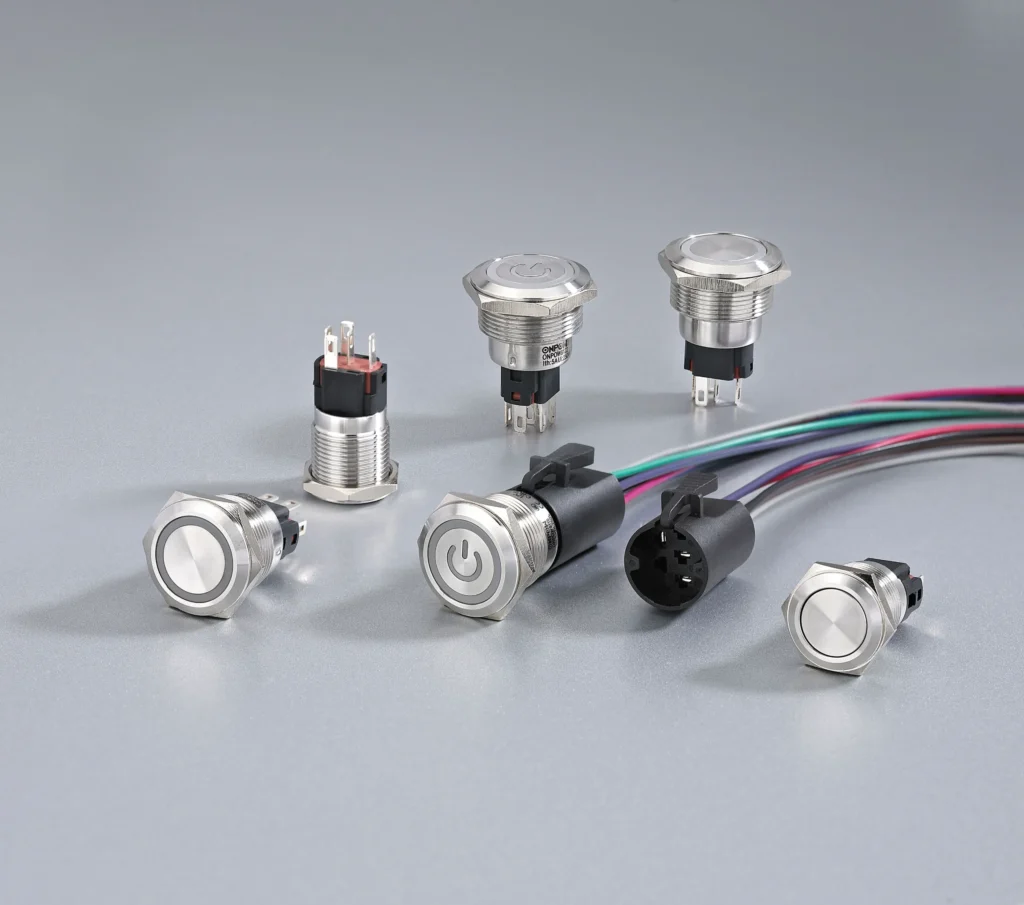
- Start: Sends a command to start a machine or process.
- Stop: Sends a command to stop a machine or process.
- Reset: Requests a control system to reset a fault or return to a ready state.
- Jog: Commands a machine to move or operate briefly, depending on the control circuit.
The exact function depends on the wiring and control system, not simply on the appearance of the button.
Momentary vs. Latching Push Button Switches
When choosing a push button switch, it is important to understand the difference between momentary and latching operation.
Momentary push button switch
A momentary switch returns to its normal mechanical state when the operator releases the button. It is commonly used for start commands, reset functions, and other inputs that should be active only while pressed.
Latching push button switch
A latching push button changes state when pressed and maintains that state until another operation changes it. Depending on the design, this can be used for functions that need to remain selected or switched.
However, a latching button does not automatically mean that a machine will stay running. The actual behavior depends on the switch contacts and the connected control circuit.
When Should You Use a Push Button Switch?
A push button switch is generally the better choice when an operator needs to issue a clear, individual command.
Las aplicaciones comunes incluyen:
- Starting and stopping machinery.
- Resetting alarms or control systems.
- Activating specific functions on production equipment.
- Sending manual commands to industrial automation systems.
- Providing illuminated controls that help operators identify button functions.
For example, a machine may use a green push button to initiate a start command and a separate red push button to request a stop. The final control behavior depends on the circuit design and applicable safety requirements.
Related Article Links:
- RGB vs. Single-Color LED Push Button Switches: What’s the Difference?
- Interruptores de botón antivandálicos: Definición, principio de funcionamiento y guía de selección
- Metal Push Button Switch Manufacture TOP10
- Interruptores de botón pulsador de 30 mm | Botones de control industrial de servicio pesado | ONPOW
4. Can a Selector Switch and a Push Button Switch Be Used Together?
Yes. In many industrial applications, using both types provides a more practical control arrangement.
A selector switch determines the operating mode, while push button switches allow the operator to issue commands within that mode.
Consider a machine with Manual and Auto operating modes.
- A selector switch lets the operator choose Manual or Auto.
- A Start push button sends a start command.
- A Stop push button sends a stop command.
- A Reset push button requests a reset when the control system permits it.
This arrangement separates mode selection from individual machine commands, making the control panel easier to understand.
The control system must still be designed so that commands work correctly in each mode. Safety-related functions should be implemented using appropriate safety-rated components and circuits rather than relying on an ordinary selector switch or push button alone.
5. Find the Right Switch for Your Control Panel
The core of selecting control components is to first clarify the equipment’s operation logic. Selector switches are suitable for operating mode switching, while push button switches are used to send commands such as start, stop and reset.
For industrial equipment manufacturers and control panel builders, parameters including mounting dimensions, contact configuration, indicator lights and protection rating are equally important as the switch type itself.
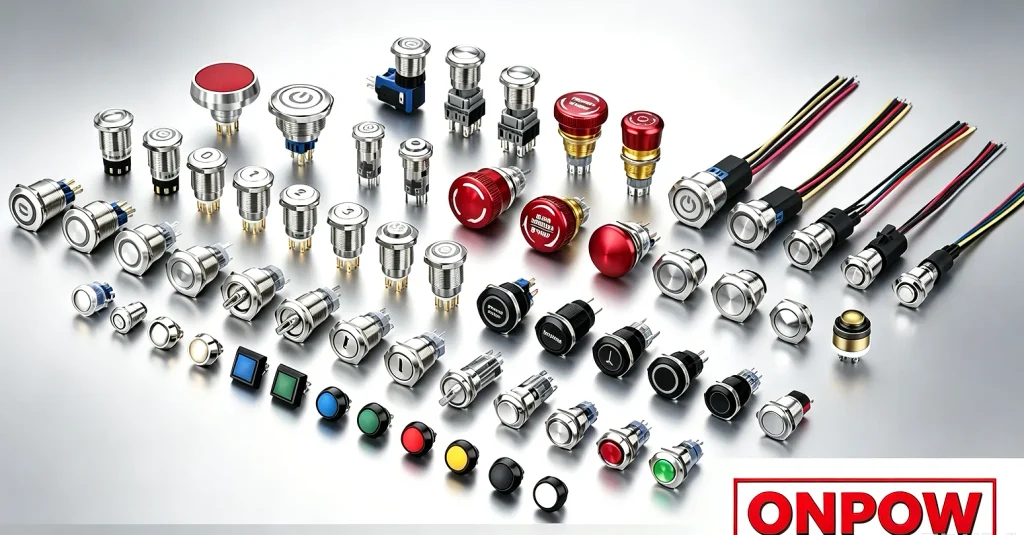
ONPOW provides push button switches and selector switches for industrial control applications with multiple product series: onpow products
You can compare different mounting sizes, illuminated designs, contact configurations and protection specifications according to your requirements to find a suitable solution.
If you are unsure which model to choose, please visit our page and contáctanos to discuss your specific requirements with our technical team.



