

An 8mm vs 10mm push button switch decision starts with the panel cutout and operator interface, not the catalogue photo. Both diameters target compact control circuits where space is tight; the trade-off is density versus legend area, finger reach, and the contact/illumination package you can fit behind the actuator.
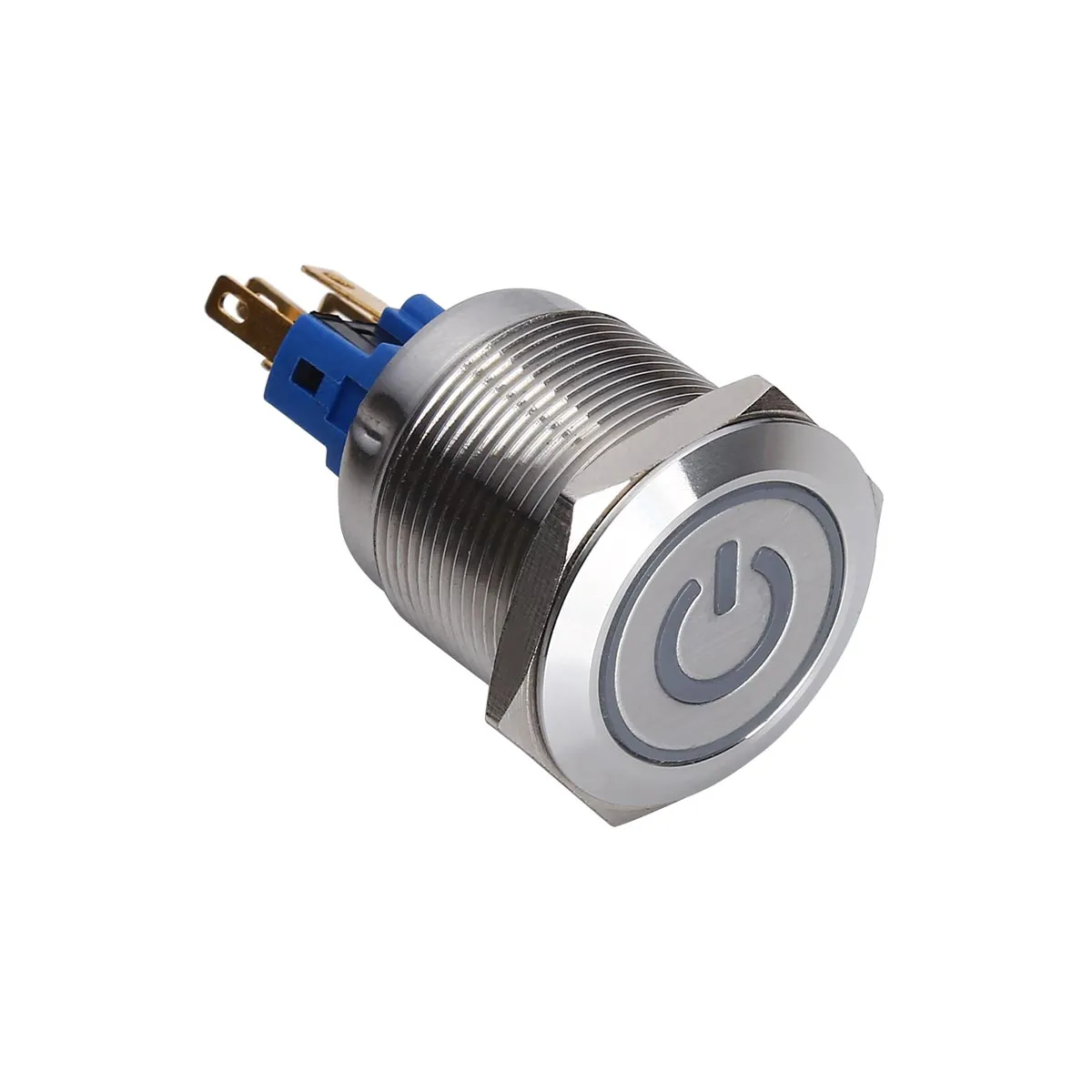
Part 1. What is the practical difference between 8 mm and 10 mm push buttons?
Micro push buttons differ mainly in actuator diameter and the panel opening they require. An 8 mm device minimizes front-panel footprint; a 10 mm device adds a modest increase in target area that can simplify labeling and gloved operation without jumping to a standard 22 mm platform.
Neither size automatically implies a higher contact rating. Buyers should compare each manufacturer’s listed ¡Uy! y Ith values, mounting depth, and contact arrangement for the exact SKU—not assume that 10 mm always means more current capacity.
| Comparison point | 8 mm typical role | 10 mm typical role |
|---|---|---|
| Panel goal | Maximum switch density on a sub-panel | Slightly larger operator target and legend window |
| Recorte | Φ8 family | Φ10 family |
| Operator feel | Best for light, frequent presses in compact HMIs | Easier finger alignment where 8 mm feels cramped |
| Step-up trigger | Legend, illumination, or contact count exceeds micro limits | Same; size alone does not remove modular limits |
For broader selection context across diameters, see the cómo elegir un interruptor de botón guide in the Guías del blog de ONPOW cluster.
Part 2. How do panel cutout and mounting depth drive compact switch selection?
Panel design should lock the cutout diameter before actuator color or legend artwork is finalized. A switch that fits the electrical spec but conflicts with the rear body depth can force a costly panel redesign.
Document these mechanical inputs early:
- front-panel cutout diameter and tolerance;
- available depth behind the panel including wire bend radius;
- adjacent component keep-out zones;
- legend plate thickness and engraving area; and
- whether the switch mounts from the front or requires rear-nut access.
Consejo: IEC control-circuit device standards define the scope for low-voltage switchgear and controlgear devices used in industrial circuits—use them to align device class language in your BOM, not as a substitute for the manufacturer’s mounting drawing (IEC 60947-5-1 scope).
| Revisión mecánica | Why it matters on micro panels |
|---|---|
| Cutout vs drill template | Prevents oval holes that bind the bushing |
| Rear-body length | Avoids collisions with DIN rails or terminal blocks |
| Grosor del panel | Affects nut engagement and IP gasket compression |
| Wire entry angle | Tight 8 mm clusters leave little room for ferrules |
Del campo: Panel-fabrication threads often ask whether a 10 mm hole can be downsized to 8 mm without redoing the legend plate—that question signals the real decision is mechanical compatibility, not a better “mini” label. — industrial panel Q&A pattern
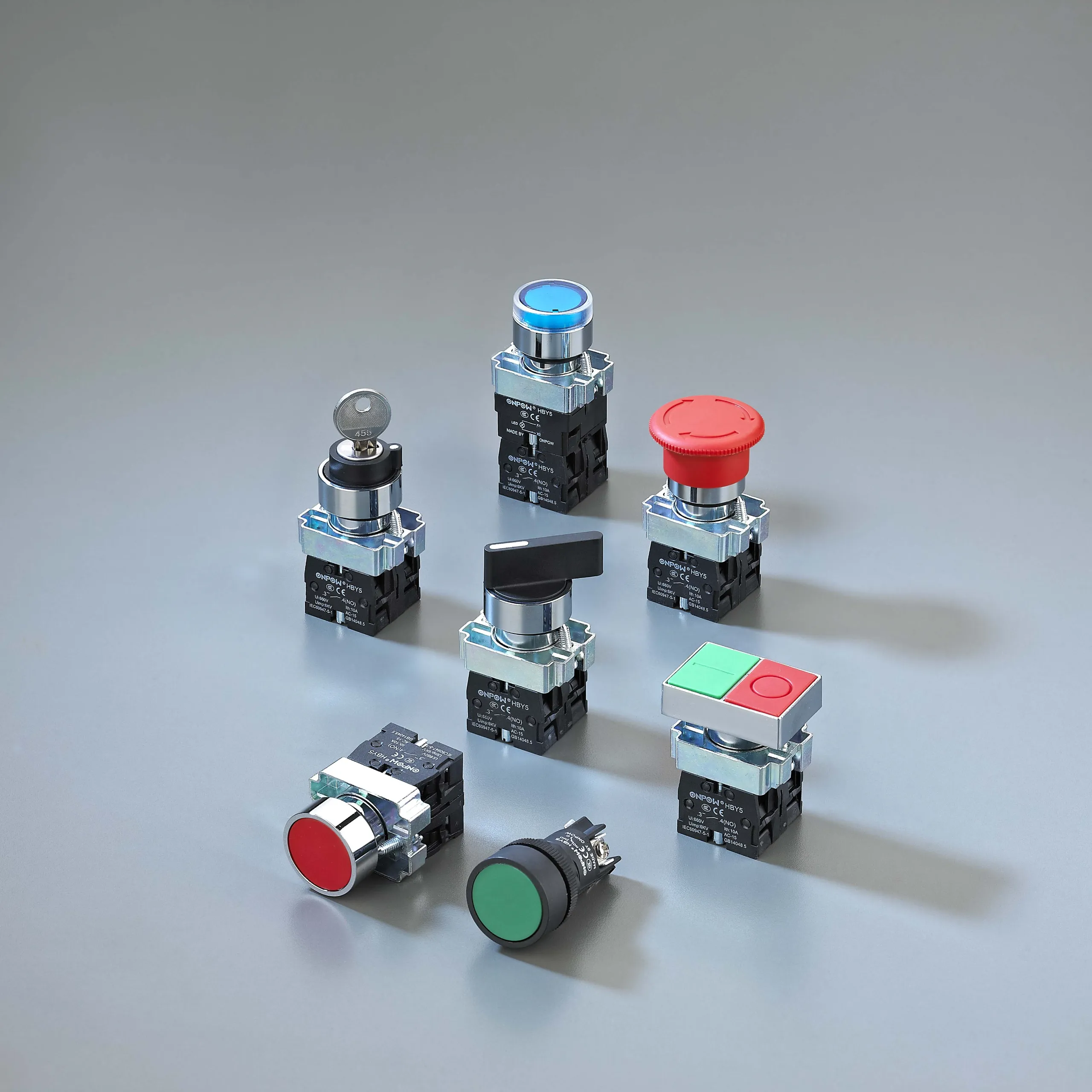
Part 3. When do contact rating and circuit layout limit micro-button choices?
Control-circuit switches must be matched to voltage class, thermal current (Ith), and the number of poles the schematic requires. ONPOW lists LAS4 (Φ8) y LAS3 (Φ10) plastic families with Ui 250 V y Ith 3 A in catalogue data—useful as a starting point for compact panels, but still subject to per-SKU confirmation.
Circuit layout questions that frequently block a micro format:
- Do you need more than one normally open / normally closed pair in the same actuator?
- Will an illuminated actuator share the same contact block?
- Is the load inductive enough to require contact protection or a different block?
- Does the harness need quick-disconnect versus screw terminals?
| Circuit input | Selection impact |
|---|---|
| Ui / Ith per pole | Defines whether catalogue micro ratings cover the branch |
| NC + NO mix | Dense micro layouts may not host multi-deck blocks |
| Illumination circuit | Adds lamp holder depth behind the panel |
| Number of switches per row | Determines whether 8 mm density is worth the wiring congestion |
Warning: Do not size a micro push button from diameter alone. A 10 mm actuator with the wrong contact block can still fail in service if Ith, pole count, or lamp load exceeds the documented SKU—verify the datasheet before batch drilling.
Part 4. Which legend, illumination, and actuator options change the BOM?
Legend and illumination decisions often determine whether 8 mm remains viable. Smaller actuators reduce printable area and can restrict lens styles, which pushes some projects toward 12 mm even when a 10 mm cutout would fit electrically.
Common BOM branches:
- Flat versus extended actuator — affects protrusion and accidental actuation risk.
- Marking method — laser engraving, printed cap, or replaceable legend insert.
- Iluminación — LED voltage, color, and whether the lamp is replaceable.
- Momentary versus maintained — changes operator training and guard requirements.
Del campo: Shop-floor comments in controls forums note that mini buttons look fine on CAD but feel cramped during commissioning—treat operator reach as a first-class requirement, especially on maintenance-heavy panels. — controls ergonomics discussion pattern
Illuminated legends on 8 mm actuators are possible in some product lines, but the rear depth and lens size should be checked against the panel section drawing before you promise a specific marking layout to the end customer.
Part 5. What mistakes push buyers from 8–10 mm up to 12 mm or 22 mm?
Several recurring errors send buyers back to larger platforms after the panel is already drilled:
- specifying micro switches before the contact count is frozen;
- ignoring rear depth until terminal blocks are placed;
- mixing emergency-stop expectations with general push-button diameters;
- choosing plastic actuators where metal bushing or vandal resistance is required; and
- copying a competitor cutout without verifying the exact bushing thread and nut style.
When any of these appear in the review, compare the 12 mm compact push-button solutions article and the 22 mm push-button switch guide before recommitting to Φ8 or Φ10.
Ajustar borde
- Choose 8–10 mm when the cutout is confirmed, operator access is acceptable, and catalogue contact ratings cover the branch.
- Step up to 12 mm when legend area, lamp modules, or slightly larger targets are non-negotiable.
- Step up to 22 mm when modular contact blocks, metal bezels, or standardized machine-building accessories dominate the BOM.
- Do not use this comparison for e-stop — review the dedicated emergency stop button line separately.
Part 6. Which ONPOW plastic lines fit documented 8 mm and 10 mm panels?
After cutout, rating, and legend checks, map the documented diameter to ONPOW plastic families on the plastic push-button switch line:
| Corte de panel | ONPOW family | Catalogue notes |
|---|---|---|
| Φ8 | LAS4 Serie | Compact plastic; catalogue lists Ui 250 V, Ith 3 A, CE |
| Φ10 | Serie LAS3 | Compact plastic; catalogue lists Ui 250 V, Ith 3 A, CE |
| Φ12 step-up | Serie LAS2 | Use when micro limits are exceeded |
| Φ16 step-up | LAS1-A Serie | Larger plastic platform for expanded blocks |
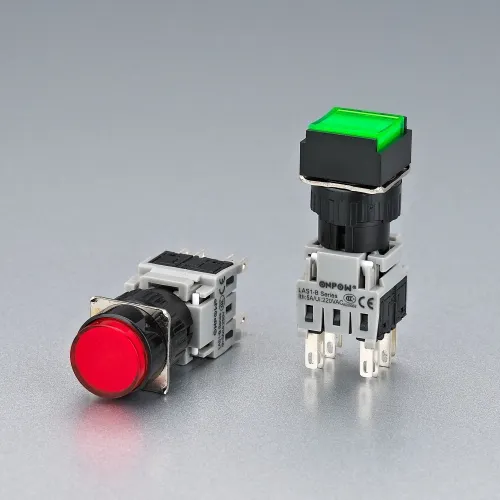
LAS4 suits panels engineered for the smallest standard cutout where density is the primary goal. LAS3 fits the same electrical class with a slightly larger operator target—helpful when labeling or gloved use is common.
Why not default to metal or modular 22 mm lines here? Metal push-button switches and 22 mm modular families such as ONPOW26/HBY5/LAS0 solve different mechanical and accessory requirements. Route those requests only after material, IP, and modular-block needs are documented—not because 8 mm is “lower quality.”
Part 7. What should buyers document before requesting a compact push-button quote?
Send a compact RFQ package so engineering can confirm LAS3/LAS4 fit without guesswork:
- panel cutout diameter and drawing revision;
- quantity and destination market;
- per-circuit ¡Uy!, Ith, and NO/NC requirement;
- actuator type: momentary/maintained, flush/extended;
- legend or illumination specification;
- required IP or environmental notes;
- terminal type and wire gauge; and
- target delivery and documentation needs (CE, test report, installation drawing).
If the review shows modular contact growth or metal-chassis requirements, pause the micro order and compare step-up families before batch production. Submit the package through send cutout drawings and quantity with drawings attached.
Preguntas frecuentes
What is the difference between 8 mm and 10 mm push buttons?
The primary difference is actuator and cutout diameter. Electrical ratings, contact layouts, and rear-body depth are model-specific—compare datasheets rather than assuming the larger diameter always carries more current.
Which panel cutout do I need for an 8 mm push button?
Plan for a Φ8 cutout family per the manufacturer’s mounting drawing. Verify panel thickness, nut engagement, and rear clearance before finalizing the legend plate.
Can 8 mm and 10 mm switches share the same contact rating?
They can in some catalogue families—ONPOW lists Ui 250 V and Ith 3 A for both LAS4 and LAS3—but pole count, illumination, and exact SKU still determine suitability.
When should I choose 12 mm instead of 8 mm or 10 mm?
Choose 12 mm when legend area, lamp modules, wiring space, or operator target size exceeds what a micro actuator can support while keeping a compact panel.
Are miniature push buttons suitable for industrial control panels?
Yes, for control-circuit branches with confirmed cutouts, documented ratings, and acceptable operator access. They are not a shortcut around e-stop, IP, or multi-pole requirements.
How deep is the mounting body behind a 10 mm switch?
Depth is model-specific. Use the manufacturer’s rear-dimension drawing and compare it with DIN rails, terminal blocks, and wire bend radius in your panel section view.
Do illuminated legends fit on 8 mm actuators?
Some product lines support lamps or marked caps at 8 mm, but printable area and lens size are limited. Confirm illumination voltage and rear depth before promising a specific legend design.



