

A micro switch works by using a small actuator movement to release a spring-loaded snap mechanism that changes the electrical contacts quickly. The contact change occurs at a defined operating point rather than following the actuator slowly through its full travel. This behavior helps create repeatable switching in compact mechanisms. A typical changeover unit provides common (COM), normally closed (NC), and normally open (NO) terminals, but the exact circuit, rating, force, travel, and environmental protection depend on the selected model. Treat the switch as a sensing component, not as a complete safety function, and verify the machine circuit before installation.
Respuesta corta: La selección es una decisión del sistema. Confirme conjuntamente la interfaz mecánica, la interfaz eléctrica, el entorno, la respuesta humana, el plan de mantenimiento y las normas aplicables. Los ejemplos siguientes son orientaciones para la toma de decisiones, no valoraciones universales de productos.
Cómo funciona el dispositivo o sistema
Inside the device, the external plunger or lever stores force in a spring or moving blade. Once the mechanism crosses its operating point, the stored energy transfers the moving contact rapidly from one fixed contact to the other. Releasing the actuator crosses a separate release point and the mechanism snaps back. The difference between operating and release position is intentional differential travel; it reduces unstable chatter near the change point. The mechanism can feel simple, but actuator geometry, contact material, load type, contamination, vibration, and overtravel all affect service behavior.

Criterios de selección de un vistazo
| Área de decisión | Qué verificar | Por qué importa |
|---|---|---|
| Actuator | Match plunger, hinge lever, roller lever, or other form to the machine motion | The actuator determines approach direction, available travel, and mechanical leverage. |
| Operating force | Confirm the force range in the chosen datasheet | Too little force may miss the operating point; excessive force can damage the mechanism. |
| Pretravel and overtravel | Provide enough motion to operate reliably without using the switch as a hard stop | Controlled overtravel accommodates tolerance while protecting the internal snap mechanism. |
| Contact form | Map COM, NO, and NC to the required control logic | Terminal labels describe the de-energized mechanical state, not the desired machine behavior. |
| Carga eléctrica | Check voltage, current, AC/DC type, inrush, and minimum load | A rating for one load category cannot automatically be applied to another. |
| Medio ambiente | Evaluate dust, moisture, oil, temperature, shock, and vibration | An exposed basic switch and a sealed assembly solve different environmental problems. |
| Montaje | Control hole position, fastener torque, alignment, and actuator approach | Misalignment changes effective force and travel and can shorten life. |
| Verificación | Test the complete mechanism at tolerance extremes | A bench click alone does not prove reliable operation in the assembled machine. |
La tabla es deliberadamente cualitativa. Los límites numéricos deben provenir de la hoja de datos actual para el modelo exacto y de las condiciones de diseño de la máquina. No transfiera un valor de un producto de apariencia similar, otro voltaje, otra categoría de carga o la página de un competidor.
Cómo hacer la selección
Actuator
Match plunger, hinge lever, roller lever, or other form to the machine motion This matters because the actuator determines approach direction, available travel, and mechanical leverage. Record the chosen value, the source document, and the condition under which it applies. If the requirement cannot be verified from the current product documentation, keep it open for supplier confirmation rather than filling the gap with an assumption.
Operating force
Confirm the force range in the chosen datasheet This matters because too little force may miss the operating point; excessive force can damage the mechanism. Record the chosen value, the source document, and the condition under which it applies. If the requirement cannot be verified from the current product documentation, keep it open for supplier confirmation rather than filling the gap with an assumption.
Pretravel and overtravel
Provide enough motion to operate reliably without using the switch as a hard stop This matters because controlled overtravel accommodates tolerance while protecting the internal snap mechanism. Record the chosen value, the source document, and the condition under which it applies. If the requirement cannot be verified from the current product documentation, keep it open for supplier confirmation rather than filling the gap with an assumption.
Contact form
Map COM, NO, and NC to the required control logic This matters because terminal labels describe the de-energized mechanical state, not the desired machine behavior. Record the chosen value, the source document, and the condition under which it applies. If the requirement cannot be verified from the current product documentation, keep it open for supplier confirmation rather than filling the gap with an assumption.
Carga eléctrica
Check voltage, current, AC/DC type, inrush, and minimum load This matters because a rating for one load category cannot automatically be applied to another. Record the chosen value, the source document, and the condition under which it applies. If the requirement cannot be verified from the current product documentation, keep it open for supplier confirmation rather than filling the gap with an assumption.
Medio ambiente
Evaluate dust, moisture, oil, temperature, shock, and vibration This matters because an exposed basic switch and a sealed assembly solve different environmental problems. Record the chosen value, the source document, and the condition under which it applies. If the requirement cannot be verified from the current product documentation, keep it open for supplier confirmation rather than filling the gap with an assumption.
Montaje
Control hole position, fastener torque, alignment, and actuator approach This matters because misalignment changes effective force and travel and can shorten life. Record the chosen value, the source document, and the condition under which it applies. If the requirement cannot be verified from the current product documentation, keep it open for supplier confirmation rather than filling the gap with an assumption.
Verificación
Test the complete mechanism at tolerance extremes This matters because a bench click alone does not prove reliable operation in the assembled machine. Record the chosen value, the source document, and the condition under which it applies. If the requirement cannot be verified from the current product documentation, keep it open for supplier confirmation rather than filling the gap with an assumption.

Revisión de la solicitud
Utilice los siguientes escenarios como indicaciones para una revisión de ingeniería. No establecen idoneidad por sí mismos:
- Door or guard position feedback where a moving part provides a controlled stroke. During commissioning, verify the command, expected response, abnormal response, and reset behavior in the assembled machine.
- Home-position or end-position detection inside compact equipment. During commissioning, verify the command, expected response, abnormal response, and reset behavior in the assembled machine.
- Presence detection in vending, appliance, and handling mechanisms. During commissioning, verify the command, expected response, abnormal response, and reset behavior in the assembled machine.
- Interlock input in a control circuit after the risk assessment defines the required architecture. During commissioning, verify the command, expected response, abnormal response, and reset behavior in the assembled machine.
- Counting or sequencing tasks where a cam repeatedly drives the actuator. During commissioning, verify the command, expected response, abnormal response, and reset behavior in the assembled machine.
Para cada caso, incluya los extremos de tolerancia, puesta en marcha, parada, pérdida de energía, restauración de energía, modo de mantenimiento, uso previsible mal intencionado o incorrecto, y sustitución de componentes. Cuando el comando afecte a la seguridad del personal, la función de seguridad debe diseñarse y validarse de forma independiente al control de procesos ordinario.
Puesta en marcha y verificación
- Congelar el requisito. Escribe el estado deseado, la acción del operador, la carga, el suministro, el entorno y el tiempo de respuesta en lenguaje sencillo.
- Verifica el modelo exacto. Relacione el código de pedido con su dibujo actual, tabla de clasificaciones, diagrama de terminales e instrucciones.
- Inspeccione la instalación. Confirmar recorte, elementos de fijación, alineación, entrada de cables, holgura trasera, alivio de tensión y protección de partes bajo tensión.
- Prueba de funcionamiento normal. Ejercite el dispositivo en todo el rango de movimiento, usuarios, cargas y condiciones ambientales esperados.
- Probar condiciones anormales. Incluya un cable desconectado, un mecanismo atascado, la pérdida de suministro, la contaminación y otros fallos identificados por la evaluación de riesgos.
- Registrar resultados. Mantener modelo, revisión, método de prueba, fecha, criterios de aceptación, observaciones medidas y aprobador.
- Planifique revisiones periódicas. Base los intervalos de inspección y sustitución en el uso, el entorno, la criticidad y el desgaste observado, y no en un programa universal inventado.
Errores comunes de selección
- Using the audible click as proof that the electrical contacts changed. Evite esto asignando un responsable, registrando el plano o la hoja de datos correspondiente y probando la instalación real en lugar de confiar en el nombre de un producto o en la imagen de un catálogo.
- Allowing a cam to strike the lever sideways or at excessive speed. Evite esto asignando un responsable, registrando el plano o la hoja de datos correspondiente y probando la instalación real en lugar de confiar en el nombre de un producto o en la imagen de un catálogo.
- Switching an inductive or high-inrush load from a resistive-load rating. Evite esto asignando un responsable, registrando el plano o la hoja de datos correspondiente y probando la instalación real en lugar de confiar en el nombre de un producto o en la imagen de un catálogo.
- Assuming every three-terminal layout uses the same physical pin order. Evite esto asignando un responsable, registrando el plano o la hoja de datos correspondiente y probando la instalación real en lugar de confiar en el nombre de un producto o en la imagen de un catálogo.
- Leaving an unsealed switch exposed to washdown, chips, oil, or condensation. Evite esto asignando un responsable, registrando el plano o la hoja de datos correspondiente y probando la instalación real en lugar de confiar en el nombre de un producto o en la imagen de un catálogo.
- Treating one basic switch as a complete safety-rated guard-monitoring system. Evite esto asignando un responsable, registrando el plano o la hoja de datos correspondiente y probando la instalación real en lugar de confiar en el nombre de un producto o en la imagen de un catálogo.
Qué incluir en una consulta a proveedores
Una consulta útil debe indicar la aplicación, el mercado objetivo, las normas aplicables, los detalles de alimentación y carga, la interfaz de control, el plano mecánico, las dimensiones de montaje o del panel, el método de cableado, el entorno, la frecuencia de operación prevista, la cantidad y la documentación requerida. Añada fotografías o un boceto de movimiento cuando el enfoque del actuador o el uso por parte del operador sean difíciles de describir. Pida al proveedor que identifique las suposiciones y excepciones. Para un diseño nuevo o modificado, obtenga muestras y complete la validación antes de realizar pedidos en volumen.
ONPOW ofrece ONPOW micro switch products dentro de su contexto más amplio gama de productos de control industrial. Utilice las páginas de productos para identificar las familias candidatas, luego confirme el modelo exacto con la información técnica actual y las condiciones de su proyecto.
Lectura relacionada de ONPOW
Referencias autorizadas
Video educativo
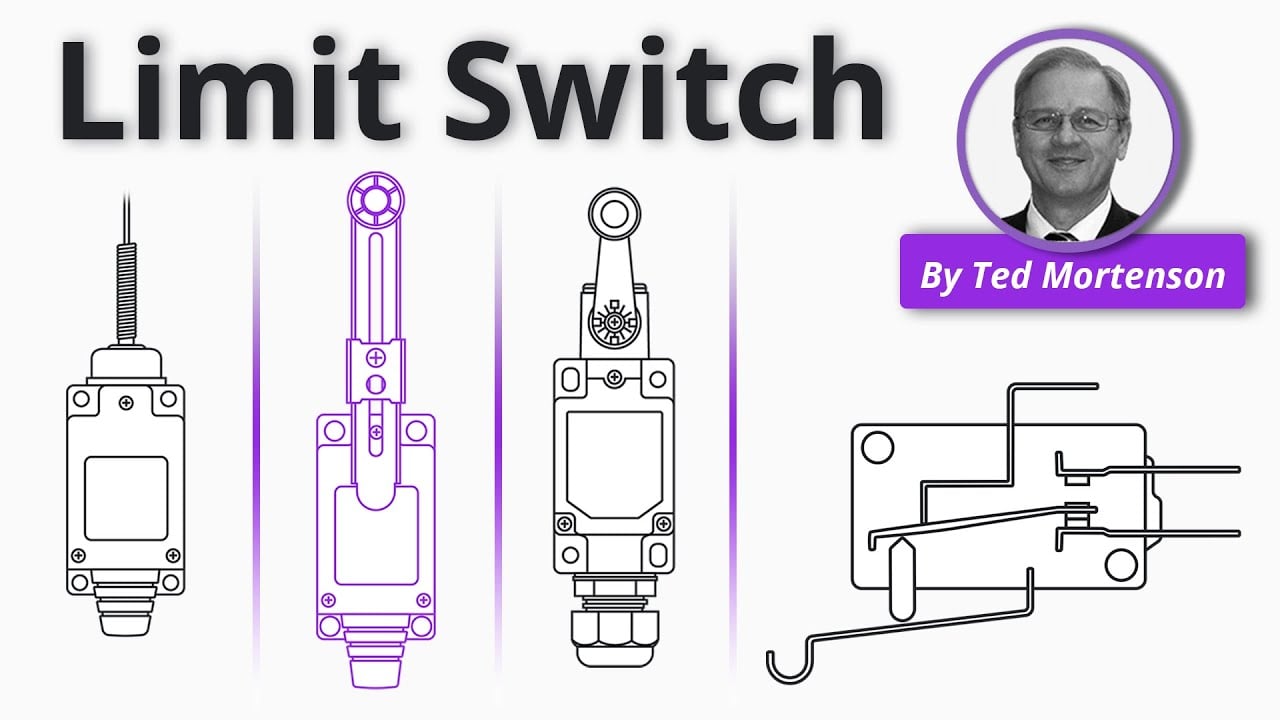
Further learning: Limit Switch Explained | Working Principles by RealPars. The video explains the underlying concept; the project must still follow its own risk assessment and manufacturer documentation.
Preguntas frecuentes
¿Por qué se llama microinterruptor?
El término describe comúnmente un interruptor de acción rápida, compacto y sensible. No garantiza un tamaño, fuerza, clasificación o disposición de terminales universal.
¿Qué son COM, NO y NC?
COM es la conexión del contacto móvil. NC está conectado a COM en el estado mecánico normal; NO se conecta después de la operación. Confirme el diagrama para el modelo exacto.
¿Un microinterruptor necesita energía?
Un microinterruptor electromecánico básico es un contacto seco y no necesita alimentación para mover sus contactos, aunque el circuito monitoreado proporciona la señal eléctrica.
¿Puede un microinterruptor controlar un motor directamente?
Solo cuando la carga exacta se encuentra dentro de la categoría y la clasificación especificadas por el fabricante. Los relés de control o contactores se utilizan a menudo para cargas más grandes o con corrientes de irrupción elevadas.
¿Cómo debería probarse?
Compruebe la continuidad en los terminales y, a continuación, verifique los puntos de funcionamiento y liberación, la alineación, el sobrerrecorrido, la exposición ambiental y el comportamiento en el circuito de control completo.
Regla de selección final
Elija el componente solo cuando sus límites mecánicos, eléctricos, ambientales, de usabilidad y de mantenimiento documentados encajen en el sistema ensamblado. Si un límite permanece desconocido, trátelo como una cuestión de ingeniería abierta. Un breve retraso de validación es menos costoso que diseñar en torno a una suposición que aparece solo después de la instalación.



