

1. Définition et principe de base
A Sélecteur DIL est un ensemble de minuscules interrupteurs électroniques actionnés manuellement. En actionnant les petits curseurs (ou leviers), chaque interrupteur peut être réglé sur une ON état (représentant généralement le “ 1 ”) ou un ARRÊT état (représentant généralement le “ 0 ”).
Lorsque plusieurs interrupteurs sont disposés côte à côte, ils forment une combinaison de code binaire couramment utilisée pour préréglage des paramètres, configuration d'adresses ou sélection de fonctions dans les appareils électroniques.
2. Caractéristiques principales
Réglable physiquement:
Aucun logiciel ou programmation n'est requis. La configuration est modifiée par simple commutation manuelle, ce qui la rend intuitive et fiable.
Rétention d'état:
Une fois réglé, l'état de l'interrupteur reste inchangé jusqu'à ce qu'il soit ajusté manuellement à nouveau, et il n'est pas affecté par la perte de courant.
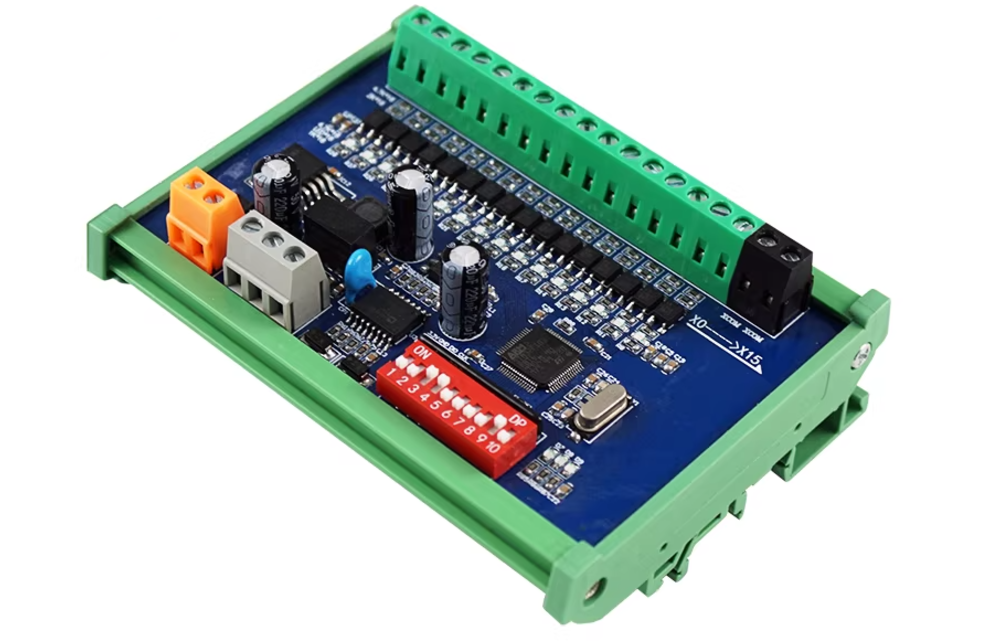
Structure simple:
Il se compose généralement d'un boîtier en plastique, d'actionneurs coulissants ou de leviers, de contacts et de broches métalliques. Cette conception simple permet d'obtenir faible coût et haute fiabilité.
Identification facile:
Des repères clairs comme “ ON/OFF ” ou “ 0/1 ” sont généralement imprimés sur l'interrupteur, permettant de reconnaître le statut en un coup d'œil.
3. Types Principaux
Type de montage
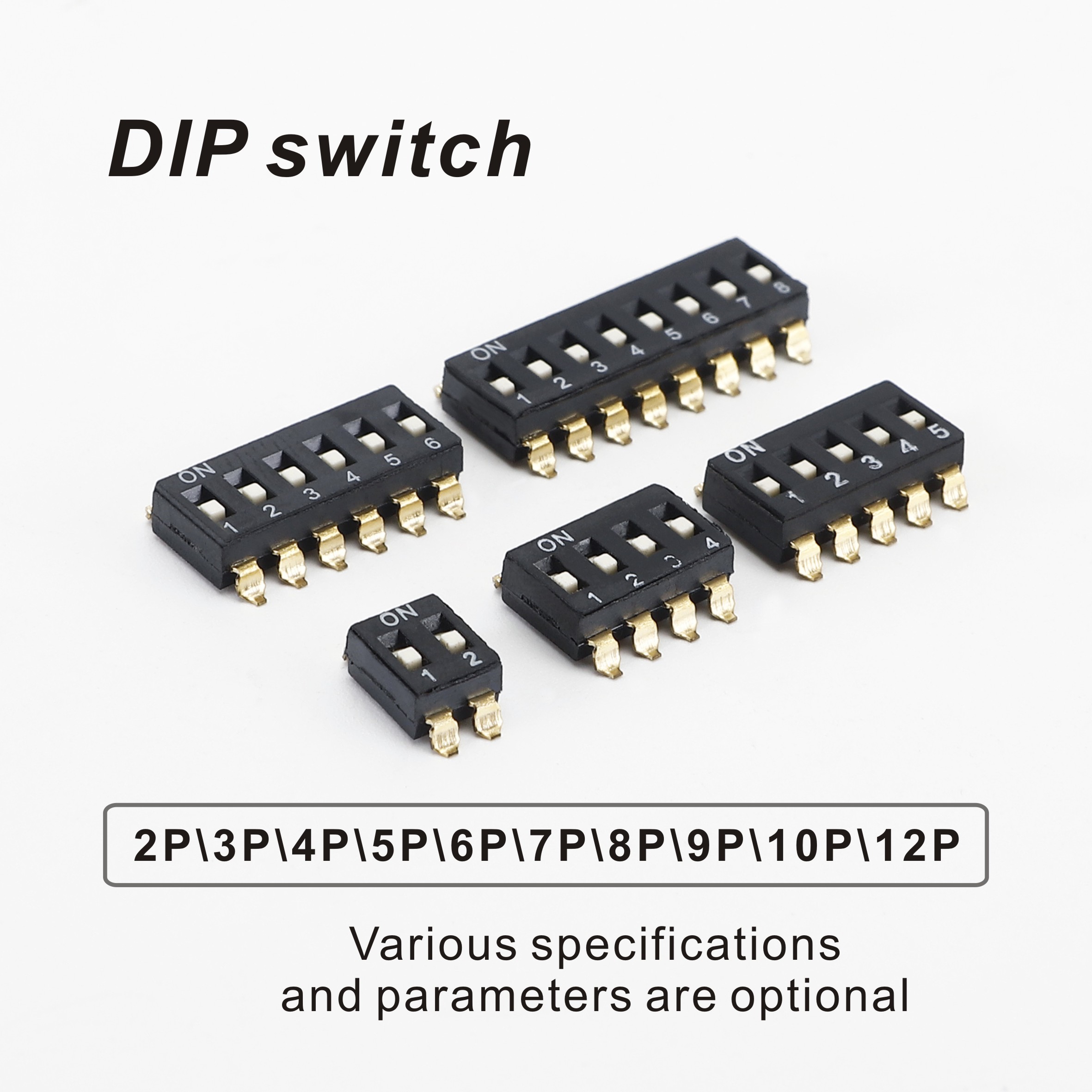
Type à montage en surface (SMD):
Adapté à la production SMT automatisée, de taille compacte, et largement utilisé dans les appareils modernes où l'espace est limité.
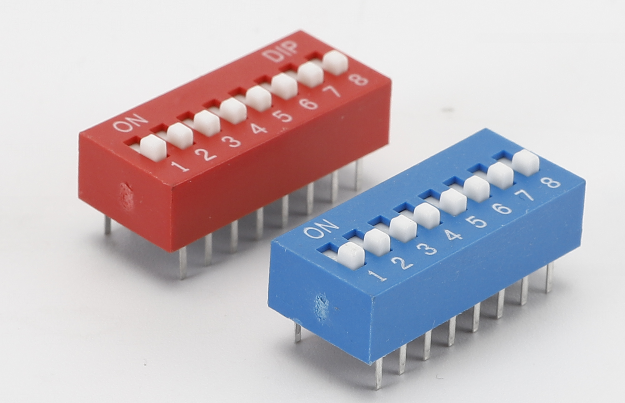
Type traversant (DIP):
Soudés dans des trous débouchants de circuit imprimé, offrant une plus grande stabilité mécanique et couramment utilisés dans les équipements industriels.
Sens d'actionnement
À actionnement latéral (glissement horizontal)
Actionné par le haut (commutation verticale)
Nombre de postes
Les configurations courantes comprennent 2 positions, 4 positions, 8 positions, jusqu'à 10 postes ou plus. Le nombre de commutateurs détermine le nombre de combinaisons possibles, qui est égal à 2.
4. Spécifications techniques
Courant / tension nominal(e):
Généralement conçu pour les applications à faible puissance de signal (par exemple, 50 mA, 24 V CC), non pour transporter l'alimentation du circuit principal.
Résistance de contact:
Plus c'est bas, mieux c'est — généralement en dessous de quelques dizaines de milliohms.
Température de fonctionnement:
De qualité professionnelle : en général -20°C à 70°C; les versions de qualité industrielle offrent une plage de température plus large.
Vie mécanique:
Généralement prévu pour centaines à plusieurs milliers de cycles de commutation.
Scénarios d'application
Grâce à leur simplicité, leur stabilité et leur grande résistance aux interférences, les commutateurs DIP sont largement utilisés dans les domaines suivants :
1. Systèmes d'automatisation et de contrôle industriels
Réglage de l'adresse du dispositif :
Attribution d'adresses physiques uniques à des appareils identiques (tels que des stations esclaves PLC, des capteurs, des variateurs et des servo-entraînements) dans des réseaux RS-485, bus CAN ou Ethernet industriel pour éviter les conflits d'adresses.
Sélection du mode de fonctionnement :
Configuration des modes de fonctionnement (manuel/automatique), des vitesses de transmission de communication, des types de signaux d'entrée et d'autres paramètres.
2. Équipement de réseau et de communication
Préréglage de l'adresse IP / de la passerelle :
Utilisé dans certains modules réseau, commutateurs et émetteurs-récepteurs optiques pour la configuration réseau de base.
Réinitialisation du routeur ou de la passerelle :
Des micro-interrupteurs (DIP switches) cachés sur certains appareils permettent de restaurer les paramètres d'usine.
3. Électronique grand public et matériel informatique
Configuration de la fonction :
Utilisé sur les cartes de développement (telles que les cartes d'extension Arduino ou Raspberry Pi) pour activer ou désactiver des fonctions spécifiques.
Cavaliers matériels :
Présent sur les anciennes cartes mères d'ordinateurs et les disques durs pour la configuration maître/esclave.
4. Sécurité et systèmes de bâtiments intelligents
Configuration des zones de la centrale d'alarme :
Définition des types de zones, tels que alarme instantanée, alarme temporisée ou zones armées 24h/24.
Adressage de l'unité d'intercommunication :
Attribuer un numéro de chambre unique à chaque unité intérieure.
Électronique automobile
Équipement de diagnostic pour véhicules
Sélection de modèles de véhicules ou de protocoles de communication.
Électronique automobile de rechange :
Utilisé pour la configuration de base dans les systèmes d'infodivertissement ou les modules de commande.
6. Autres applications
Dispositifs médicaux
Configuration des paramètres dans certains équipements simples ou spécialisés.
Instruments de laboratoire :
Sélection des plages de mesure ou des sources de signaux d'entrée.
Analyse des perspectives du marché
En tant composant électronique mature et fondamental, le marché des interrupteurs DIP présente les caractéristiques de “demande existante stable, croissance segmentée et équilibre entre défis et opportunités.”
1. Facteurs positifs et opportunités
Une pierre angulaire de l'IdO et de l'Industrie 4.0 :
Avec la croissance explosive des appareils IoT, un grand nombre de capteurs et d'actionneurs à bas coût nécessitent une méthode d'adressage physique à consommation nulle et hautement fiable. Les interrupteurs DIP offrent des avantages inouïs en termes de coût et de fiabilité dans ce rôle.
Un complément à la configuration logicielle :
Dans les scénarios mettant l'accent sur la cybersécurité et la stabilité des systèmes, les commutateurs DIP physiques offrent une méthode de configuration matérielle résistante au piratage et aux pannes logicielles, ajoutant une couche supplémentaire de redondance de sécurité.
Demande de miniaturisation et de performances accrues :
La demande constante pour des tailles plus petites (par exemple, les types CMS ultra-miniatures), une plus grande fiabilité (étanches à l'eau et à la poussière, large plage de température) et un meilleur retour tactile stimule l'amélioration des produits vers des conceptions haut de gamme et de précision.
Pénétration dans de nouveaux domaines d'application :
Dans les maisons intelligentes, les drones, la robotique et les nouveaux systèmes énergétiques, les interrupteurs DIP restent pertinents partout où une configuration au niveau du matériel est requise.
2. Défis et menaces de substitution
Impact de la configuration logicielle et intelligente :
De nos jours, un plus grand nombre d'appareils sont configurés via des logiciels, des applications mobiles ou des interfaces Web utilisant le Bluetooth ou le Wi-Fi. Ces méthodes sont plus flexibles et conviviales, remplaçant progressivement les interrupteurs DIP dans l'électronique grand public et certains produits industriels.
Limites de la fabrication automatisée :
L'état final d'un interrupteur DIP nécessite souvent un réglage manuel, ce qui entre en conflit avec les lignes de production SMT entièrement automatisées.
Plafond technologique :
En tant que composants mécaniques, les commutateurs DIP font face à des limites inhérentes en matière de taille physique et de durée de vie opérationnelle, laissant une marge de progression technologique relativement restreinte.
3. Tendances futures
Différenciation sur le marché :
Marché bas de gamme : hautement standardisé avec une intense concurrence par les prix.
Marchés haut de gamme et de niche : dans les applications industrielles, automobiles et militaires où la fiabilité est critique, la demande pour des commutateurs DIP haute performance et résistants aux environnements difficiles reste stable avec des marges bénéficiaires plus élevées.
Rôle renforcé de “ garde-fou matériel ” :
Dans les systèmes critiques, les interrupteurs DIP serviront de plus en plus de dernière ligne de défense pour la configuration matérielle, qui ne peut pas être modifiée à distance.
Intégration avec les technologies de commutation électronique :
Des solutions hybrides pourraient voir le jour, combinant des commutateurs DIP et des interfaces numériques pour la détection d'état, offrant ainsi à la fois la fiabilité de la commutation physique et la commodité de la surveillance numérique.
Conclusion
Les interrupteurs DIP ne disparaîtront pas rapidement comme certains composants traditionnels. Au lieu de cela, le marché évolue, passant de composants à usage général à des composants de solutions spécialisés et de haute fiabilité.
Dans un avenir prévisible, les commutateurs DIP continueront de jouer un rôle indispensable dans les applications qui privilégient la fiabilité, la sécurité, un coût réduit et une complexité logicielle moindre. Bien que la taille globale du marché doive rester stable, la structure des produits continuera de s'optimiser, et les commutateurs DIP à haute valeur ajoutée et à haute performance jouiront de perspectives de croissance plus solides.



