

A single-pole single-throw toggle switch opens or closes one circuit. It is the simplest maintained ON-OFF contact arrangement, but safe selection still depends on action, load type, voltage, environmental protection, terminals, mounting and service access. The SPST label alone does not establish the electrical or mechanical rating. This guide explains a safe identification and verification process for engineers, panel builders, maintenance teams and buyers. It does not replace the current datasheet, machine risk assessment or locally applicable electrical requirements. The method keeps each decision traceable during purchasing, assembly, commissioning and later service.
Quick decision
Start with function, not pin count. Write the required stable and momentary states, identify every contact and lamp circuit, then match the documented rating to the actual load. Keep power isolated during identification. After installation, test both the electrical state and the machine response. If the application controls hazardous motion, use the required safety architecture rather than treating a general-purpose switch as a complete safety function.
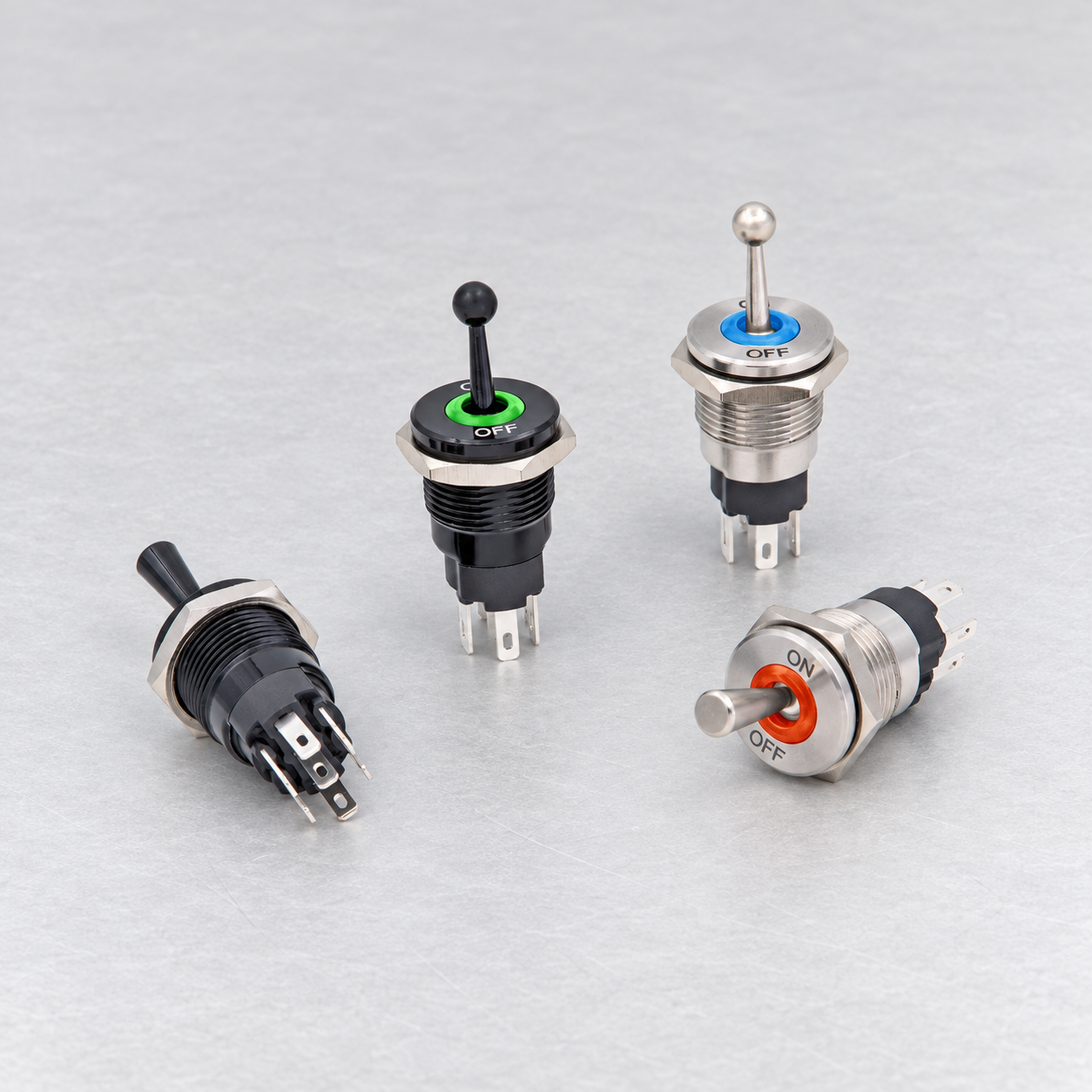
Selection and wiring criteria
| Decision | Apa yang harus diverifikasi | Alasan teknik |
|---|---|---|
| Contact action | Confirm maintained ON-OFF or momentary behavior | The lever action must match the operator task and control logic. |
| Normal state | Define whether the circuit should be open or closed at rest | A label on the panel must match the de-energized contact state. |
| Load type | Document resistive, lamp, motor, solenoid or electronic input duty | Inrush and stored energy change contact stress. |
| AC or DC | Use ratings stated for the actual supply | A value stated for AC should not be copied to DC. |
| Pemasangan | Confirm cutout, thread, anti-rotation feature and rear depth | A switch that fits the hole can still conflict with wiring space. |
| Terminals | Choose solder lug, quick-connect, screw or lead wire for the assembly process | The connection method affects strain relief and inspection. |
| Lingkungan | Check dust, water, oil, temperature, shock and vibration | Panel sealing depends on the complete mounting stack. |
| Service plan | Define inspection and replacement access | A low-cost switch can be expensive if it cannot be safely reached. |
This table is intentionally qualitative. Numerical ratings, torque, conductor size, insulation distance, endurance and environmental limits must come from the approved documents for the exact device and from the complete equipment design. Similar-looking switches can use different internal connections.
Understand the contact logic before wiring
Pole describes how many independent common contact paths operate together. Throw describes how many fixed contacts each common can select. These terms do not state the number of lever positions, whether a position is maintained or momentary, whether contacts overlap during transfer, or how an indicator lamp is connected. Those details require a position-by-position contact table.
Draw a matrix with terminals across the top and actuator positions down the side. Mark only connections supported by the current drawing or by isolated measurements. Include a clear viewing direction such as “rear terminal view with actuator up.” This simple record prevents mirrored diagrams, rotated components and harness cavity numbers from being confused during assembly or later service.
Contact action
Apa yang harus diverifikasi: Confirm maintained ON-OFF or momentary behavior. The lever action must match the operator task and control logic. The engineering record should name the exact order code, drawing revision, supply, load and operating state used for the decision. Check the component in its installed orientation because panel thickness, wire routing, adjacent hardware and actuator access can change the result.
How to verify it: Compare the current manufacturer contact diagram with an isolated continuity test. Record the measured state before operation, in every maintained position and after release from every momentary position. If documentation and measurement disagree, stop and resolve the mismatch before applying power. Never infer a terminal function from pin location, metal color or a diagram for a similar-looking switch.
Normal state
Apa yang harus diverifikasi: Define whether the circuit should be open or closed at rest. A label on the panel must match the de-energized contact state. The engineering record should name the exact order code, drawing revision, supply, load and operating state used for the decision. Check the component in its installed orientation because panel thickness, wire routing, adjacent hardware and actuator access can change the result.
How to verify it: Compare the current manufacturer contact diagram with an isolated continuity test. Record the measured state before operation, in every maintained position and after release from every momentary position. If documentation and measurement disagree, stop and resolve the mismatch before applying power. Never infer a terminal function from pin location, metal color or a diagram for a similar-looking switch.
Load type
Apa yang harus diverifikasi: Document resistive, lamp, motor, solenoid or electronic input duty. Inrush and stored energy change contact stress. The engineering record should name the exact order code, drawing revision, supply, load and operating state used for the decision. Check the component in its installed orientation because panel thickness, wire routing, adjacent hardware and actuator access can change the result.
How to verify it: Compare the current manufacturer contact diagram with an isolated continuity test. Record the measured state before operation, in every maintained position and after release from every momentary position. If documentation and measurement disagree, stop and resolve the mismatch before applying power. Never infer a terminal function from pin location, metal color or a diagram for a similar-looking switch.
AC or DC
Apa yang harus diverifikasi: Use ratings stated for the actual supply. A value stated for AC should not be copied to DC. The engineering record should name the exact order code, drawing revision, supply, load and operating state used for the decision. Check the component in its installed orientation because panel thickness, wire routing, adjacent hardware and actuator access can change the result.
How to verify it: Compare the current manufacturer contact diagram with an isolated continuity test. Record the measured state before operation, in every maintained position and after release from every momentary position. If documentation and measurement disagree, stop and resolve the mismatch before applying power. Never infer a terminal function from pin location, metal color or a diagram for a similar-looking switch.
Pemasangan
Apa yang harus diverifikasi: Confirm cutout, thread, anti-rotation feature and rear depth. A switch that fits the hole can still conflict with wiring space. The engineering record should name the exact order code, drawing revision, supply, load and operating state used for the decision. Check the component in its installed orientation because panel thickness, wire routing, adjacent hardware and actuator access can change the result.
How to verify it: Compare the current manufacturer contact diagram with an isolated continuity test. Record the measured state before operation, in every maintained position and after release from every momentary position. If documentation and measurement disagree, stop and resolve the mismatch before applying power. Never infer a terminal function from pin location, metal color or a diagram for a similar-looking switch.
Terminals
Apa yang harus diverifikasi: Choose solder lug, quick-connect, screw or lead wire for the assembly process. The connection method affects strain relief and inspection. The engineering record should name the exact order code, drawing revision, supply, load and operating state used for the decision. Check the component in its installed orientation because panel thickness, wire routing, adjacent hardware and actuator access can change the result.
How to verify it: Compare the current manufacturer contact diagram with an isolated continuity test. Record the measured state before operation, in every maintained position and after release from every momentary position. If documentation and measurement disagree, stop and resolve the mismatch before applying power. Never infer a terminal function from pin location, metal color or a diagram for a similar-looking switch.
Lingkungan
Apa yang harus diverifikasi: Check dust, water, oil, temperature, shock and vibration. Panel sealing depends on the complete mounting stack. The engineering record should name the exact order code, drawing revision, supply, load and operating state used for the decision. Check the component in its installed orientation because panel thickness, wire routing, adjacent hardware and actuator access can change the result.
How to verify it: Compare the current manufacturer contact diagram with an isolated continuity test. Record the measured state before operation, in every maintained position and after release from every momentary position. If documentation and measurement disagree, stop and resolve the mismatch before applying power. Never infer a terminal function from pin location, metal color or a diagram for a similar-looking switch.
Service plan
Apa yang harus diverifikasi: Define inspection and replacement access. A low-cost switch can be expensive if it cannot be safely reached. The engineering record should name the exact order code, drawing revision, supply, load and operating state used for the decision. Check the component in its installed orientation because panel thickness, wire routing, adjacent hardware and actuator access can change the result.
How to verify it: Compare the current manufacturer contact diagram with an isolated continuity test. Record the measured state before operation, in every maintained position and after release from every momentary position. If documentation and measurement disagree, stop and resolve the mismatch before applying power. Never infer a terminal function from pin location, metal color or a diagram for a similar-looking switch.
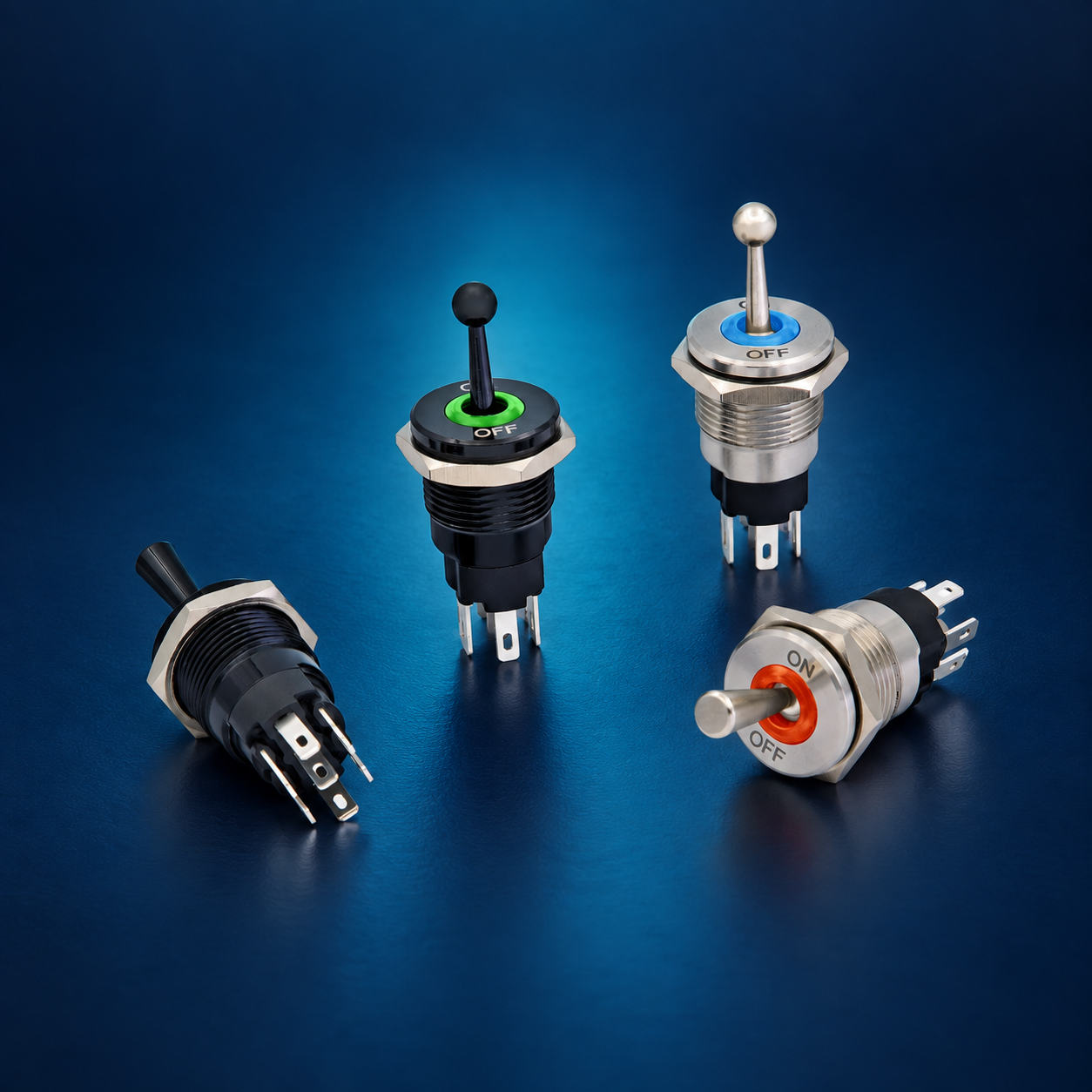
Safe identification and commissioning sequence
- Define the function. State what each actuator position should command, what happens on release and what the normal state must be after loss of power.
- Confirm identity. Photograph the marking and record the complete order code. Retrieve the matching current drawing rather than a family brochure.
- Isolate energy. Follow the site procedure for disconnecting and controlling hazardous energy. Prove the circuit is de-energized with appropriate equipment before touching conductors.
- Separate the component. Disconnect enough conductors to prevent parallel circuit paths from corrupting continuity measurements. Label every removed conductor.
- Map contacts. Test all terminal pairs in all positions. Repeat the sequence to detect intermittent behavior and note any spring-return action.
- Identify lamps separately. Use the published lamp diagram and voltage. Do not apply an unknown test voltage to an LED or electronic module.
- Review the load. Check normal current, inrush, AC or DC, inductive energy, switching frequency, protection and the consequence of a contact failing open or closed.
- Install mechanically. Confirm cutout, panel thickness, anti-rotation, fasteners, sealing, rear clearance, conductor support and accessible labels.
- Perform an unpowered check. Verify point-to-point wiring and insulation before energizing. Make sure unused terminals cannot contact adjacent conductive parts.
- Commission under control. Energize according to the equipment procedure, test each command and indication, then test loss and restoration of power and the credible faults identified by the risk assessment.
Load and protection boundaries
Contact ratings are conditional. A resistive laboratory load does not represent every motor, solenoid, lamp, heater, electronic power supply or capacitive input. DC interruption can sustain an arc differently from AC. Inductive loads release stored energy when opened, and cold lamps or capacitors may draw high inrush. Obtain the load data and apply only a rating that explicitly covers the intended conditions.
The switch is also not the branch-circuit protective device. Conductor size, fuse or breaker selection, short-circuit capability, grounding, insulation and enclosure protection belong to the wider equipment design. Where the operator should carry only a low-energy command, use a properly selected relay, contactor or controller input and verify the interface. Suppression components must suit the supply, load and failure behavior.
Common mistakes
- Contact action: The lever action must match the operator task and control logic. Prevent this by completing the related verification step—confirm maintained on-off or momentary behavior—and retaining the evidence with the machine documentation.
- Normal state: A label on the panel must match the de-energized contact state. Prevent this by completing the related verification step—define whether the circuit should be open or closed at rest—and retaining the evidence with the machine documentation.
- Load type: Inrush and stored energy change contact stress. Prevent this by completing the related verification step—document resistive, lamp, motor, solenoid or electronic input duty—and retaining the evidence with the machine documentation.
- AC or DC: A value stated for AC should not be copied to DC. Prevent this by completing the related verification step—use ratings stated for the actual supply—and retaining the evidence with the machine documentation.
- Mounting: A switch that fits the hole can still conflict with wiring space. Prevent this by completing the related verification step—confirm cutout, thread, anti-rotation feature and rear depth—and retaining the evidence with the machine documentation.
- Terminals: The connection method affects strain relief and inspection. Prevent this by completing the related verification step—choose solder lug, quick-connect, screw or lead wire for the assembly process—and retaining the evidence with the machine documentation.
What to include in an RFQ
Provide the contact form, actuator positions, maintained or momentary action, center state, lamp function and voltage, supply, load category, normal and inrush current, switching frequency, panel cutout, panel thickness, rear-space limit, terminal preference, environment, ingress requirement, temperature range, vibration, required documentation, quantity and target market. Ask the supplier to return the exact contact table and dimensional drawing for the proposed order code.
Gunakan ONPOW industrial control product range to identify candidate families. Final selection must be based on the exact model documentation and validation in the completed assembly. For an unusual harness or control sequence, provide a terminal-view sketch and ask the supplier to mark any assumptions before samples are ordered.
Related ONPOW guides
- Toggle switch position basics
- Toggle switch and push button comparison
- Normally open and normally closed contacts
Authoritative references
- IEC 60947-5-1 control-circuit devices
- IEC 60204-1 electrical equipment of machines
- OSHA electrical safety requirements
Educational video
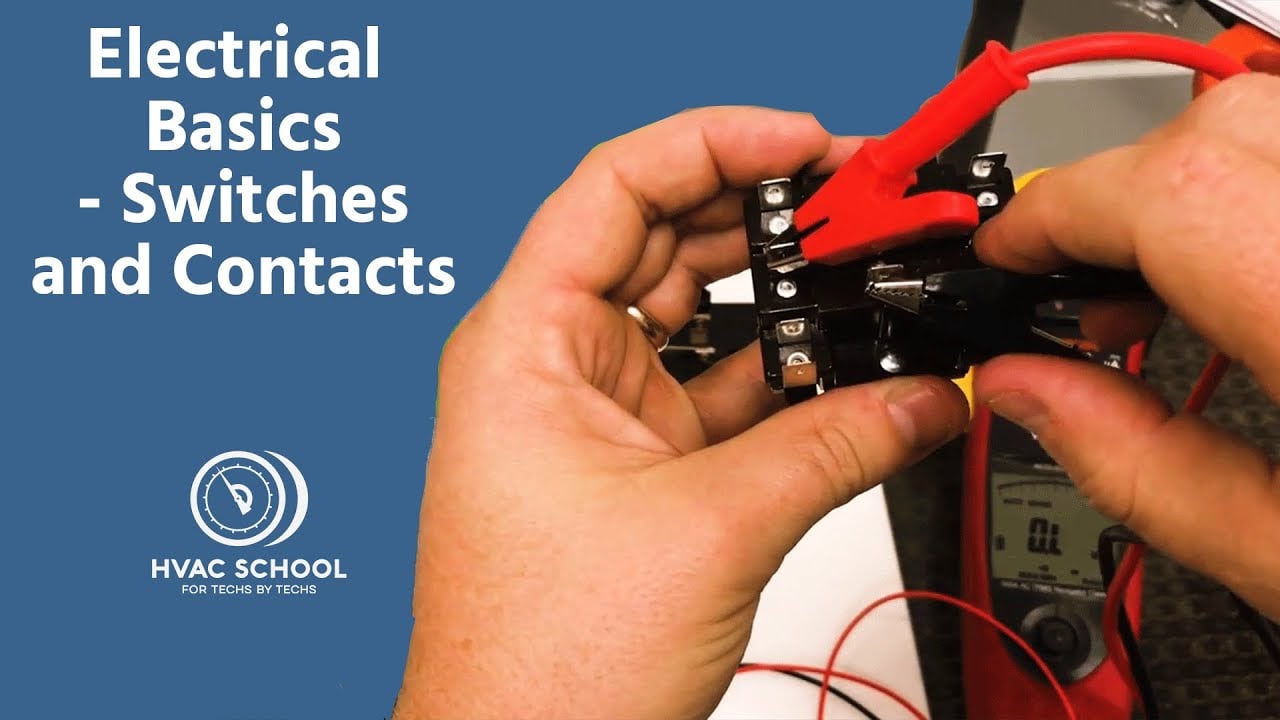
Electrical Basics – Switches and Contacts by HVAC School provides general background. The exact switch and equipment still require their own documentation and validation.
Pertanyaan yang sering diajukan
Bisakah posisi terminal diidentifikasi dari foto sakelar toggle ini?
Tidak. Sebuah foto dapat menunjukkan kemasan dan jumlah terminal, tetapi tidak dapat secara andal menentukan susunan kontak internal, orientasi pandangan, rangkaian lampu, atau peringkatnya. Gunakan gambar model yang akurat dan pengujian terisolasi.
Apakah nilai ampere yang tertera berlaku untuk setiap beban?
Tidak. Nilai yang diizinkan bergantung pada tegangan, AC atau DC, kategori beban, arus masuk (inrush), frekuensi penyakelaran, suhu, dan kondisi pengujian pabrikan. Pilih dari rating yang ditentukan untuk aplikasi aktual.
Dapatkah penguji kontinuitas digunakan untuk mengidentifikasi kontak?
Ya, ketika semua sumber telah diisolasi dan energi yang tersimpan telah dibuang. Uji setiap posisi, sadari bahwa sirkuit lampu dapat menghasilkan pembacaan resistansi, dan bandingkan matriks dengan dokumentasi produsen.
Haruskah sakelar mengalirkan arus motor atau solenoid secara langsung?
Hanya jika beban dan siklus kerja yang tepat berada dalam batas rating yang didokumentasikan. Untuk arus lonjakan (inrush) yang lebih tinggi, pengoperasian yang sering, atau mesin yang sensitif terhadap risiko, relai atau kontaktor yang dipilih secara tepat seringkali merupakan antarmuka yang lebih baik.
Informasi apa saja yang termasuk dalam catatan pengkabelan akhir?
Catat kode pesanan, arah pandangan terminal, matriks kontak, pengenal konduktor, perangkat pelindung, suplai, beban, label, hasil pengujian, revisi dokumen, dan tanggal persetujuan.
Final verification rule
Approve the installation only when the exact device identity, contact matrix, lamp behavior, mechanical fit, environmental boundary, load rating, protective measures, labels and test results all agree. Resolve every discrepancy before energizing production equipment. Keep the final record with the machine so a later replacement is checked against evidence rather than appearance.



