Push button plastic tensile creep evidence describes how a defined plastic specimen deforms over time under sustained tensile loading. It does not establish the service life of a finished switch, the retention of a mounting nut or an acceptable maintenance interval. For a useful purchasing review, identify the material and component, then read the stress, duration, temperature and measurement basis together. A creep number without these conditions cannot support a defensible comparison. This guide helps buyers request and organize the evidence for an industrial button project without treating a laboratory specimen as a tested assembly or inventing an ONPOW performance claim.
Start with the time dependent question
A short test and a sustained load investigation answer different questions. If your concern involves deformation after extended exposure, write that concern clearly before requesting documents. Name the component and the application condition you want reviewed. Avoid asking for a generic “creep certificate,” which may lead to a material sheet containing a value unrelated to the actual purchasing question.
その BSI ISO 899-1 public scope identifies tensile creep testing of standard plastic specimens under specified conditions. The BSI tensile creep listing provides another route to the method. These sources establish the type of investigation; they do not identify the material in a particular button or supply a universal acceptance value for it.
Treat the proposed application as a separate review. A molded retaining feature, a button head and a contact carrier can experience different constraints in an assembly. A tensile specimen result may contribute to the material assessment, but the responsible designer must determine whether it is relevant to the actual loading. Procurement should preserve that boundary rather than choose a convenient test to stand in for missing assembly evidence.
Map the report to the ordered component
使用する ONPOW LAS1 product information to identify the family and then specify the actual configuration being ordered. Ask the supplier which plastic component the evidence concerns. Do not assume that a visible head and a concealed retaining component use the same grade simply because both appear in one product assembly.
The document chain should connect purchase configuration, component reference, material code and test specimen. If one link is absent, record the gap. A generic resin datasheet can remain useful background while a component specific declaration is requested. A confidential formulation does not prevent traceability if the parties agree on a controlled reference that identifies the relevant material consistently.
Include color and formulation options where they matter to the supplier’s material mapping. Do not invent a claim that every color differs, or that none can differ. Ask what the supplied evidence actually covers. The same principle applies to processing changes: obtain the supplier’s scope statement rather than assigning a report to configurations that were never identified by its issuer.
Read stress, duration and temperature together
A result is not self contained if the loading condition is missing. Request the applied tensile stress, test duration, environmental conditions and specimen history stated in the report. Keep those fields beside the plotted response or tabulated result. If the time axis or units are unclear, obtain a corrected document before making a purchasing comparison.
その National Physical Laboratory creep guidance addresses obtaining creep data and analyzing them for long term behavior. Its existence is a reminder that prediction requires a defined method and competent interpretation. It is not permission to extend any short record into an arbitrary lifetime claim. Ask who produced the model, what data support it and which conditions limit its use.
Separate measured duration from predicted duration in your review. If the supplier provides a graph containing both, request a clear legend and the supporting analysis reference. An extrapolated curve is not an observation from a specimen that actually remained on test for that entire period. A purchasing file should preserve this distinction so a later reader does not accidentally repeat a prediction as a completed endurance test.
A document checklist for tensile creep evidence
The following table is a proposed review checklist, not a test method or a set of standard mandated limits. It organizes the information needed to decide whether the submitted evidence addresses your question.
| レビュー時の確認事項 | Document field to inspect | Follow up when unclear |
|---|---|---|
| What was tested? | Specimen identity and material code | Obtain the component to specimen mapping |
| Under what load? | Tensile stress and loading basis | Ask the laboratory to define the condition |
| For how long? | Actual recorded duration and time units | Separate measured and predicted periods |
| In what environment? | Temperature, humidity and pretreatment | Avoid comparing unlike conditions |
| How was strain measured? | Measurement basis and gauge reference | Request clarification of the plotted output |
| What decision is supported? | Report scope and application review | Retain assembly approval as a separate action |
Use the checklist before copying values into a supplier comparison. If two reports differ in several fields, it may be more efficient to request one controlled comparative investigation than to spend time constructing an unsupported conversion. Let the qualified laboratory define the investigation and explain the interpretation limits.
Understand strain, compliance and modulus labels
A report may present different forms of the response. Read the label and its definition before extracting a number. Ask whether the displayed value is strain at a stated time, a compliance quantity or a time dependent modulus. The same material can appear in several plots without those plots being interchangeable purchasing specifications.
Also check the measurement reference. The ISO public scope distinguishes measurement approaches used for different purposes and notes that specimen preparation and environment affect results. In the buying file, capture the issuer’s measurement description rather than translating every graph into one generic “elongation” heading. This preserves enough context for an engineer to evaluate whether the data fit the proposed use.
Do not confuse a smooth graph with low uncertainty or proven applicability. Request the number of specimens, explanation of variation and any limitations stated by the issuer. When the report does not provide an interpretation of an apparent anomaly, ask for one. Removing inconvenient points or averaging curves yourself can hide the very limitation that should govern the decision.
Keep tensile creep separate from relaxation and cyclic life
Creep evidence is not a substitute for a contact operating life result. A switch may have electrical, mechanical and installation requirements that are not answered by a sustained tensile specimen test. Retain the product’s applicable ratings and instructions in the same project file, but do not describe the material evidence as proof of those separate characteristics.
Similarly, a report about stress relaxation addresses a different investigation from the tensile creep question covered here. If the actual concern is loss of retaining force, ask the engineer which evidence is appropriate. Selecting the test name first and defining the problem afterward can lead to a technically valid report that does not resolve the application risk.
For related material review, consult the プラスチック引張レポートガイド を参照してください。また、 材料熱耐久性ガイド. They address complementary evidence. The push button selection information remains the starting point for selecting the operator family before requesting configuration specific documents.
Review a typical supplier response
Imagine receiving a short material sheet with a creep related value but no specimen reference or stated duration. The appropriate first step is to request the supporting report and scope. Do not reject the supplier merely because the summary is brief, and do not accept the configuration merely because the sheet includes a recognized standard number.
If the full report arrives with a different material code, ask for the documented relationship. Where the supplier states that it is a representative grade, determine whether representative evidence is acceptable under your project requirement. Record that decision explicitly. A representative material file should not later be described as a test on the exact ordered production item.
If the proposed use falls outside the reported conditions, send the actual concern to the responsible engineering team. A valid conclusion may be that additional application evidence is needed. Give the purchasing action a clear owner and request so the issue can be resolved; avoid leaving an unexplained “pending” label that forces the next reviewer to repeat the whole investigation.
Preserve a useful inquiry and change record
An effective inquiry includes the ordered configuration, component of concern, expected exposure information and the decision you need to make. Ask ONPOW what material and product evidence is available for that configuration. Request the report identifier and scope, rather than requiring an unsupported statement that a material will never deform during service.
Once accepted, save the source files with the component mapping and engineering decision. Define which future changes require review, including a changed material reference or a revised report. This creates a repeatable purchasing process while acknowledging that the evidence has a scope. It does not turn one historical specimen test into continuing approval for every future configuration.
よくある質問
引張クリープ試験によって、取付ナットが緩まずに固定され続けることを証明できるか?
いいえ。この報告書は、規定された条件下での特定の引張試験片に関するものです。ナットの保持性能は、実際に取り付けられたアセンブリとその荷重条件に左右されます。材料の応力曲線からナットの保持性能を推測するのではなく、適切な取り付け方法および使用条件に関する根拠資料を、担当技術者に確認してください。.
Can I compare values from different temperatures?
専門家による適切な解釈なしに、直接比較できるものとして扱わないでください。それぞれの測定結果と併せて、温度やその他の条件を記録してください。比較が必要な場合は、適切な方法とその限界について、検査機関に確認してください。.
予測寿命は、実測された試験時間と同じものですか?
いいえ。実際の継続時間とモデルによって推定された延長時間は、別々のフィールドに保持してください。エンジニアリングまたは購入の意思決定に予測値を使用する前に、その根拠となるモデルと適用可能性に関する説明を要求してください。.
最初に要求する書類として、最も有用なものは何ですか?
Ask for the component and material mapping, full report reference, measured stress and duration, environment and interpretation scope. Those fields help determine whether the evidence answers your actual question before further investigation is commissioned.
さらに詳しく学ぶ
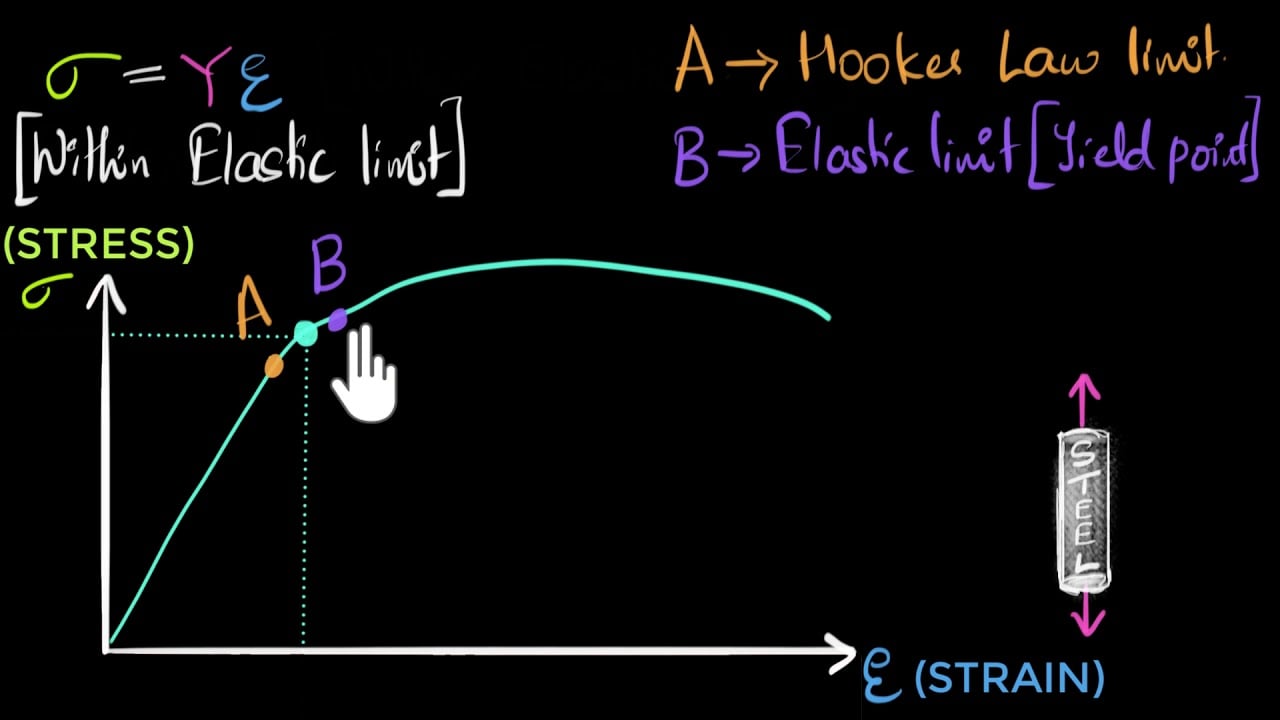
Khan Academyでは、応力、ひずみ、弾性変形と永久変形について解説しています。これは材料の変形に関する報告書を読み解くための基礎知識です。圧縮試験やクリープ試験の手順を示すものではなく、ONPOW製品の性能を証明するものでもありません。.