

A push button polymer solution viscosity report is useful only when the tested resin, solvent, concentration and temperature are identifiable. It describes polymer behaviour in a dilute solution under a defined procedure; it does not directly measure the operating force, endurance or impact resistance of a finished switch. For procurement, first establish that the method suits the particular polymer. Then check how the reported quantity was obtained and how the sample connects to the ordered component. This guide explains that review without assigning an unverified resin grade or viscosity limit to an ONPOW product.
Decide whether solution viscosity answers your purchasing question
A materials team may request solution viscosity to investigate resin consistency or support a material specification. A switch buyer may instead need confirmation of contact ratings, mounting dimensions or mechanical operation. Before commissioning specialist laboratory work, write down the decision the result will support. If there is no corresponding material requirement, an isolated viscosity value can add paperwork without resolving a real purchasing uncertainty.
The distinction matters because the test changes the physical state of the sample. A dissolved polymer is not a molded button housing under service load. Its measurement can help characterize the polymer system, but the connection to a finished part requires material identification, production traceability and the relevant engineering assessment. Do not use the report as a substitute for the configured switch’s specifications.
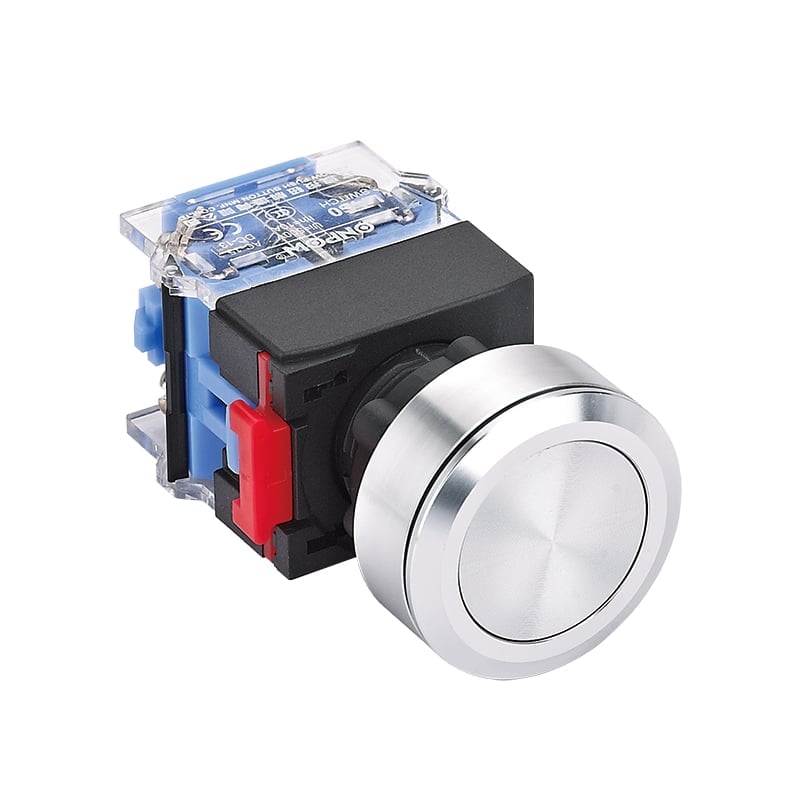
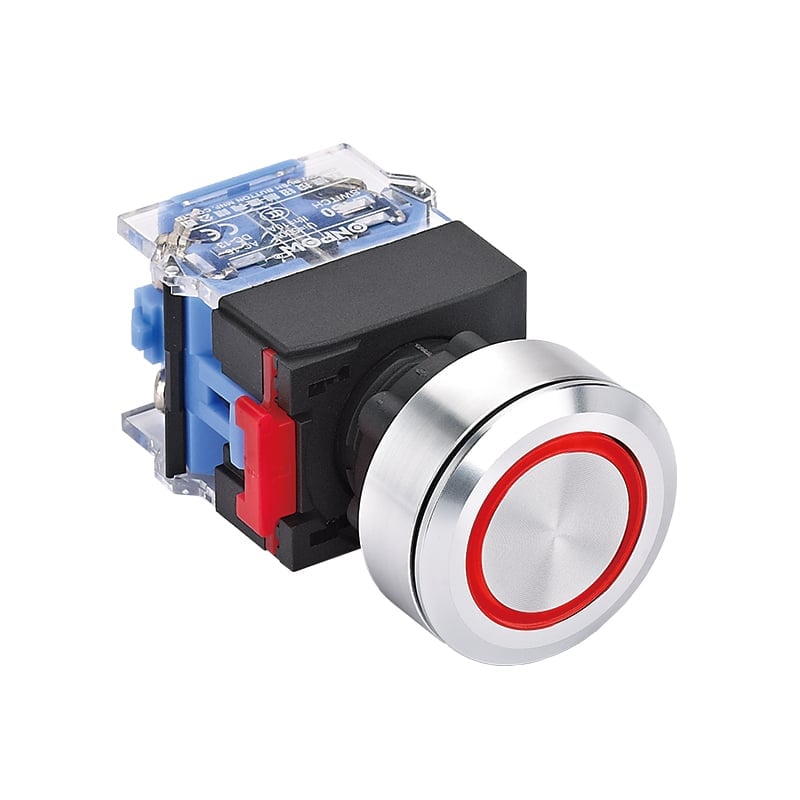
The ONPOW LAS0-K30 product page provides a concrete product reference for an enquiry. Identify the exact component of interest rather than asking for a viscosity report for the entire switch. The photographs accompanying this guide identify products only; they do not establish which polymer, additive package or laboratory method applies to any component.
Confirm the polymer and the applicable method first
ISO 1628-1:2024 addresses general principles for viscosity measurements of organic polymers in dilute solution. Its public scope covers several reporting quantities and provides a basis for polymer-specific methods. That does not mean every plastic part can be put through one universal solvent and temperature procedure.
Request the resin identity and the laboratory’s proposed method before approving a test request. Where a polymer-specific standard or material specification exists, ask how it governs the measurement. If the laboratory proposes another procedure, retain its identification and explanation of applicability. Never fill a missing procedure field by assuming the most familiar standard number.
Crosslinked materials, mixtures and filled compounds require particular care. Ask which fraction is actually being measured and how undissolved material is treated. A result for an extracted soluble fraction must remain labelled as such. It cannot silently become a property of the entire molded component or a declaration about every material used in the switch.
Distinguish the reported viscosity quantities
Relative viscosity compares the solution with its solvent. Reduced and inherent viscosity also involve concentration, while intrinsic viscosity represents a limiting dilute-solution quantity. The Polymer Science Learning Center explanation of dilute solution viscometry provides educational background on why solution behaviour is used in polymer characterization.
For a purchasing review, the practical lesson is to preserve the report’s exact quantity and units. A column headed viscosity number should not be renamed intrinsic viscosity merely because both occur in polymer documentation. Similarly, a dimensionless ratio is not interchangeable with a quantity reported in volume per mass. Ask the laboratory to resolve an ambiguous heading before making comparisons.
Avoid converting the result into a molecular weight unless the appropriate relationship and its applicability have been established for that polymer, solvent and temperature. A generic online conversion is insufficient. If molecular weight is the actual requirement, ask the responsible materials specialist which measurement and interpretation should form the acceptance evidence.
Keep preparation and measurement conditions attached to the result
Record the solvent identification, solution concentration, test temperature and sample preparation history. These details belong beside the result, not in an attachment that disappears when a quotation is summarized. Ask whether the measurement concerns supplied resin, a prepared plaque or material recovered from a production part.
Dissolution and sample handling can affect what reaches the instrument. A reviewer should request the laboratory’s preparation record, including any extraction or filtration step, without improvising a laboratory procedure. Handling organic solvents and heated solutions belongs with trained personnel and the applicable laboratory controls. This article supplies no solvent selection or operating instructions.
If a report includes flow times, instrument details or repeat measurements, preserve them with the issued conclusion. A neatly rounded catalogue value should remain distinguishable from a laboratory result and from a guaranteed material limit. All three may have a role, but they do not carry the same contractual or technical meaning.
Use a comparison worksheet before ranking submissions
The table below is a proposed purchasing worksheet, not a set of standard acceptance limits. Its purpose is to expose differences that could otherwise be hidden behind one numerical column.
| 검토 항목 | Detail to retain | Action if submissions differ |
|---|---|---|
| Tested material | Resin grade, component and sample identifier | Establish the link to the ordered part |
| Reported quantity | Relative, reduced, inherent or intrinsic viscosity | Ask for a common, correctly labelled basis |
| Procedure | Method part, edition and any adaptation | Obtain an applicability explanation |
| Solution conditions | Solvent, concentration and temperature | cURL Too many subrequests by single Worker invocation. To configure this limit, refer to https://developers.cloudflare.com/workers/wrangler/configuration/#limits |
| 준비 | cURL Too many subrequests by single Worker invocation. To configure this limit, refer to https://developers.cloudflare.com/workers/wrangler/configuration/#limits | cURL Too many subrequests by single Worker invocation. To configure this limit, refer to https://developers.cloudflare.com/workers/wrangler/configuration/#limits |
| 데이터 품질 | cURL Too many subrequests by single Worker invocation. To configure this limit, refer to https://developers.cloudflare.com/workers/wrangler/configuration/#limits | cURL Too many subrequests by single Worker invocation. To configure this limit, refer to https://developers.cloudflare.com/workers/wrangler/configuration/#limits |
| 수용 기준 | cURL Too many subrequests by single Worker invocation. To configure this limit, refer to https://developers.cloudflare.com/workers/wrangler/configuration/#limits | cURL Too many subrequests by single Worker invocation. To configure this limit, refer to https://developers.cloudflare.com/workers/wrangler/configuration/#limits |
| 변경 관리 | cURL Too many subrequests by single Worker invocation. To configure this limit, refer to https://developers.cloudflare.com/workers/wrangler/configuration/#limits | cURL Too many subrequests by single Worker invocation. To configure this limit, refer to https://developers.cloudflare.com/workers/wrangler/configuration/#limits |
For example, suppose one submission reports a viscosity number at a specified concentration while another reports an intrinsic value derived from a concentration series. Both documents may be technically useful. They do not automatically provide a common numerical ranking. Request comparable evidence or a documented interpretation from the responsible reviewer.
The correct outcome may be “comparison pending” rather than “material rejected.” Missing comparability is an evidence gap, not proof that the product is poor. Keep that distinction in the supplier discussion so that follow-up work targets the uncertainty rather than encouraging unnecessary replacement tests.
Separate solution viscosity from melt flow and finished-part performance
The push button plastic melt flow report guide addresses material flowing in a different physical state and under a different test arrangement. A melt flow result should not be converted into a solution viscosity result by a general purchasing formula. Preserve each method’s purpose and conditions.
Material identity is another separate issue. The FTIR report review explains how sampling and identification evidence should be interpreted. A viscosity measurement may support a controlled material investigation, but it does not independently establish every constituent or confirm that a particular production component uses the stated grade.
For the broader procurement context, use the plastic density and material traceability guide. Link the tested sample to the component drawing and material record before relying on any specialist characterization. The same general polymer name on two documents is not enough to prove that their formulations and preparation histories match.
Investigate an apparent batch change systematically
Imagine a hypothetical supplier notification showing a lower solution-viscosity result for a new batch. First confirm that the same quantity, procedure and conditions were used. Check the sample identification and whether preparation changed. Request the original report rather than drawing a conclusion from a number copied into an email.
Next ask the materials specialist what the difference could mean within the method’s validity and measurement quality. A change in a measured quantity does not by itself establish a specific degradation mechanism. Keep explanations as hypotheses until the supporting investigation is available. Do not declare a finished switch defective solely from a comparison whose basis remains uncertain.
Finally connect the investigation to the actual purchasing requirement. The team may need additional material evidence, a controlled batch review or a finished-part assessment. Record who makes that decision and which documents support it. Retain the distinction between a laboratory observation and an approved production disposition.
Prepare a focused supplier enquiry
Send the order code, component description, drawing revision and reason for requesting the evidence. State whether the project needs characterization data, comparison with an approved material or compliance with an agreed material specification. Ask for the sample origin, reported quantity, method edition and all conditions necessary to understand the result.
Request a written connection between the laboratory sample identifier and the supplied production component. If the report is for raw resin rather than the molded part, keep that fact visible. Ask whether pigments, fillers or processing differences limit the relevance of the submission. Avoid asking the supplier to certify an unspecified property for every configuration in a broad product family.
When evidence is accepted, preserve the issued report with the approved material and component revisions. A later change should trigger a review of what the existing report still supports. The enquiry is complete when the intended decision has a documented basis, not merely when a PDF contains the word viscosity.
자주 묻는 질문
Is solution viscosity the same as melt flow rate?
No. They use different material states and procedures. Retain each method and its conditions, and request a justified comparison rather than converting one result into the other.
Does a viscosity report identify the resin in a photographed button?
No. The link must come from controlled sample and component records. A photograph establishes visible product identity, not polymer composition or laboratory traceability.
Can every plastic component be assessed by the same solution method?
No. The polymer, soluble fraction and procedure must be suitable. Ask the laboratory to explain applicability and preserve any limitation in the purchasing record.
Is a higher intrinsic viscosity always the better choice?
No. Acceptance depends on the specified material and engineering purpose. Compare like conditions against an agreed requirement rather than treating a higher number as a universal quality score.
추가 학습 자료
NPTEL IIT Guwahati explains polymer molar mass determination using viscometry and GPC. This is background for solution viscosity interpretation, not a test on an ONPOW component or a universal molecular weight conversion.
Determination of Polymer Molar Mass: Viscometry and GPC — NPTEL IIT Guwahati



