

A push button RoHS declaration review should establish which ordered references the statement covers, which regulatory basis it uses, and whether any claimed exemption applies to the actual technical use. A green symbol or a generic “RoHS” heading does not answer these questions. Begin with product identity and document scope, then review the evidence with the person responsible for your equipment’s compliance. This article provides a purchasing checklist for industrial control components. It does not declare a particular ONPOW switch compliant or determine the legal status of your finished machine.
Identify what the supplier is declaring
A supplier substance statement, a laboratory report, and an equipment declaration of conformity serve different purposes. Ask the supplier to name the document and explain its scope. A component statement can support your technical file without independently demonstrating that the complete equipment meets every applicable requirement. Keep the original document title in your records rather than renaming everything a certificate.
The European Commission’s RoHS overview describes the restriction of hazardous substances in electrical and electronic equipment. Use that official starting point to identify the relevant regulatory framework. Then establish whether the supplier’s statement concerns the component’s material restrictions, the finished equipment, or another defined scope.
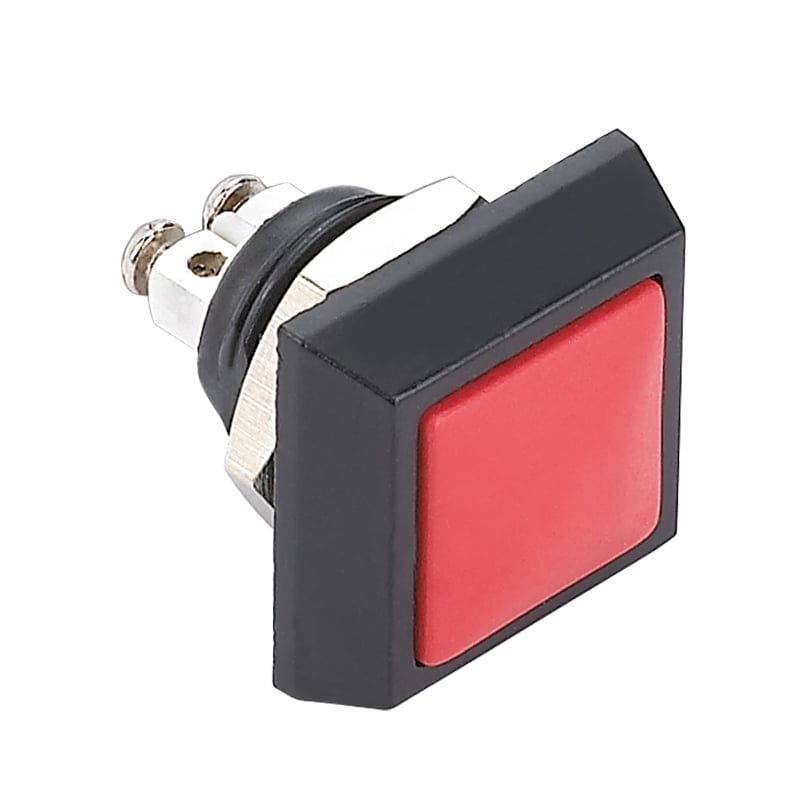
Avoid using a component photograph to bridge missing documentation. The GQ12B-10/B/AL product page identifies a real ONPOW product for a focused request. Its appearance does not establish the composition of internal parts or demonstrate that any exemption is necessary or applicable. Ask for the evidence corresponding to the reference you intend to order.
Match the complete ordered configuration
Record the full manufacturer designation and every ordered option that may affect the assembly. Include accessories supplied under separate references. If the declaration lists only a series, ask how the manufacturer defines the covered variants and whether the selected configuration falls within that scope. Do not assume that similar appearance means identical material documentation.
A distributor may use a commercial stock code that differs from the manufacturer’s reference. Retain both and obtain a written link between them. This becomes especially useful when several terminal styles or actuator finishes share the same short purchasing description. The evidence should follow the part supplied rather than an image copied into a quotation.
When an order changes, review the document mapping again. A substitute that meets dimensional and functional requirements may require its own material statement. Make documentation review part of substitution approval, so production does not discover the missing reference only after the original part has been replaced in the bill of materials.
Read the regulatory reference and revision
Check that the statement identifies the legislation or requirement assessed and its reference date. A letter that mentions only an informal label such as “RoHS 3” may need clarification. Ask for the actual regulatory references, applicable amendments, and the date of the manufacturer’s assessment. These details make the statement easier to maintain when requirements change.
Do not insert a permanent list of exemption expiry dates into an evergreen purchase template without a maintenance process. The Commission’s RoHS implementation guidance explains the exemption framework and its review process. Review the applicable official information at the time of the transaction rather than relying on a date copied from an old supplier presentation.
Separate the destination market from the supplier’s location. A supplier outside the EU may provide information supporting an EU equipment assessment, but its address does not determine which market requirements your organization must apply. State the intended markets in the request and involve the responsible compliance owner when more than one framework is relevant.
Treat exemptions as specific evidence questions
If the statement cites an exemption, request its exact identification, the affected component or material, and the technical application claimed. Ask the compliance owner to check the applicable category, conditions, and relevant timing. A number by itself is difficult to evaluate because the same document may cover several products or different uses.
An exemption is not a blanket description of the whole button. A supplier may need to explain which part relies on it and which evidence supports the remaining materials. Conversely, a statement that uses an exemption should not automatically be rewritten as a failed product. The correct decision depends on the applicable requirements and the documented use.
Ask the supplier how changes to the exemption status will reach your purchasing team. A monitored email address and a controlled reference list are more useful than an unassigned note saying “check later.” The organization placing equipment on the market should decide how a regulatory change affects stock, future orders, and its technical documentation.
Use a scope review matrix
This matrix is a suggested purchasing aid. It contains qualitative evidence questions, not a legal test or a manufacturer declaration. Adapt the disposition to the product, destination, and responsibilities confirmed by your compliance team.
| 증거 항목 | 확립할 내용 | Useful follow-up question |
|---|---|---|
| Ordered reference | Exact model and supplied options | Which listed item covers this order? |
| Document type | Component statement, report, or equipment declaration | What conclusion is this document intended to support? |
| Regulatory basis | Named legislation and assessment date | Which amendments were considered? |
| Exemption | Specific reference and affected application, if used | Which component relies on this provision? |
| Supporting assessment | Traceable supplier information or identified testing | What materials and revisions were reviewed? |
| Change notification | Responsible contact and update mechanism | How will a material or scope change be communicated? |
Store the answer and its supporting attachment together. A review matrix without the source document cannot show what the supplier actually stated. Equally, a folder of letters without a reference mapping makes it difficult to determine whether the ordered configuration has been assessed.
Understand the limits of laboratory evidence
A laboratory report should identify the sample received, the methods used, the locations or materials assessed, and the reporting limits. Ask whether the report supports the actual declaration scope. A result from an unidentified fragment or a different production revision cannot automatically close every material question for a complete assembly.
Do not treat a single screening result as interchangeable with every subsequent analytical method. Where the report calls for further assessment, obtain a technical interpretation rather than deleting that qualification from the purchasing summary. The laboratory or responsible specialist should explain what the result can establish and what it leaves unresolved.
The 실험실 인증 범위 가이드 provides a separate review of competence and method coverage. Keep that review distinct from product identity. The laboratory may be competent to perform a method while the sample still fails to represent your ordered switch or supplied accessory.
Keep RoHS and REACH records separate
Both topics may appear in one supplier packet, but they answer different questions. Do not use a REACH Candidate List statement as the sole answer to a RoHS evidence request, or vice versa. Ask the supplier to identify the scope of each statement, even when both appear on the same signed page.
For a structured request covering the other topic, see the push button REACH material declaration review. Cross-reference the product identity where appropriate, but retain each assessment’s regulatory basis, date, and limitations. This prevents a later buyer from assuming that one general environmental letter covers every requirement.
A chemical-substance statement also does not establish electrical ratings, ingress protection, mechanical life, or functional safety. Keep those acceptance requirements in their own evidence records. Combining unrelated conclusions into a single approval makes it harder to understand what was verified when a design or application changes.
Plan for receiving checks and repeat orders
사용하기 incoming inspection guide for push buttons to connect the paperwork with the delivered item. Check the supplied references and agreed identification against the approved order. Physical acceptance cannot determine substance concentrations, but it can reveal that the paperwork has been attached to a different part.
For repeat orders, record which document revision supports which deliveries. Request an update when the supplier announces a material, finish, manufacturing, or model change that could affect the assessment. Your quality system should define the review trigger and the person responsible for resolving it. A recurring purchase should not silently inherit an approval after its evidence basis changes.
Where evidence remains incomplete, state the precise unresolved point and the next owner. “Awaiting confirmation of accessory coverage” is more useful than “RoHS pending.” Purchasing, engineering, and compliance can then work on the same question without creating inconsistent summaries of the supplier’s position.
Write the RFQ so the answer is usable
Send the supplier the complete references, destination markets, required evidence scope, and your policy on exemptions. Ask for a dated response with a clear contact for follow-up. If your customer contract imposes conditions beyond the regulatory baseline, label those as customer requirements and request confirmation separately.
For EU electrical equipment context, return to the Commission’s official overview and implementation guidance linked above. Use current authoritative guidance and qualified review for legal applicability. The purchasing checklist here organizes evidence; it does not replace that determination or supply a missing ONPOW declaration.
자주 묻는 질문
RoHS 구성 요소 진술은 장비 적합성 선언인가요?
그들이 동일하다고 가정하지 마십시오. 문서의 명시된 목적과 범위를 읽으십시오. 구성 요소 물질 정보는 장비 평가를 지원할 수 있지만, 책임 있는 장비 제조업체가 자사 제품에 적용되는 문서 및 기타 의무를 결정해야 합니다.
면제 번호가 시리즈의 모든 스위치를 포함합니까?
자동으로는 아닙니다. 공급자가 면제와 관련하여 어떤 참조, 구성 요소, 기술 응용 프로그램, 조건 및 관련 날짜를 연관시키는지 문의하십시오. 책임 있는 준수 담당자가 해당 설명을 현재 공식 정보와 비교하여 검토하도록 하십시오.
오래된 테스트 보고서가 새로운 주문을 지원할 수 있나요?
샘플, 재료, 구성 및 평가 기준이 여전히 공급된 항목을 나타낸다면 유용한 증거를 제공할 수 있습니다. 제조업체에 그 관계를 확인해 달라고 요청하십시오. 최근 배송 날짜만으로는 오래된 보고서의 범위를 업데이트할 수 없습니다.
What should I request from ONPOW before closing the review?
정확한 제품 참조 및 옵션, 시장 및 문서 요구 사항을 제공하십시오. 적용 가능한 진술, 증거 기반, 날짜 및 면제 세부 정보를 요청하십시오. 참조 불일치를 해결하고 문서 검토를 완료하기 전에 구매 기록과 함께 원래 응답을 보관하십시오.
추가 학습 자료
Fraunhofer IZM explains substance regulation for electronics, including REACH and RoHS. This educational presentation is background, not an ONPOW declaration or a current exemption decision.
Green ICT-Kurs 10 – 2/4: EU-Stoffregulierungen für Elektronik | REACH, RoHS & ELV — Fraunhofer IZM



