

Industrial buzzer selection starts with the required human response, not with the loudest available device. Define who must hear the signal, from where, above which background conditions, and what action the sound should trigger. Then match the operating voltage, active or passive drive method, tone or pattern, sound output, duty cycle, mounting, enclosure, and environmental limits. A panel buzzer is one part of an alarm system; it cannot replace a risk assessment, machine safeguarding, or a properly designed emergency notification system.
Respuesta corta: La selección es una decisión del sistema. Confirme conjuntamente la interfaz mecánica, la interfaz eléctrica, el entorno, la respuesta humana, el plan de mantenimiento y las normas aplicables. Los ejemplos siguientes son orientaciones para la toma de decisiones, no valoraciones universales de productos.
Cómo funciona el dispositivo o sistema
A buzzer converts electrical input into an audible signal using an electromechanical or piezoelectric mechanism. Active buzzers include the circuitry needed to produce a tone when the specified supply is applied. Passive transducers require an external drive waveform. Industrial panel units may combine a sounder with a lamp, but the control logic still determines when and why it operates. Sound-pressure figures are meaningful only with their stated distance, drive conditions, frequency, and measurement method. Perceived audibility also changes with background spectrum, hearing protection, barriers, and room acoustics.
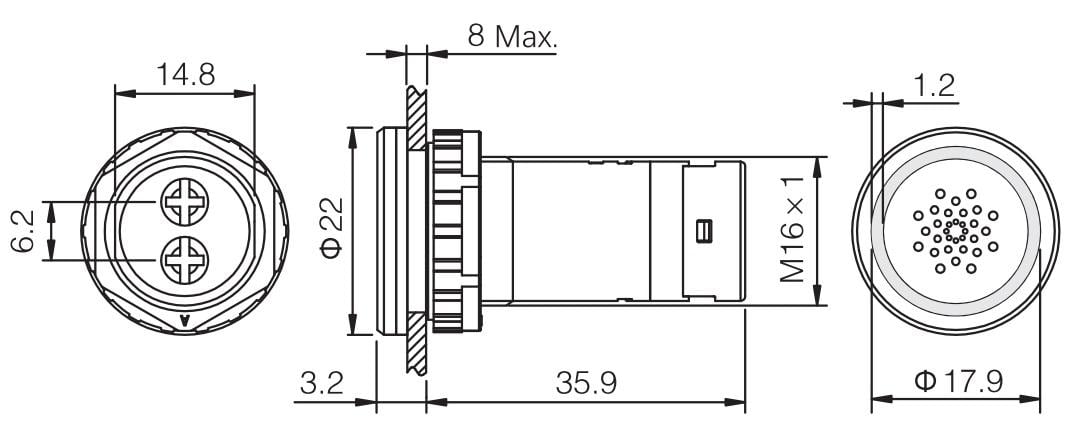
Criterios de selección de un vistazo
| Área de decisión | Qué verificar | Por qué importa |
|---|---|---|
| Propósito | Define warning, fault, confirmation, call-for-help, or process notification | Different purposes require different priority, pattern, duration, and reset behavior. |
| Supply and drive | Confirm voltage range, AC/DC type, polarity, active/passive design, and current demand | Incorrect drive conditions can prevent sound or damage the device. |
| Audibility | Evaluate the stated sound output together with distance and ambient noise | Bench loudness does not prove recognition on a running production floor. |
| Tone and pattern | Assign a distinctive signal that users can learn and separate from other alarms | Too many similar tones increase confusion and slow response. |
| Duty cycle | Check whether the alarm is intermittent, continuous, or time-limited | Thermal and lifetime limits can depend on how long the sounder remains energized. |
| Medio ambiente | Check ingress, temperature, oil, dust, washdown, vibration, and chemicals | The panel seal and rear terminal area may have different protection needs. |
| Montaje | Verify panel cutout, thickness, anti-rotation features, rear depth, and service access | A compatible front diameter alone does not guarantee a correct installation. |
| Human factors | Consider hearing protection, distance, language, training, and visual redundancy | A visual indicator and clear procedure can improve recognition without relying on sound alone. |
La tabla es deliberadamente cualitativa. Los límites numéricos deben provenir de la hoja de datos actual para el modelo exacto y de las condiciones de diseño de la máquina. No transfiera un valor de un producto de apariencia similar, otro voltaje, otra categoría de carga o la página de un competidor.
Cómo hacer la selección
Propósito
Define warning, fault, confirmation, call-for-help, or process notification This matters because different purposes require different priority, pattern, duration, and reset behavior. Record the chosen value, the source document, and the condition under which it applies. If the requirement cannot be verified from the current product documentation, keep it open for supplier confirmation rather than filling the gap with an assumption.
Supply and drive
Confirm voltage range, AC/DC type, polarity, active/passive design, and current demand This matters because incorrect drive conditions can prevent sound or damage the device. Record the chosen value, the source document, and the condition under which it applies. If the requirement cannot be verified from the current product documentation, keep it open for supplier confirmation rather than filling the gap with an assumption.
Audibility
Evaluate the stated sound output together with distance and ambient noise This matters because bench loudness does not prove recognition on a running production floor. Record the chosen value, the source document, and the condition under which it applies. If the requirement cannot be verified from the current product documentation, keep it open for supplier confirmation rather than filling the gap with an assumption.
Tone and pattern
Assign a distinctive signal that users can learn and separate from other alarms This matters because too many similar tones increase confusion and slow response. Record the chosen value, the source document, and the condition under which it applies. If the requirement cannot be verified from the current product documentation, keep it open for supplier confirmation rather than filling the gap with an assumption.
Duty cycle
Check whether the alarm is intermittent, continuous, or time-limited This matters because thermal and lifetime limits can depend on how long the sounder remains energized. Record the chosen value, the source document, and the condition under which it applies. If the requirement cannot be verified from the current product documentation, keep it open for supplier confirmation rather than filling the gap with an assumption.
Medio ambiente
Check ingress, temperature, oil, dust, washdown, vibration, and chemicals This matters because the panel seal and rear terminal area may have different protection needs. Record the chosen value, the source document, and the condition under which it applies. If the requirement cannot be verified from the current product documentation, keep it open for supplier confirmation rather than filling the gap with an assumption.
Montaje
Verify panel cutout, thickness, anti-rotation features, rear depth, and service access This matters because a compatible front diameter alone does not guarantee a correct installation. Record the chosen value, the source document, and the condition under which it applies. If the requirement cannot be verified from the current product documentation, keep it open for supplier confirmation rather than filling the gap with an assumption.
Human factors
Consider hearing protection, distance, language, training, and visual redundancy This matters because a visual indicator and clear procedure can improve recognition without relying on sound alone. Record the chosen value, the source document, and the condition under which it applies. If the requirement cannot be verified from the current product documentation, keep it open for supplier confirmation rather than filling the gap with an assumption.
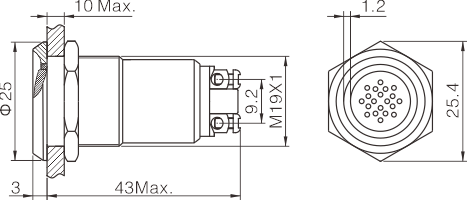
Revisión de la solicitud
Utilice los siguientes escenarios como indicaciones para una revisión de ingeniería. No establecen idoneidad por sí mismos:
- A brief confirmation tone after a valid operator command. During commissioning, verify the command, expected response, abnormal response, and reset behavior in the assembled machine.
- A repeating machine-fault signal paired with a visible status message. During commissioning, verify the command, expected response, abnormal response, and reset behavior in the assembled machine.
- A material or maintenance call that must be distinguishable from a hazard warning. During commissioning, verify the command, expected response, abnormal response, and reset behavior in the assembled machine.
- A panel alarm in a wet or dusty area where sealing and rear protection need verification. During commissioning, verify the command, expected response, abnormal response, and reset behavior in the assembled machine.
- A multi-machine area where each signal must be mapped and tested to prevent source confusion. During commissioning, verify the command, expected response, abnormal response, and reset behavior in the assembled machine.
Para cada caso, incluya los extremos de tolerancia, puesta en marcha, parada, pérdida de energía, restauración de energía, modo de mantenimiento, uso previsible mal intencionado o incorrecto, y sustitución de componentes. Cuando el comando afecte a la seguridad del personal, la función de seguridad debe diseñarse y validarse de forma independiente al control de procesos ordinario.
Puesta en marcha y verificación
- Congelar el requisito. Escribe el estado deseado, la acción del operador, la carga, el suministro, el entorno y el tiempo de respuesta en lenguaje sencillo.
- Verifica el modelo exacto. Relacione el código de pedido con su dibujo actual, tabla de clasificaciones, diagrama de terminales e instrucciones.
- Inspeccione la instalación. Confirmar recorte, elementos de fijación, alineación, entrada de cables, holgura trasera, alivio de tensión y protección de partes bajo tensión.
- Prueba de funcionamiento normal. Ejercite el dispositivo en todo el rango de movimiento, usuarios, cargas y condiciones ambientales esperados.
- Probar condiciones anormales. Incluya un cable desconectado, un mecanismo atascado, la pérdida de suministro, la contaminación y otros fallos identificados por la evaluación de riesgos.
- Registrar resultados. Mantener modelo, revisión, método de prueba, fecha, criterios de aceptación, observaciones medidas y aprobador.
- Planifique revisiones periódicas. Base los intervalos de inspección y sustitución en el uso, el entorno, la criticidad y el desgaste observado, y no en un programa universal inventado.
Errores comunes de selección
- Selecting only by nominal decibel value without its test conditions. Evite esto asignando un responsable, registrando el plano o la hoja de datos correspondiente y probando la instalación real en lugar de confiar en el nombre de un producto o en la imagen de un catálogo.
- Using an active buzzer where the control expects a passive transducer or the reverse. Evite esto asignando un responsable, registrando el plano o la hoja de datos correspondiente y probando la instalación real en lugar de confiar en el nombre de un producto o en la imagen de un catálogo.
- Assuming a front-panel seal protects exposed rear terminals. Evite esto asignando un responsable, registrando el plano o la hoja de datos correspondiente y probando la instalación real en lugar de confiar en el nombre de un producto o en la imagen de un catálogo.
- Creating many tones without a documented response matrix. Evite esto asignando un responsable, registrando el plano o la hoja de datos correspondiente y probando la instalación real en lugar de confiar en el nombre de un producto o en la imagen de un catálogo.
- Using continuous high-priority sound for routine confirmations. Evite esto asignando un responsable, registrando el plano o la hoja de datos correspondiente y probando la instalación real en lugar de confiar en el nombre de un producto o en la imagen de un catálogo.
- Accepting a desk test instead of validating audibility and recognition in the operating environment. Evite esto asignando un responsable, registrando el plano o la hoja de datos correspondiente y probando la instalación real en lugar de confiar en el nombre de un producto o en la imagen de un catálogo.
Qué incluir en una consulta a proveedores
Una consulta útil debe indicar la aplicación, el mercado objetivo, las normas aplicables, los detalles de alimentación y carga, la interfaz de control, el plano mecánico, las dimensiones de montaje o del panel, el método de cableado, el entorno, la frecuencia de operación prevista, la cantidad y la documentación requerida. Añada fotografías o un boceto de movimiento cuando el enfoque del actuador o el uso por parte del operador sean difíciles de describir. Pida al proveedor que identifique las suposiciones y excepciones. Para un diseño nuevo o modificado, obtenga muestras y complete la validación antes de realizar pedidos en volumen.
ONPOW ofrece ONPOW panel buzzer products dentro de su contexto más amplio gama de productos de control industrial. Utilice las páginas de productos para identificar las familias candidatas, luego confirme el modelo exacto con la información técnica actual y las condiciones de su proyecto.
Lectura relacionada de ONPOW
Referencias autorizadas
- sistemas de alarma para empleados de OSHA
- Guía de ruido ocupacional de NIOSH
- MIT OpenCourseWare piezoelectricity lab
Video educativo
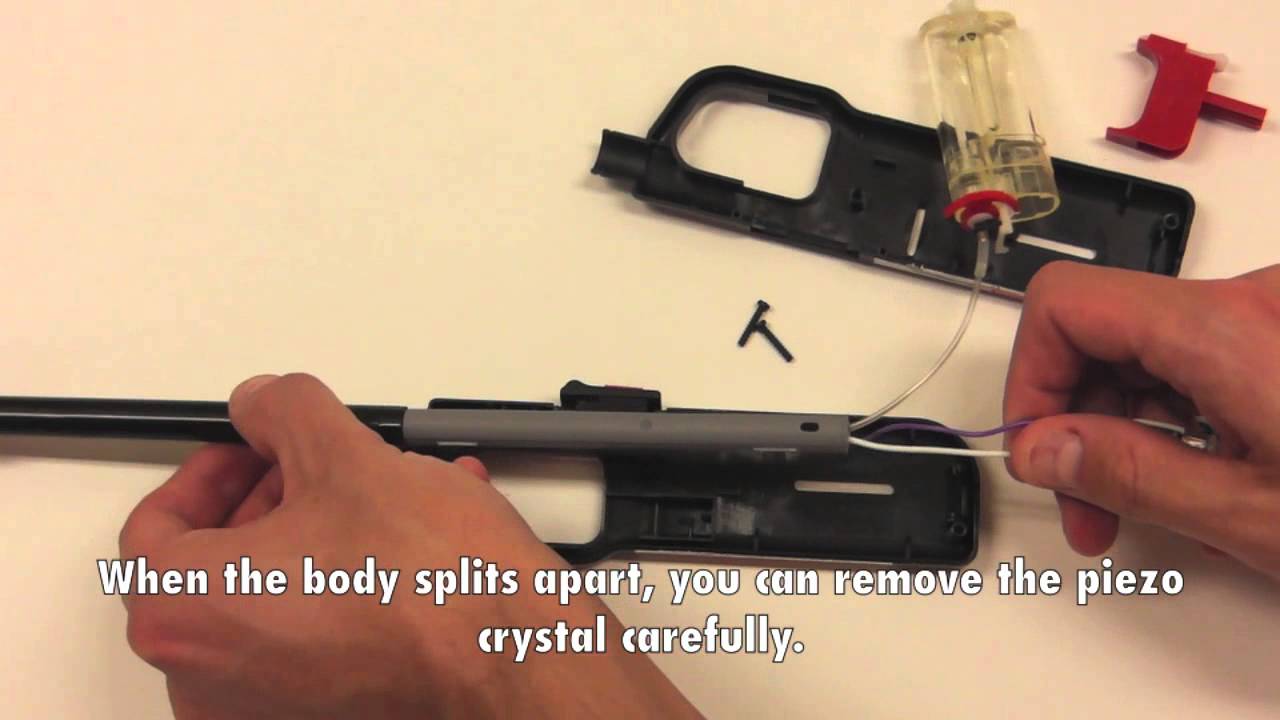
Further learning: Lab 9: Piezoelectricity by MIT OpenCourseWare. The video explains the underlying concept; the project must still follow its own risk assessment and manufacturer documentation.
Preguntas frecuentes
What is the difference between active and passive buzzers?
An active buzzer normally produces a tone from the specified supply. A passive transducer needs an external waveform. Product terminology varies, so verify the wiring and drive documentation.
How loud should an industrial buzzer be?
There is no single number for every site. It must be recognizable in the real environment while worker-noise exposure, hearing protection, distance, and barriers are considered.
Is a higher frequency always easier to hear?
No. Hearing sensitivity, background noise, barriers, and the listener population all matter. Validate the selected tone under operating conditions.
Can one buzzer indicate several states?
Yes, with controlled patterns, but users must reliably distinguish them. A visual message or tower light should reinforce the meaning.
What should be included in an inquiry?
Provide supply, control method, required pattern, environment, panel dimensions, duty cycle, audibility target and test distance, quantities, and applicable compliance requirements.
Regla de selección final
Elija el componente solo cuando sus límites mecánicos, eléctricos, ambientales, de usabilidad y de mantenimiento documentados encajen en el sistema ensamblado. Si un límite permanece desconocido, trátelo como una cuestión de ingeniería abierta. Un breve retraso de validación es menos costoso que diseñar en torno a una suposición que aparece solo después de la instalación.



