

Industrial buzzer selection starts with the required human response, not with the loudest available device. Define who must hear the signal, from where, above which background conditions, and what action the sound should trigger. Then match the operating voltage, active or passive drive method, tone or pattern, sound output, duty cycle, mounting, enclosure, and environmental limits. A panel buzzer is one part of an alarm system; it cannot replace a risk assessment, machine safeguarding, or a properly designed emergency notification system.
Krótka odpowiedź: Wybór jest decyzją systemową. Należy wspólnie potwierdzić interfejs mechaniczny, interfejs elektryczny, środowisko, reakcję człowieka, plan konserwacji oraz obowiązujące normy. Poniższe przykłady stanowią wskazówki decydujące, a nie uniwersalne oceny produktów.
Jak działa urządzenie lub system
A buzzer converts electrical input into an audible signal using an electromechanical or piezoelectric mechanism. Active buzzers include the circuitry needed to produce a tone when the specified supply is applied. Passive transducers require an external drive waveform. Industrial panel units may combine a sounder with a lamp, but the control logic still determines when and why it operates. Sound-pressure figures are meaningful only with their stated distance, drive conditions, frequency, and measurement method. Perceived audibility also changes with background spectrum, hearing protection, barriers, and room acoustics.
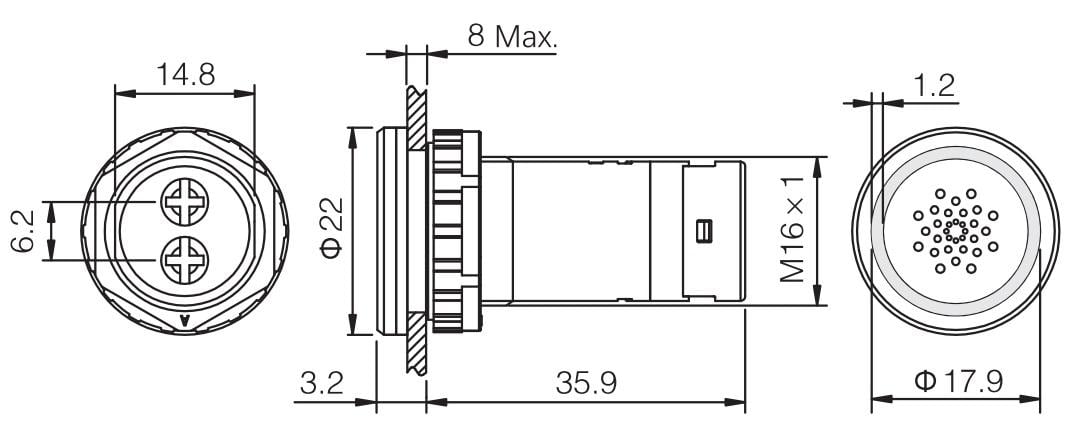
Kryteria wyboru w skrócie
| Obszar decyzyjny | Co zweryfikować | Dlaczego to ma znaczenie |
|---|---|---|
| Cel | Define warning, fault, confirmation, call-for-help, or process notification | Different purposes require different priority, pattern, duration, and reset behavior. |
| Supply and drive | Confirm voltage range, AC/DC type, polarity, active/passive design, and current demand | Incorrect drive conditions can prevent sound or damage the device. |
| Audibility | Evaluate the stated sound output together with distance and ambient noise | Bench loudness does not prove recognition on a running production floor. |
| Tone and pattern | Assign a distinctive signal that users can learn and separate from other alarms | Too many similar tones increase confusion and slow response. |
| Duty cycle | Check whether the alarm is intermittent, continuous, or time-limited | Thermal and lifetime limits can depend on how long the sounder remains energized. |
| Środowisko | Check ingress, temperature, oil, dust, washdown, vibration, and chemicals | The panel seal and rear terminal area may have different protection needs. |
| Montaż | Verify panel cutout, thickness, anti-rotation features, rear depth, and service access | A compatible front diameter alone does not guarantee a correct installation. |
| Human factors | Consider hearing protection, distance, language, training, and visual redundancy | A visual indicator and clear procedure can improve recognition without relying on sound alone. |
Tabela ma charakter celowo jakościowy. Limity numeryczne muszą pochodzić z aktualnej karty katalogowej dla konkretnego modelu oraz z warunków projektowych maszyny. Nie należy przenosić wartości z podobnie wyglądającego produktu, innego napięcia, innej kategorii obciążenia ani ze strony konkurencji.
Jak dokonać wyboru
Cel
Define warning, fault, confirmation, call-for-help, or process notification This matters because different purposes require different priority, pattern, duration, and reset behavior. Record the chosen value, the source document, and the condition under which it applies. If the requirement cannot be verified from the current product documentation, keep it open for supplier confirmation rather than filling the gap with an assumption.
Supply and drive
Confirm voltage range, AC/DC type, polarity, active/passive design, and current demand This matters because incorrect drive conditions can prevent sound or damage the device. Record the chosen value, the source document, and the condition under which it applies. If the requirement cannot be verified from the current product documentation, keep it open for supplier confirmation rather than filling the gap with an assumption.
Audibility
Evaluate the stated sound output together with distance and ambient noise This matters because bench loudness does not prove recognition on a running production floor. Record the chosen value, the source document, and the condition under which it applies. If the requirement cannot be verified from the current product documentation, keep it open for supplier confirmation rather than filling the gap with an assumption.
Tone and pattern
Assign a distinctive signal that users can learn and separate from other alarms This matters because too many similar tones increase confusion and slow response. Record the chosen value, the source document, and the condition under which it applies. If the requirement cannot be verified from the current product documentation, keep it open for supplier confirmation rather than filling the gap with an assumption.
Duty cycle
Check whether the alarm is intermittent, continuous, or time-limited This matters because thermal and lifetime limits can depend on how long the sounder remains energized. Record the chosen value, the source document, and the condition under which it applies. If the requirement cannot be verified from the current product documentation, keep it open for supplier confirmation rather than filling the gap with an assumption.
Środowisko
Check ingress, temperature, oil, dust, washdown, vibration, and chemicals This matters because the panel seal and rear terminal area may have different protection needs. Record the chosen value, the source document, and the condition under which it applies. If the requirement cannot be verified from the current product documentation, keep it open for supplier confirmation rather than filling the gap with an assumption.
Montaż
Verify panel cutout, thickness, anti-rotation features, rear depth, and service access This matters because a compatible front diameter alone does not guarantee a correct installation. Record the chosen value, the source document, and the condition under which it applies. If the requirement cannot be verified from the current product documentation, keep it open for supplier confirmation rather than filling the gap with an assumption.
Human factors
Consider hearing protection, distance, language, training, and visual redundancy This matters because a visual indicator and clear procedure can improve recognition without relying on sound alone. Record the chosen value, the source document, and the condition under which it applies. If the requirement cannot be verified from the current product documentation, keep it open for supplier confirmation rather than filling the gap with an assumption.
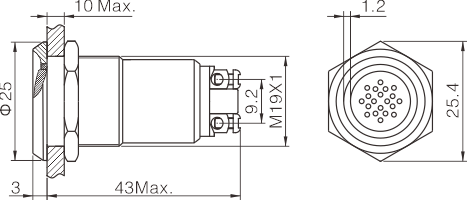
Przegląd aplikacji
Wykorzystaj poniższe scenariusze jako wytyczne do przeglądu inżynieryjnego. Same w sobie nie potwierdzają one przydatności:
- A brief confirmation tone after a valid operator command. During commissioning, verify the command, expected response, abnormal response, and reset behavior in the assembled machine.
- A repeating machine-fault signal paired with a visible status message. During commissioning, verify the command, expected response, abnormal response, and reset behavior in the assembled machine.
- A material or maintenance call that must be distinguishable from a hazard warning. During commissioning, verify the command, expected response, abnormal response, and reset behavior in the assembled machine.
- A panel alarm in a wet or dusty area where sealing and rear protection need verification. During commissioning, verify the command, expected response, abnormal response, and reset behavior in the assembled machine.
- A multi-machine area where each signal must be mapped and tested to prevent source confusion. During commissioning, verify the command, expected response, abnormal response, and reset behavior in the assembled machine.
Dla każdego przypadku należy uwzględnić skrajne tolerancje, rozruch, wyłączenie, utratę zasilania, przywrócenie zasilania, tryb konserwacji, przewidywalne niewłaściwe użycie oraz wymianę komponentów. W przypadkach, gdy polecenie wpływa na bezpieczeństwo personelu, funkcja bezpieczeństwa musi być zaprojektowana i zwieziona niezależnie od zwykłego sterowania procesem.
Uruchomienie i weryfikacja
- Zablokuj wymaganie. Opisz zamierzony stan, działanie operatora, obciążenie, zasilanie, środowisko i czas reakcji prostym językiem.
- Sprawdź dokładny model. Dopasuj kod zamówienia do jego aktualnego rysunku, tabeli znamionowej, schematu wyprowadzeń i instrukcji.
- Sprawdź instalację. Potwierdzić wycięcie, elementy złączne, osiowanie, wpust kablowy, prześwit z tyłu, odciążenie naciągu oraz zabezpieczenie części pod napięciem.
- Test normalnego działania. Przeprowadź ćwiczenia z urządzeniem w całym oczekiwanym zakresie ruchu, przez użytkowników, z różnymi obciążeniami oraz w warunkach środowiskowych.
- Przetestuj nienormalne warunki. Uwzględnij odłączony przewód, zablokowany mechanizm, brak zasilania, zanieczyszczenie oraz inne usterki zidentyfikowane w ocenie ryzyka.
- Zapisz wyniki. Zachowaj model, wersję, metodę testową, datę, kryteria akceptacji, zarejestrowane obserwacje oraz osobę zatwierdzającą.
- Zaplanuj okresowe kontrole. Częstotliwość przeglądów i wymian należy opierać na warunkach pracy, otoczeniu, krytyczności i zaobserwowanym zużyciu, a nie na wymyślonym, uniwersalnym harmonogramie.
Częste błędy przy rekrutacji
- Selecting only by nominal decibel value without its test conditions. Zapobiegnij temu poprzez wyznaczenie właściciela, zarejestrowanie odpowiedniego rysunku technicznego lub karty katalogowej oraz przetestowanie faktycznej instalacji zamiast polegania na nazwie produktu lub zdjęciu z katalogu.
- Using an active buzzer where the control expects a passive transducer or the reverse. Zapobiegnij temu poprzez wyznaczenie właściciela, zarejestrowanie odpowiedniego rysunku technicznego lub karty katalogowej oraz przetestowanie faktycznej instalacji zamiast polegania na nazwie produktu lub zdjęciu z katalogu.
- Assuming a front-panel seal protects exposed rear terminals. Zapobiegnij temu poprzez wyznaczenie właściciela, zarejestrowanie odpowiedniego rysunku technicznego lub karty katalogowej oraz przetestowanie faktycznej instalacji zamiast polegania na nazwie produktu lub zdjęciu z katalogu.
- Creating many tones without a documented response matrix. Zapobiegnij temu poprzez wyznaczenie właściciela, zarejestrowanie odpowiedniego rysunku technicznego lub karty katalogowej oraz przetestowanie faktycznej instalacji zamiast polegania na nazwie produktu lub zdjęciu z katalogu.
- Using continuous high-priority sound for routine confirmations. Zapobiegnij temu poprzez wyznaczenie właściciela, zarejestrowanie odpowiedniego rysunku technicznego lub karty katalogowej oraz przetestowanie faktycznej instalacji zamiast polegania na nazwie produktu lub zdjęciu z katalogu.
- Accepting a desk test instead of validating audibility and recognition in the operating environment. Zapobiegnij temu poprzez wyznaczenie właściciela, zarejestrowanie odpowiedniego rysunku technicznego lub karty katalogowej oraz przetestowanie faktycznej instalacji zamiast polegania na nazwie produktu lub zdjęciu z katalogu.
Co uwzględnić w zapytaniu ofertowym do dostawcy
Przydatne zapytanie powinno określać zastosowanie, rynek docelowy, obowiązujące normy, szczegóły dotyczące zasilania i obciążenia, interfejs sterowania, rysunek mechaniczny, wymiary panelu lub montażowe, metodę okablowania, środowisko, oczekiwaną częstotliwość pracy, ilość oraz wymaganą dokumentację. Należy dodać fotografie lub szkic ruchu, gdy sposób działania siłownika lub obsługi przez operatora jest trudny do opisania. Poproś dostawcę o wskazanie przyjętych założeń i odstępstw. W przypadku nowego lub zmodyfikowanego projektu należy pozyskać próbki i przeprowadzić pełną walidację przed złożeniem zamówienia wielkoseryjnego.
ONPOW zapewnia ONPOW panel buzzer products w szerszym kontekście asortyment produktów sterowania przemysłowego. Skorzystaj ze stron produktów, aby zidentyfikować kandydackie rodziny, a następnie potwierdź dokładny model na podstawie aktualnych informacji technicznych oraz warunków swojego projektu.
Powiązane materiały ONPOW
Autorytatywne źródła
- systemy alarmowe pracowników OSHA
- Wytyczne NIOSH dotyczące hałasu w środowisku pracy
- MIT OpenCourseWare piezoelectricity lab
Film edukacyjny
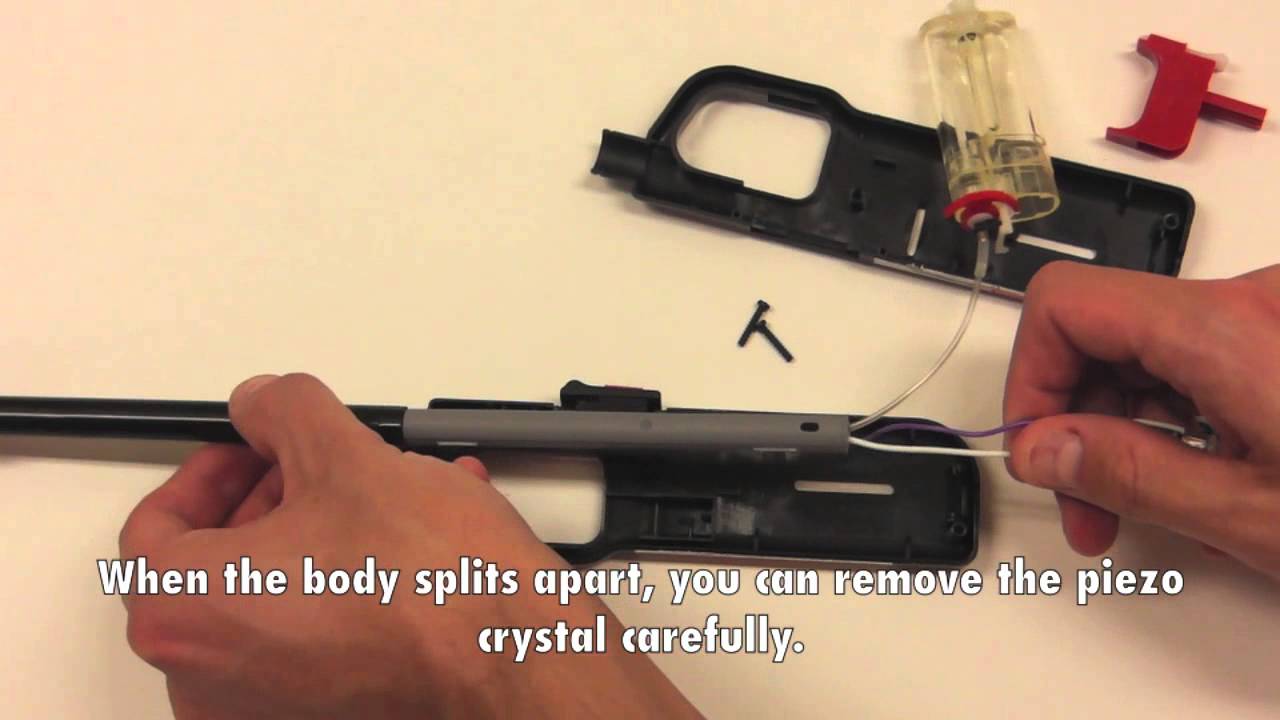
Further learning: Lab 9: Piezoelectricity by MIT OpenCourseWare. The video explains the underlying concept; the project must still follow its own risk assessment and manufacturer documentation.
Często zadawane pytania
What is the difference between active and passive buzzers?
An active buzzer normally produces a tone from the specified supply. A passive transducer needs an external waveform. Product terminology varies, so verify the wiring and drive documentation.
How loud should an industrial buzzer be?
There is no single number for every site. It must be recognizable in the real environment while worker-noise exposure, hearing protection, distance, and barriers are considered.
Is a higher frequency always easier to hear?
No. Hearing sensitivity, background noise, barriers, and the listener population all matter. Validate the selected tone under operating conditions.
Can one buzzer indicate several states?
Yes, with controlled patterns, but users must reliably distinguish them. A visual message or tower light should reinforce the meaning.
What should be included in an inquiry?
Provide supply, control method, required pattern, environment, panel dimensions, duty cycle, audibility target and test distance, quantities, and applicable compliance requirements.
Ostateczna reguła wyboru
Wybierz komponent tylko wtedy, gdy jego udokumentowane granice mechaniczne, elektryczne, środowiskowe, użyteczności i utrzymaniowe mieszczą się w całości w zmontowanym systemie. Jeśli jedna granica pozostaje nieznana, potraktuj ją jako otwarte pytanie inżynieryjne. Krótkie opóźnienie walidacji jest mniej kosztowne niż projektowanie wokół założenia, które pojawia się dopiero po instalacji.



