

A guarded push button switch uses a raised ring, shroud, cover, recess, or other physical feature to reduce unintended operation. The guard must address a documented hazard or nuisance scenario without making the intended command difficult, invisible, hard to clean, or slow to reach. Guarding is especially sensitive around emergency functions: a normal command guard must not be copied onto an emergency-stop control unless the applicable requirements and risk assessment support the exact design. Evaluate the operator, guard, panel, user, gloves, approach direction, and environment as one interface.
Règle de sélection : traitez l'appareil, l'actionneur, les contacts, le boîtier, le câblage, la logique de commande, l'utilisateur et le mouvement de la machine comme un seul système. Les exemples de produits n'illustrent que la forme ; l'aptitude finale doit provenir de la documentation actuelle pour le code de commande exact et de la validation dans l'équipement fini.
Comment fonctionne le mécanisme
The guard changes the physical access path to the operator. It may block broad contact from tools, clothing, moving material, or a person leaning against the panel while still permitting a deliberate finger action. A hinged cover adds another action and can collect contamination. A fixed shroud can reduce side access. A recessed mounting changes reach. These differences should be tested with real users and foreseeable accidental contacts.
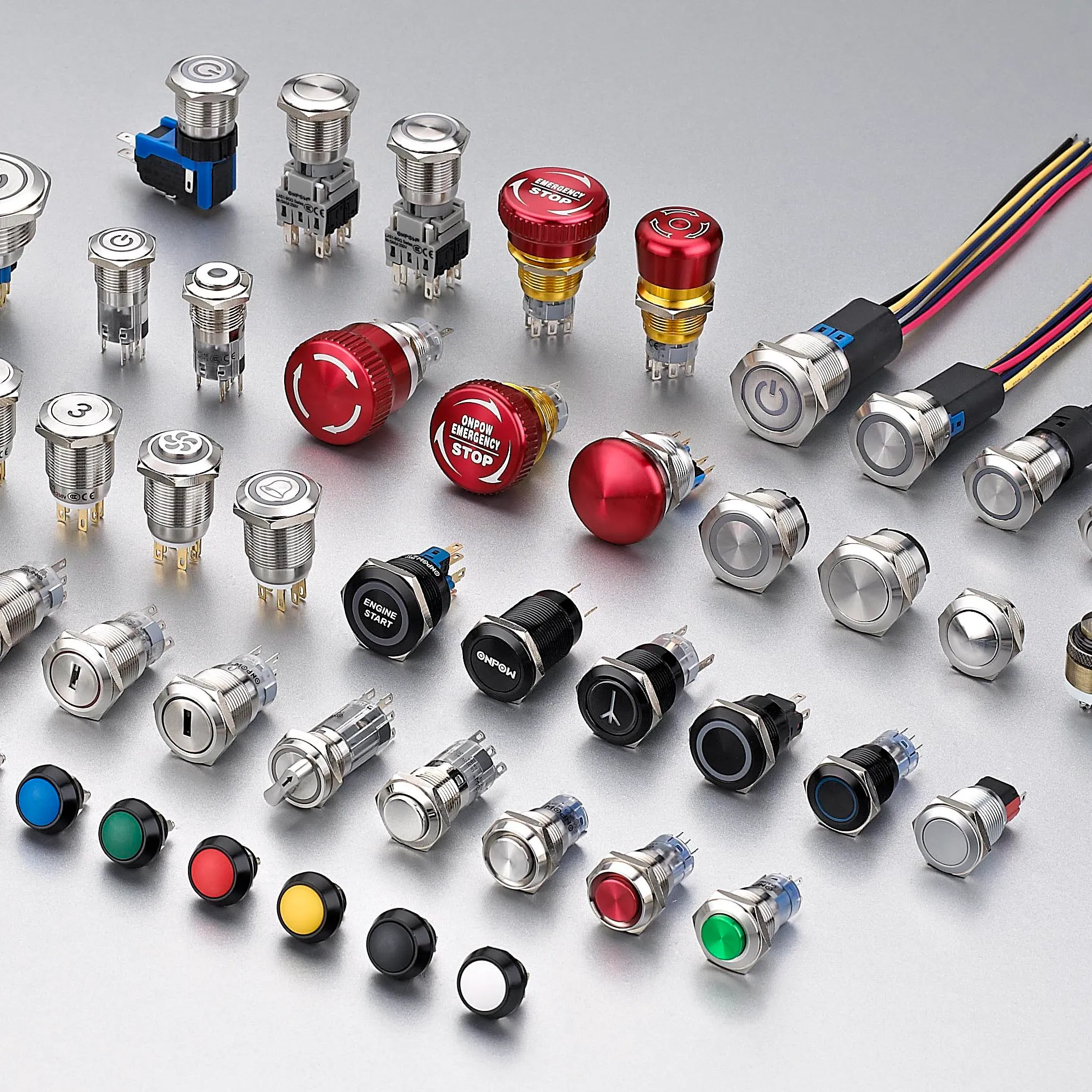
Critères de sélection en un coup d'œil
| Zone de décision | Que vérifier | Raison technique |
|---|---|---|
| Unintended contact | Identify the actual object, direction, force, and frequency | The guard geometry must address a real scenario. |
| Intentional access | Test finger size, gloves, reach, posture, and required speed | Protection that prevents proper use creates a new problem. |
| Visibilité | Keep the operator state and legend readable | Users must identify the command before acting. |
| Guard form | Compare fixed shroud, raised ring, hinged cover, or recess | Each changes access and cleaning differently. |
| Emergency boundary | Separate ordinary command protection from emergency-stop requirements | Emergency access and function need dedicated validation. |
| Environnement | Check debris traps, washdown, corrosion, and impact | A guard can collect contamination around the operator. |
| Montage | Verify cutout, guard retention, panel thickness, and rear clearance | Loose or rotating accessories defeat the design. |
| Human validation | Test expected users and foreseeable misuse | A drawing cannot prove usability by itself. |
Ce tableau est intentionnellement qualitatif. Les limites numériques, les valeurs nominales, le couple, la force, la course, les déclarations environnementales et les valeurs d'endurance doivent être tirés de la fiche technique actuelle et évalués dans les conditions de l'application.
Processus de sélection détaillé
Unintended contact
À vérifier : Identify the actual object, direction, force, and frequency. The guard geometry must address a real scenario. The requirement should be written in the project specification and traced to the exact model drawing or datasheet. Review worst-case tolerance, wear, contamination, maintenance access, and foreseeable misuse. If the available documentation does not define the boundary, keep the point open for supplier confirmation and sample testing rather than substituting an assumption.
Intentional access
À vérifier : Test finger size, gloves, reach, posture, and required speed. Protection that prevents proper use creates a new problem. The requirement should be written in the project specification and traced to the exact model drawing or datasheet. Review worst-case tolerance, wear, contamination, maintenance access, and foreseeable misuse. If the available documentation does not define the boundary, keep the point open for supplier confirmation and sample testing rather than substituting an assumption.
Visibilité
À vérifier : Keep the operator state and legend readable. Users must identify the command before acting. The requirement should be written in the project specification and traced to the exact model drawing or datasheet. Review worst-case tolerance, wear, contamination, maintenance access, and foreseeable misuse. If the available documentation does not define the boundary, keep the point open for supplier confirmation and sample testing rather than substituting an assumption.
Guard form
À vérifier : Compare fixed shroud, raised ring, hinged cover, or recess. Each changes access and cleaning differently. The requirement should be written in the project specification and traced to the exact model drawing or datasheet. Review worst-case tolerance, wear, contamination, maintenance access, and foreseeable misuse. If the available documentation does not define the boundary, keep the point open for supplier confirmation and sample testing rather than substituting an assumption.
Emergency boundary
À vérifier : Separate ordinary command protection from emergency-stop requirements. Emergency access and function need dedicated validation. The requirement should be written in the project specification and traced to the exact model drawing or datasheet. Review worst-case tolerance, wear, contamination, maintenance access, and foreseeable misuse. If the available documentation does not define the boundary, keep the point open for supplier confirmation and sample testing rather than substituting an assumption.
Environnement
À vérifier : Check debris traps, washdown, corrosion, and impact. A guard can collect contamination around the operator. The requirement should be written in the project specification and traced to the exact model drawing or datasheet. Review worst-case tolerance, wear, contamination, maintenance access, and foreseeable misuse. If the available documentation does not define the boundary, keep the point open for supplier confirmation and sample testing rather than substituting an assumption.
Montage
À vérifier : Verify cutout, guard retention, panel thickness, and rear clearance. Loose or rotating accessories defeat the design. The requirement should be written in the project specification and traced to the exact model drawing or datasheet. Review worst-case tolerance, wear, contamination, maintenance access, and foreseeable misuse. If the available documentation does not define the boundary, keep the point open for supplier confirmation and sample testing rather than substituting an assumption.
Human validation
À vérifier : Test expected users and foreseeable misuse. A drawing cannot prove usability by itself. The requirement should be written in the project specification and traced to the exact model drawing or datasheet. Review worst-case tolerance, wear, contamination, maintenance access, and foreseeable misuse. If the available documentation does not define the boundary, keep the point open for supplier confirmation and sample testing rather than substituting an assumption.

Examen de la demande
- Preventing hip or shoulder contact on crowded panels. Record the expected command, response, release behavior, abnormal condition, and acceptance evidence for the assembled machine.
- Protecting a reset button near material flow. Record the expected command, response, release behavior, abnormal condition, and acceptance evidence for the assembled machine.
- Reducing tool contact during maintenance. Record the expected command, response, release behavior, abnormal condition, and acceptance evidence for the assembled machine.
- Shielding an exposed command on mobile equipment. Record the expected command, response, release behavior, abnormal condition, and acceptance evidence for the assembled machine.
- Recessing a non-emergency control in a public interface. Record the expected command, response, release behavior, abnormal condition, and acceptance evidence for the assembled machine.
Pour chaque application, inclure le démarrage, le fonctionnement normal, l'arrêt, la perte de courant, le rétablissement du courant, le mode de maintenance, le remplacement de composants et les défauts identifiés par l'évaluation des risques. Un interrupteur de commande général ne doit pas être considéré comme une fonction de sécurité complète.
Liste de contrôle de mise en service
- Geler le besoin. Indiquer l'action prévue, la condition normale, l'alimentation, la charge, le mouvement, l'environnement et l'utilisateur.
- Faites correspondre le code de commande. Comparez la pièce livrée avec le dessin approuvé, le schéma de contacts, l'actionneur, le style de borne et les accessoires.
- Inspecter l'installation. Vérifier l'alignement, les éléments de fixation, le dégagement arrière, le cheminement des câbles, le soulagement de traction, la protection des pièces sous tension et l'accès pour l'entretien.
- Tester chaque état. Vérifier le fonctionnement et le déclenchement aux extrêmes de tolérance, aux vitesses prévues, aux charges, avec des gants, en présence de contamination et dans diverses conditions environnementales.
- Tester les conditions anormales. Inclure les conducteurs débranchés, les mécanismes bloqués ou endommagés, la perte d'alimentation, la contamination et autres défauts crédibles.
- Enregistrez le résultat. Enregistrer le modèle, la révision, la méthode d'essai, les observations, les critères d'acceptation, la date et l'approbateur.
Erreurs courantes
- Adding a cover without testing gloved access. Prévenez cela en affectant la vérification à un dessin, une fiche technique, un schéma de câblage ou un essai de mise en service avec un critère d'acceptation nommé.
- Obscuring the legend or illumination. Prévenez cela en affectant la vérification à un dessin, une fiche technique, un schéma de câblage ou un essai de mise en service avec un critère d'acceptation nommé.
- Creating a pocket that traps liquid or debris. Prévenez cela en affectant la vérification à un dessin, une fiche technique, un schéma de câblage ou un essai de mise en service avec un critère d'acceptation nommé.
- Using a normal guard on an emergency stop by analogy. Prévenez cela en affectant la vérification à un dessin, une fiche technique, un schéma de câblage ou un essai de mise en service avec un critère d'acceptation nommé.
- Failing to identify the accidental-contact direction. Prévenez cela en affectant la vérification à un dessin, une fiche technique, un schéma de câblage ou un essai de mise en service avec un critère d'acceptation nommé.
Que faut-il inclure dans une demande de prix
Fournissez l'application, le marché cible, les normes applicables, la fonction de la machine, l'alimentation et la charge, l'interface de commande, la logique de contact, le dessin mécanique, la trajectoire de mouvement, les dimensions du panneau, la méthode de câblage, l'environnement, la fréquence de fonctionnement, la quantité, les besoins en documentation et le plan de validation des échantillons. Demandez au fournisseur d'identifier les hypothèses et les exceptions. ONPOW propose des produits pertinents dans sa famille de produits spécifique à une application et le plus large gamme de produits de contrôle industriel.
Guides ONPOW associés
- Comment fonctionne un micro-interrupteur
- Micro-interrupteur vs fin de course
- Vie mécanique contre vie électrique
Références autorisées
- appareils de circuit de commande CEI 60947-5-1
- CEI 60529 degrés de protection procurés par les enveloppes
- Exigences d'OSHA concernant la protection des machines
- Exigences de sécurité électrique de l'OSHA
Vidéo éducative

Machine Guarding Safety Meeting Video by Weeklysafety provides general background. Project decisions still require the applicable standards and product documentation.
Foire aux questions
What does a push button guard do?
It changes the access path so broad or unintended contact is less likely to operate the button.
Is a hinged cover always safer?
No. It adds an action and may delay use, trap debris, or remain open; test the actual risk and workflow.
Can an emergency stop be guarded?
Only when the exact arrangement complies with applicable requirements and the risk assessment; do not assume an ordinary shroud is acceptable.
How should a guard be tested?
Use real users, gloves, lighting, cleaning conditions, intended actions, and credible accidental-contact scenarios.
Décision finale
Approuvez le composant uniquement lorsque les limites documentées relatives à la mécanique, à l'électricité, à l'environnement, à l'ergonomie, à l'installation et à la maintenance correspondent toutes au système assemblé. Résolvez les inconnues grâce aux informations actuelles du fabricant et à des tests avant le lancement de la production.



