

Tekan sakelar tombol ada di mana-mana—dari mesin industri hingga peralatan rumah tangga dan peralatan medis. Namun, tidak semua sakelar bekerja dengan cara yang sama. Dua jenis umum yang’akan Anda temui adalah sesaat tombol tekan sakelar dan pengunci tombol tekan sakelar. Tertukar dalam memilihnya dapat menyebabkan gangguan yang menjengkelkan (seperti mesin yang’tidak mau menyala) atau bahkan risiko keamanan. Mari’kita bedah perbedaan utamanya, cara kerjanya, dan cara memilih yang tepat untuk kebutuhan Anda—dengan contoh praktis dari ONPOW, ahli selama 37 tahun di bidang tombol tekan manufaktur.
1. Apa’Perbedaan Intinya? Ini’Semua Tentang “Tetap” or “Kembali Otomatis”
Perbedaan terbesar antara sakelar sesaat (momentary) dan sakelar pengunci (latching) bermuara pada satu pertanyaan: Apakah sakelar tetap berada di posisi saat Anda menekannya, atau akan kembali berpegas?
Mari’kita gunakan analogi sederhana: Bayangkan bel pintu (sesaat) vs. sakelar lampu (pengunci).
Bel pintu hanya berbunyi selama Anda menekannya—lepas, dan itu berhenti. Itu’sementara.
Saklar lampu tetap “on” ketika Anda menggesernya ke atas, dan “mati” ketika Anda menggesernya ke bawah—tidak perlu menahannya. Itu’mengunci.
2. Momentary tombol tekan Saklar: “Tekan untuk Mengaktifkan, Lepaskan untuk Menghentikan”
Cara Kerjanya
Saklar sementara hanya menyelesaikan atau memutus rangkaian listrik selama Anda menekannya secara fisik. Begitu Anda melepaskan tombol, pegas bawaan menariknya kembali ke posisi semula, dan rangkaian mati. Itu’adalah “tindakan” sementara—tanpa perubahan permanen kecuali Anda terus menekannya.
Penggunaan Umum
Saklar sementara digunakan untuk tindakan yang perlu berlangsung singkat atau dikendalikan dengan tekanan konstan. Contohnya meliputi:
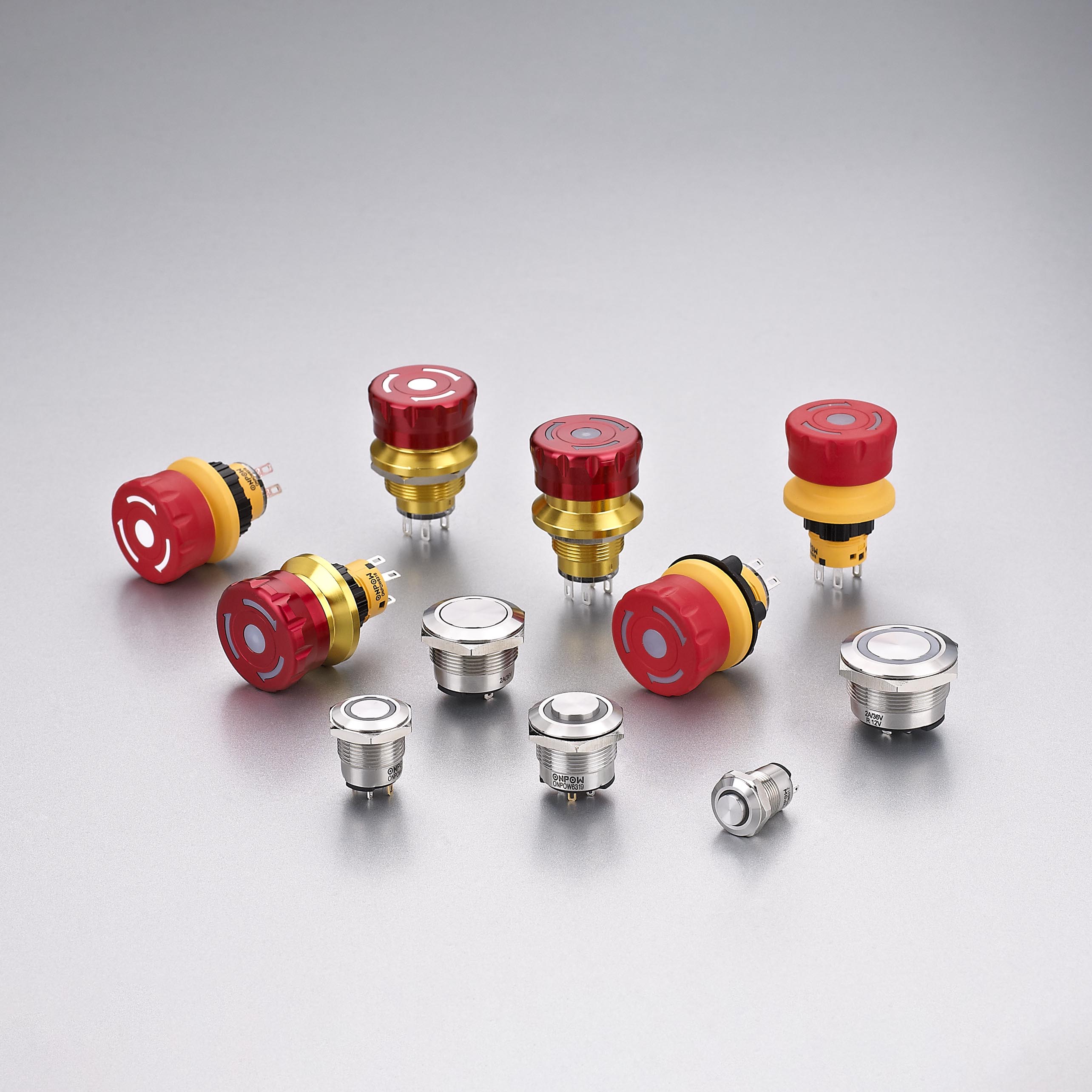
Mesin industri: Tombol berhenti darurat (E-stop)—Anda menekannya untuk mematikan mesin, dan mesin akan reset saat dilepaskan (atau dengan reset terpisah).
Peralatan medis: “Mulai pemindaian” tombol pada mesin diagnostik (seperti X-ray)—pemindaian hanya berjalan saat Anda menahan tombol, menambahkan lapisan keamanan untuk mencegah aktivasi jangka panjang yang tidak disengaja.
Perangkat rumah tangga: Bel pintu, microwave “mulai” tombol (beberapa model), atau tombol panggil lift.
Opsi Sementara ONPOW
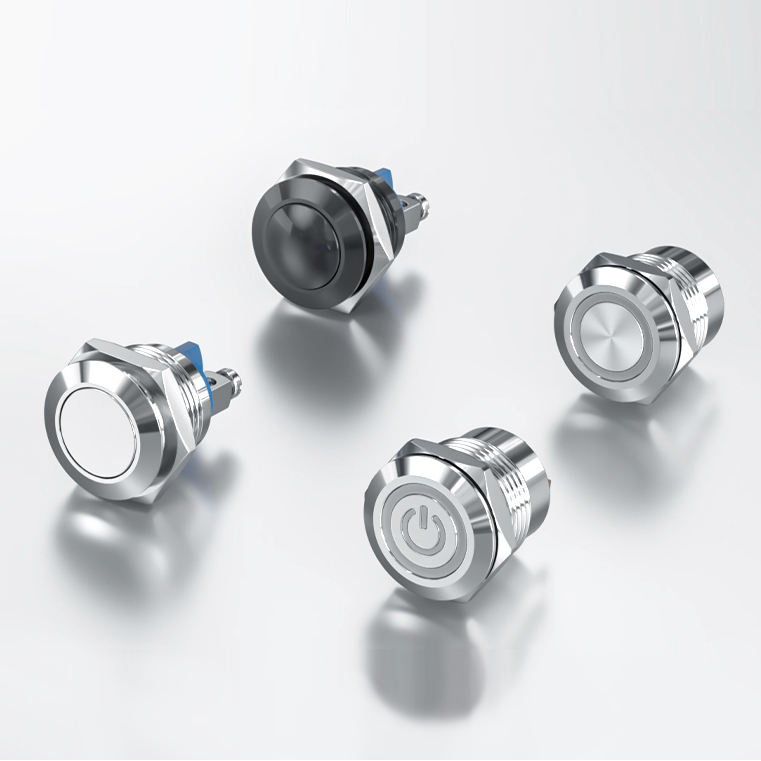
ONPOW’s metal sementara tombol tekans (e.g., GQ16 series) are built for durability—ideal for industrial and medical use. They handle frequent presses (up to millions of cycles) and resist harsh conditions (dust, humidity, chemical cleaners), making them reliable for high-use scenarios.

3. Mengunci tombol tekan Saklar: “Press Once to Turn On, Press Again to Turn Off”
Cara Kerjanya
A latching switch “locks” into position after you press it, keeping the circuit open or closed even when you let go. To reverse the action (e.g., turn off a light), you press the button again—this releases the latch, and it snaps back to the opposite position. It’adalah “toggle” sementara—each press changes the state permanently until the next press.
Penggunaan Umum
Latching switches are for actions that need to be long-lasting or stay in place without constant pressure. Examples include:
Industrial control panels: “Power on” buttons for machines—press once to start the machine, and it stays on until you press the button again to shut down.
Household appliances: Coffee maker “on/off” buttons, or lamp switches (the tombol tekan-style ones).
Automation equipment: “Mode select” buttons (e.g., “auto” vs. “manual” on a conveyor belt)—each press switches the mode and keeps it there.
ONPOW Latching Options
ONPOW’s latching switches (available in metal and plastic series, like F31 plastic series) are designed for stability. They use high-quality latching mechanisms to avoid accidental “unlocking” (critical for safety) and come with certifications like CE, UL, and CB—suitable for global industrial and commercial use.
4.Key Differences at a Glance (Table)
To make it easier, here’s how momentary and latching switches stack up:
|
Fitur |
Momentary tombol tekan Switch |
Mengunci tombol tekan Switch |
|
Action |
Works only while pressed; springs back when released |
Locks in position after pressing; reverses with a second press |
|
Status Sirkuit |
Temporary (on/off only during press) |
cURL Too many subrequests by single Worker invocation. To configure this limit, refer to https://developers.cloudflare.com/workers/wrangler/configuration/#limits |
|
cURL Too many subrequests by single Worker invocation. To configure this limit, refer to https://developers.cloudflare.com/workers/wrangler/configuration/#limits |
cURL Too many subrequests by single Worker invocation. To configure this limit, refer to https://developers.cloudflare.com/workers/wrangler/configuration/#limits |
cURL Too many subrequests by single Worker invocation. To configure this limit, refer to https://developers.cloudflare.com/workers/wrangler/configuration/#limits |
|
cURL Too many subrequests by single Worker invocation. To configure this limit, refer to https://developers.cloudflare.com/workers/wrangler/configuration/#limits |
cURL Too many subrequests by single Worker invocation. To configure this limit, refer to https://developers.cloudflare.com/workers/wrangler/configuration/#limits, “cURL Too many subrequests by single Worker invocation. To configure this limit, refer to https://developers.cloudflare.com/workers/wrangler/configuration/#limits” |
cURL Too many subrequests by single Worker invocation. To configure this limit, refer to https://developers.cloudflare.com/workers/wrangler/configuration/#limits |
|
cURL Too many subrequests by single Worker invocation. To configure this limit, refer to https://developers.cloudflare.com/workers/wrangler/configuration/#limits |
Ideal for “interrupt” actions (e.g., E-stop) |
Better for “sustained” actions (e.g., machine power) |
5.How to Choose: 4 Simple Questions to Ask
Not sure which switch to pick? Answer these 4 questions, and you’ll have your answer:
Question 1: “Do I need the action to stop when I let go of the button?”
If YES â Momentary (e.g., E-stop, doorbell).
If NO â Latching (e.g., machine power, lamp).
Question 2: “Is safety a top priority for accidental activation?”
For actions that need a “hold to work” safety layer (e.g., medical scans, heavy machinery controls) â Momentary (you can’t accidentally leave it on).
For actions that need to stay on without supervision (e.g., factory conveyor belts) â Latching (no need to hold the button for hours).
Question 3: “How often will the switch be pressed?”
High-frequency presses (e.g., 100+ times a day) â Choose a durable option like ONPOW’s metal momentary switches (built for millions of cycles).
Low-frequency presses (e.g., once a day to turn on a machine) â Latching switches (their latching mechanism holds up well to infrequent use).
Question 4: “What environment will it be used in?”
Harsh environments (dust, humidity, chemicals—e.g., factories, hospitals) â ONPOW’s metal switches (momentary or latching) with IP65/IP67 protection (waterproof, dustproof).
Mild environments (offices, homes) â Plastic switches (e.g., ONPOW F31 latching series) for cost-effectiveness.



