

Push button plastic Vicat softening temperature is a material comparison result obtained under a specified indentation load and heating rate. It is not the maximum ambient temperature of a complete push button. When a supplier offers a Vicat report, check the exact resin, specimen preparation and method before comparing the reported temperature with another value. For an industrial control panel, the separate question is whether the ordered switch assembly remains suitable under its documented operating conditions. A higher material softening result cannot answer that assembly question by itself.
This guide explains how buyers can review the evidence, distinguish it from other thermal properties and ask focused questions without turning a laboratory result into an unsupported product rating.
What the Vicat result actually describes
Vicat testing records a defined softening response as a loaded indenter acts on a heated thermoplastic specimen. The result belongs to that specimen and the selected method. The ISO 306 catalogue scope identifies different combinations of load and heating rate. UL’s heat resistance testing overview also distinguishes Vicat testing from heat deflection and other thermal assessments.
For purchasing, the important consequence is comparability. Two entries headed “Vicat” are not necessarily measurements under the same conditions. Before ranking them, locate the complete method designation and material identification. If a summary omits either, request the original report or the missing details. Do not assume that the larger temperature represents the better choice for every panel application.
The document may concern a resin supplied to a moulder rather than a specimen taken from a production switch. That can still be useful evidence, but it needs a documented connection to the part being purchased. Treat the report as one input to engineering review, with its scope kept visible.
Identify which component the report covers
A push button includes several parts, and the plastic named in a material report may describe only one of them. The actuator, lens, mounting body and contact housing should not automatically be treated as identical materials. Start with a marked photograph or drawing showing the component covered by the evidence. Then ask the supplier to connect that component to a controlled part reference.
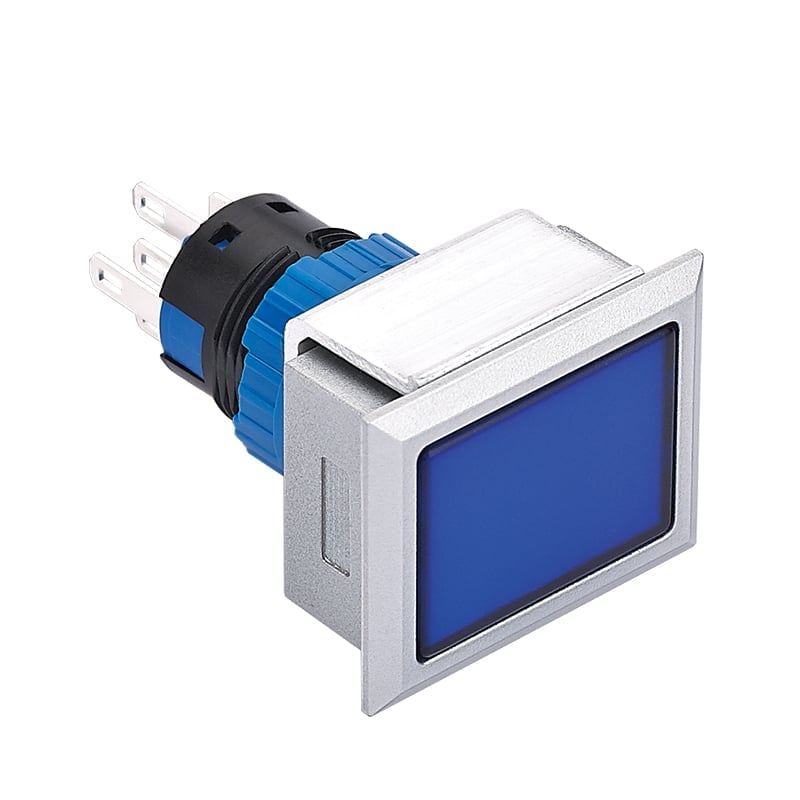
Sebagai contoh, ONPOW LAS1-A 22 mm product family provides an identifiable product reference for a quotation discussion. Its photographs establish visible product identity; they do not establish a resin grade, a Vicat result or certification. Include the complete ordered configuration in the enquiry and ask which material information can actually be supplied for it.
If a report covers a different colour or an earlier material revision, record that difference. The correct next step is a supplier explanation of applicability, not an assumption that all visually similar parts share the same result. Keep any unresolved connection open in the approval record.
Compare complete method conditions
Build a comparison sheet before reviewing the numerical outcome. Put the test standard and edition, method designation, material grade, specimen identity and report date in separate fields. Include preparation and conditioning information when the report provides it. This makes a missing field visible instead of hiding it in a note beneath a temperature.
Do not silently convert an incomplete “Vicat temperature” entry into a fully specified measurement. If two suppliers use different method conditions, ask the engineer whether a common test basis is needed. There is no general purchasing rule that permits correcting one method’s result into another through a fixed temperature adjustment.
The same caution applies when one document cites ISO and another cites ASTM. Read the precise designation and revision, and ask the laboratory to explain the comparison where necessary. A standards title alone does not establish that specimen preparation, reporting and acceptance requirements are interchangeable for the contract.
A practical evidence review table
The following table is a buyer’s review aid, not a substitute for the test method. Method distinctions are based on the ISO catalogue and UL overview linked above; the actions describe a proposed purchasing workflow.
| Bidang bukti | Apa yang harus dipastikan | Action if missing or mismatched |
|---|---|---|
| Identitas bahan | Grade and controlled revision linked to the relevant component | Request a component-to-material statement |
| Metode | Complete standard, edition and selected load/heating designation | Hold numerical ranking until clarified |
| Spesimen | Whether it is a moulded material sample or a finished-part sample | Record the actual scope without extending it |
| Persiapan | Relevant moulding, conditioning and treatment history | Ask for the laboratory’s recorded conditions |
| Hasil | Reported temperature, units and individual results where supplied | Obtain the report rather than a cropped data field |
| Application link | Separate switch operating conditions and assembly approval | cURL Too many subrequests by single Worker invocation. To configure this limit, refer to https://developers.cloudflare.com/workers/wrangler/configuration/#limits |
| Pengendalian perubahan | cURL Too many subrequests by single Worker invocation. To configure this limit, refer to https://developers.cloudflare.com/workers/wrangler/configuration/#limits | cURL Too many subrequests by single Worker invocation. To configure this limit, refer to https://developers.cloudflare.com/workers/wrangler/configuration/#limits |
Keep Vicat separate from other temperature evidence
cURL Too many subrequests by single Worker invocation. To configure this limit, refer to https://developers.cloudflare.com/workers/wrangler/configuration/#limits.
cURL Too many subrequests by single Worker invocation. To configure this limit, refer to https://developers.cloudflare.com/workers/wrangler/configuration/#limits cURL Too many subrequests by single Worker invocation. To configure this limit, refer to https://developers.cloudflare.com/workers/wrangler/configuration/#limits. cURL Too many subrequests by single Worker invocation. To configure this limit, refer to https://developers.cloudflare.com/workers/wrangler/configuration/#limits cURL Too many subrequests by single Worker invocation. To configure this limit, refer to https://developers.cloudflare.com/workers/wrangler/configuration/#limits. cURL Too many subrequests by single Worker invocation. To configure this limit, refer to https://developers.cloudflare.com/workers/wrangler/configuration/#limits.
An illuminated assembly also contains electrical and mechanical elements that a resin softening test does not evaluate. Ask for the ordered product’s documented limits and the intended equipment conditions. A material result can support selection, but it cannot demonstrate contact performance, illumination life, sealing or the behaviour of the complete panel.
Review a supplier comparison without inventing a margin
Consider two quotations that list different Vicat temperatures. The first includes a complete method designation and a traceable resin reference. The second provides only a temperature copied into a sales summary. Begin by obtaining the missing evidence for the second quotation. It is premature to select it simply because its reported number is larger.
Once both reports are comparable, ask whether the material property is actually a decision criterion for the application. If the equipment specification concerns normal operating ambient temperature, the product documentation and equipment assessment remain the relevant acceptance route. Do not subtract an arbitrary number from the Vicat result to create a supposed safe service temperature.
Where a customer requires a defined material threshold, record the exact test conditions in the purchase specification before ordering. State who reviews the report and how an exception is handled. Avoid accepting a general “high temperature plastic” description in place of the agreed evidence. This keeps quotation comparison tied to a requirement that both parties understand.
What to do with incomplete or inconsistent evidence
Separate administrative gaps from technical differences. An unreadable report number may be resolved with a clearer copy. A report for an unidentified resin requires a material traceability explanation. A report using another method may require technical review or further testing. Labelling all three situations “certificate missing” obscures the actual work needed.
Keep a short question log with one owner and a requested response for each gap. Attach the supplier’s answer to the report, and identify whether it resolves the question or merely offers a commercial assurance. If the answer changes the material or product configuration, update the quotation reference as well.
The panduan ruang lingkup akreditasi laboratorium explains another useful distinction: a laboratory’s credentials do not automatically prove that every test and reported conclusion falls within the scope needed for your purchase. Review the particular evidence, not just the logo on its cover.
Build the enquiry around the actual panel
Provide the mounting arrangement, intended environment, operating duty and any customer material requirement that makes the Vicat report relevant. Ask for the complete switch model and the applicable product data. If the requirement originated in an equipment specification, include its exact wording so the supplier can identify what evidence it can support.
Request the component covered by the material report, resin identification where available, the report reference and the method used. Ask whether any difference exists between the tested material and the supplied production configuration. Do not ask a sales team to certify an entire installation from a single resin property.
Keep the material evidence and finished-product documentation as linked records. This makes later changes easier to assess: a revised lens need not be confused with an unchanged mounting body, and a new resin statement need not overwrite the switch’s existing application limits. Contact ONPOW with the ordered configuration and evidence questions to confirm what documentation is available.
Maintain a usable approval record
Save the report, supplier clarification and review decision under the same purchase reference. Record the reviewer, date, accepted scope and unresolved limitations. A later buyer should be able to see why a document was accepted without reconstructing a chain of informal messages.
When a supplier proposes a substitution, compare the identified component and method basis again. Similar appearance and the same catalogue family do not by themselves demonstrate unchanged material evidence. Ask for a change description before deciding whether the previous approval still applies. The amount of review should follow the actual change and the equipment requirement.
This approach also prevents unnecessary retesting. If the supplied configuration, evidence and requirements remain the same, a new purchase does not automatically create a new technical problem. Preserve the established basis, verify its continued applicability and focus additional work on specific changes or missing information.
Pertanyaan yang sering diajukan
Is Vicat softening temperature a push button’s operating temperature?
No. It is a material test result under defined conditions. Use the ordered switch’s documented operating limits and the equipment assessment for the application; do not derive those limits from Vicat alone.
Can two Vicat values be compared directly?
Only after reviewing material identity and the complete test basis. Different load or heating conditions, specimens or preparation histories can make a simple numerical ranking misleading.
Does a product photograph prove the material grade?
No. A photograph helps identify the component or product being discussed. Material identity and test applicability require supporting documentation linked to the ordered configuration.
What should a buyer request first?
Request the full report reference, exact material and component identity, test method designation and the separate product operating documentation. These establish whether the evidence addresses the purchasing requirement.
Pembelajaran lebih lanjut
Saint Mary’s University demonstrates dimensional changes with temperature using metal objects. This introduces thermal response only; it is not a Vicat test demonstration and gives no softening result or operating rating for ONPOW plastics.



