A push button lens refractive index report describes an optical material property under stated measurement conditions. Before using it, confirm which transparent component was sampled, whether the specimen suits the method, and which wavelength and temperature apply. Refractive index helps describe light propagation and refraction. It does not establish how bright an assembled button looks, how evenly its legend is illuminated or whether its indication is clear in a control panel. A useful purchasing review separates the material measurement from the finished assembly’s visual performance and connects each result to the question it can answer.
Begin with the optical question
A request for “better optical quality” is too broad to define a measurement. First decide whether the concern is a changed transparent material, unexpected light distribution, a simulation input or a mismatch between two supplier documents. Each problem needs a different evidence path. A refractive index result can be relevant to material identification or optical design, but it may not explain a dim indication.
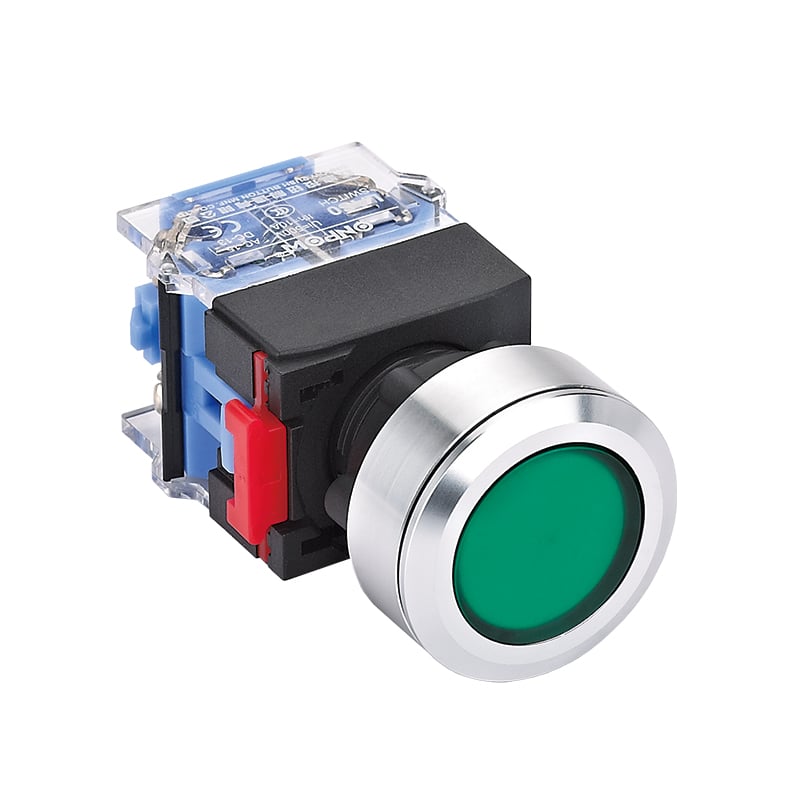
For a replacement order, start with the exact product configuration, illumination option and component drawing. The ONPOW LAS0-K30 product example shows the physical product family being discussed. The product photograph is an identification reference; it does not prove that every visible part is transparent, optically homogeneous or made from one material.
Name the part of interest in the request. An outer cap, colored insert and clear light guide should not be treated as one interchangeable specimen description. If the supplier cannot connect a report to the relevant part, resolve that mapping before interpreting the optical number.
Understand what refractive index means
In a simple transparent medium, refractive index n can be expressed as n = c/v, where c is the speed of light in vacuum and v is its phase velocity in the medium. It is a ratio without units. For purchasing, this means that a report should not label the result in percent or describe it as a percentage of transmitted light.
The MIT introductory optics notes introduce refraction and its relationship to optical propagation. That relationship helps explain why an index may be needed in a model, while leaving the geometry, source and surface details to the actual design.
For illustration only, if an imagined transparent material has n = 1.5, its phase velocity in the simple model is c/1.5, or about two thirds of c. This is not a measurement of an ONPOW lens. It does not mean that two thirds of the light passes through, and it cannot be converted directly into an illumination efficiency.
Check whether the method fits the specimen
ASTM D542 concerns refractive index measurement of transparent organic plastics and identifies specimen suitability as an important condition. Ask the laboratory which method edition it used and whether the actual specimen falls within its applicable scope. A finished translucent, textured or layered component may require discussion before a conventional result can be interpreted.
Do not flatten, polish or cut a production part based solely on an informal buyer instruction. Preparation can change what portion of the component the test represents. Let the laboratory define a suitable preparation route, then document whether the reported specimen was a separate plaque or material removed from a finished part.
The result should state any limitations caused by coatings, surface texture, curvature, colorants or internal nonuniformity. If the laboratory cannot obtain an interpretable measurement using the proposed method, that is useful information. Replacing it with an unexplained numerical estimate would make the evidence weaker rather than complete the request.
Preserve wavelength and temperature information
A refractive index value should travel with its measurement conditions. Ask for the light wavelength or spectral designation, specimen temperature and instrument method. A number copied into a spreadsheet without those fields may be difficult to compare with a second report, even when both originally described valid measurements.
Use consistent labels in the purchasing record. If one supplier reports a spectral line designation and another uses wavelength units, have the laboratory or optical engineer confirm the intended comparison. Do not assume that similar-looking labels represent the same measurement conditions or that extra decimal places establish equivalence.
When the purpose is an optical model, ask which spectral conditions the model actually uses. A single visible-light index may be sufficient for a preliminary calculation, while a more detailed model could need wavelength-dependent data. Specify the evidence needed for the decision; do not request a full dispersion dataset simply because the instrument can produce one.
Review the report using an optical evidence table
This table organizes a buyer’s review. It is not a substitute for the laboratory’s procedure and sets no universal pass value for a button lens.
| Bidang bukti | Pertanyaan tinjauan | Tindak lanjut jika tidak jelas |
|---|---|---|
| Component mapping | Does the sample correspond to the ordered transparent part? | Request a drawing or labeled specimen photograph |
| Identitas bahan | Is the resin or controlled material reference recorded? | Ask how the batch connects to the production component |
| Specimen suitability | Was a suitable transparent specimen available? | Obtain the laboratory’s preparation and scope explanation |
| Measurement conditions | Are wavelength and temperature stated? | Resolve conditions before comparing numbers |
| Metode | Is the procedure and edition identified? | Ask for deviations and their effect on interpretation |
| cURL Too many subrequests by single Worker invocation. To configure this limit, refer to https://developers.cloudflare.com/workers/wrangler/configuration/#limits | cURL Too many subrequests by single Worker invocation. To configure this limit, refer to https://developers.cloudflare.com/workers/wrangler/configuration/#limits | cURL Too many subrequests by single Worker invocation. To configure this limit, refer to https://developers.cloudflare.com/workers/wrangler/configuration/#limits |
| cURL Too many subrequests by single Worker invocation. To configure this limit, refer to https://developers.cloudflare.com/workers/wrangler/configuration/#limits | cURL Too many subrequests by single Worker invocation. To configure this limit, refer to https://developers.cloudflare.com/workers/wrangler/configuration/#limits | cURL Too many subrequests by single Worker invocation. To configure this limit, refer to https://developers.cloudflare.com/workers/wrangler/configuration/#limits |
| cURL Too many subrequests by single Worker invocation. To configure this limit, refer to https://developers.cloudflare.com/workers/wrangler/configuration/#limits | cURL Too many subrequests by single Worker invocation. To configure this limit, refer to https://developers.cloudflare.com/workers/wrangler/configuration/#limits | cURL Too many subrequests by single Worker invocation. To configure this limit, refer to https://developers.cloudflare.com/workers/wrangler/configuration/#limits |
Distinguish index from transmission and haze
Refraction concerns the behavior of light at a boundary between media. Transmission concerns how much light passes through a specimen under defined conditions. Haze concerns scattering that changes the directional distribution of transmitted light. These are related to an optical system, but one measurement does not replace all the others.
If the practical complaint is a cloudy cap, a refractive index comparison alone may leave the key question unanswered. The illuminated lens transmittance guide covers a different evidence route. Identify whether the issue is bulk transmission, scattering, surface condition or the assembly’s source and geometry before selecting further measurements.
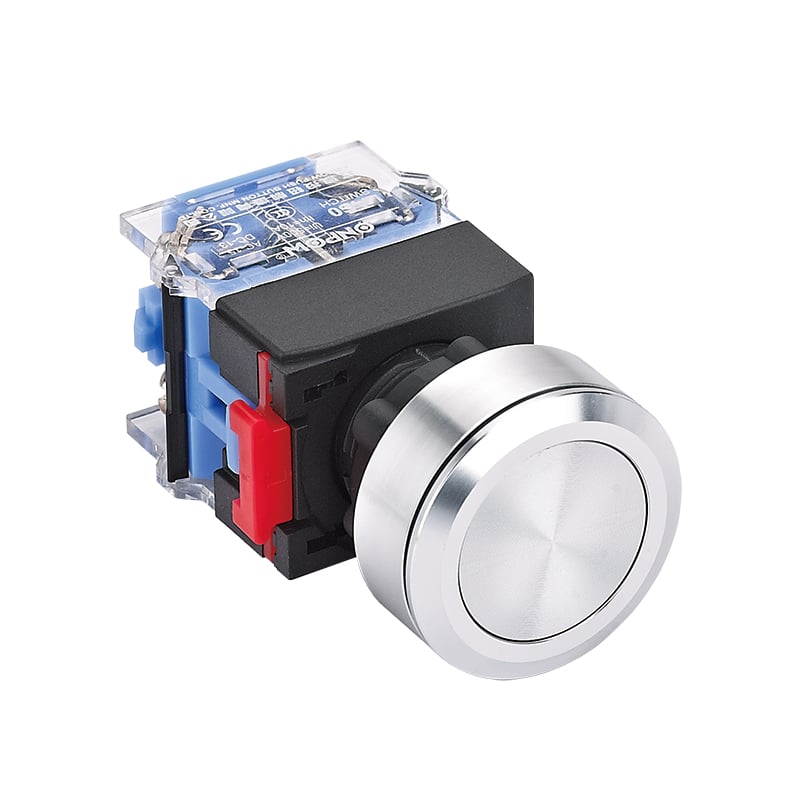
Likewise, a visually bright sample does not establish a particular index. A product photo depends on lighting, exposure and editing. Use images to identify construction and visible condition, then use a suitable measurement for the property being claimed. Keep original photographs and report data as different kinds of evidence in the project file.
Compare batches without overstating a material match
When a supplier reports two close values, first check that both specimens represent comparable material and preparation. Confirm measurement conditions and the stated precision before deciding that a small difference signals a formulation change. A purchasing tolerance should come from the relevant engineering requirement or agreed control plan, not from the number of digits printed by an instrument.
A matching index does not uniquely identify a polymer formulation. If identity is the concern, combine appropriate evidence rather than treating one optical property as a material fingerprint. The tinjauan permitivitas bahan illustrates why another material property must also be interpreted within its own measurement conditions; it is not an optical identity test.
Keep changes in color, coating or molded geometry visible in the record. Even when the underlying material evidence is accepted, an assembly change may still affect its appearance or light distribution. A material comparison should answer its defined question and leave the separate assembly review clearly assigned.
Translate the evidence into an assembly decision
For an illuminated control, examine the actual ordered configuration under the application conditions specified by the equipment team. Identify supply conditions, viewing distance, ambient illumination and any required legend assessment. Those are parameters for a deliberate evaluation, not universal test settings supplied by this article.
If a refractive index dataset is used in a model, record its source, version and assumed applicability. An engineer should understand whether it came from the resin producer, a laboratory measurement or a provisional reference. Preserve that distinction when the model is handed to another person or updated after a material change.
Gunakan daftar cek ruang lingkup akreditasi laboratorium when reviewing a laboratory’s claimed scope. A recognizable laboratory name is helpful context, but it does not connect an unnamed specimen to your product or make every optical service part of an accredited scope.
Ask for evidence that can be used and maintained
A concise request should identify the product code, transparent component, material revision and purpose of the measurement. Ask for the method edition, specimen preparation, wavelength, temperature, reported uncertainty or repeatability information and the complete report. Include any drawing needed to establish which part the sample represents.
For screening, a supplier dataset may be sufficient if the engineer accepts its relevance and records the assumption. For a controlled production comparison, a batch-linked measurement may be needed. These are different levels of evidence. State the required level before ordering laboratory work to avoid paying for a report that cannot support the intended decision.
If the result is unclear, keep the specific optical claim pending and send a focused question to the supplier. Preserve the report number and revision in the purchasing file. For an ONPOW inquiry, request current documentation for the exact configuration instead of inferring resin, optical performance or interchangeability from a catalog photograph.
Pertanyaan yang sering diajukan
Does a higher refractive index mean a brighter push button?
No. Brightness of an assembly depends on several factors, including the source, geometry and optical losses. Refractive index alone does not establish the visible output.
Can a refractive index report identify the exact plastic formulation?
It can contribute to a material comparison, but a matching value is not unique proof of formulation. Check sample traceability and other appropriate evidence when identity is the concern.
Can every colored or textured button cap be measured by the same method?
Do not assume that it can. Ask the laboratory whether the actual specimen is suitable and how preparation affects what the result represents.
What information must remain attached to the index value?
Keep the specimen identity, method, wavelength, temperature, report revision and stated measurement limitations together with the number so another reviewer can interpret it correctly.
Pembelajaran lebih lanjut
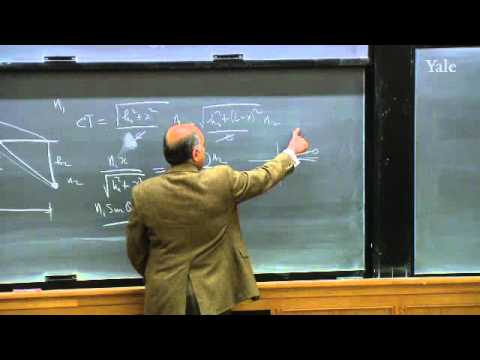
Yale Courses introduces geometrical optics, refraction and optical paths. The lecture supports the distinction between refractive index and transmitted light; it does not measure an ONPOW lens.