

Limit switch actuator types translate machine motion into reliable switch operation. A plunger accepts direct axial movement, a roller reduces sliding friction, a lever increases reach and changes mechanical advantage, and a rod or whisker tolerates wider approach variation. The actuator is not a cosmetic option: it determines approach direction, required force, permitted speed, travel, repeatability, and exposure to impact. Select the actuator only after the machine motion and tolerance stack are documented, then verify the exact switch drawing and test the assembled mechanism.
Regola di selezione: considerare il dispositivo, l'attuatore, i contatti, la custodia, il cablaggio, la logica di controllo, l'utente e il movimento della macchina come un unico sistema. Gli esempi di prodotto illustrano solo la forma; l'idoneità finale deve derivare dalla documentazione aggiornata per il codice d'ordine esatto e dalla convalida nell'apparecchiatura finita.
Come funziona il meccanismo
The actuator transfers external movement to an internal snap-action or slow-action contact mechanism. Reliable operation requires the moving target to cross the operating point while staying inside the permitted overtravel and force limits. Release motion must also cross the reset point. Cam shape, alignment, speed, vibration, and wear can change the effective stroke, so a switch that clicks on a bench may still be unreliable in the machine.

Criteri di selezione a colpo d'occhio
| Area decisionale | Cosa verificare | Motivo ingegneristico |
|---|---|---|
| Straight plunger | Direct axial approach with tightly controlled alignment | Compact and repeatable, but poorly suited to side loading. |
| Roller plunger | Direct approach where the target also slides across the actuator | Rolling contact reduces rubbing but adds height and a rotating part. |
| Hinge lever | A cam approaches from the side and additional reach is needed | The lever changes force and travel at the internal plunger. |
| Roller lever | Repeated cam travel across the actuator | The roller reduces sliding wear and helps a cam pass smoothly. |
| Adjustable lever | The operating radius must be tuned during setup | Adjustment adds flexibility but must be locked and documented. |
| Rod or whisker | The target position varies across a wider area | Flexible reach tolerates misalignment but usually reduces positional precision. |
| Fork or special head | The mechanism requires bidirectional or application-specific engagement | Use only with the exact manufacturer motion diagram. |
| Sealed actuator assembly | Dust, oil, spray, or condensation can reach the switch | The complete housing and cable entry must match the environment. |
Questa tabella è volutamente qualitativa. Limiti numerici, valori nominali, coppia, forza, corsa, dichiarazioni ambientali e valori di durata devono essere presi dalla scheda tecnica corrente e valutati in base alle condizioni dell'applicazione.
Processo di selezione dettagliato
Straight plunger
Cosa verificare: Direct axial approach with tightly controlled alignment. Compact and repeatable, but poorly suited to side loading. The requirement should be written in the project specification and traced to the exact model drawing or datasheet. Review worst-case tolerance, wear, contamination, maintenance access, and foreseeable misuse. If the available documentation does not define the boundary, keep the point open for supplier confirmation and sample testing rather than substituting an assumption.
Roller plunger
Cosa verificare: Direct approach where the target also slides across the actuator. Rolling contact reduces rubbing but adds height and a rotating part. The requirement should be written in the project specification and traced to the exact model drawing or datasheet. Review worst-case tolerance, wear, contamination, maintenance access, and foreseeable misuse. If the available documentation does not define the boundary, keep the point open for supplier confirmation and sample testing rather than substituting an assumption.
Hinge lever
Cosa verificare: A cam approaches from the side and additional reach is needed. The lever changes force and travel at the internal plunger. The requirement should be written in the project specification and traced to the exact model drawing or datasheet. Review worst-case tolerance, wear, contamination, maintenance access, and foreseeable misuse. If the available documentation does not define the boundary, keep the point open for supplier confirmation and sample testing rather than substituting an assumption.
Roller lever
Cosa verificare: Repeated cam travel across the actuator. The roller reduces sliding wear and helps a cam pass smoothly. The requirement should be written in the project specification and traced to the exact model drawing or datasheet. Review worst-case tolerance, wear, contamination, maintenance access, and foreseeable misuse. If the available documentation does not define the boundary, keep the point open for supplier confirmation and sample testing rather than substituting an assumption.
Adjustable lever
Cosa verificare: The operating radius must be tuned during setup. Adjustment adds flexibility but must be locked and documented. The requirement should be written in the project specification and traced to the exact model drawing or datasheet. Review worst-case tolerance, wear, contamination, maintenance access, and foreseeable misuse. If the available documentation does not define the boundary, keep the point open for supplier confirmation and sample testing rather than substituting an assumption.
Rod or whisker
Cosa verificare: The target position varies across a wider area. Flexible reach tolerates misalignment but usually reduces positional precision. The requirement should be written in the project specification and traced to the exact model drawing or datasheet. Review worst-case tolerance, wear, contamination, maintenance access, and foreseeable misuse. If the available documentation does not define the boundary, keep the point open for supplier confirmation and sample testing rather than substituting an assumption.
Fork or special head
Cosa verificare: The mechanism requires bidirectional or application-specific engagement. Use only with the exact manufacturer motion diagram. The requirement should be written in the project specification and traced to the exact model drawing or datasheet. Review worst-case tolerance, wear, contamination, maintenance access, and foreseeable misuse. If the available documentation does not define the boundary, keep the point open for supplier confirmation and sample testing rather than substituting an assumption.
Sealed actuator assembly
Cosa verificare: Dust, oil, spray, or condensation can reach the switch. The complete housing and cable entry must match the environment. The requirement should be written in the project specification and traced to the exact model drawing or datasheet. Review worst-case tolerance, wear, contamination, maintenance access, and foreseeable misuse. If the available documentation does not define the boundary, keep the point open for supplier confirmation and sample testing rather than substituting an assumption.

Revisione della domanda
- Map the full target path, not just its final position. Record the expected command, response, release behavior, abnormal condition, and acceptance evidence for the assembled machine.
- Check approach and departure angles at tolerance extremes. Record the expected command, response, release behavior, abnormal condition, and acceptance evidence for the assembled machine.
- Keep the actuator out of the role of a mechanical hard stop. Record the expected command, response, release behavior, abnormal condition, and acceptance evidence for the assembled machine.
- Measure available overtravel after the electrical operating point. Record the expected command, response, release behavior, abnormal condition, and acceptance evidence for the assembled machine.
- Test slow, normal, and maximum machine speed. Record the expected command, response, release behavior, abnormal condition, and acceptance evidence for the assembled machine.
Per ogni applicazione, includere l'avvio, il normale funzionamento, lo spegnimento, la perdita di alimentazione, il ripristino dell'alimentazione, la modalità di manutenzione, la sostituzione dei componenti e i guasti identificati dalla valutazione dei rischi. Un interruttore di controllo generale non deve essere trattato come una funzione di sicurezza completa.
Lista di controllo per la messa in servizio
- Bloccare il requisito. Indica l'azione prevista, la condizione normale, l'alimentazione, il carico, il movimento, l'ambiente e l'utente.
- Abbina il codice dell'ordine. Confrontare la parte consegnata con il disegno approvato, il diagramma dei contatti, l'attuatore, il tipo di terminale e gli accessori.
- Ispezionare l'installazione. Controllare l'allineamento, gli elementi di fissaggio, lo spazio libero posteriore, il passaggio dei cavi, lo scarico della trazione, la protezione delle parti in tensione e l'accesso per la manutenzione.
- Testa ogni stato. Verificare il funzionamento e il rilascio ai limiti di tolleranza, alle velocità previste, ai carichi, con guanti, in presenza di contaminazione e nelle condizioni ambientali previste.
- Testare condizioni anormali. Includere conduttori scollegati, meccanismi bloccati o danneggiati, interruzione di corrente, contaminazione e altri guasti plausibili.
- Registra il risultato. Salvare modello, revisione, metodo di prova, osservazioni, criteri di accettazione, data e approvatore.
Common mistakes
- Choosing by catalog photograph instead of the motion drawing. Prevent this by assigning the check to a drawing, datasheet, wiring record, or commissioning test with a named acceptance criterion.
- Allowing a cam edge to strike a lever sideways. Prevent this by assigning the check to a drawing, datasheet, wiring record, or commissioning test with a named acceptance criterion.
- Using excessive overtravel to compensate for poor alignment. Prevent this by assigning the check to a drawing, datasheet, wiring record, or commissioning test with a named acceptance criterion.
- Ignoring the release point and reset margin. Prevent this by assigning the check to a drawing, datasheet, wiring record, or commissioning test with a named acceptance criterion.
- Assuming a roller makes every impact acceptable. Prevent this by assigning the check to a drawing, datasheet, wiring record, or commissioning test with a named acceptance criterion.
What to include in an RFQ
Provide the application, target market, applicable standards, machine function, supply and load, control interface, contact logic, mechanical drawing, motion path, panel dimensions, cable method, environment, operating frequency, quantity, documentation needs, and sample-validation plan. Ask the supplier to identify assumptions and exceptions. ONPOW offers relevant products in its application-specific product family and the broader industrial control product range.
Related ONPOW guides
Authoritative references
- IEC 60947-5-1 control-circuit devices
- IEC 60529 degrees of protection provided by enclosures
- OSHA machine guarding requirements
- OSHA electrical safety requirements
Educational video
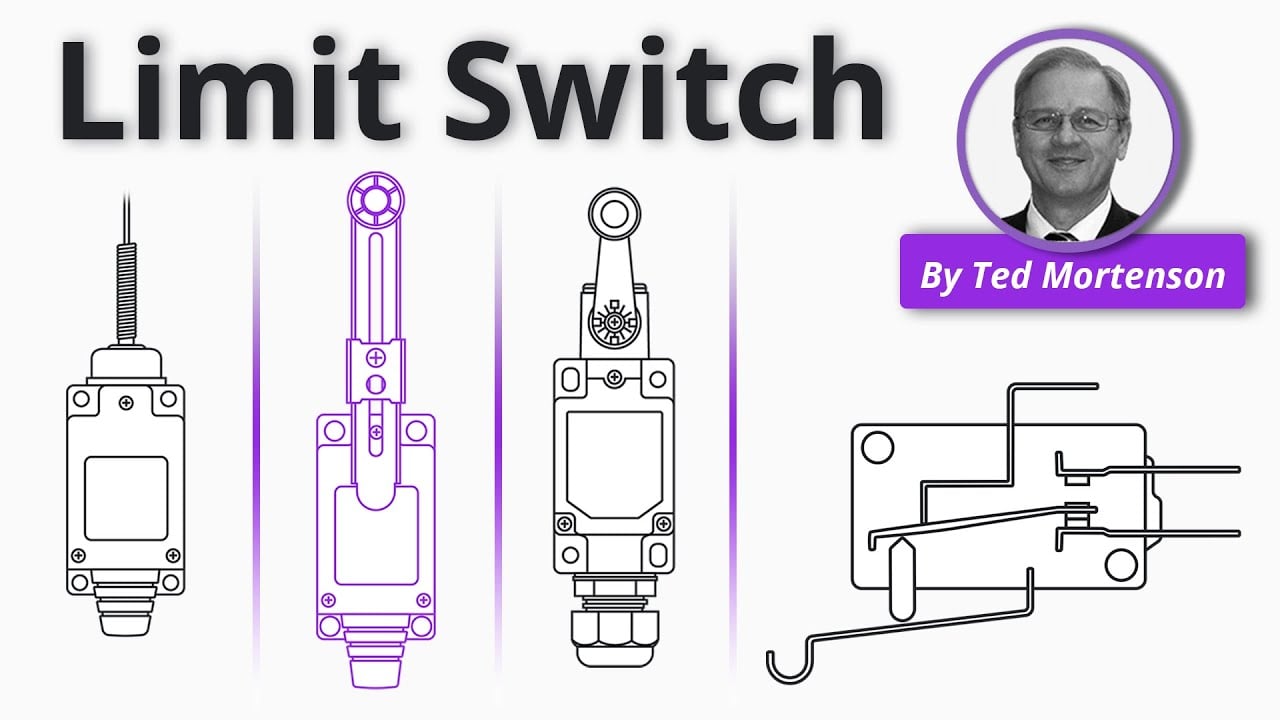
Limit Switch Explained by RealPars provides general background. Project decisions still require the applicable standards and product documentation.
Frequently asked questions
Quale attuatore è il più preciso?
La precisione dipende dall'interruttore esatto, dal montaggio, dalla camma, dalla forza, dalla temperatura, dall'usura e dalla catena di tolleranze. Uno stantuffo è spesso diretto, ma i dati del modello e il collaudo assemblato sono decisivi.
Quando si dovrebbe usare un rullo?
Usa un rullo quando una camma o un bersaglio scorre sull'attuatore e una ridotta attrito di scorrimento è utile.
Può un finecorsa arrestare meccanicamente la corsa della macchina?
No. La macchina necessita di un arresto meccanico separato quando è richiesto; l'attuatore dell'interruttore deve rimanere entro la sua corsa documentata.
Un microinterruttore è la stessa cosa di un finecorsa?
Un microinterruttore può essere l'elemento di commutazione interno, mentre un finecorsa descrive spesso l'intero gruppo completo di rilevamento della posizione installato.
Final decision
Approve the component only when the documented mechanical, electrical, environmental, usability, installation, and maintenance boundaries all fit the assembled system. Resolve unknowns through current manufacturer information and testing before production release.



