

Limit switch actuator types translate machine motion into reliable switch operation. A plunger accepts direct axial movement, a roller reduces sliding friction, a lever increases reach and changes mechanical advantage, and a rod or whisker tolerates wider approach variation. The actuator is not a cosmetic option: it determines approach direction, required force, permitted speed, travel, repeatability, and exposure to impact. Select the actuator only after the machine motion and tolerance stack are documented, then verify the exact switch drawing and test the assembled mechanism.
Selectieregel: Beschouw het apparaat, de actuator, de contacten, de behuizing, de bedrading, de besturingslogica, de gebruiker en de machinebeweging als één systeem. Productvoorbeelden illustreren alleen de vorm; de uiteindelijke geschiktheid moet blijken uit de actuele documentatie voor de exacte bestelcode en uit validatie in de gereedstaande apparatuur.
Hoe het mechanisme werkt
The actuator transfers external movement to an internal snap-action or slow-action contact mechanism. Reliable operation requires the moving target to cross the operating point while staying inside the permitted overtravel and force limits. Release motion must also cross the reset point. Cam shape, alignment, speed, vibration, and wear can change the effective stroke, so a switch that clicks on a bench may still be unreliable in the machine.

Selectiecriteria in een oogopslag
| Beslissingsgebied | Wat te verifiëren | Technische reden |
|---|---|---|
| Straight plunger | Direct axial approach with tightly controlled alignment | Compact and repeatable, but poorly suited to side loading. |
| Roller plunger | Direct approach where the target also slides across the actuator | Rolling contact reduces rubbing but adds height and a rotating part. |
| Hinge lever | A cam approaches from the side and additional reach is needed | The lever changes force and travel at the internal plunger. |
| Roller lever | Repeated cam travel across the actuator | The roller reduces sliding wear and helps a cam pass smoothly. |
| Adjustable lever | The operating radius must be tuned during setup | Adjustment adds flexibility but must be locked and documented. |
| Rod or whisker | The target position varies across a wider area | Flexible reach tolerates misalignment but usually reduces positional precision. |
| Fork or special head | The mechanism requires bidirectional or application-specific engagement | Use only with the exact manufacturer motion diagram. |
| Sealed actuator assembly | Dust, oil, spray, or condensation can reach the switch | The complete housing and cable entry must match the environment. |
Deze tabel is opzettelijk kwalitatief. Numerieke limieten, nominale waarden, koppel, kracht, slag, milieuclaims en uithoudingsvermogenswaarden moeten worden overgenomen uit het huidige gegevensblad en worden geëvalueerd onder de toepassingsomstandigheden.
Gedetailleerd selectieproces
Straight plunger
Wat te controleren: Direct axial approach with tightly controlled alignment. Compact and repeatable, but poorly suited to side loading. The requirement should be written in the project specification and traced to the exact model drawing or datasheet. Review worst-case tolerance, wear, contamination, maintenance access, and foreseeable misuse. If the available documentation does not define the boundary, keep the point open for supplier confirmation and sample testing rather than substituting an assumption.
Roller plunger
Wat te controleren: Direct approach where the target also slides across the actuator. Rolling contact reduces rubbing but adds height and a rotating part. The requirement should be written in the project specification and traced to the exact model drawing or datasheet. Review worst-case tolerance, wear, contamination, maintenance access, and foreseeable misuse. If the available documentation does not define the boundary, keep the point open for supplier confirmation and sample testing rather than substituting an assumption.
Hinge lever
Wat te controleren: A cam approaches from the side and additional reach is needed. The lever changes force and travel at the internal plunger. The requirement should be written in the project specification and traced to the exact model drawing or datasheet. Review worst-case tolerance, wear, contamination, maintenance access, and foreseeable misuse. If the available documentation does not define the boundary, keep the point open for supplier confirmation and sample testing rather than substituting an assumption.
Roller lever
Wat te controleren: Repeated cam travel across the actuator. The roller reduces sliding wear and helps a cam pass smoothly. The requirement should be written in the project specification and traced to the exact model drawing or datasheet. Review worst-case tolerance, wear, contamination, maintenance access, and foreseeable misuse. If the available documentation does not define the boundary, keep the point open for supplier confirmation and sample testing rather than substituting an assumption.
Adjustable lever
Wat te controleren: The operating radius must be tuned during setup. Adjustment adds flexibility but must be locked and documented. The requirement should be written in the project specification and traced to the exact model drawing or datasheet. Review worst-case tolerance, wear, contamination, maintenance access, and foreseeable misuse. If the available documentation does not define the boundary, keep the point open for supplier confirmation and sample testing rather than substituting an assumption.
Rod or whisker
Wat te controleren: The target position varies across a wider area. Flexible reach tolerates misalignment but usually reduces positional precision. The requirement should be written in the project specification and traced to the exact model drawing or datasheet. Review worst-case tolerance, wear, contamination, maintenance access, and foreseeable misuse. If the available documentation does not define the boundary, keep the point open for supplier confirmation and sample testing rather than substituting an assumption.
Fork or special head
Wat te controleren: The mechanism requires bidirectional or application-specific engagement. Use only with the exact manufacturer motion diagram. The requirement should be written in the project specification and traced to the exact model drawing or datasheet. Review worst-case tolerance, wear, contamination, maintenance access, and foreseeable misuse. If the available documentation does not define the boundary, keep the point open for supplier confirmation and sample testing rather than substituting an assumption.
Sealed actuator assembly
Wat te controleren: Dust, oil, spray, or condensation can reach the switch. The complete housing and cable entry must match the environment. The requirement should be written in the project specification and traced to the exact model drawing or datasheet. Review worst-case tolerance, wear, contamination, maintenance access, and foreseeable misuse. If the available documentation does not define the boundary, keep the point open for supplier confirmation and sample testing rather than substituting an assumption.

Applicatiebeoordeling
- Map the full target path, not just its final position. Record the expected command, response, release behavior, abnormal condition, and acceptance evidence for the assembled machine.
- Check approach and departure angles at tolerance extremes. Record the expected command, response, release behavior, abnormal condition, and acceptance evidence for the assembled machine.
- Keep the actuator out of the role of a mechanical hard stop. Record the expected command, response, release behavior, abnormal condition, and acceptance evidence for the assembled machine.
- Measure available overtravel after the electrical operating point. Record the expected command, response, release behavior, abnormal condition, and acceptance evidence for the assembled machine.
- Test slow, normal, and maximum machine speed. Record the expected command, response, release behavior, abnormal condition, and acceptance evidence for the assembled machine.
Voor elke toepassing moeten de opstartfase, normale werking, uitschakeling, stroomuitval, stroomherstel, onderhoudsmodus, vervanging van componenten en de door de risicobeoordeling geïdentificeerde storingen worden opgenomen. Een algemene bedieningsschakelaar mag niet worden beschouwd als een volledige veiligheidsfunctie.
Inbedrijfstellingschecklist
- Bevries de vereiste. Vermeld de beoogde actie, normale toestand, voeding, belasting, beweging, omgeving en gebruiker.
- Match de bestelcode. Vergelijk het geleverde onderdeel met de goedgekeurde tekening, het contactschema, de actuator, de aansluitstijl en de toebehoren.
- Inspecteer de installatie. Controleer de uitlijning, bevestigingsmiddelen, speling aan de achterzijde, kabelgeleiding, trekontlasting, afscherming van onder spanning staande delen en de toegankelijkheid voor onderhoud.
- Test elke staat. Controleer de werking en ontgrendeling bij extreme toleranties, verwachte snelheden, belastingen, handschoenen, verontreiniging en omgevingsomstandigheden.
- Test abnormale omstandigheden. Inclusief losgekoppelde geleiders, geblokkeerde of beschadigde mechanismen, stroomuitval, vervuiling en andere aannemelijke storingen.
- Registreer het resultaat. Sla model, revisie, testmethode, observaties, acceptatiecriteria, datum en goedkeurder op.
Common mistakes
- Choosing by catalog photograph instead of the motion drawing. Prevent this by assigning the check to a drawing, datasheet, wiring record, or commissioning test with a named acceptance criterion.
- Allowing a cam edge to strike a lever sideways. Prevent this by assigning the check to a drawing, datasheet, wiring record, or commissioning test with a named acceptance criterion.
- Using excessive overtravel to compensate for poor alignment. Prevent this by assigning the check to a drawing, datasheet, wiring record, or commissioning test with a named acceptance criterion.
- Ignoring the release point and reset margin. Prevent this by assigning the check to a drawing, datasheet, wiring record, or commissioning test with a named acceptance criterion.
- Assuming a roller makes every impact acceptable. Prevent this by assigning the check to a drawing, datasheet, wiring record, or commissioning test with a named acceptance criterion.
What to include in an RFQ
Provide the application, target market, applicable standards, machine function, supply and load, control interface, contact logic, mechanical drawing, motion path, panel dimensions, cable method, environment, operating frequency, quantity, documentation needs, and sample-validation plan. Ask the supplier to identify assumptions and exceptions. ONPOW offers relevant products in its application-specific product family and the broader industrial control product range.
Related ONPOW guides
Authoritative references
- IEC 60947-5-1 control-circuit devices
- IEC 60529 degrees of protection provided by enclosures
- OSHA machine guarding requirements
- OSHA electrical safety requirements
Educational video
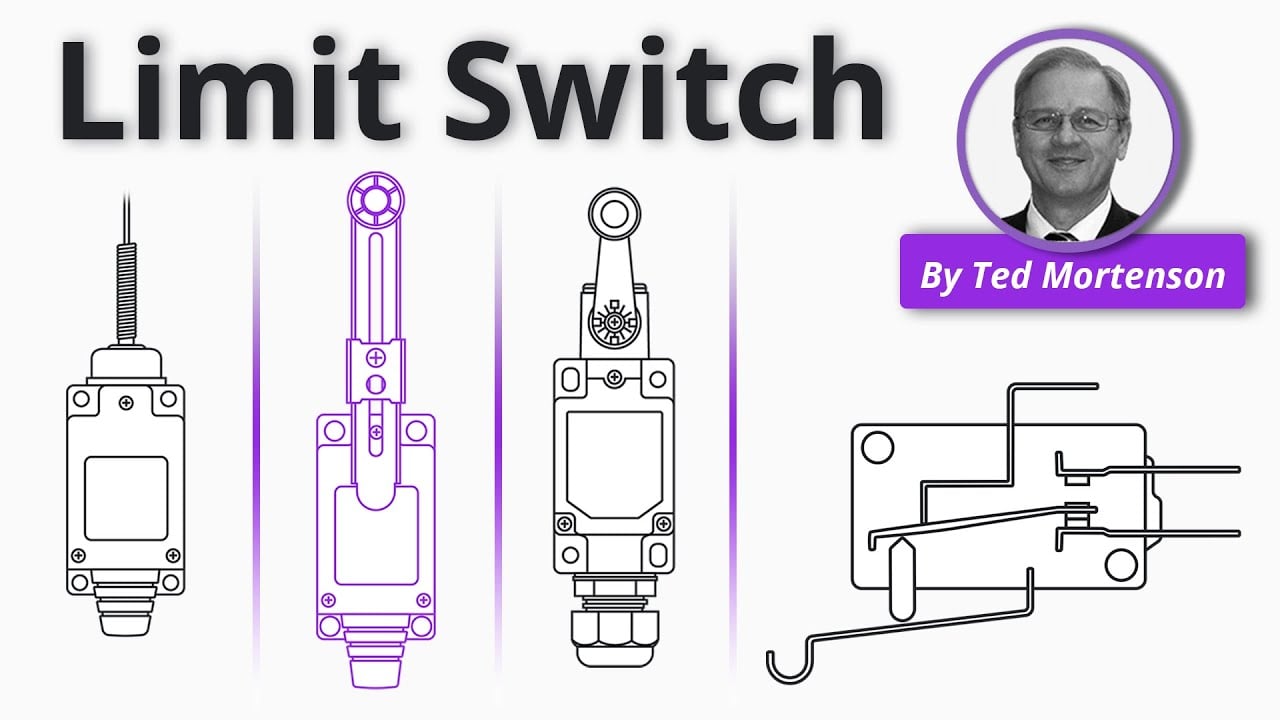
Limit Switch Explained by RealPars provides general background. Project decisions still require the applicable standards and product documentation.
Frequently asked questions
Welke actuator is het meest nauwkeurig?
Nauwkeurigheid hangt af van de exacte schakelaar, montage, nok, kracht, temperatuur, slijtage en tolerantieketen. Een plunjer is vaak direct, maar de modelgegevens en de gemonteerde test zijn doorslaggevend.
Wanneer moet een roller worden gebruikt?
Gebruik een rol wanneer een nok of doel over de actuator beweegt en verminderde wrijving door verschuiving nuttig is.
Kan een eindsnoer de machinebeweging mechanisch stoppen?
Nee. De machine heeft een afzonderlijke mechanische stop nodig wanneer er één vereist is; de schakelaaractuator moet binnen de gedocumenteerde slag blijven.
Is een microschakelaar hetzelfde als een eindschakelaar?
Een microschakelaar kan het interne schakelelement zijn, terwijl een eindaanslag- of positieschakelaar vaak de volledige geïnstalleerde positiedetectie-eenheid beschrijft.
Final decision
Approve the component only when the documented mechanical, electrical, environmental, usability, installation, and maintenance boundaries all fit the assembled system. Resolve unknowns through current manufacturer information and testing before production release.



