

In modern industrial automation, machines operate faster and more efficiently than ever before. However, high-speed equipment such as CNC machines, robotic systems, conveyor lines, and automated production equipment also introduces potential safety risks.An Emergency Stop Button is a critical safety device designed to immediately stop hazardous machine operations when an emergency situation occurs. By providing a quick and reliable shutdown method, emergency stop buttons help protect operators, prevent equipment damage, and improve overall workplace safety.Unlike a standard stop switch used for routine machine operation, an Emergency Stop Button is part of a machine safety system. It is designed according to safety principles that require rapid activation, easy identification, and prevention of unexpected restart.
Safety Function Device:
A device designed to perform a specific safety action to reduce risks caused by hazardous machine conditions.
Modern emergency stop solutions are widely used in:
-
Manufacturing automation
-
Robotics systems
-
CNC equipment
-
Packaging machinery
-
Conveyor systems
-
Food processing equipment
What Is an Emergency Stop Button and How Does It Work?
An E-Stop button is a manually operated safety switch that allows operators to quickly stop dangerous machine movements.
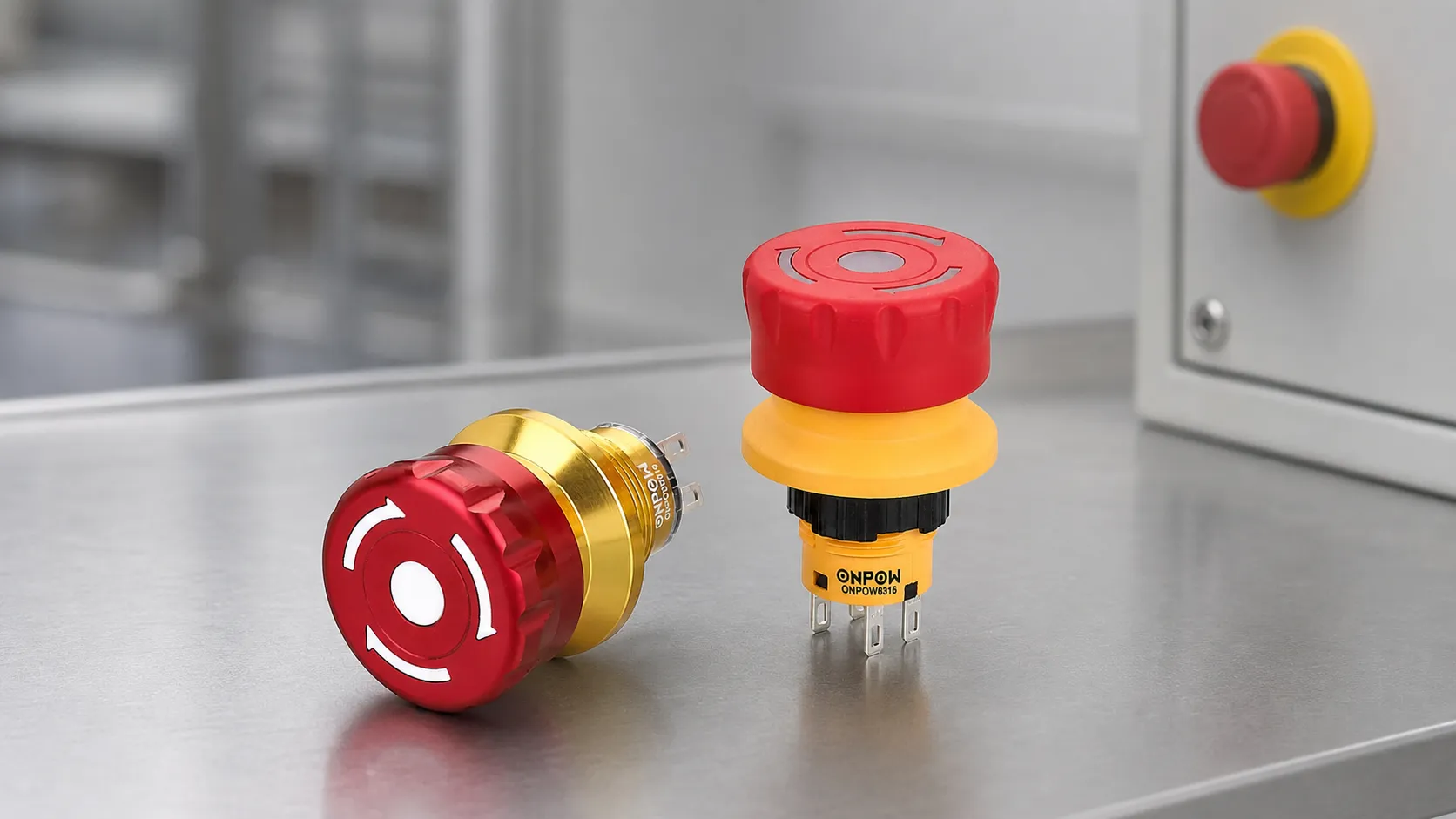
Most industrial emergency stop buttons feature a red mushroom-shaped actuator mounted on a yellow background. This design improves visibility and allows operators to activate the button quickly, even during stressful situations or while wearing protective gloves.
The basic operating process is:
Hazard detected → Emergency Stop Button pressed → Safety circuit activated → Machine stops → Manual reset required
When the button is pressed, internal electrical contacts change state and send a shutdown signal to the machine control system. Depending on the machine design, the emergency stop signal may:
-
Disconnect power from hazardous components
-
Activate a safety relay
-
Trigger a controlled shutdown through a safety PLC
Emergency Stop Button vs Normal Stop Button
Although both devices can stop machines, their functions are completely different.
| Feature | Emergency Stop Button | Normal Stop Button |
|---|---|---|
| Main purpose | Emergency shutdown | Routine machine stopping |
| Safety function | Yes | No |
| Activation speed | Immediate | Standard operation |
| Reset method | Manual reset | Usually automatic |
| Application | Hazard situations | Daily machine control |
An emergency stop button should not replace normal machine controls. Instead, it provides an additional layer of protection within a complete machine safety system.
Types of Emergency Stop Push Buttons for Industrial Applications
Different machines require different Emergency Stop Push Button designs depending on operating environment, safety requirements, and user accessibility.
Mushroom Head Emergency Stop Push Button
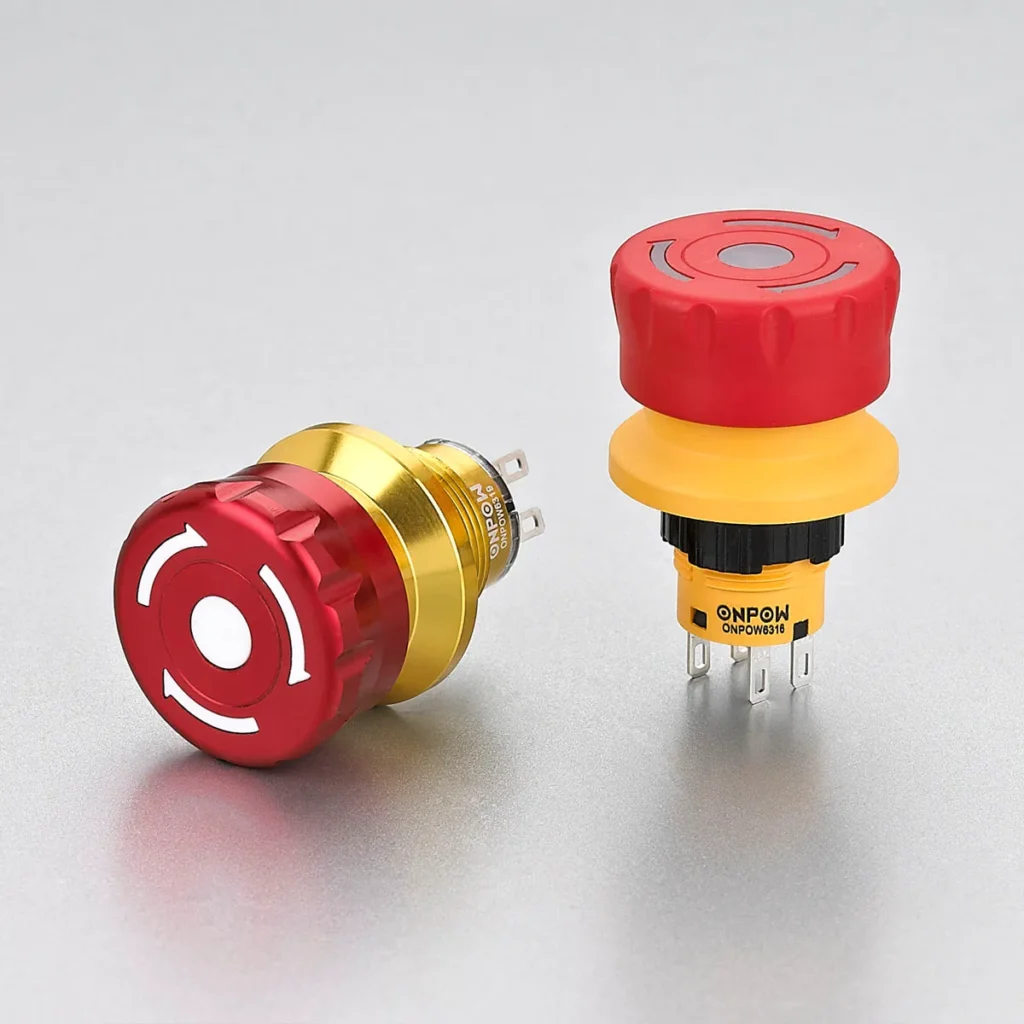
The mushroom head emergency stop push button is the most common design used in industrial equipment.
Its advantages include:
-
Large operating surface
-
Fast emergency activation
-
Easy visual identification
-
Suitable for industrial environments
Common applications include:
-
CNC machines
-
Assembly lines
-
Robotic cells
-
Production equipment
Twist Release Emergency Stop Push Button
A twist release emergency stop push button requires the operator to rotate the button after activation to restore normal operation.
Benefits include:
-
Preventing accidental reset
-
Confirming intentional operator action
-
Improving machine safety
This type is commonly used in automated production lines where unexpected restart could create hazards.
Key Reset Emergency Stop Push Button
Key reset emergency stop push buttons require a physical key to release the locked position.
They are suitable for:
-
High-risk industrial machines
-
Restricted access areas
-
Equipment requiring controlled restart authorization
Wireless and Smart Emergency Stop Push Buttons
With the development of Industry 4.0, wireless emergency stop push buttons are becoming increasingly popular.
Modern smart safety systems can provide:
-
Flexible installation
-
Remote monitoring
-
Integration with industrial automation networks
The growth of connected manufacturing is driving demand for intelligent safety devices that can work together with modern control systems.
Emergency Stop Push Button Cover: Protection and Selection Guide
An Emergency Stop Push Button Cover is a protective accessory designed to prevent accidental activation and protect emergency stop devices from harsh working environments.
In industrial applications, unexpected activation of an emergency stop button may interrupt production, reduce efficiency, and create unnecessary downtime.
A suitable emergency stop push button cover can help:
-
Prevent accidental pressing
-
Protect against physical impact
-
Reduce dust contamination
-
Improve long-term reliability
Protective Cover / Guard:
A mechanical component used to shield switches or buttons from unintended operation.
Types of Emergency Stop Button Covers
Different environments require different protection solutions.
| Emergency Stop Button Cover Type | Application |
|---|---|
| Transparent cover | Protection while maintaining visibility |
| Flip cover | Prevents accidental activation |
| Lockable cover | Prevents unauthorized operation |
| Waterproof cover | Outdoor and wet environments |
When selecting an emergency stop push button cover, consider:
-
Operating environment
-
Required IP protection level
-
Machine design
-
Operator accessibility
For example:
-
Food processing equipment may require corrosion-resistant covers.
-
Outdoor machinery may require waterproof protection.
-
Heavy industrial equipment may require impact-resistant guards.
Emergency Stop Button Wiring: Complete Installation Guide
Correct Emergency Stop Button Wiring is essential for ensuring reliable machine safety.
Incorrect wiring may cause the emergency stop function to fail during critical situations, creating serious safety risks.
Most industrial emergency stop circuits use Normally Closed (NC) Contacts because they support fail-safe operation.
Normally Closed (NC) Contact:
An electrical contact that remains closed during normal operation and opens when activated.
How Emergency Stop Button Wiring Works
A typical emergency stop button wiring system includes:
-
Emergency Stop Button
-
Safety Relay
-
PLC or Machine Controller
-
Power switching device
The basic circuit structure is:
Emergency Stop Button → Safety Relay → PLC → Machine Shutdown
When the emergency stop button is pressed:
-
NC contacts open
-
Safety circuit is interrupted
-
Safety relay detects the condition
-
Machine enters a safe state
Why NC Contacts Are Used in Emergency Stop Wiring
Emergency stop systems follow the principle of fail-safe design.
For example, if a wire breaks in an NC safety circuit, the system can detect the fault and prevent unsafe operation.
The electrical requirements for emergency stop devices are defined in the IEC 60947-5-5 Electrical emergency stop device standard.
Fail-Safe Design:
A safety approach where system failures result in a safer condition instead of creating additional hazards.
Emergency Stop Button Wiring Diagram and Safety Relay Connection
For modern industrial machines, emergency stop buttons are usually connected through safety relays instead of directly cutting machine power.
Safety Relay:
A specialized control device that monitors safety inputs and controls machine shutdown functions.
Safety relays provide:
-
Dual-channel monitoring
-
Contact fault detection
-
Safety circuit monitoring
-
Reliable machine shutdown
For advanced automation systems, safety PLCs are used to manage multiple safety devices.
Emergency Stop Button Safety Standards and Installation Requirements
Proper installation is essential for emergency stop system reliability.
International standards such as ISO 13850 and IEC 60947-5-5 define requirements for emergency stop design, operation, and reliability.
According to ISO 13850: Safety of machinery — Emergency stop function — Principles for design, emergency stop functions should be:
-
Clearly identifiable
-
Easily accessible
-
Quickly activated
-
Designed to prevent unexpected restart
Emergency Stop Button Placement Guidelines
Emergency stop buttons should be installed based on machine risk assessment.
Common installation locations include:
-
Operator control panels
-
Machine entrances
-
Conveyor emergency points
-
Robotic work areas
Large machines may require multiple emergency stop buttons to ensure operators can stop equipment from different positions.
Risk Assessment Before Selecting an Emergency Stop Solution
Before selecting an emergency stop button, manufacturers should perform a machine risk assessment.
According to ISO 12100: Safety of machinery — Risk assessment and risk reduction, manufacturers should identify hazards and apply suitable risk reduction measures.
Risk Assessment:
A structured process used to identify hazards and determine appropriate safety solutions.
Emergency stop buttons should work together with:
-
Machine guards
-
Safety sensors
-
Protective barriers
-
Safety controllers
Common Emergency Stop Button Problems and Troubleshooting
Regular inspection is important because emergency stop systems must operate correctly during emergencies.
| Problem | Possible Cause |
|---|---|
| Button cannot reset | Damaged locking mechanism |
| Machine does not stop | Wiring error or contact failure |
| Unexpected shutdown | Loose wiring or faulty contacts |
| Safety relay alarm | Safety circuit fault |
Regular testing helps maintain machine safety and reduce unexpected downtime.
How to Choose the Right Emergency Stop Button Solution
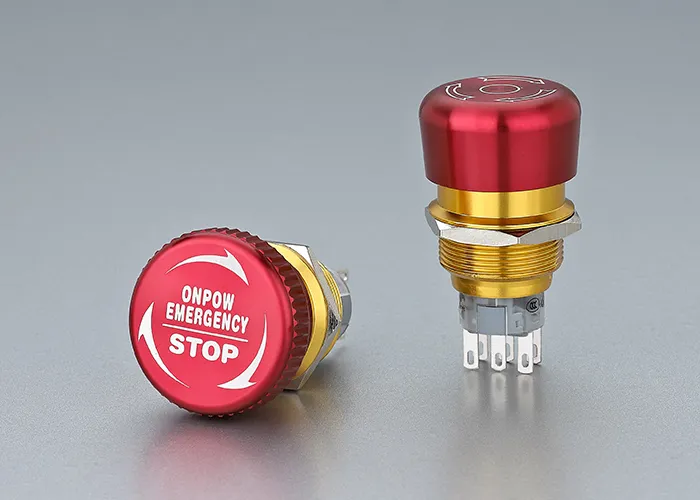
Selecting the correct emergency stop button depends on several factors. Hongbo Focuses on customized emergency sotp buttonsolutions and customer service. We have excellent sales, engineering and production teams. They can provide customers with efficient and high-quality docking.
Electrical Requirements
Consider:
-
Voltage rating
-
Current rating
-
Contact configuration
-
Safety relay compatibility
Environmental Protection
The operating environment determines the required protection level.
Examples:
-
IP65: Dust-tight and protected against water jets
-
IP67: Dust-tight and protected against temporary immersion
Industry Application
| Industry | Application |
|---|---|
| Automotive | Robotic production lines |
| Electronics | Assembly equipment |
| Food Processing | Packaging machines |
| Logistics | Conveyor systems |
| Heavy Industry | Large machinery |
Future Trends: Emergency Stop Buttons in Smart Manufacturing
As manufacturing becomes more connected, emergency stop systems are evolving from simple mechanical switches into intelligent safety solutions.
According to industry information from International Federation of Robotics (IFR), industrial automation and robotics adoption continues expanding globally, increasing the need for reliable safety technologies.
Future emergency stop solutions may include:
-
Wireless safety systems
-
Industrial IoT integration
-
Safety data monitoring
-
Predictive maintenance
Predictive Maintenance:
A maintenance strategy that uses equipment data to predict potential failures before they occur.
FAQs
How to Reset an Emergency Stop Button?
To reset an emergency stop button, first make sure the hazardous condition has been removed. The reset method depends on the button design, such as twisting the actuator, pulling the button, or using a key release mechanism. After resetting, the machine should only restart after the operator confirms that the working area is safe.
What Is the Emergency Stop Button Used For?
An emergency stop button is used to quickly stop hazardous machine operations during emergency situations. It helps protect operators and equipment by interrupting the safety circuit when unexpected events occur, such as equipment malfunction, unsafe movement, or potential injury risks. It is commonly used in industrial machines, automation systems, CNC equipment, and production lines.
What Is the Difference Between a Stop Button and an Emergency Button?
A stop button is designed for normal machine operation and allows operators to stop equipment under standard working conditions. An emergency stop button is a safety device used only during dangerous situations and provides immediate machine shutdown through a dedicated safety circuit. Emergency stop buttons usually require manual reset to prevent unexpected restart.
What Are the Common Problems with Emergency Stop Buttons?
Common emergency stop button problems include failure to reset, incorrect emergency stop button wiring, damaged internal contacts, and unexpected activation caused by loose connections or mechanical damage. Regular inspection and testing help ensure that the emergency stop system remains reliable during emergency situations.
What Is the Symbol for Emergency Stop?
The emergency stop symbol is used to help operators quickly identify emergency stop devices on industrial equipment. Most emergency stop buttons use a red mushroom-shaped actuator with a yellow background, making them visually distinct from normal machine controls and easy to locate during hazardous situations.



