

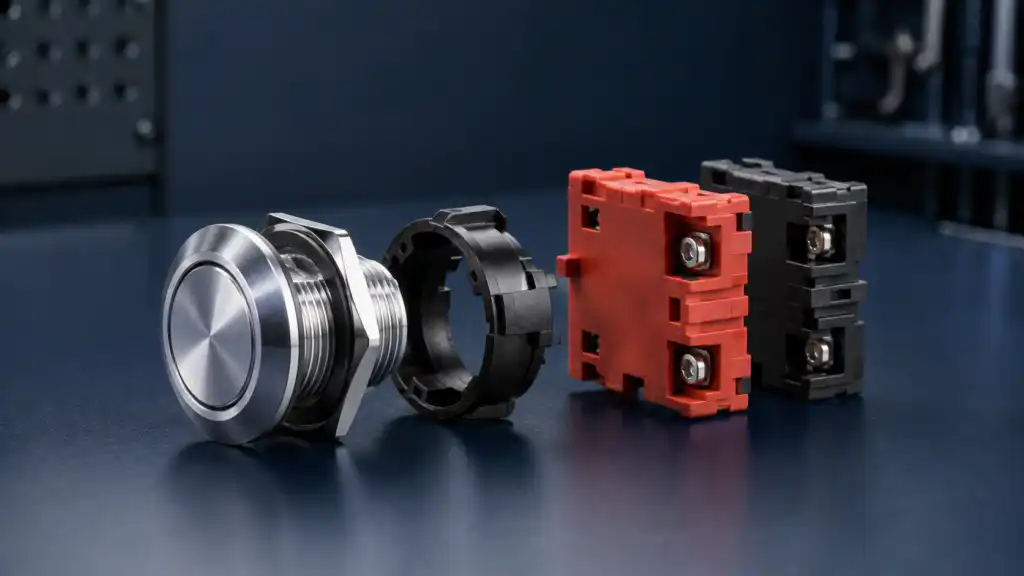
Un bloc de contacts pour bouton-poussoir est le module de commutation arrière qui convertit le mouvement de l'actionneur en un changement de contact électrique. Sélectionnez-le en fonction de l'état de contact requis, du nombre de circuits, de la compatibilité avec l'actionneur, du système de montage, de la tension et de la catégorie de charge, de la méthode de raccordement, de la fréquence de commutation, de l'environnement et du comportement en cas de défaillance. “ 1NO ” ou “ 1NC ” décrit l'état mécanique normal, et non la fonction complète de la machine. L'actionneur avant, le support, le bloc de contacts, le boîtier, le câblage et la logique de commande doivent être traités comme un seul ensemble et vérifiés à partir de la documentation exacte du produit.
Règle de sélection : traitez l'appareil, l'actionneur, les contacts, le boîtier, le câblage, la logique de commande, l'utilisateur et le mouvement de la machine comme un seul système. Les exemples de produits n'illustrent que la forme ; l'aptitude finale doit provenir de la documentation actuelle pour le code de commande exact et de la validation dans l'équipement fini.
Comment fonctionne le mécanisme
L'actionnement de l'opérateur transmet le mouvement par l'intermédiaire d'un collier ou d'un support à un ou plusieurs blocs de contacts modulaires. Les contacts normalement ouverts se ferment après l'actionnement ; les contacts normalement fermés s'ouvrent. Les opérateurs à impulsion reviennent lorsqu'ils sont relâchés, tandis que les opérateurs maintenus restent dans leur état sélectionné jusqu'à ce qu'ils soient réinitialisés par leur mécanisme. Les blocs de contacts peuvent sembler interchangeables, mais diffèrent par leurs détrompeurs de montage, leur profondeur, leur course, la disposition de leurs bornes, leurs caractéristiques nominales et leurs spécifications d'ouverture directe.
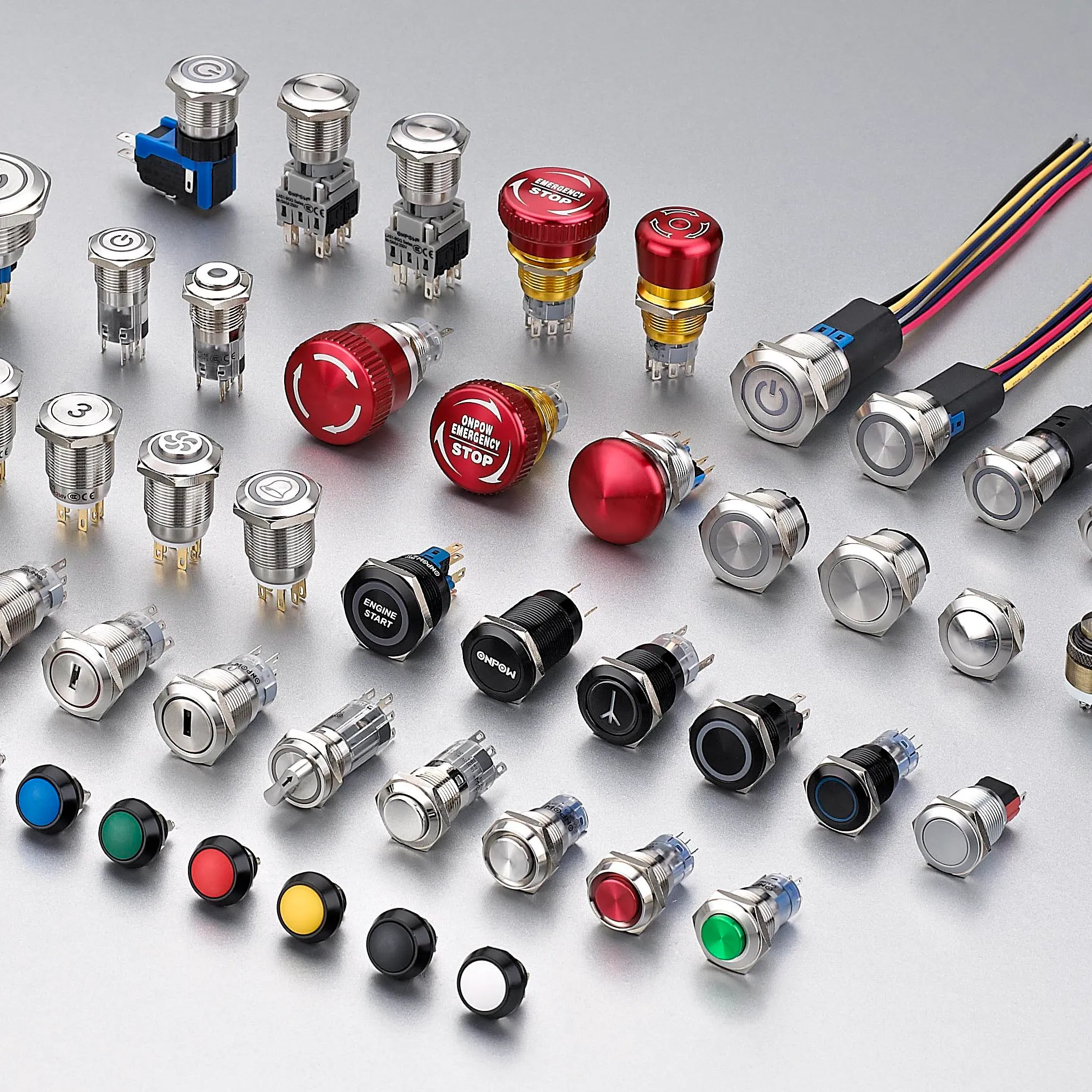
Critères de sélection en un coup d'œil
| Zone de décision | Que vérifier | Raison technique |
|---|---|---|
| Fonction de contact | Définissez chaque circuit NO et NC à partir des états normal et actionné requis | Les étiquettes doivent correspondre au diagramme d'état de la machine. |
| Compatibilité des opérateurs | Utilisez l'opérateur, le titulaire et la famille de blocs approuvés | Des dimensions similaires ne prouvent pas la compatibilité mécanique. |
| Nombre et empilement | Vérifier les positions autorisées des blocs et la profondeur arrière | Les blocs supplémentaires ajoutent de l'espace, de la contrainte et de la complexité de câblage. |
| Charge électrique | Vérifiez la tension, le courant, le type CA/CC, la catégorie de charge, le courant d'appel et la charge minimale | Le flux actuel seul est incomplet. |
| Méthode de terminal | Choisissez vis, languette, serre-fil, soudure ou connecteur pour le processus de câblage | La terminaison affecte l'inspection, le couple et l'aptitude à l'entretien. |
| Besoins d'ouverture positifs | Utilisez uniquement des dispositifs documentés dans une architecture de sécurité validée | Un marquage NC seul ne garantit pas un comportement de sécurité. |
| Environnement | Protéger les blocs arrière de la poussière, de l'humidité, des débris conducteurs et des produits chimiques | L'étanchéité du panneau avant peut ne pas couvrir l'ensemble arrière. |
| Maintenance | Fournir l'identification, l'accès, les points de test et la commande de remplacement | Un bloc correct peut quand même être câblé ou remplacé de manière incorrecte. |
Ce tableau est intentionnellement qualitatif. Les limites numériques, les valeurs nominales, le couple, la force, la course, les déclarations environnementales et les valeurs d'endurance doivent être tirés de la fiche technique actuelle et évalués dans les conditions de l'application.
Processus de sélection détaillé
Fonction de contact
À vérifier : Définissez chaque circuit NA et NF à partir des états normaux et actionnés requis. Les étiquettes doivent correspondre au diagramme d'état de la machine. L'exigence doit être rédigée dans le cahier des charges du projet et tracée jusqu'au dessin de modèle exact ou à la fiche technique. Examinez la tolérance au pire cas, l'usure, la contamination, l'accès à la maintenance et la mauvaise utilisation prévisible. Si la documentation disponible ne définit pas la limite, laissez le point ouvert pour confirmation par le fournisseur et tests d'échantillons plutôt que de substituer une supposition.
Compatibilité des opérateurs
À vérifier : Utilisez l'opérateur, le support et la famille de blocs approuvés. Des dimensions similaires ne prouvent pas la compatibilité mécanique. L'exigence doit être rédigée dans le cahier des charges du projet et rattachée au dessin de modèle exact ou à la fiche technique. Examinez la tolérance au pire cas, l'usure, la contamination, l'accès à la maintenance et la mauvaise utilisation prévisible. Si la documentation disponible ne définit pas la limite, maintenez le point ouvert pour confirmation par le fournisseur et test d'échantillon plutôt que de substituer une hypothèse.
Nombre et empilement
À vérifier : Vérifier les positions autorisées des blocs et la profondeur arrière. Les blocs supplémentaires ajoutent de l'espace, de la force et de la complexité de câblage. L'exigence doit être écrite dans le cahier des charges du projet et liée au dessin du modèle exact ou à la fiche technique. Examiner la tolérance au pire cas, l'usure, la contamination, l'accès à la maintenance et la mauvaise utilisation prévisible. Si la documentation disponible ne définit pas la limite, laisser le point ouvert pour confirmation par le fournisseur et tests d'échantillons plutôt que de substituer une hypothèse.
Charge électrique
À vérifier : Vérifiez la tension, le courant, le type CA/CC, la catégorie de charge, le courant d'appel et la charge minimale. Le courant nominal seul est incomplet. L'exigence doit être rédigée dans le cahier des charges du projet et rattachée au dessin du modèle exact ou à la fiche technique. Examinez la tolérance au pire cas, l'usure, la contamination, l'accès pour la maintenance et l'utilisation détournée prévisible. Si la documentation disponible ne définit pas la limite, laissez le point ouvert pour confirmation par le fournisseur et essais sur échantillons plutôt que de substituer une supposition.
Méthode de terminal
À vérifier : Choisissez vis, languette, serre-fil, soudure ou connecteur pour le processus de câblage. La terminaison affecte l'inspection, le couple et la facilité de maintenance. L'exigence doit être rédigée dans le cahier des charges du projet et tracée jusqu'au dessin du modèle exact ou à la fiche technique. Examinez la tolérance au pire cas, l'usure, la contamination, l'accès pour la maintenance et la mauvaise utilisation prévisible. Si la documentation disponible ne définit pas la limite, laissez le point ouvert pour la confirmation du fournisseur et les tests d'échantillons plutôt que de substituer une hypothèse.
Besoins d'ouverture positifs
À vérifier : Utilisez uniquement des dispositifs documentés dans une architecture de sécurité validée. Un marquage NF (ou NC) à lui seul n'établit pas un comportement de sécurité. L'exigence doit être rédigée dans le cahier des charges du projet et tracée jusqu'au dessin de modèle exact ou à la fiche technique. Examinez la tolérance au pire cas, l'usure, la contamination, l'accès à la maintenance et la mauvaise utilisation prévisible. Si la documentation disponible ne définit pas la limite, laissez le point ouvert pour confirmation par le fournisseur et tests d'échantillons plutôt que de substituer une supposition.
Environnement
À vérifier : Protégez les blocs arrière de la poussière, de l'humidité, des débris conducteurs et des produits chimiques. L'étanchéité du panneau avant peut ne pas couvrir l'ensemble arrière. L'exigence doit être rédigée dans le cahier des charges du projet et rattachée au dessin de modèle exact ou à la fiche technique. Examinez la tolérance au pire cas, l'usure, la contamination, l'accès à la maintenance et la mauvaise utilisation prévisible. Si la documentation disponible ne définit pas la limite, laissez le point ouvert pour confirmation par le fournisseur et test d'échantillons plutôt que de substituer une supposition.
Maintenance
À vérifier : Fournissez l'identification, l'accès, les points de test et le contrôle du remplacement. Un bloc correct peut toujours être câblé ou remplacé de manière incorrecte. L'exigence doit être rédigée dans le cahier des charges du projet et rattachée au dessin de modèle ou à la fiche technique exacts. Examinez la tolérance au pire cas, l'usure, la contamination, l'accès à la maintenance et la mauvaise utilisation prévisible. Si la documentation disponible ne définit pas la limite, laissez le point ouvert pour confirmation par le fournisseur et tests sur échantillons plutôt que de substituer une supposition.

Examen de la demande
- Démarrer et arrêter les stations de commande. Enregistrer la commande attendue, la réponse, le comportement de relâchement, la condition anormale et la preuve de recette pour la machine assemblée.
- Commandes de mode et de réinitialisation. Enregistrer la commande attendue, la réponse, le comportement au relâché, la condition anormale et les preuves de recette pour la machine assemblée.
- Dispositions de commande à double circuit. Enregistrer la commande attendue, la réponse, le comportement de relâchement, la condition anormale et les preuves de conformité pour la machine assemblée.
- Voyants lumineux avec circuits de lampe séparés. Enregistrer la commande attendue, la réponse, le comportement au relâché, la condition anormale et la preuve de recette pour la machine assemblée.
- Panneaux modulaires faciles à entretenir. Enregistrez la commande attendue, la réponse, le comportement de libération, la condition anormale et les preuves de recette pour la machine assemblée.
Pour chaque application, inclure le démarrage, le fonctionnement normal, l'arrêt, la perte de courant, le rétablissement du courant, le mode de maintenance, le remplacement de composants et les défauts identifiés par l'évaluation des risques. Un interrupteur de commande général ne doit pas être considéré comme une fonction de sécurité complète.
Liste de contrôle de mise en service
- Geler le besoin. Indiquer l'action prévue, la condition normale, l'alimentation, la charge, le mouvement, l'environnement et l'utilisateur.
- Faites correspondre le code de commande. Comparez la pièce livrée avec le dessin approuvé, le schéma de contacts, l'actionneur, le style de borne et les accessoires.
- Inspecter l'installation. Vérifier l'alignement, les éléments de fixation, le dégagement arrière, le cheminement des câbles, le soulagement de traction, la protection des pièces sous tension et l'accès pour l'entretien.
- Tester chaque état. Vérifier le fonctionnement et le déclenchement aux extrêmes de tolérance, aux vitesses prévues, aux charges, avec des gants, en présence de contamination et dans diverses conditions environnementales.
- Tester les conditions anormales. Inclure les conducteurs débranchés, les mécanismes bloqués ou endommagés, la perte d'alimentation, la contamination et autres défauts crédibles.
- Enregistrez le résultat. Enregistrer le modèle, la révision, la méthode d'essai, les observations, les critères d'acceptation, la date et l'approbateur.
Erreurs courantes
- Confondre l'état normal avec l'état souhaité de la machine. Prévenez cela en affectant la vérification à un dessin, une fiche technique, un schéma de câblage ou un essai de mise en service avec un critère d'acceptation nommé.
- Mélanger des blocs de contacts d'une autre gamme de produits. Prévenez cela en affectant la vérification à un dessin, une fiche technique, un schéma de câblage ou un essai de mise en service avec un critère d'acceptation nommé.
- En faisant abstraction du dégagement du panneau arrière. Prévenez cela en affectant la vérification à un dessin, une fiche technique, un schéma de câblage ou un essai de mise en service avec un critère d'acceptation nommé.
- Commuter directement une charge inadaptée à fort appel de courant. Prévenez cela en affectant la vérification à un dessin, une fiche technique, un schéma de câblage ou un essai de mise en service avec un critère d'acceptation nommé.
- En supposant que la protection IP frontale couvre les bornes. Prévenez cela en affectant la vérification à un dessin, une fiche technique, un schéma de câblage ou un essai de mise en service avec un critère d'acceptation nommé.
Que faut-il inclure dans une demande de prix
Fournissez l'application, le marché cible, les normes applicables, la fonction de la machine, l'alimentation et la charge, l'interface de commande, la logique de contact, le dessin mécanique, la trajectoire de mouvement, les dimensions du panneau, la méthode de câblage, l'environnement, la fréquence de fonctionnement, la quantité, les besoins en documentation et le plan de validation des échantillons. Demandez au fournisseur d'identifier les hypothèses et les exceptions. ONPOW propose des produits pertinents dans sa famille de produits spécifique à une application et le plus large gamme de produits de contrôle industriel.
Guides ONPOW associés
- Comment fonctionne un micro-interrupteur
- Micro-interrupteur vs fin de course
- Vie mécanique contre vie électrique
Références autorisées
- appareils de circuit de commande CEI 60947-5-1
- CEI 60529 degrés de protection procurés par les enveloppes
- Exigences d'OSHA concernant la protection des machines
- Exigences de sécurité électrique de l'OSHA
Vidéo éducative
Les boutons-poussoirs expliqués : types NO et NC, symboles et schémas de câblage par Automatedo fournit des informations générales de base. Les décisions relatives aux projets nécessitent toujours l'application des normes en vigueur et de la documentation technique des produits.
Foire aux questions
Que signifie 1NO ?
Un circuit à contact normalement ouvert est ouvert dans l'état mécanique normal défini et se ferme lors de l'actionnement.
Est-ce que les blocs NO et NC peuvent être empilés ?
Uniquement dans le respect des règles de la famille d'opérateurs, des positions autorisées, de la force, de la profondeur et des classifications indiquées par le fabricant.
Un bloc NC est-il adapté pour un arrêt d'urgence ?
Ce n'est pas par le simple marquage. Le dispositif d'arrêt d'urgence complet et l'architecture de sécurité exigent un comportement documenté et une validation.
Comment faut-il vérifier les bornes ?
Suivez la méthode de raccordement et le couple prescrits, inspectez la préparation des conducteurs et l'antitraction, et effectuez un test de fonctionnement de chaque circuit.
Décision finale
Approuvez le composant uniquement lorsque les limites documentées relatives à la mécanique, à l'électricité, à l'environnement, à l'ergonomie, à l'installation et à la maintenance correspondent toutes au système assemblé. Résolvez les inconnues grâce aux informations actuelles du fabricant et à des tests avant le lancement de la production.
Personnalisation
ONPOW undertakes a variety of custom needs for push-button development. Confirm whether packaging, marking or documentation OEM/ODM applies to Push Button Contact Block Selection: NO, NC, Ratings, and Installation in the quotation.
La quantité minimale d’ordre, le délai de livraison et les modalités commerciales ne sont pas indiqués ici ; veuillez les confirmer auprès de la direction commerciale. sales@onpow.com.



