

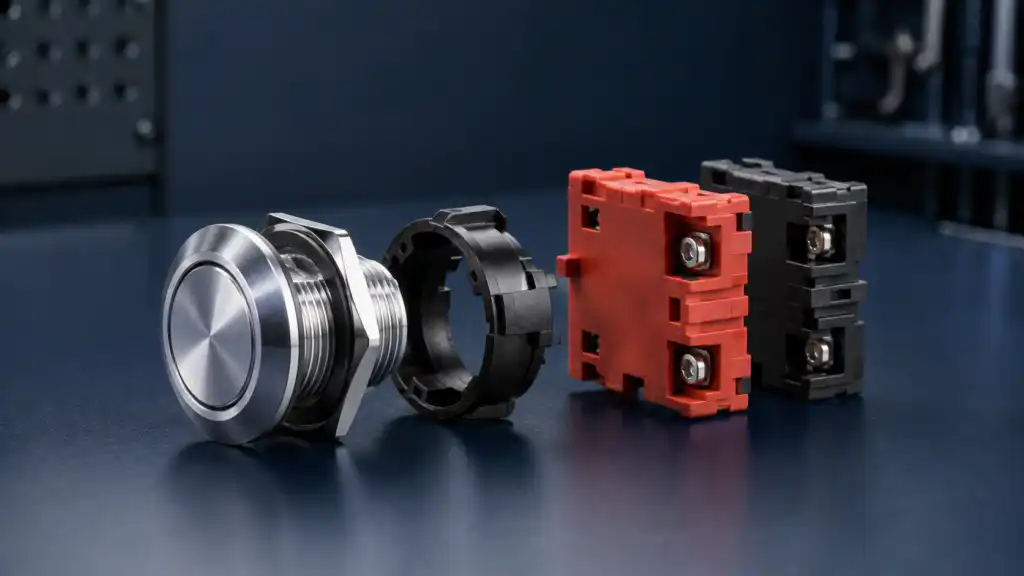
Un bloque de contactos de pulsador es el módulo de conmutación trasero que convierte el movimiento del operador en un cambio de contacto eléctrico. Selecciónelo según el estado de contacto requerido, el número de circuitos, la compatibilidad con el operador, el sistema de montaje, la categoría de tensión y carga, el método de bornes, la frecuencia de conmutación, el entorno y el comportamiento ante fallos. “1NO” o “1NC” describe el estado mecánico normal, no la función completa de la máquina. El operador frontal, el soporte, el bloque de contactos, la envolvente, el cableado y la lógica de control deben tratarse como un solo conjunto y verificarse a partir de la documentación exacta del producto.
Regla de selección: trate el dispositivo, el actuador, los contactos, la carcasa, el cableado, la lógica de control, el usuario y el movimiento de la máquina como un solo sistema. Los ejemplos de productos ilustran únicamente la forma; la idoneidad final debe provenir de la documentación actual para el código de pedido exacto y de la validación en el equipo terminado.
Cómo funciona el mecanismo
Al presionar el operador, se transfiere el movimiento a través de un collar o soporte a uno o más bloques de contactos modulares. Los contactos normalmente abiertos se cierran después de la operación; los contactos normalmente cerrados se abren. Los operadores momentáneos regresan al soltarlos, mientras que los operadores con retención permanecen en su estado seleccionado hasta que su mecanismo los reinicia. Los bloques de contactos pueden parecer intercambiables, pero difieren en las muescas de montaje, la profundidad, el recorrido, la disposición de los terminales, las capacidades nominales y las declaraciones de apertura directa.
Criterios de selección de un vistazo
| Área de decisión | Qué verificar | Razón de ingeniería |
|---|---|---|
| Función de contacto | Define cada circuito NO y NC a partir de sus estados normales y accionados requeridos | Las etiquetas deben coincidir con el diagrama de estados de la máquina. |
| Compatibilidad de operadores | Utilice el operador, titular y familia de bloques aprobados | Las dimensiones similares no prueban la compatibilidad mecánica. |
| Número y apilamiento | Comprobar las posiciones permitidas de los bloques y la profundidad trasera | Los bloques adicionales añaden espacio, fuerza y complejidad de cableado. |
| Carga eléctrica | Verifique el voltaje, la corriente, el tipo de CA/CC, la categoría de carga, la corriente de irrupción y la carga mínima | El titular actual por sí solo está incompleto. |
| Método de terminal | Elija tornillo, lengüeta, abrazadera, soldadura o conector para el proceso de cableado | La terminación afecta a la inspección, el torque y la reparabilidad. |
| Necesidades de apertura positiva | Utilice únicamente dispositivos documentados en una arquitectura de seguridad validada | Una marca NC por sí sola no establece un comportamiento de seguridad. |
| Medio ambiente | Protege los bloques traseros contra el polvo, la humedad, los residuos conductores y los productos químicos | El sellado del panel frontal puede no cubrir el ensamblaje trasero. |
| Mantenimiento | Proporcionar identificación, acceso, puntos de prueba y control de reemplazo | Un bloque correcto aún puede cablearse o reemplazarse incorrectamente. |
Esta tabla es intencionalmente cualitativa. Los límites numéricos, clasificaciones, par, fuerza, recorrido, declaraciones ambientales y valores de resistencia deben tomarse de la hoja de datos actual y evaluarse bajo las condiciones de la aplicación.
Proceso de selección detallado
Función de contacto
Qué verificar: Defina cada circuito NA y NC a partir de los estados normal y operado requeridos. Las etiquetas deben coincidir con el diagrama de estados de la máquina. El requisito debe escribirse en la especificación del proyecto y rastrearse hasta el dibujo del modelo o la hoja de datos exacta. Revise la tolerancia en el peor de los casos, el desgaste, la contaminación, el acceso para mantenimiento y el mal uso previsible. Si la documentación disponible no define el límite, mantenga el punto abierto para la confirmación del proveedor y la prueba de muestras en lugar de sustituirlo por una suposición.
Compatibilidad de operadores
Qué verificar: Utilice el operador, soporte y familia de bloques aprobados. Dimensiones similares no prueban compatibilidad mecánica. El requisito debe escribirse en la especificación del proyecto y rastrearse hasta el dibujo del modelo exacto o la hoja de datos. Revise la tolerancia del peor caso, el desgaste, la contaminación, el acceso para mantenimiento y el uso indebido previsible. Si la documentación disponible no define el límite, mantenga el punto abierto para la confirmación del proveedor y la prueba de muestras en lugar de sustituir una suposición.
Número y apilamiento
Qué verificar: Compruebe las posiciones permitidas de los bloques y la profundidad trasera. Los bloques adicionales añaden espacio, fuerza y complejidad de cableado. El requisito debe redactarse en la especificación del proyecto y rastrearse hasta el dibujo del modelo exacto o la hoja de datos. Revise la tolerancia en el peor de los casos, el desgaste, la contaminación, el acceso para mantenimiento y el uso indebido previsible. Si la documentación disponible no define el límite, mantenga el punto abierto para la confirmación del proveedor y las pruebas de muestras en lugar de sustituirlo por una suposición.
Carga eléctrica
Qué verificar: Verifique el voltaje, la corriente, el tipo de CA/CC, la categoría de carga, la corriente de irrupción y la carga mínima. La corriente nominal por sí sola está incompleta. El requisito debe estar escrito en la especificación del proyecto y vinculado al dibujo del modelo exacto o a la hoja de datos. Revise la tolerancia en el peor de los casos, el desgaste, la contaminación, el acceso para mantenimiento y el uso indebido previsible. Si la documentación disponible no define el límite, mantenga el punto abierto para la confirmación del proveedor y las pruebas de muestras en lugar de sustituirlo por una suposición.
Método de terminal
Qué verificar: Elija tornillo, lengüeta, abrazadera, soldadura o conector para el proceso de cableado. La terminación afecta la inspección, el par de apriete y la facilidad de mantenimiento. El requisito debe escribirse en la especificación del proyecto y rastrearse hasta el dibujo del modelo exacto o la hoja de datos. Revise la tolerancia en el peor de los casos, el desgaste, la contaminación, el acceso para mantenimiento y el uso indebido previsible. Si la documentación disponible no define el límite, mantenga el punto abierto para la confirmación del proveedor y la prueba de muestras en lugar de sustituirlo por una suposición.
Necesidades de apertura positiva
Qué verificar: Utilice únicamente dispositivos documentados en una arquitectura de seguridad validada. Un marcado NC por sí solo no establece un comportamiento de seguridad. El requisito debe redactarse en la especificación del proyecto y rastrearse hasta el dibujo del modelo exacto o la hoja de datos. Revise la tolerancia en el peor de los casos, el desgaste, la contaminación, el acceso para mantenimiento y el uso indebido previsible. Si la documentación disponible no define el límite, mantenga el punto abierto para la confirmación del proveedor y las pruebas de muestras en lugar de sustituirlo por una suposición.
Medio ambiente
Qué verificar: Proteja los bloques traseros contra el polvo, la humedad, los residuos conductores y los productos químicos. Es posible que el sellado del panel frontal no cubra el conjunto trasero. El requisito debe redactarse en la especificación del proyecto y rastrearse hasta el dibujo del modelo exacto o la hoja de datos. Revise la tolerancia en el peor de los casos, el desgaste, la contaminación, el acceso para mantenimiento y el uso indebido previsible. Si la documentación disponible no define el límite, mantenga el punto abierto para la confirmación del proveedor y la prueba de muestras en lugar de sustituirlo por una suposición.
Mantenimiento
Qué verificar: Proporcione identificación, acceso, puntos de prueba y control de reemplazo. Un bloque correcto aún puede cablearse o reemplazarse incorrectamente. El requisito debe escribirse en la especificación del proyecto y rastrearse hasta el dibujo del modelo exacto o la hoja de datos. Revise la tolerancia en el peor de los casos, el desgaste, la contaminación, el acceso para mantenimiento y el uso indebido previsible. Si la documentación disponible no define el límite, mantenga el punto abierto para la confirmación del proveedor y la prueba de muestras en lugar de sustituir una suposición.

Revisión de la solicitud
- Iniciar y detener las estaciones de comando. Registrar el comando esperado, la respuesta, el comportamiento de liberación, la condición anormal y la evidencia de aceptación para la máquina ensamblada.
- Controles de modo y reinicio. Registre el comando esperado, la respuesta, el comportamiento de liberación, la condición anormal y la evidencia de aceptación para la máquina ensamblada.
- Disposiciones de comandos de doble circuito. Registre el comando esperado, la respuesta, el comportamiento de liberación, la condición anormal y la evidencia de aceptación para la máquina ensamblada.
- Operadores iluminados con circuitos de lámpara separados. Registre la orden esperada, la respuesta, el comportamiento de liberación, la condición anormal y la evidencia de aceptación para la máquina ensamblada.
- Paneles modulares de fácil mantenimiento. Registre el comando esperado, la respuesta, el comportamiento de liberación, la condición anormal y la evidencia de aceptación para la máquina ensamblada.
Para cada aplicación, incluya el inicio, la operación normal, el apagado, la pérdida de energía, la restauración de energía, el modo de mantenimiento, el reemplazo de componentes y las fallas identificadas por la evaluación de riesgos. Un interruptor de control general no debe tratarse como una función de seguridad completa.
Lista de verificación de puesta en marcha
- Congelar el requisito. Indique la acción prevista, condición normal, alimentación, carga, movimiento, entorno y usuario.
- Coincidir con el código de pedido. Compare la pieza entregada con el dibujo aprobado, el esquema de contactos, el actuador, el tipo de terminal y los accesorios.
- Inspeccionar la instalación. Verificar alineación, elementos de sujeción, holgura trasera, recorrido de cables, alivio de tensión, protección de partes activas y acceso para mantenimiento.
- Prueba cada estado. Verificar el funcionamiento y la liberación en los extremos de tolerancia, velocidades previstas, cargas, guantes, contaminación y condiciones ambientales.
- Probar condiciones anormales. Incluya conductores desconectados, mecanismos bloqueados o dañados, pérdida de energía, contaminación y otras fallas creíbles.
- Registrar el resultado. Guardar modelo, revisión, método de prueba, observaciones, criterios de aceptación, fecha y aprobador.
Errores comunes
- Confundir el estado normal con el estado deseado de la máquina. Evite esto asignando la comprobación a un plano, hoja de datos, registro de cableado o prueba de puesta en marcha con un criterio de aceptación nombrado.
- Mezclar bloques de contactos de otra familia de productos. Evite esto asignando la comprobación a un plano, hoja de datos, registro de cableado o prueba de puesta en marcha con un criterio de aceptación nombrado.
- Ignorando el espacio libre del panel posterior. Evite esto asignando la comprobación a un plano, hoja de datos, registro de cableado o prueba de puesta en marcha con un criterio de aceptación nombrado.
- Conmutación directa de una carga inadecuada de alta corriente de irrupción. Evite esto asignando la comprobación a un plano, hoja de datos, registro de cableado o prueba de puesta en marcha con un criterio de aceptación nombrado.
- Asumiendo que la protección IP frontal cubre los terminales. Evite esto asignando la comprobación a un plano, hoja de datos, registro de cableado o prueba de puesta en marcha con un criterio de aceptación nombrado.
Qué incluir en una solicitud de cotización (RFQ)
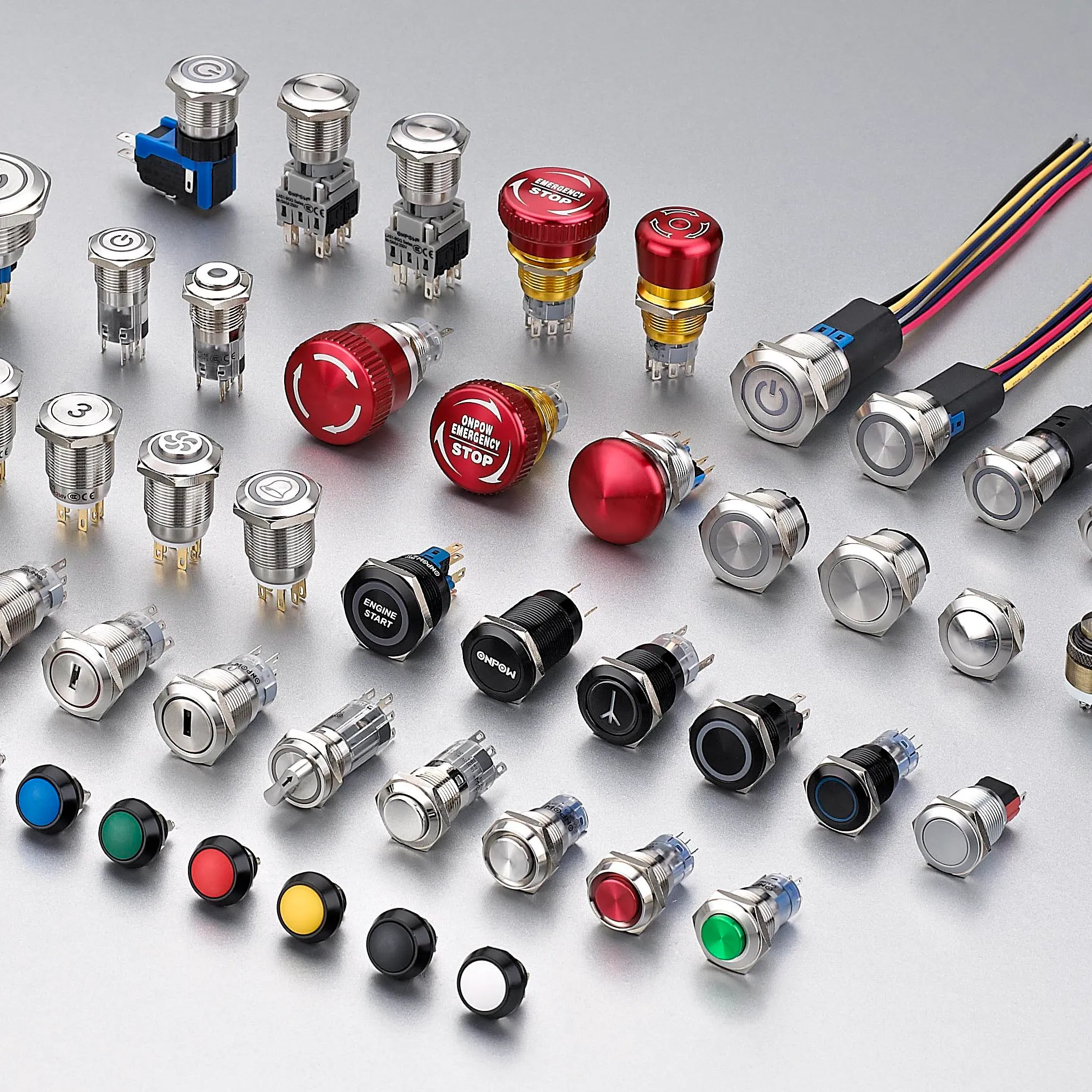
Proporcione la aplicación, el mercado objetivo, las normas aplicables, la función de la máquina, la alimentación y la carga, la interfaz de control, la lógica de contactos, el dibujo mecánico, la trayectoria de movimiento, las dimensiones del panel, el método de cableado, el entorno, la frecuencia de operación, la cantidad, las necesidades de documentación y el plan de validación de muestras. Pida al proveedor que identifique las suposiciones y excepciones. ONPOW ofrece productos relevantes en su familia de productos específica de la aplicación y lo más amplio gama de productos de control industrial.
Guías relacionadas de ONPOW
- Cómo funciona un microinterruptor
- Microinterruptor vs interruptor de límite
- Vida mecánica vs. vida eléctrica
Referencias autorizadas
- aparatos para circuitos de control IEC 60947-5-1
- IEC 60529 grados de protección proporcionados por las envolventes
- Requisitos de protección de maquinaria de OSHA
- Requisitos de seguridad eléctrica de OSHA
Video educativo
Push Buttons Explained: NO vs NC Types, Symbols, and Wiring Diagrams de Automatedo proporciona antecedentes generales. Las decisiones del proyecto aún requieren las normas aplicables y la documentación del producto.
Preguntas frecuentes
¿Qué significa 1NO?
Un circuito de contacto normalmente abierto está abierto en el estado mecánico normal definido y se cierra cuando es accionado.
¿Se pueden apilar bloques NA y NC?
Únicamente dentro de las reglas de la familia de operadores, las posiciones permitidas, la fuerza, la profundidad y las clasificaciones establecidas por el fabricante.
¿Es adecuado un contacto NC para una parada de emergencia?
No solo mediante el marcado. El dispositivo de parada de emergencia completo y la arquitectura de seguridad requieren un comportamiento documentado y validación.
¿Cómo se deben revisar los terminales?
Siga el método de terminación y el par de apriete indicados, inspeccione la preparación del conductor y el alivio de tensión, y pruebe el funcionamiento de cada circuito.
Decisión final
Apruebe el componente únicamente cuando los límites documentados de mecánica, electricidad, medio ambiente, usabilidad, instalación y mantenimiento se ajusten al sistema ensamblado. Resuelva las incógnitas mediante información actual del fabricante y pruebas antes de la liberación para producción.
Personalización
ONPOW undertakes a variety of custom needs for push-button development. Confirm whether packaging, marking or documentation OEM/ODM applies to Push Button Contact Block Selection: NO, NC, Ratings, and Installation in the quotation.
La cantidad mínima de pedido, el plazo de entrega y los términos comerciales no se publican aquí; confirme estos datos con la atención comercial. sales@onpow.com.



