

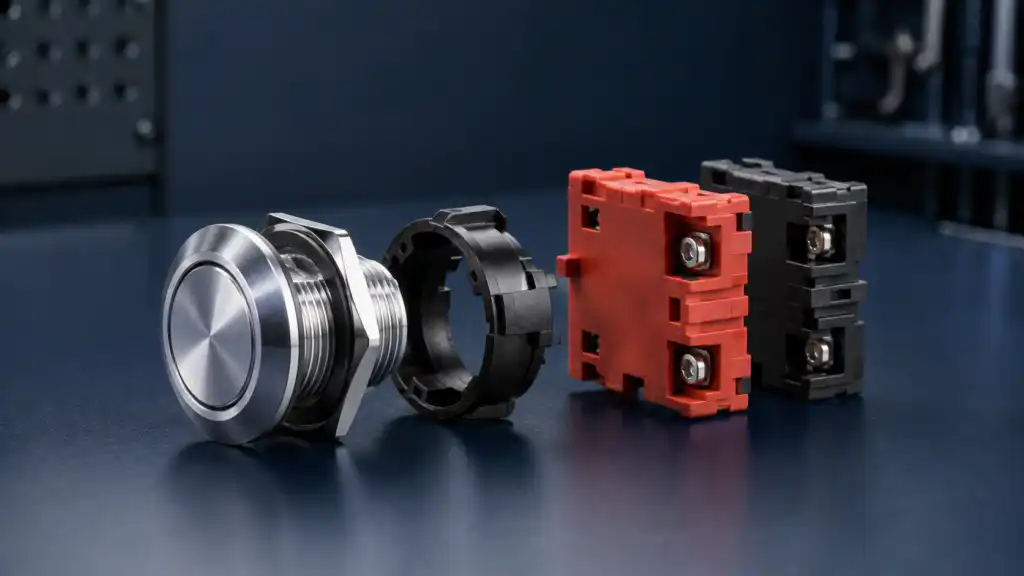
Blok styków przycisku to tylny moduł przełączający, który przekształca ruch operatora w zmianę stanu styku elektrycznego. Należy go dobierać pod kątem wymaganego stanu styków, liczby obwodów, kompatybilności z operatorem, systemu montażowego, napięcia i kategorii obciążenia, metody zaciskania, częstotliwości przełączania, środowiska oraz zachowania w przypadku awarii. “1NO” lub “1NC” opisuje normalny stan mechaniczny, a nie pełną funkcję urządzenia. Przedni operator, uchwyt, blok styków, obudowa, okablowanie i logika sterowania muszą być traktowane jako jeden zespół i weryfikowane na podstawie dokładnej dokumentacji produktu.
Zasada wyboru: Traktuj urządzenie, siłownik, styki, obudowę, okablowanie, logikę sterowania, użytkownika oraz ruch maszyny jako jeden system. Przykłady produktów ilustrują jedynie formę; ostateczna przydatność musi wynikać z aktualnej dokumentacji dla konkretnego kodu zamówienia oraz z walidacji w gotowym urządzeniu.
Jak działa ten mechanizm
Naciśnięcie elementu napędowego przenosi ruch poprzez pierścień lub uchwyt na jeden lub więcej modułowych bloków stykowych. Styki normalnie otwarte zamykają się po zadziałaniu; styki normalnie zamknięte otwierają się. Elementy napędowe chwilowe powracają do pozycji wyjściowej po zwolnieniu, podczas gdy elementy napędowe ze stabilizacją pozostają w wybranym stanie do momentu zresetowania przez ich mechanizm. Bloki stykowe mogą wyglądać na zamienne, lecz różnią się wpustami montażowymi, głębokością, drogą przełączania, układem zacisków, parametrami znamionowymi oraz deklaracjami wymuszonego otwarcia.
Kryteria wyboru w skrócie
| Obszar decyzyjny | Co zweryfikować | Powód inżynieryjny |
|---|---|---|
| Funkcja kontaktu | Zdefiniuj każdy obwód NO i NC na podstawie wymaganego stanu normalnego i uruchomionego | Etykiety muszą być zgodne z diagramem stanu maszyny. |
| Kompatybilność operatorów | Użyj zatwierdzonego operatora, uchwytu i rodziny bloków | Podobne wymiary nie dowodzą kompatybilności mechanicznej. |
| Liczba i układ w stosie | Sprawdź dozwolone pozycje bloków i głębokość tylną | Dodatkowe bloki zwiększają zapotrzebowanie na miejsce, siłę oraz złożoność okablowania. |
| Obciążenie elektryczne | Sprawdź napięcie, prąd, typ AC/DC, kategorię obciążenia, prąd rozruchowy oraz obciążenie minimalne | Sama bieżąca treść nagłówka jest niekompletna. |
| Metoda terminalna | Wybierz śrubę, końcówkę, zacisk, lut lub złącze do procesu okablowania | Zakończenie wpływa na inspekcję, moment dokręcania oraz serwisowalność. |
| Pozytywne potrzeby otwarcia | Używaj wyłącznie udokumentowanych urządzeń w zweryfikowanej architekturze bezpieczeństwa | Samo oznaczenie NC nie gwarantuje bezpiecznego zachowania. |
| Środowisko | Chroń tylne bloki przed kurzem, wilgocią, przewodzącymi zanieczyszczeniami i chemikaliami | Uszczelnienie panelu przedniego może nie obejmować zespołu tylnego. |
| Konserwacja | Zapewnij identyfikację, dostęp, punkty testowe oraz kontrolę wymiany | Poprawny blok nadal może zostać niepoprawnie okablowany lub wymieniony. |
Ta tabela ma charakter celowo jakościowy. Limity numeryczne, parametry znamionowe, moment obrotowy, siła, przemieszczenie, deklaracje środowiskowe i wartości wytrzymałościowe należy pobrać z aktualnego arkusza danych i ocenić w warunkach aplikacji.
Szczegółowy proces selekcji
Funkcja kontaktu
Co zweryfikować: Zdefiniuj każdy obwód NO i NC na podstawie wymaganych stanów normalnych i wysterowanych. Etykiety muszą być zgodne z diagramem stanów maszyny. Wymaganie powinno być zapisane w specyfikacji projektu i powiązane z dokładnym rysunkiem modelu lub arkuszem danych. Przeanalizuj tolerancję w najgorszym przypadku (worst-case), zużycie, zanieczyszczenie, dostęp serwisowy oraz przewidywalne niewłaściwe użycie. Jeśli dostępna dokumentacja nie definiuje granicy, pozostaw tę kwestię otwartą do potwierdzenia przez dostawcę i testów próbek, zamiast zastępować ją domysłem.
Kompatybilność operatorów
Co zweryfikować: Użyj zatwierdzonego operatora, uchwytu i rodziny bloków. Podobne wymiary nie dowodzą kompatybilności mechanicznej. Wymóg należy zapisać w specyfikacji projektu i powiązać z dokładnie określoną rysunkiem modelu lub kartą katalogową. Należy przeanalizować najgorszy przypadek tolerancji, zużycie, zanieczyszczenia, dostęp konserwacyjny oraz przewidywalne niewłaściwe użytkowanie. Jeśli dostępna dokumentacja nie definiuje granic, należy pozostawić tę kwestię otwartą do potwierdzenia przez dostawcę i testów próbek, zamiast zastępować ją domniemaniem.
Liczba i układ w stosie
Co zweryfikować: Sprawdź dozwolone pozycje bloków i głębokość tylną. Dodatkowe bloki zwiększają przestrzeń, siłę oraz złożoność okablowania. Wymaganie powinno być zapisane w specyfikacji projektu i powiązane z dokładnym rysunkiem modelu lub arkuszem danych. Przeanalizuj tolerancję w najgorszym przypadku, zużycie, zanieczyszczenie, dostęp konserwacyjny oraz przewidywalne niewłaściwe użycie. Jeśli dostępna dokumentacja nie definiuje granicy, pozostaw tę kwestię otwartą do potwierdzenia przez dostawcę i testów próbek zamiast przyjmować założenia.
Obciążenie elektryczne
Co zweryfikować: Sprawdź napięcie, prąd, rodzaj prądu AC/DC, kategorię obciążenia, prąd rozruchowy oraz obciążenie minimalne. Sam prąd znamionowy jest niewystarczający. Wymóg ten należy ująć w specyfikacji projektu i powiązać z konkretnym rysunkiem modelu lub kartą katalogową. Należy przeanalizować tolerancję w najgorszym przypadku, zużycie, zanieczyszczenie, dostęp konserwacyjny oraz przewidywalne niewłaściwe użytkowanie. Jeśli dostępna dokumentacja nie definiuje granic, należy pozostawić tę kwestię otwartą do potwierdzenia przez dostawcę i testów próbek, zamiast przyjmować założenia.
Metoda terminalna
Co zweryfikować: Wybierz wkręt, wsuwkę, zacisk, lutowanie lub złącze do procesu okablowania. Zakończenie wpływa na inspekcję, moment dokręcania i serwisowalność. Wymóg należy opisać w specyfikacji projektowej i powiązać z dokładnie określoną rysunkiem modelu lub kartą katalogową. Przeanalizuj najgorszy przypadek tolerancji, zużycia, zanieczyszczenia, dostępu konserwacyjnego oraz przewidywanego niewłaściwego użycia. Jeśli dostępne dokumenty nie definiują granicy, pozostaw tę kwestię otwartą do potwierdzenia przez dostawcę i testów próbek zamiast zastępować ją domysłem.
Pozytywne potrzeby otwarcia
Co zweryfikować: Używaj wyłącznie udokumentowanych urządzeń w zweryfikowanej architekturze bezpieczeństwa. Samo oznaczenie NC nie gwarantuje zachowania bezpieczeństwa. Wymóg należy zapisać w specyfikacji projektu i powiązać z dokładnym rysunkiem modelu lub kartą katalogową. Należy przeanalizować najgorszy przypadek tolerancji, zużycia, zanieczyszczenia, dostępu konserwacyjnego oraz przewidywalnego niewłaściwego użytkowania. Jeśli dostępna dokumentacja nie definiuje granic, należy pozostawić tę kwestię otwartą do potwierdzenia przez dostawcę i przetestowania próbek zamiast przyjmowania założeń.
Środowisko
Co zweryfikować: Chroń tylne bloki przed kurzem, wilgocią, przewodzącymi zanieczyszczeniami i chemikaliami. Uszczelnienie panelu przedniego może nie obejmować zespołu tylnego. Wymóg należy umieścić w specyfikacji projektu i powiązać z dokładnym rysunkiem modelu lub kartą katalogową. Przeanalizuj najgorszy przypadek tolerancji, zużycia, zanieczyszczenia, dostępu konserwacyjnego oraz przewidywalnego niewłaściwego użycia. Jeśli dostępna dokumentacja nie definiuje granicy, pozostaw tę kwestię otwartą do potwierdzenia przez dostawcę i przetestowania próbek, zamiast zastępować ją założeniem.
Konserwacja
Co zweryfikować: Zapewnij identyfikację, dostęp, punkty testowe oraz kontrolę wymiany. Prawidłowy blok może nadal zostać nieprawidłowo okablowany lub wymieniony. Wymaganie powinno być zapisane w specyfikacji projektu i powiązane z dokładnym rysunkiem modelu lub kartą katalogową. Przeanalizuj najgorszy przypadek tolerancji, zużycia, zanieczyszczenia, dostępu konserwacyjnego oraz przewidywalnego niewłaściwego użycia. Jeśli dostępna dokumentacja nie definiuje granicy, pozostaw ten punkt otwarty do potwierdzenia przez dostawcę i testów próbek, zamiast zastępować go założeniem.

Przegląd aplikacji
- Uruchom i zatrzymaj stacje poleceń. Zarejestruj oczekiwaną komendę, odpowiedź, zachowanie przy zwolnieniu, stan awaryjny oraz dowód akceptacji dla zmontowanej maszyny.
- Sterowanie trybem pracy i resetem. Zarejestruj oczekiwaną komendę, odpowiedź, zachowanie przy zwolnieniu, stan nieprawidłowy oraz dowód akceptacji dla zmontowanej maszyny.
- Układy sterowania dwutorowego. Należy zarejestrować oczekiwane polecenie, odpowiedź, zachowanie przy zwolnieniu, stan nieprawidłowy oraz dowód odbioru dla zmontowanej maszyny.
- Podświetlane łączniki z osobnymi obwodami lamp. Należy zarejestrować oczekiwaną komendę, odpowiedź, zachowanie przy zwolnieniu, stan nieprawidłowy oraz dowód akceptacji dla zmontowanej maszyny.
- Modułowe panele łatwe w utrzymaniu. Należy zarejestrować oczekiwaną komendę, odpowiedź, zachowanie podczas zwalniania, stan nieprawidłowy oraz dowód odbioru dla zmontowanej maszyny.
Dla każdego zastosowania należy uwzględnić rozruch, normalną pracę, wyłączenie, zanik zasilania, przywrócenie zasilania, tryb konserwacji, wymianę komponentów oraz uszkodzenia zidentyfikowane w ocenie ryzyka. Ogólny wyłącznik sterujący nie powinien być traktowany jako kompletna funkcja bezpieczeństwa.
Lista kontrolna odbioru technicznego
- Zablokuj wymaganie. Określ zamierzoną czynność, warunek normalny, zasilanie, obciążenie, ruch, środowisko oraz użytkownika.
- Dopasuj kod zamówienia. Porównaj dostarczoną część z zatwierdzonym rysunkiem, schematem styków, siłownikiem, stylem zacisków i akcesoriami.
- Sprawdź instalację. Sprawdź osiowanie, elementy złączne, luz z tyłu, prowadzenie kabli, odciążenie naciągu, ochronę części pod napięciem oraz dostęp serwisowy.
- Przetestuj każdy stan. Sprawdzić działanie i zwolnienie przy skrajnych tolerancjach, oczekiwanych prędkościach, obciążeniach, w rękawicach, przy obecności zanieczyszczeń oraz w warunkach środowiskowych.
- Przetestuj nienormalne warunki. Uwzględnij odłączone przewody, zablokowane lub uszkodzone mechanizmy, utratę zasilania, zanieczyszczenia oraz inne wiarygodne uszkodzenia.
- Zarejestruj wynik. Zapisz model, wersję, metodę testową, obserwacje, kryteria akceptacji, datę i osobę zatwierdzającą.
Częste błędy
- Mylenie stanu normalnego z pożądanym stanem maszyny. Zapobiegnij temu, przypisując sprawdzenie do rysunku, arkusza danych, rejestru okablowania lub testu uruchomieniowego z podanym kryterium akceptacji.
- Mieszkanie styków pomocniczych z innej grupy produktów. Zapobiegnij temu, przypisując sprawdzenie do rysunku, arkusza danych, rejestru okablowania lub testu uruchomieniowego z podanym kryterium akceptacji.
- Ignorowanie odstępu od tylnego panelu. Zapobiegnij temu, przypisując sprawdzenie do rysunku, arkusza danych, rejestru okablowania lub testu uruchomieniowego z podanym kryterium akceptacji.
- Bezpośrednie przełączanie nieodpowiedniego obciążenia o dużym prądzie rozruchowym. Zapobiegnij temu, przypisując sprawdzenie do rysunku, arkusza danych, rejestru okablowania lub testu uruchomieniowego z podanym kryterium akceptacji.
- Zakładając, że stopień ochrony przednich części chroni zaciski. Zapobiegnij temu, przypisując sprawdzenie do rysunku, arkusza danych, rejestru okablowania lub testu uruchomieniowego z podanym kryterium akceptacji.
Co uwzględnić w zapytaniu ofertowym (RFQ)
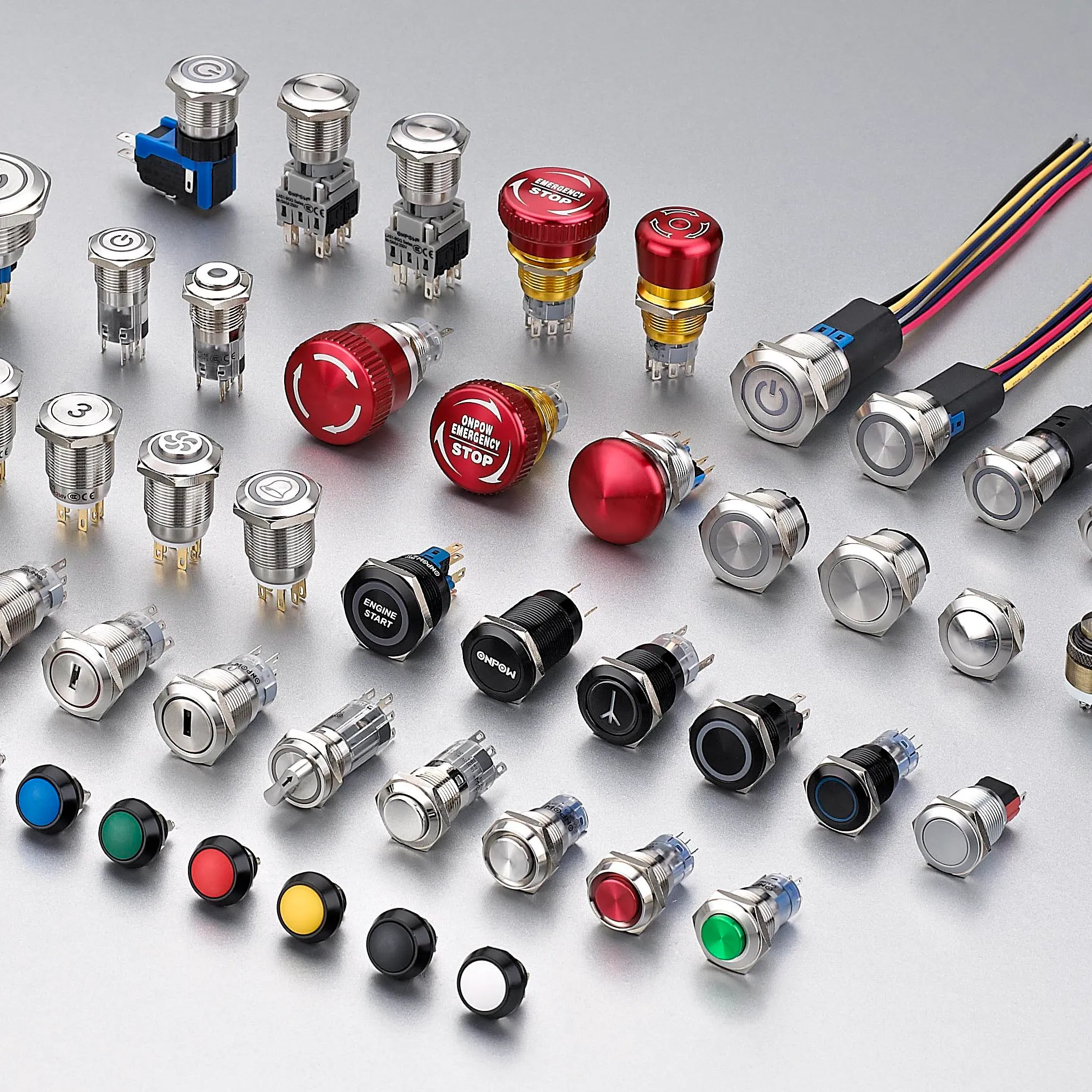
Podaj zastosowanie, rynek docelowy, obowiązujące normy, funkcję maszyny, zasilanie i obciążenie, interfejs sterowania, logikę styków, rysunek mechaniczny, tor ruchu, wymiary panelu, metodę okablowania, środowisko, częstotliwość pracy, ilość, zapotrzebowanie na dokumentację oraz plan walidacji próbek. Poproś dostawcę o wskazanie założeń i wyłączeń. ONPOW oferuje powiązane produkty w swoim rodzina produktów dedykowana do konkretnych zastosowań i szerszy kontekst asortyment produktów sterowania przemysłowego.
Powiązane poradniki ONPOW
- Jak działa mikroprzełącznik
- Mikrostycznik a wyłącznik krańcowy
- Życie mechaniczne kontra życie elektryczne
Autorytatywne źródła
- urządzenia w obwodach sterowniczych zgodne z normą IEC 60947-5-1
- IEC 60529 Stopnie ochrony zapewniane przez obudowy
- Wymagania OSHA dotyczące osłon maszyn
- Wymagania bezpieczeństwa elektrycznego OSHA
Film edukacyjny
Wyjaśnienie przycisków sterowniczych: typy NO i NC, symbole oraz schematy okablowania autorstwa Automatedo stanowią ogólne tło. Decyzje projektowe nadal wymagają zastosowania odpowiednich norm i dokumentacji produktów.
Często zadawane pytania
Co oznacza 1NO?
Jeden normalnie otwarty styk jest otwarty w zdefiniowanym normalnym stanie mechanicznym i zamyka się po zadziałaniu.
Czy bloki NO i NC można ze sobą łączyć (sztaplować / montować piętrowo)?
Tylko w ramach zasad rodziny operatorów, dozwolonych pozycji, siły, głębokości i wartości znamionowych określonych przez producenta.
Czy styk NC jest odpowiedni do zatrzymania awaryjnego?
Nie tylko poprzez samo oznaczenie. Kompletne urządzenie zatrzymania awaryjnego oraz architektura bezpieczeństwa wymagają udokumentowanego działania i walidacji.
Jak należy sprawdzać zaciski?
Postępuj zgodnie z określoną metodą zakończenia i momentem dokręcania, sprawdź przygotowanie żyły i odciążenie naciągu oraz przetestuj działanie każdego obwodu.
Ostateczna decyzja
Zatwierdź komponent tylko wtedy, gdy udokumentowane granice mechaniczne, elektryczne, środowiskowe, użyteczności, instalacji i konserwacji w pełni pasują do zmontowanego systemu. Rozstrzygnij kwestie niewiadome za pomocą aktualnych informacji od producenta i testów przed dopuszczeniem do produkcji.
Personalizacja
ONPOW undertakes a variety of custom needs for push-button development. Confirm whether packaging, marking or documentation OEM/ODM applies to Push Button Contact Block Selection: NO, NC, Ratings, and Installation in the quotation.
Minimalna ilość zamówienia, czas realizacji i warunki handlowe nie są tutaj podane; należy potwierdzić ich zgodność z działem sprzedaży. sales@onpow.com.



