

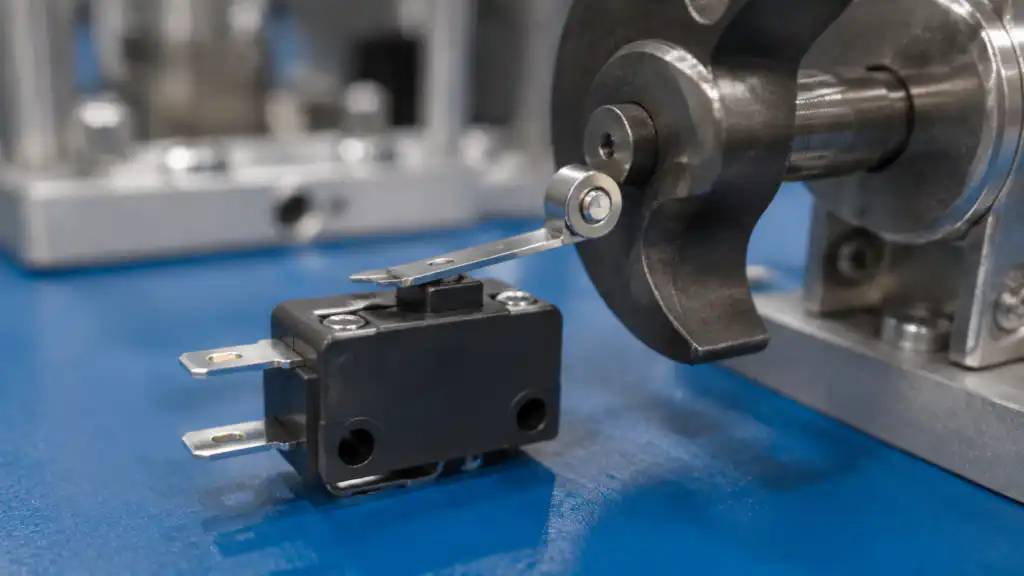
Un microinterruptor de rodillo se utiliza cuando un objetivo móvil o una leva necesita pasar a través del actuador con menos fricción de deslizamiento que una palanca simple o un émbolo. Los diseños de émbolo de rodillo y palanca de rodillo se comportan de manera diferente: el émbolo acepta principalmente fuerza axial, mientras que una palanca cambia el alcance, la fuerza y el recorrido antes de mover el mecanismo interno. Seleccione la disposición a partir de la trayectoria de movimiento real y la acumulación de tolerancia. Verifique el diámetro del rodillo, la geometría de la palanca, la fuerza de operación, el pretrecorrido, el sobrepaso, el punto de liberación, la velocidad, el montaje y los límites ambientales para el código de pedido exacto.
Regla de selección: trate el dispositivo, el actuador, los contactos, la carcasa, el cableado, la lógica de control, el usuario y el movimiento de la máquina como un solo sistema. Los ejemplos de productos ilustran únicamente la forma; la idoneidad final debe provenir de la documentación actual para el código de pedido exacto y de la validación en el equipo terminado.
Cómo funciona el mecanismo
El rodillo gira en la interfaz de la leva mientras que el émbolo o palanca transfiere el movimiento al mecanismo de salto. En una palanca, el contacto en un radio mayor generalmente cambia la relación de carrera y fuerza en el émbolo interno. Por lo tanto, mover el punto de contacto de la leva o cambiar el ángulo de aproximación puede alterar el funcionamiento efectivo. El rodillo reduce la fricción, pero no elimina el desgaste de los cojinetes, el impacto, la contaminación o la desalineación.

Criterios de selección de un vistazo
| Área de decisión | Qué verificar | Razón de ingeniería |
|---|---|---|
| Disposición de rodillos | Elija el émbolo de rodillo para carrera directa o la palanca de rodillo para alcance de desplazamiento lateral | Las dos formas transmiten el movimiento de manera diferente. |
| Dirección de la leva | Siga el enfoque permitido que se muestra en el dibujo | Un impacto trasero o lateral puede doblar la palanca o atascar el émbolo. |
| Radio de contacto | Mantenga la leva en la pista de rodillos prevista | El contacto excéntrico puede causar un desgaste desigual. |
| Longitud de la palanca | Utilice la geometría documentada y el rango de ajuste | Los cambios de longitud afectan a la fuerza y al movimiento. |
| Margen operativo | Cruzar el punto de operación bajo cualquier condición de tolerancia | El funcionamiento nominal puede ocultar señales perdidas. |
| Margen de liberación | Asegúrese de que la leva retroceda lo suficiente para el reajuste | Una liberación incompleta puede dejar el circuito en el estado incorrecto. |
| Velocidad e impacto | Utilice un perfil uniforme y la velocidad de operación permitida | El rodillo no es un amortiguador de impactos. |
| Contaminación | Considere las virutas, fibras, polvo, aceite y humedad en el rodillo | Los escombros pueden detener la rotación o alterar la trayectoria de movimiento. |
Esta tabla es intencionalmente cualitativa. Los límites numéricos, clasificaciones, par, fuerza, recorrido, declaraciones ambientales y valores de resistencia deben tomarse de la hoja de datos actual y evaluarse bajo las condiciones de la aplicación.
Proceso de selección detallado
Disposición de rodillos
Qué verificar: Elija el émbolo de rodillo para carrera directa o la palanca de rodillo para alcance de desplazamiento lateral. Las dos formas transmiten el movimiento de manera diferente. El requisito debe escribirse en la especificación del proyecto y rastrearse hasta el dibujo del modelo exacto o la hoja de datos. Revise la tolerancia en el peor de los casos, el desgaste, la contaminación, el acceso para mantenimiento y el uso indebido previsible. Si la documentación disponible no define el límite, mantenga el punto abierto para la confirmación del proveedor y la prueba de muestras en lugar de sustituirlo por una suposición.
Dirección de la leva
Qué verificar: Siga el enfoque permitido que se muestra en el dibujo. El impacto en reversa o lateral puede doblar la palanca o atascar el émbolo. El requisito debe escribirse en la especificación del proyecto y rastrearse hasta el dibujo del modelo exacto o la hoja de datos. Revise la tolerancia en el peor de los casos, el desgaste, la contaminación, el acceso para mantenimiento y el uso indebido previsible. Si la documentación disponible no define el límite, mantenga el punto abierto para la confirmación del proveedor y la prueba de muestras en lugar de sustituirlo por una suposición.
Radio de contacto
Qué verificar: Mantenga la leva en la pista de rodadura prevista. Un contacto descentrado puede generar un desgaste desigual. El requisito debe incluirse en la especificación del proyecto y rastrearse hasta el dibujo del modelo exacto o la hoja de datos. Revise la tolerancia en el peor de los casos, el desgaste, la contaminación, el acceso para mantenimiento y el uso indebido previsible. Si la documentación disponible no define el límite, mantenga el punto abierto para la confirmación del proveedor y las pruebas de muestras en lugar de sustituirlo por una suposición.
Longitud de la palanca
Qué verificar: Utilice la geometría documentada y el rango de ajuste. La longitud modifica la fuerza efectiva y el movimiento. El requisito debe redactarse en la especificación del proyecto y rastrearse hasta el dibujo del modelo exacto o la ficha técnica. Revise la tolerancia del peor caso, el desgaste, la contaminación, el acceso para mantenimiento y el uso indebido previsible. Si la documentación disponible no define el límite, mantenga el punto abierto para la confirmación del proveedor y la prueba de muestras en lugar de sustituirlo por una suposición.
Margen operativo
Qué verificar: Cruzar el punto de operación bajo cada condición de tolerancia. La operación nominal puede ocultar señales perdidas. El requisito debe escribirse en la especificación del proyecto y rastrearse hasta el dibujo del modelo exacto o la hoja de datos. Revisar la tolerancia en el peor de los casos, el desgaste, la contaminación, el acceso de mantenimiento y el mal uso previsible. Si la documentación disponible no define el límite, mantenga el punto abierto para la confirmación del proveedor y las pruebas de muestra en lugar de sustituir una suposición.
Margen de liberación
Qué verificar: Asegúrese de que la leva retroceda lo suficiente para el reajuste. Una liberación incompleta puede dejar el circuito en el estado incorrecto. El requisito debe incluirse en la especificación del proyecto y rastrearse hasta el dibujo del modelo o la hoja de datos exacta. Revise la tolerancia en el peor de los casos, el desgaste, la contaminación, el acceso para mantenimiento y el uso indebido previsible. Si la documentación disponible no define el límite, mantenga el punto abierto para la confirmación del proveedor y la prueba de muestras en lugar de sustituirlo por una suposición.
Velocidad e impacto
Qué verificar: Use un perfil liso y la velocidad de operación permitida. El rodillo no es un absorbedor de impactos. El requisito debe incluirse en las especificaciones del proyecto y rastrearse hasta el dibujo del modelo exacto o la hoja de datos. Revise la tolerancia en el peor de los casos, el desgaste, la contaminación, el acceso para mantenimiento y el uso indebido previsible. Si la documentación disponible no define el límite, mantenga el punto abierto para la confirmación del proveedor y la prueba de muestras en lugar de sustituirlo por una suposición.
Contaminación
Qué verificar: Considere virutas, fibras, polvo, aceite y humedad en el rodillo. Los residuos pueden detener la rotación o alterar la trayectoria del movimiento. El requisito debe redactarse en la especificación del proyecto y rastrearse hasta el dibujo del modelo exacto o la hoja de datos. Revise la tolerancia en el peor de los casos, el desgaste, la contaminación, el acceso para mantenimiento y el uso indebido previsible. Si la documentación disponible no define el límite, mantenga el punto abierto para la confirmación del proveedor y la prueba de muestras en lugar de sustituirlo por una suposición.

Revisión de la solicitud
- Detección de secuencia accionada por levas. Registre el comando esperado, la respuesta, el comportamiento de liberación, la condición anormal y la evidencia de aceptación para la máquina ensamblada.
- Detección de productos en transportador con contacto controlado. Registre el comando esperado, la respuesta, el comportamiento de liberación, la condición anormal y la evidencia de aceptación para la máquina ensamblada.
- Realimentación de la posición de referencia de la máquina. Registre el comando esperado, la respuesta, el comportamiento de liberación, la condición anormal y la evidencia de aceptación para la máquina ensamblada.
- Posición de la puerta o bandeja dentro del equipo. Registre el comando esperado, la respuesta, el comportamiento de liberación, la condición anormal y la evidencia de aceptación para la máquina ensamblada.
- Indexación repetida donde una interfaz rodante reduce el desgaste. Registre el comando esperado, la respuesta, el comportamiento de liberación, la condición anormal y la evidencia de aceptación para la máquina ensamblada.
Para cada aplicación, incluya el inicio, la operación normal, el apagado, la pérdida de energía, la restauración de energía, el modo de mantenimiento, el reemplazo de componentes y las fallas identificadas por la evaluación de riesgos. Un interruptor de control general no debe tratarse como una función de seguridad completa.
Lista de verificación de puesta en marcha
- Congelar el requisito. Indique la acción prevista, condición normal, alimentación, carga, movimiento, entorno y usuario.
- Coincidir con el código de pedido. Compare la pieza entregada con el dibujo aprobado, el esquema de contactos, el actuador, el tipo de terminal y los accesorios.
- Inspeccionar la instalación. Verificar alineación, elementos de sujeción, holgura trasera, recorrido de cables, alivio de tensión, protección de partes activas y acceso para mantenimiento.
- Prueba cada estado. Verificar el funcionamiento y la liberación en los extremos de tolerancia, velocidades previstas, cargas, guantes, contaminación y condiciones ambientales.
- Probar condiciones anormales. Incluya conductores desconectados, mecanismos bloqueados o dañados, pérdida de energía, contaminación y otras fallas creíbles.
- Registrar el resultado. Guardar modelo, revisión, método de prueba, observaciones, criterios de aceptación, fecha y aprobador.
Errores comunes
- Dejar que la leva se salga del borde del rodillo. Evite esto asignando la comprobación a un plano, hoja de datos, registro de cableado o prueba de puesta en marcha con un criterio de aceptación nombrado.
- Doblar una palanca para compensar un error de montaje. Evite esto asignando la comprobación a un plano, hoja de datos, registro de cableado o prueba de puesta en marcha con un criterio de aceptación nombrado.
- Ignorando la dirección de lanzamiento. Evite esto asignando la comprobación a un plano, hoja de datos, registro de cableado o prueba de puesta en marcha con un criterio de aceptación nombrado.
- Asumiendo que un rodillo más grande siempre mejora la repetibilidad. Evite esto asignando la comprobación a un plano, hoja de datos, registro de cableado o prueba de puesta en marcha con un criterio de aceptación nombrado.
- Usar el actuador como tope mecánico. Evite esto asignando la comprobación a un plano, hoja de datos, registro de cableado o prueba de puesta en marcha con un criterio de aceptación nombrado.
Qué incluir en una solicitud de cotización (RFQ)
Proporcione la aplicación, el mercado objetivo, las normas aplicables, la función de la máquina, la alimentación y la carga, la interfaz de control, la lógica de contactos, el dibujo mecánico, la trayectoria de movimiento, las dimensiones del panel, el método de cableado, el entorno, la frecuencia de operación, la cantidad, las necesidades de documentación y el plan de validación de muestras. Pida al proveedor que identifique las suposiciones y excepciones. ONPOW ofrece productos relevantes en su familia de productos específica de la aplicación y lo más amplio gama de productos de control industrial.
Guías relacionadas de ONPOW
- Cómo funciona un microinterruptor
- Microinterruptor vs interruptor de límite
- Vida mecánica vs. vida eléctrica
Referencias autorizadas
- aparatos para circuitos de control IEC 60947-5-1
- IEC 60529 grados de protección proporcionados por las envolventes
- Requisitos de protección de maquinaria de OSHA
- Requisitos de seguridad eléctrica de OSHA
Video educativo
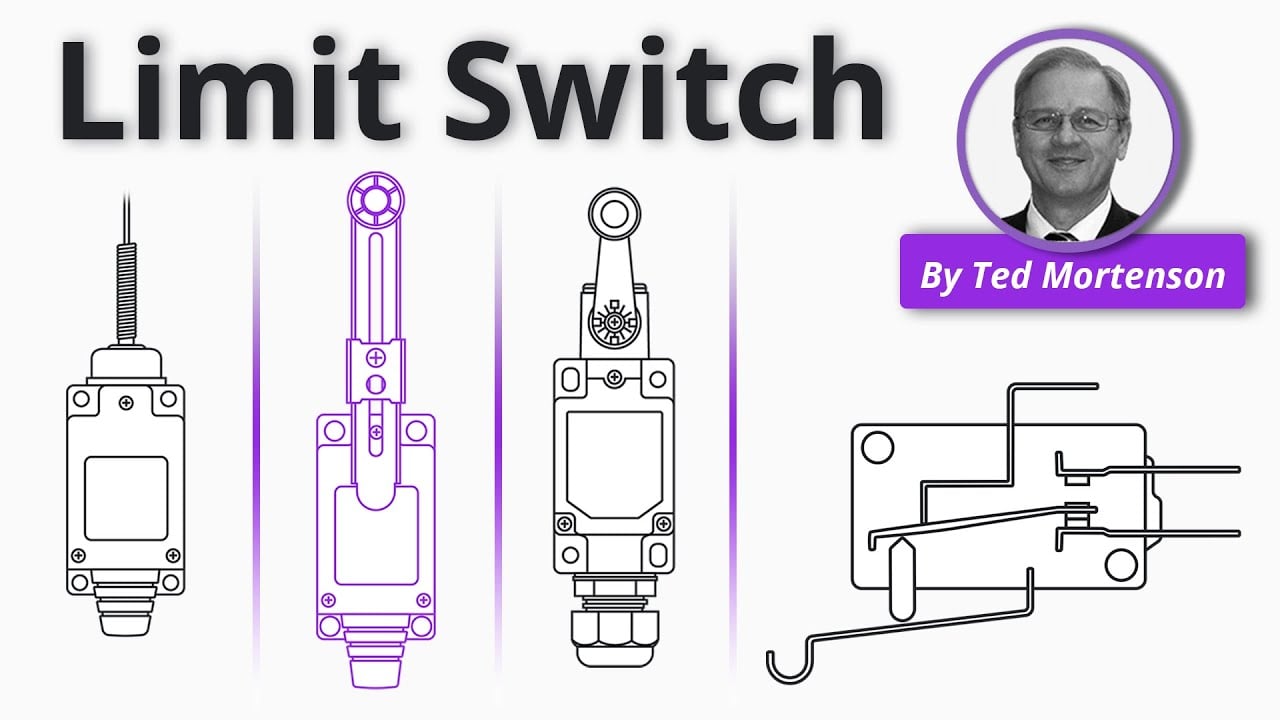
Limit Switch Explained de RealPars proporciona antecedentes generales. Las decisiones de proyecto aún requieren las normas aplicables y la documentación del producto.
Preguntas frecuentes
¿Cuál es la diferencia entre una palanca de rodillo y un émbolo de rodillo?
Una palanca de rodillo pivotea y cambia la ventaja mecánica; un émbolo de rodillo se mueve principalmente a lo largo de su eje.
¿Reduce el rodillo la fuerza de operación?
El efecto depende de la geometría completa de la palanca y del diseño del interruptor; utilice los datos exactos de fuerza y recorrido.
¿Se puede doblar la palanca durante la instalación?
No lo modifique a menos que el fabricante permita explícitamente un método de ajuste.
¿Cómo se comprueba el desgaste?
Inspeccione la rotación del rodillo, la condición de la superficie, la alineación de la palanca, la seguridad del montaje, el punto de operación y el cambio eléctrico confiable.
Decisión final
Apruebe el componente únicamente cuando los límites documentados de mecánica, electricidad, medio ambiente, usabilidad, instalación y mantenimiento se ajusten al sistema ensamblado. Resuelva las incógnitas mediante información actual del fabricante y pruebas antes de la liberación para producción.
Personalización
ONPOW undertakes a variety of custom needs for push-button development. Confirm whether packaging, marking or documentation OEM/ODM applies to Micro Switch Roller Selection: Lever, Plunger, and Cam Geometry in the quotation.
La cantidad mínima de pedido, el plazo de entrega y los términos comerciales no se publican aquí; confirme estos datos con la atención comercial. sales@onpow.com.



